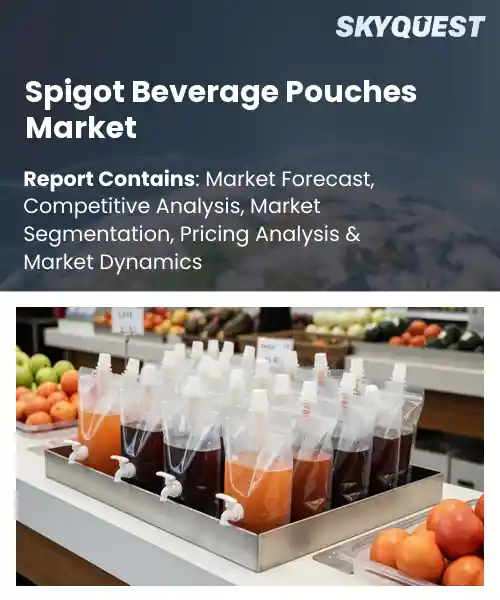
Spigot Beverage Pouches Market
Report ID: SQMIG15H2262
Report ID: SQMIG15H2262
[email protected]
USA +1 351-333-4748
Report ID:
SQMIG15H2262 |
Region:
Global |
Published Date: July, 2026
Pages:
157
|Tables:
118
|Figures:
77


Global Spigot Beverage Pouches Market size was valued at USD 846.5 Million in 2024 and is poised to grow from USD 915.07 Million in 2025 to USD 1706.31 Million by 2033, growing at a CAGR of 8.1% during the forecast period (2026-2033).
Beyond convenience, the growth catalyst for spigot beverage pouches is the sustainability push that forces brands to cut plastic waste. Replacing a 500‑ml PET bottle with a pouch can cut material use by up to 70 %, lowering emissions and delivering cost savings that attract retailers. This advantage prompted a European dairy cooperative to launch a 250‑ml oat‑milk pouch for school cafeterias lacking refrigeration. Barrier films now preserve flavor and extend shelf life, prompting snack producers to bundle drinks with kits. Consequently, firms use the compact form on e‑commerce platforms, reducing shipping volume and boosting margins, which fuels broader
What role does AI-driven automation play in the Spigot beverage pouches market?
AI‑driven automation is reshaping the Spigot beverage pouches market by streamlining design, production and quality assurance. Machine‑learning models predict optimal pouch geometry, reducing material usage while maintaining strength. Robotics handle filling, sealing and labeling with consistent precision, cutting cycle times and minimizing human error. Real‑time sensors feed data into predictive maintenance systems, preventing downtime and extending equipment life. Integrated supply‑chain platforms use AI to forecast demand, align inventory and coordinate logistics, ensuring that manufacturers can respond swiftly to shifting consumer preferences. These technologies collectively enhance efficiency, lower costs and support sustainable growth in a market that is rapidly expanding.In June 2024, a leading packaging firm introduced an AI‑driven production line that accelerates pouch filling and sealing, improving throughput and operational efficiency.
Market snapshot - (2026-2033)
Global Market Size
USD 846.5 Million
Largest Segment
Plastic
Fastest Growth
Paper-Based Laminates
Growth Rate
8.1% CAGR
To get more insights on this market click here to Request a Free Sample Report
Global spigot beverage pouches market is segmented by material, capacity, beverage type, closure type and region. Based on material, the market is segmented into Plastic, Aluminum Foil Laminates and Paper-Based Laminates. Based on capacity, the market is segmented into Up to 500 mL, 501–1000 mL and Above 1000 mL. Based on beverage type, the market is segmented into Juices, Dairy Beverages, Alcoholic Beverages and Functional Beverages. Based on closure type, the market is segmented into Screw Cap, Flip Cap and Push-Pull Cap. Based on region, the market is segmented into North America, Europe, Asia Pacific, Latin America and Middle East & Africa.
Plastic segment dominates because manufacturers value its lightweight nature, cost efficiency, and compatibility with high speed filling lines, enabling rapid production of spigot pouches. Its barrier properties can be engineered to protect moisture and oxygen, which is essential for preserving flavor and extending shelf life across a wide range of beverages. These advantages spur widespread adoption by brands seeking reliable packaging that aligns with sustainability initiatives while maintaining product integrity.
However, aluminum foil laminate segment is witnessing the strongest growth momentum as it offers superior oxygen and light barriers crucial for premium functional drinks. Consumer preference for clean label preservation drives brands toward this material, and advances in lamination technology reduce weight, positioning it as a high growth catalyst for market expansion.
Functional beverages segment dominates because consumers increasingly seek health enhancing drinks, prompting producers to prioritize packaging that preserves bioactive compounds and active ingredients. Spigot pouches provide convenient dispensing while protecting sensitive nutrients from oxidation and light exposure, supporting brand narratives around wellness. The resealable spigot design encourages repeat consumption and aligns with on the go lifestyles, reinforcing its appeal and driving sustained market leadership for both established and emerging brands seeking differentiated shelf presence.
Meanwhile, dairy beverages segment emerges as the key high growth area as manufacturers leverage spigot pouches to offer portable milks, kefir, and fortified drinks that cater to convenience driven consumers. The ability to maintain freshness without refrigeration expands distribution channels, and rising interest in dairy based protein fuels packaging innovation, accelerating market expansion and creating new product opportunities.
To get detailed segments analysis, Request a Free Sample Report
The Asia Pacific region combines a deep cultural affinity for on‑the‑go consumption with rapid advances in flexible‑film technology that enable sleek, resealable spigot designs. Consumers prioritize convenience without compromising perceived freshness, prompting manufacturers to invest heavily in innovative sealing mechanisms and eco‑friendly materials. Strong distribution networks across densely populated urban corridors accelerate product visibility, while leading food‑service brands champion trial through promotional placements. Regulatory frameworks that emphasize food safety and sustainable packaging further reinforce market confidence. Collaborative ecosystems linking raw‑material suppliers, converters, and brand owners create economies of scale that lower cost barriers, allowing a diverse portfolio of flavors and functional beverages to thrive. This confluence of consumer behavior, technological capability, and supportive policy positions Asia Pacific as the pre‑eminent driver of global spigot beverage pouch adoption.
Spigot Beverage Pouches Market in Japan benefits from a longstanding emphasis on product quality and meticulous packaging craftsmanship. Consumers value the hygienic resealable feature that aligns with a culture of freshness and portion control. Retail channels ranging from convenience stores to high‑end supermarkets provide extensive shelf presence, while innovative flavor collaborations with local beverage producers stimulate continuous interest. Sustainability initiatives encourage the adoption of recyclable films, reinforcing brand reputation among environmentally conscious shoppers.
Spigot Beverage Pouches Market in South Korea thrives on a vibrant youth culture that embraces novel drinking experiences and portable convenience. Fast‑moving retail formats and tech‑savvy e‑commerce platforms amplify product reach, while partnerships with popular K‑pop and lifestyle influencers generate buzz. Manufacturers prioritize lightweight, tamper‑evident designs that resonate with safety‑focused consumers, and ongoing research into biodegradable materials supports a growing demand for greener packaging solutions.
In North America, the surge in health‑forward and on‑the‑move lifestyles fuels demand for packaging that delivers both convenience and portion accuracy. Consumers seek resealable options that preserve flavor integrity, especially for functional beverages targeting wellness trends. Retail environments such as big‑box chains and specialty stores champion shelf‑ready displays that highlight the spigot’s ease of use, while immersive marketing campaigns underline the product’s suitability for active routines. Supply‑chain efficiencies, bolstered by domestic film production facilities, keep lead times short and enable rapid product launches. Environmental stewardship initiatives further encourage producers to explore recyclable and compostable spigot solutions, aligning brand narratives with broader sustainability goals and reinforcing market momentum.
Spigot Beverage Pouches Market in the United States enjoys broad consumer acceptance driven by a culture that values convenience and innovation. Major grocery chains allocate prominent aisle space for spigot‑enabled beverages, while sports and outdoor retailers promote the format for on‑the‑go hydration. Collaborative product development with beverage innovators introduces functional blends that cater to wellness‑oriented shoppers. Commitment to reducing single‑use plastics motivates manufacturers to adopt recyclable spigot materials, reinforcing brand alignment with eco‑conscious consumer expectations.
Spigot Beverage Pouches Market in Canada benefits from a consumer base that prioritizes practicality and environmental responsibility. Retail networks emphasize shelf‑stable options suitable for travel and outdoor activities, reinforcing the spigot’s resealable advantage. Partnerships with local beverage producers highlight regional flavors and natural ingredient stories. Industry focus on biodegradable film technologies resonates with regulatory encouragement toward reduced plastic waste, positioning the spigot format as a forward‑looking solution within the Canadian market.
Europe leverages a sophisticated consumer palate and stringent sustainability directives to elevate the spigot beverage pouch segment. Across the continent, shoppers appreciate resealable packaging that maintains freshness while minimizing waste, prompting manufacturers to refine barrier technologies and adopt recyclable polymer blends. Collaborative innovation clusters connect packaging engineers with beverage brands, accelerating the rollout of premium, functional drinks tailored to regional taste preferences. Retail ecosystems, from traditional supermarkets to specialty health stores, showcase the spigot’s convenience, especially for portion‑controlled consumption. Policy‑driven incentives for circular packaging reinforce industry investment in closed‑loop solutions, bolstering Europe’s reputation as a hub for environmentally attuned, high‑quality beverage packaging.
Spigot Beverage Pouches Market in Germany is shaped by a consumer ethos that prizes both functionality and ecological impact. Retail chains prioritize spigot‑enabled products that offer resealable freshness for on‑the‑go lifestyles while adhering to strict recycling standards. Collaborative efforts between packaging firms and beverage innovators focus on high‑performance barrier films that extend shelf life without compromising sustainability goals.
Spigot Beverage Pouches Market in the United Kingdom reflects a strong demand for convenient, portion‑controlled drinks among commuters and active individuals. Supermarket shelves feature a diverse array of spigot pouches, often highlighted for their ease of use and reduced plastic footprint. Manufacturers are intensifying research into bio‑based films to meet consumer expectations for greener packaging solutions.
Spigot Beverage Pouches Market in France benefits from a culinary culture that values freshness and refined presentation. Retail environments emphasize elegant packaging designs that incorporate resealable spigots, catering to consumers seeking both practicality and aesthetic appeal. Ongoing collaboration with local beverage artisans drives flavor innovation, while environmental policies encourage the shift toward recyclable and compostable pouch materials.
To know more about the market opportunities by region and country, click here to
Buy The Complete Report
Growing Consumer Preference for Convenience
Consumers increasingly favor ready‑to‑drink formats that require minimal preparation, leading manufacturers to adopt spigot beverage pouches that provide quick dispensing and resealable convenience. This preference drives demand across retail and on‑the‑go channels, encouraging product innovation and expanding distribution networks. Retailers allocate shelf space to these flexible packages, while marketers highlight hygienic and sustainable aspects, further boosting acceptance. Consequently, the spigot pouch format becomes a key component of the evolving beverage ecosystem, reinforcing repeat purchases and supporting sustained market overall growth.
Adoption of Sustainable Packaging Practices
Environmental concerns drive both consumers and regulators to prioritize packaging that reduces waste, prompting beverage producers to transition toward recyclable spigot pouches. These containers often incorporate biodegradable films or recyclable polymers, aligning with sustainability mandates and corporate responsibility goals. Manufacturers leverage this shift to differentiate their brands, attracting eco‑conscious buyers and opening access to markets with strict packaging regulations. The perceived environmental advantage enhances brand equity, encourages higher price acceptance, and stimulates broader adoption across diverse distribution channels, thereby reinforcing market expansion.
High Initial Investment Costs
Developing and scaling spigot beverage pouch production requires substantial capital outlays for specialized extrusion equipment, sealing technology, and quality control systems. Companies must allocate significant financial resources to design moulds, integrate dispensing mechanisms, and ensure material compatibility, which elevates entry barriers for new participants. This investment burden can defer market entry decisions, limit expansion of existing players, and constrain overall market velocity. Consequently, firms may prioritize incremental improvements to existing packaging lines over full adoption of spigot technology, slowing broader market penetration.
Regulatory Uncertainty Across Regions
Regulatory frameworks governing spigot pouch materials, dispensing mechanisms, and labeling differ markedly among jurisdictions, creating uncertainty for manufacturers seeking global deployment. Variations in permissible polymer compositions, recycling standards, and safety certifications necessitate extensive testing and adaptation, which can prolong product launch timelines. Companies often must navigate complex approval processes and maintain multiple compliance documentation sets, increasing operational overhead. This regulatory heterogeneity discourages rapid market roll‑out, prompting some producers to focus on established packaging solutions with clearer guidelines, thereby dampening market expansion momentum.
Request Free Customization of this report to help us to meet your business objectives.
The spigot beverage pouch market is shaped by intense rivalry as established CPG giants and agile newcomers vie for shelf space, prompting a wave of strategic moves such as acquisitions of niche packaging firms, joint ventures with smart‑cap technology providers, and rapid rollout of recyclable spigot designs to meet sustainability pressures and differentiate product convenience.
Top Player’s Company Profile
Recent Developments
SkyQuest’s ABIRAW (Advanced Business Intelligence, Research & Analysis Wing) is our Business Information Services team that Collects, Collates, Correlates, and Analyses the Data collected by means of Primary Exploratory Research backed by robust Secondary Desk research. As per SkyQuest analysis, the spigot beverage pouch market is being propelled primarily by a growing consumer preference for convenience, as shoppers seek ready‑to‑drink formats that dispense quickly and reseal easily. A second powerful driver is the shift toward sustainable packaging, with brands adopting recyclable or compostable films to meet environmental expectations. The plastic material segment remains the dominant choice because of its lightweight cost efficiency and compatibility with high‑speed lines. Asia Pacific leads the market, fueled by dense urban demand and advanced flexible‑film capabilities. However, high initial investment costs for specialized extrusion and sealing equipment act as a restraint, slowing entry for new players.
| Report Metric | Details |
|---|---|
| Market size value in 2024 | USD 846.5 Million |
| Market size value in 2033 | USD 1706.31 Million |
| Growth Rate | 8.1% |
| Base year | 2024 |
| Forecast period | (2026-2033) |
| Forecast Unit (Value) | USD Million |
| Segments covered |
|
| Regions covered | North America (US, Canada), Europe (Germany, France, United Kingdom, Italy, Spain, Rest of Europe), Asia Pacific (China, India, Japan, Rest of Asia-Pacific), Latin America (Brazil, Rest of Latin America), Middle East & Africa (South Africa, GCC Countries, Rest of MEA) |
| Companies covered |
|
| Customization scope | Free report customization with purchase. Customization includes:-
|
To get a free trial access to our platform which is a one stop solution for all your data requirements for quicker decision making. This platform allows you to compare markets, competitors who are prominent in the market, and mega trends that are influencing the dynamics in the market. Also, get access to detailed SkyQuest exclusive matrix.
Table Of Content
Executive Summary
Market overview
Parent Market Analysis
Market overview
Market size
KEY MARKET INSIGHTS
COVID IMPACT
MARKET DYNAMICS & OUTLOOK
Market Size by Region
KEY COMPANY PROFILES
Methodology
For the Spigot Beverage Pouches Market, our research methodology involved a mixture of primary and secondary data sources. Key steps involved in the research process are listed below:
1. Information Procurement: This stage involved the procurement of Market data or related information via primary and secondary sources. The various secondary sources used included various company websites, annual reports, trade databases, and paid databases such as Hoover's, Bloomberg Business, Factiva, and Avention. Our team did 45 primary interactions Globally which included several stakeholders such as manufacturers, customers, key opinion leaders, etc. Overall, information procurement was one of the most extensive stages in our research process.
2. Information Analysis: This step involved triangulation of data through bottom-up and top-down approaches to estimate and validate the total size and future estimate of the Spigot Beverage Pouches Market.
3. Report Formulation: The final step entailed the placement of data points in appropriate Market spaces in an attempt to deduce viable conclusions.
4. Validation & Publishing: Validation is the most important step in the process. Validation & re-validation via an intricately designed process helped us finalize data points to be used for final calculations. The final Market estimates and forecasts were then aligned and sent to our panel of industry experts for validation of data. Once the validation was done the report was sent to our Quality Assurance team to ensure adherence to style guides, consistency & design.
Analyst Support
Customization Options
With the given market data, our dedicated team of analysts can offer you the following customization options are available for the Spigot Beverage Pouches Market:
Product Analysis: Product matrix, which offers a detailed comparison of the product portfolio of companies.
Regional Analysis: Further analysis of the Spigot Beverage Pouches Market for additional countries.
Competitive Analysis: Detailed analysis and profiling of additional Market players & comparative analysis of competitive products.
Go to Market Strategy: Find the high-growth channels to invest your marketing efforts and increase your customer base.
Innovation Mapping: Identify racial solutions and innovation, connected to deep ecosystems of innovators, start-ups, academics, and strategic partners.
Category Intelligence: Customized intelligence that is relevant to their supply Markets will enable them to make smarter sourcing decisions and improve their category management.
Public Company Transcript Analysis: To improve the investment performance by generating new alpha and making better-informed decisions.
Social Media Listening: To analyze the conversations and trends happening not just around your brand, but around your industry as a whole, and use those insights to make better Marketing decisions.
REQUEST FOR SAMPLE
 REQUEST FREE CUSTOMIZATION


Want to customize this report? This report can be personalized according to your needs. Our analysts and industry experts will work directly with you to understand your requirements and provide you with customized data in a short amount of time. We offer $1000 worth of FREE customization at the time of purchase.
Feedback From Our Clients


 USA (+1) 351-333-4748

