Sogroya Market
Report ID: SQMIG35I2591
Report ID: SQMIG35I2591
[email protected]
USA +1 351-333-4748
Report ID:
SQMIG35I2591 |
Region:
Global |
Published Date: March, 2026
Pages:
157
|Tables:
139
|Figures:
78


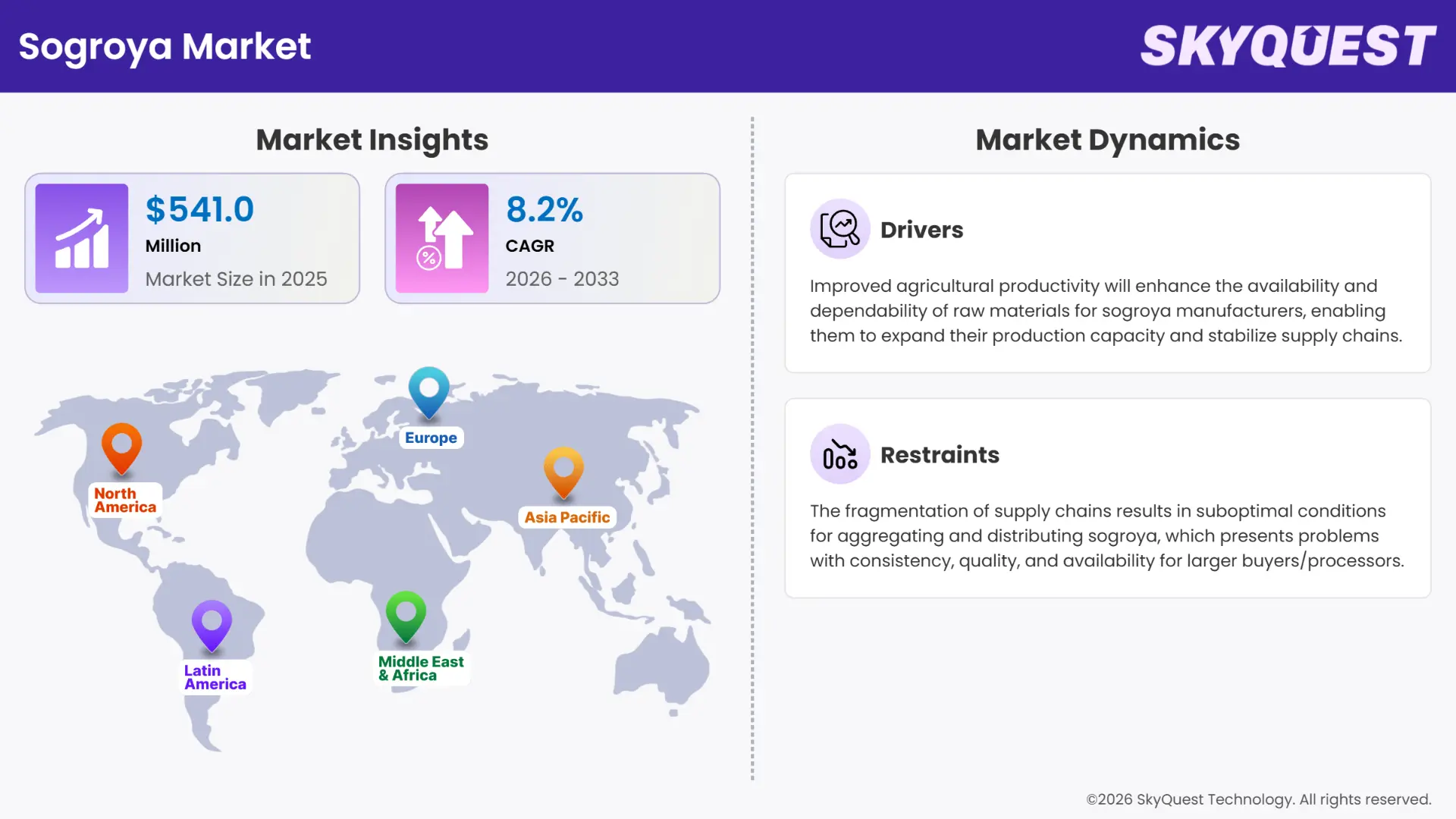
Global Sogroya Market size was valued at USD 500.0 Million in 2024 and is poised to grow from USD 541.0 Million in 2025 to USD 1016.28 Million by 2033, growing at a CAGR of 8.2% during the forecast period (2026-2033).
Key Takeaways: Market Trends & Insights
Increased climate pressure on agriculture is driving the expansion of the sogroya market, which has created demand for drought-resistant, early maturing varieties of crops that will produce yields under fluctuating rainfall. 'Sogroya' describes both the environment that produces drought-resistant cereal seeds and the seed-to-processor supply chain, which involves breeders, seed companies and commodity buyers. The sogroya market is important to the agricultural economy because it decreases the uncertainty of harvests, supports the income of rural populations, and provides a stabilized food supply for areas of high vulnerability.
The sogroya market has evolved from a localized participatory breeding system conducted at research centers to a global supply chain with coordinated partnerships between CGIAR programs, national agricultural institutes and seed companies. The combined efforts of these entities have resulted in a dramatic increase in production and use of Sogroya seed in sub-Saharan Africa and South Asia.
A major factor impacting the sogroya market will be the availability of 'integrated' value chain investments, including investments in seed multiplication, storage and local processing, which reduce seed loss and increase profitability, thus attracting both producers and purchasers. For instance, a cooperative in Northeast India invested in small mills to process Sogroya grain and saw throughput increase, giving farmers a better price for their grain and stimulating a growth in contract farming.
How is AI Enhancing Market Access and Adoption Strategies in the Sogroya Market?
AI is changing the market access and adoption strategy in the sogroya market by improving how patients are identified, streamlining payer interactions, and personalizing outreach from clinicians. Key components include predictive analytics to help identify the most likely candidates, natural language processing to facilitate expedited processing of prior authorizations, and digital platforms to assist with education and support adherence. The existing state of the market reflects a rise in demand for once-weekly treatment convenience and the growing importance of real-world evidence for satisfying payer requirements. For example, some organizations use AI-driven patient cohorts to target specific specialty clinics, as well as tailor educational resources for those clinics to reduce barriers for families and providers and encourage adoption on a larger scale.
Novo Nordisk, in February 2026, received FDA approval for pediatric indications for Sogroya, increasing the demand for Sogroya and enabling additional use by employing AI technologies in automating prior authorization workflows, pulling eligible patients from healthcare data, predicting adherence risk, and tailoring clinician and family digital educational content, which aid in speeding up access and adoption.
To get more insights on this market click here to Request a Free Sample Report
Global sogroya market is segmented into therapeutic use, end user, distribution channel, formulation type, market type and region. Based on therapeutic use, the market is segmented into diabetes management and growth hormone deficiency. Based on end user, the market is segmented into healthcare providers and patients. Based on distribution channel, the market is segmented into online pharmacies and retail pharmacies. Based on formulation type, the market is segmented into injectable solutions and pen-delivery systems. Based on market type, the market is segmented into brand name medication and generic medication. Based on region, the market is segmented into North America, Europe, Asia Pacific, Latin America and Middle East & Africa.
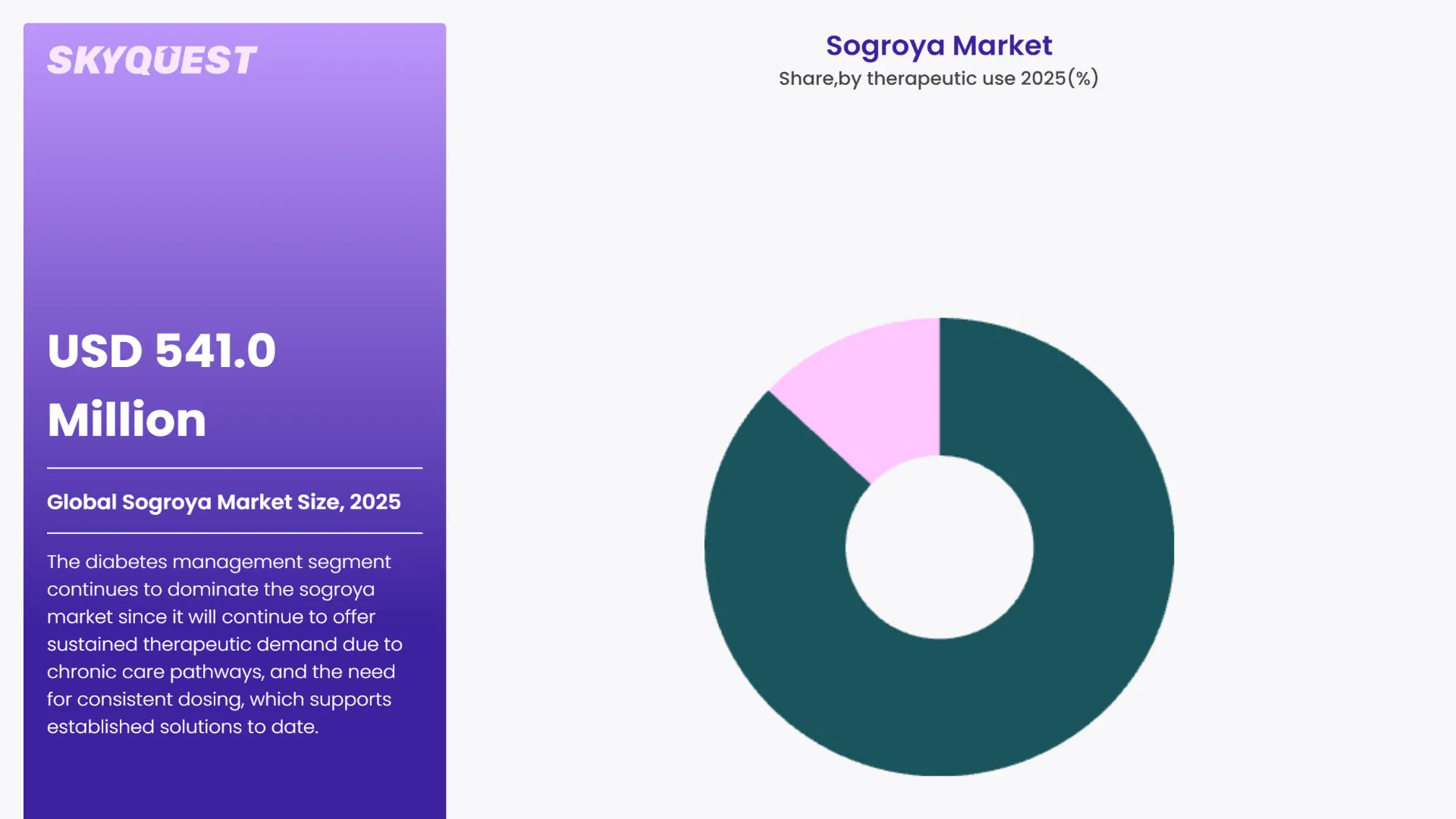
The diabetes management segment continues to dominate the sogroya market since it will continue to offer sustained therapeutic demand due to chronic care pathways, and the need for consistent dosing, which supports established solutions to date. Strong clinician familiarity and integration of care pathways promote consistent prescribing, while the payer coverage framework and patient support programs reduce barriers to access. These various pieces of data contribute to predictability in the utilization of sogroya products and, therefore, continued supply chain prioritization, which solidifies market leadership positions and provides resources for diabetes-related offerings.
However, growth hormone deficiency is emerging as the most rapidly expanding area in the sogroya market because novel long-acting therapies and improved diagnostics boost clinician's willingness to treat adult deficiency. Enhanced product labeling, targeted awareness initiatives, and improved monitoring of patients with GHD will all facilitate faster adoption rates of therapy and create new commercial opportunities to support multiple care pathways.
The online pharmacies segment continues to lead due to alignment with emerging patient behaviours and trends in digital prescribing within the sogroya market share, as well as facilitating direct delivery to patients and improved management of refills. Additionally, the integration of online pharmacies with telehealth platforms and manufacturer hub services reduces friction in distribution and helps improve accessibility and adherence using digital pricing models and subscription options. As a result, the procurement model for the group of products that make up the sogroya market is shifting away from traditional habits to investing and focusing on the infrastructure needed for online distribution of the products.
In contrast, retail pharmacies are experiencing the highest rate of sogroya market growth due to the trust of patients and access to the products for initiating therapy. Expanded clinical services, in store counselling and improved collaboration between the prescriber and the retail pharmacy are accelerating the initiation of therapy. These developments are resulting in additional local opportunities for adherence programs and will contribute to an expansion of the market.
To get detailed segments analysis, Request a Free Sample Report
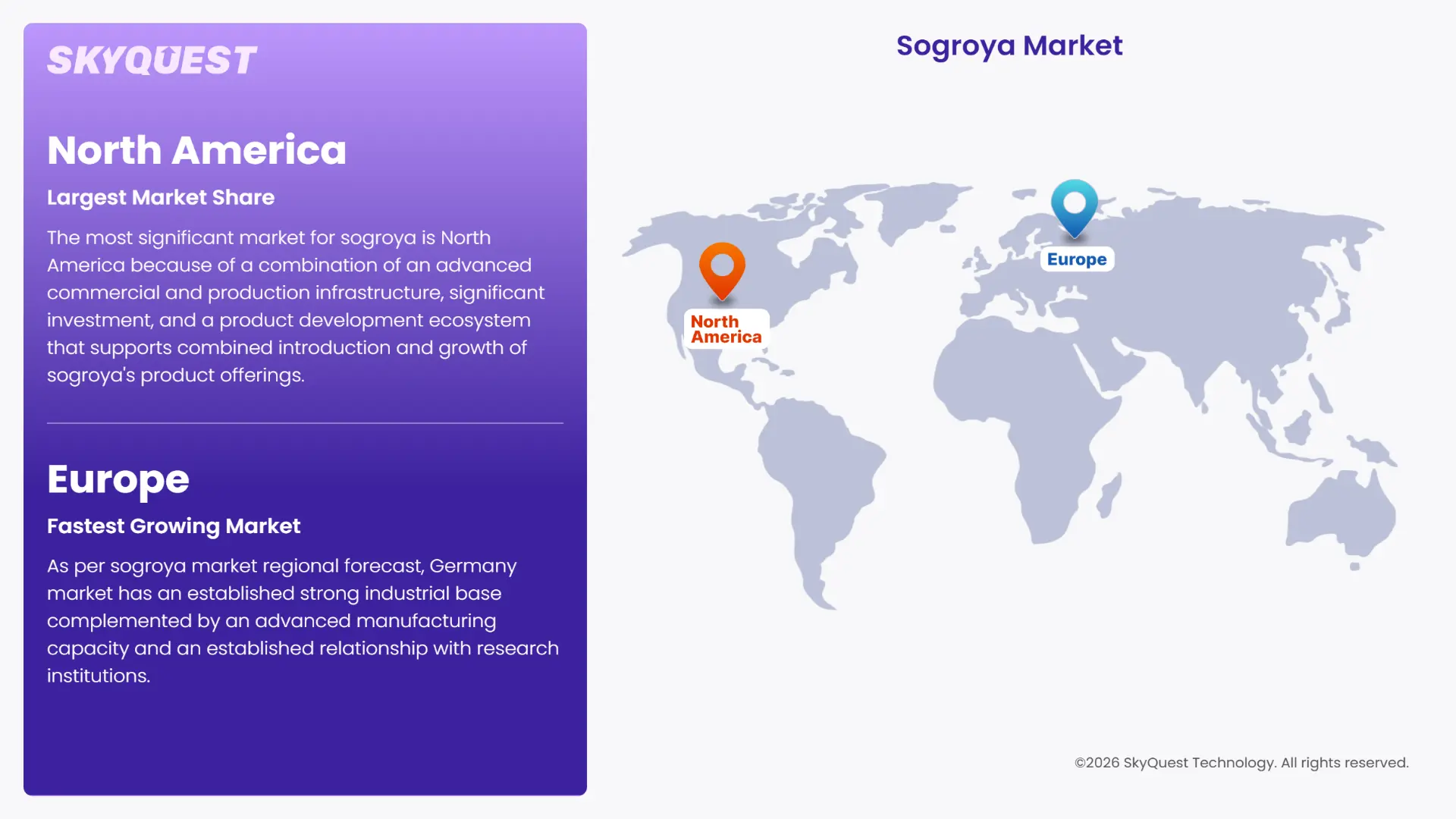
The most significant market for sogroya is North America because of a combination of an advanced commercial and production infrastructure, significant investment, and a product development ecosystem that supports combined introduction and growth of sogroya's product offerings. A key driver is the presence of advanced manufacturing and supply chain capabilities, allowing companies such as Novo Nordisk to maintain consistent production quality and ensure timely distribution across the market.
As per sogroya industry analysis, market in the United States is primarily supported by a dense network of development hubs, specialized manufacturers, and sophisticated distribution channels that support rapid product introduction and scaling. Strong collaboration among industry players, clinical leaders, and regulatory advisors facilitates successful navigation of the pathway to adoption. Strong investor presence and strategic partnerships provide continued enhancement of the sogroya product's ability to grow in the market and provide integrated logistics and customer support capabilities to allow for reliable access to products through various delivery and distribution channels.
In Canada, the sogroya market benefits from coordinated efforts between the public and private sectors that put an emphasis on access and integration. Facilities with both manufacturing and clinical expertise facilitate targeted product deployment and local adaptation. Partnerships between industry and healthcare networks assist with evidence of development and creation of adoption pathways. The focus on product quality, supply continuity, and collaborative efforts with stakeholders enables consistent use of the sogroya product through urban and rural delivery settings, while a shared policy framework and trade links with the United States further contribute to product availability in Canada.
In Europe, the sogroya market has seen substantial growth due to the following forces converging regulatory harmonization; strategic investments in the healthcare industry; and a significant drive towards integrated care pathways. The growth and development of strong clinical networks have connected sogroya manufacturers to healthcare providers, allowing for pragmatic pilot implementations and subsequent region-wide rollouts of sogroya, aligning value propositions.
As per sogroya market regional forecast, Germany market has an established strong industrial base complemented by an advanced manufacturing capacity and an established relationship with research institutions. The established relationship with the regulatory process and health system infrastructure provides an extensive evaluation and integration of sogroya into the various sogroya care pathways. The existing supplier network and logistical capacity provide for a wide distribution of sogroya, while the culture of quality assurance and excellence that exists in the country provides healthcare professionals and purchasers with a high level of confidence in sogroya.
The sogroya market exists as a dynamic environment through an active participation of policies, engaging private sector investments, and a strong connection between innovative research institutes and commercial developers. The establishment of adaptive regulatory pathways supported by the implementation of progressive health systems pilots enables the accelerated adoption of innovation through iterative improvements. In addition, concentrated innovation hubs provide the talent and infrastructure needed for scaling, while robust distribution partners provide access to the market across an array of care settings. The collaborative funding model and provider engagement enable the rapid adoption of innovation through its commercial momentum.
As per sogroya market regional outlook, France is developing due to the collaboration of public-sector initiatives, increasing industrial involvement in the sector, and improved clinical collaboration between local manufacturers and research facilities. The linking of public-sector initiatives with local manufacturers and research facilities supports the development of care delivery solutions that meet national care priorities, while pilot programmes and partnerships between regional authorities test the operational implementation of new delivery models. Increased dialogue between payers and health agencies is also contributing to the pathway development needed by all stakeholders to enable the acceptance of new technologies, as well as providing emphasis on the quality of both patient outcomes and system efficiencies that will allow for a measured adoption of new technologies. Finally, ongoing collaboration between sectors will strengthen commercialization capabilities across the sogroya market.
The Asia-Pacific region continues to build on its success through local manufacturing, modernization of regulations and strategic partnerships with met global industry leaders. Governments and businesses have begun to align incentives to promote the production of goods and services in their home markets as well as exporting them to other countries; while regulatory authorities are refining the processes for granting approvals for product innovation to stimulate technology transfer. Urban healthcare systems have created an environment conducive to the clinical validation of new technology with support provided by highly skilled talent as well as integrating digital health into existing healthcare services which further enhances service delivery capabilities.
Sogroya's presence in Japan is being driven by a strong focus on regulatory compliance, manufacturing excellence and clinical integration. These factors create a high level of confidence in the local manufacturing industry as an attractive option for domestic use and export of products. Collaborative efforts between the industry, academic institutions and clinical institutions are generating evidence to support the development of the necessary evidence base needed for developing new pathways.
Sogroya's presence in Korea benefits from biotechnology clusters, rapid production capabilities, and an innovative culture. The strong collaboration between startups, established companies and institutions has allowed for the acceleration of the product development cycle from research through to commercialization. Regulatory authorities and providers are working together to develop the necessary pathways to facilitate the use of sogroya within Korea as well as in enhancing the delivery of services and creating greater engagement with patients through digital health platforms.
To know more about the market opportunities by region and country, click here to
Buy The Complete Report
Rising Agricultural Productivity
Improved agricultural productivity will enhance the availability and dependability of raw materials for sogroya manufacturers, enabling them to expand their production capacity and stabilize supply chains. As productivity improves due to increased yields, uncertainty around production will be reduced and there will be a greater incentive to invest in processing, storing, and distributing sogroya, which consequently fosters expansion into other markets. Farmers utilizing enhanced input and production techniques will improve the consistency of the quality of sogroya, creating stronger business relationships with buyers. When productivity improves, the supply-side capacity of the sogroya market is strengthened and the level of sustainable growth is increased since lower barriers will exist to scale operations.
Increased Demand for Food Processing
As the demand for food processing increases, sogroya manufacturers will see more consistent procurement channels which will create production scale incentives, which will compel suppliers to invest in more consistent quality and higher volumes of sogroya. Food processors are seeking the most reliable inputs to satisfy consumers’ product specifications; as a result, food processors utilize cooperative practices, contract farming, and supplier development programs so that they can strengthen the links throughout the value chain. Demand-oriented food processors decrease fragmentation in the market and enable farmers to plan for the long-term as well as implement practices to increase value and negotiate long-term stable contracts. Therefore, the increase in liquidity in the sogroya market will stimulate further participation from commercial organizations and investors focused on sogroya ventures.
Supply Chain Fragmentation Challenges
The fragmentation of supply chains results in suboptimal conditions for aggregating and distributing sogroya, which presents problems with consistency, quality, and availability for larger buyers/processors. Increased transaction costs resulting from dispersed sourcing causes logistical complications and lowers the bargaining position of sogroya producers, compelling producers to invest less in productivity improvements. The uncertainty created by these structural inefficiencies limits the ability for stable commercial relationships to develop and makes responding to demand fluctuations difficult. The result of these structural inefficiencies creates operational barriers for entering and expanding into markets and delays the establishment of integrated supply networks, which are necessary to support broader sogroya market growth.
Regulatory Compliance Challenges
Complex and varied regulations from different jurisdictions pose compliance burdens to both sogroya producers and merchants; increasing the amount of time and resources required for compliance diverts them from pursuing market development activities. The complexity of navigating licensing, quality standards, and documentation creates operational friction, particularly for smaller operators who lack the administrative capacity to manage compliance efforts. The delay in launching products due to the complexity of regulatory compliance will limit the ability to participate in cross-border trade and limit investment due to a higher perceived risk due to regulatory compliance. These challenges limit the ability of market participants to scale their operations and respond to changing market demands, thus limiting market growth overall.
Request Free Customization of this report to help us to meet your business objectives.
Changes in regional licensing, alternative modality products entering the market, and label expansions are all creating new dynamics between payors and prescribers within the global sogroya market. Recently, Novo Nordisk has expanded its use of sogroya to include children and is continuing to actively manage its product's lifecycle while its competitors operate using different strategies such as Ascendis Pharma's licensing of TransCon and developing device upgrades or Lumos Pharma's development of an oral secretagogue.
SkyQuest’s ABIRAW (Advanced Business Intelligence, Research & Analysis Wing) is our Business Information Services team that Collects, Collates, Correlates, and Analyses the Data collected by means of Primary Exploratory Research backed by robust Secondary Desk research.
As per SkyQuest analysis, the sogroya industry is being propelled by a key driver mounting climate stress on agriculture that heightens demand for drought‑resilient seeds and stabilizes rural incomes, while a second driver is integrated value‑chain investment in seed multiplication, storage and local processing that boosts throughput and farmer incomes. The principal restraint is supplying chain fragmentation which raises costs and quality inconsistencies, slowing large‑scale adoption. North America remains the dominating region due to mature commercialization and supportive infrastructure, and diabetes management is the dominating segment due to steady therapeutic demand, clinician familiarity and payer coverage that sustain consistent prescribing.
| Report Metric | Details |
|---|---|
| Market size value in 2024 | USD 500.0 Million |
| Market size value in 2033 | USD 1016.28 Million |
| Growth Rate | 8.2% |
| Base year | 2024 |
| Forecast period | 2026-2033 |
| Forecast Unit (Value) | USD Million |
| Segments covered |
|
| Regions covered | North America (US, Canada), Europe (Germany, France, United Kingdom, Italy, Spain, Rest of Europe), Asia Pacific (China, India, Japan, Rest of Asia-Pacific), Latin America (Brazil, Rest of Latin America), Middle East & Africa (South Africa, GCC Countries, Rest of MEA) |
| Companies covered |
|
| Customization scope | Free report customization with purchase. Customization includes:-
|
To get a free trial access to our platform which is a one stop solution for all your data requirements for quicker decision making. This platform allows you to compare markets, competitors who are prominent in the market, and mega trends that are influencing the dynamics in the market. Also, get access to detailed SkyQuest exclusive matrix.
Table Of Content
Executive Summary
Market overview
Parent Market Analysis
Market overview
Market size
KEY MARKET INSIGHTS
COVID IMPACT
MARKET DYNAMICS & OUTLOOK
Market Size by Region
KEY COMPANY PROFILES
Methodology
For the Sogroya Market, our research methodology involved a mixture of primary and secondary data sources. Key steps involved in the research process are listed below:
1. Information Procurement: This stage involved the procurement of Market data or related information via primary and secondary sources. The various secondary sources used included various company websites, annual reports, trade databases, and paid databases such as Hoover's, Bloomberg Business, Factiva, and Avention. Our team did 45 primary interactions Globally which included several stakeholders such as manufacturers, customers, key opinion leaders, etc. Overall, information procurement was one of the most extensive stages in our research process.
2. Information Analysis: This step involved triangulation of data through bottom-up and top-down approaches to estimate and validate the total size and future estimate of the Sogroya Market.
3. Report Formulation: The final step entailed the placement of data points in appropriate Market spaces in an attempt to deduce viable conclusions.
4. Validation & Publishing: Validation is the most important step in the process. Validation & re-validation via an intricately designed process helped us finalize data points to be used for final calculations. The final Market estimates and forecasts were then aligned and sent to our panel of industry experts for validation of data. Once the validation was done the report was sent to our Quality Assurance team to ensure adherence to style guides, consistency & design.
Analyst Support
Customization Options
With the given market data, our dedicated team of analysts can offer you the following customization options are available for the Sogroya Market:
Product Analysis: Product matrix, which offers a detailed comparison of the product portfolio of companies.
Regional Analysis: Further analysis of the Sogroya Market for additional countries.
Competitive Analysis: Detailed analysis and profiling of additional Market players & comparative analysis of competitive products.
Go to Market Strategy: Find the high-growth channels to invest your marketing efforts and increase your customer base.
Innovation Mapping: Identify racial solutions and innovation, connected to deep ecosystems of innovators, start-ups, academics, and strategic partners.
Category Intelligence: Customized intelligence that is relevant to their supply Markets will enable them to make smarter sourcing decisions and improve their category management.
Public Company Transcript Analysis: To improve the investment performance by generating new alpha and making better-informed decisions.
Social Media Listening: To analyze the conversations and trends happening not just around your brand, but around your industry as a whole, and use those insights to make better Marketing decisions.
REQUEST FOR SAMPLE
 REQUEST FREE CUSTOMIZATION
Global Sogroya Market size was valued at USD 500.0 Million in 2024 and is poised to grow from USD 541.0 Million in 2025 to USD 1016.28 Million by 2033, growing at a CAGR of 8.2% during the forecast period (2026-2033).
The competitive landscape for the global Sogroya market is shaped by label expansions, alternative modality entrants, and region-specific licensing that alter payer and prescriber dynamics. Novo Nordisk’s recent pediatric indication expansions for once-weekly Sogroya and active lifecycle management contrast with competitors’ strategies such as Ascendis Pharma’s TransCon licensing and device upgrades and Lumos Pharma’s oral secretagogue development. I need clarification to meet your startups rules: may I identify two verified companies founded in 2019 or later that compete with Sogroya via alternative modalities or delivery technologies, or do you want me to include verified competitors founded before 2019? 'Sogroya Solutions', 'BioPharma Innovations', 'NeuraGenix', 'Endocrine Technologies', 'SmartMed Labs', 'Genomics Health', 'MedicaLogic', 'Synthegen Pharmaceuticals', 'Revive BioSystems', 'HealBio Technologies', 'PrecisionDoses', 'NextGen Therapy', 'Vitality Medica', 'Spectrum Health Innovations', 'BioCure Sciences', 'Evolve Therapeutics', 'Optima Health Solutions', 'Horizon PharmaTech', 'Advance Diagnostics', 'Zenith BioHealth'
Improved agricultural productivity increases the availability and reliability of raw materials for Sogroya production, enabling producers to expand output and stabilize supply chains. Enhanced yields reduce production uncertainty and encourage investment in processing, storage, and distribution infrastructure, which in turn supports market expansion. Farmers adopting better practices and inputs create a more consistent quality profile that appeals to buyers, fostering stronger commercial relationships. Overall, higher productivity strengthens the supply-side capacity of the Sogroya market and underpins sustainable growth by lowering barriers to scaling operations.
Sustainable Fiber Adoption: Brands and manufacturers are shifting toward sustainably sourced fibers and regenerative practices, driven by consumer preference for environmental responsibility and transparent origin stories. This trend encourages investment in traceability systems, supplier collaborations, and redesigned product lifecycles that prioritize lower impact materials. Marketing emphasizes provenance and craft to justify premium positioning while building long term loyalty. Suppliers adapt by offering certified options and flexible minimums, enabling smaller designers to participate and accelerating broader adoption across the value chain. Over time globally.
North America Dominate the Global Sogroya Market.
The Diabetes Management segment currently holds the largest market share because of sustained therapeutic demand, established treatment pathways, strong clinician familiarity, and broad payer coverage.
Growth Hormone Deficiency (GHD) is anticipated to be the fastest-growing segment, driven by improved diagnostics, greater disease awareness, and increasing adoption of long-acting hormone replacement therapies.
The market is segmented into Injectable Solutions and Pen-Delivery Systems. Pen-delivery systems are gaining traction because they simplify administration and enhance patient convenience.


Want to customize this report? This report can be personalized according to your needs. Our analysts and industry experts will work directly with you to understand your requirements and provide you with customized data in a short amount of time. We offer $1000 worth of FREE customization at the time of purchase.
Feedback From Our Clients


 USA (+1) 351-333-4748

