
Smart Polymers Market
Report ID: SQMIG15E2723
Report ID: SQMIG15E2723
[email protected]
USA +1 351-333-4748
Report ID:
SQMIG15E2723 |
Region:
Global |
Published Date: May, 2025
Pages:
194
|Tables:
64
|Figures:
68


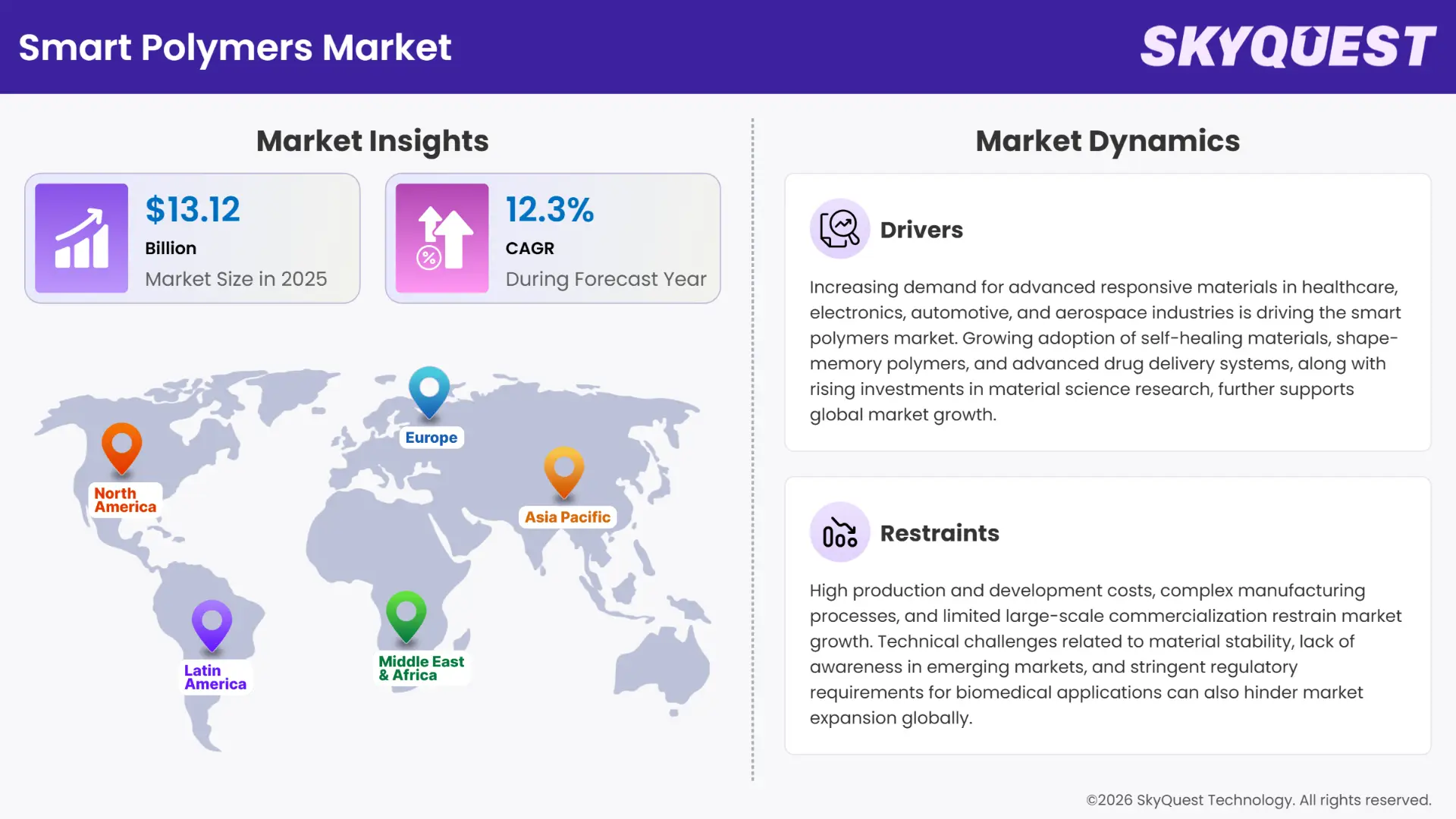
Global Smart Polymers Market size was valued at USD 11.68 Billion in 2024 and is poised to grow from USD 13.12 Billion in 2025 to USD 33.18 Billion by 2033, growing at a CAGR of 12.3% during the forecast period (2026–2033).
Key Takeaways: Market Trends & Insights
The global smart polymers market is experiencing significant growth, driven by increasing demand across industries such as healthcare, automotive, electronics, and textiles. These advanced materials respond to external stimuli like temperature, pH, and light, making them highly valuable for applications in drug delivery, self-healing materials, and adaptive coatings. The healthcare sector remains a major driver, with innovations in biocompatible polymers for targeted drug release and tissue engineering.
North America leads the market due to strong R&D investments, a robust industrial base, and the presence of major players like Dow, Lubrizol, and DuPont. Europe follows closely, driven by strict environmental regulations and a growing emphasis on sustainable and biodegradable polymers. Meanwhile, Asia Pacific is the fastest-growing region, with countries like China, Japan, and India rapidly advancing in smart polymer manufacturing and applications. Rising government initiatives, increasing investments in nanotechnology, and expanding industrial automation are further propelling global smart polymers market growth.
Additionally, strategic collaborations and mergers among key industry players are fueling innovation and expanding product portfolios. As industries continue to adopt smart materials for energy-efficient and eco-friendly solutions, the global smart polymers market is poised for strong growth in the coming years.
Can Artificial Intelligence Revolutionize Efficiency in the Smart Polymers Market?
Artificial intelligence (AI) is significantly enhancing efficiency in the smart polymers market by accelerating the discovery and design of innovative materials. In 2024, the smart polymers market witnessed significant mergers and collaborations that enhanced efficiency and innovation within the industry. A notable example is the strategic merger between Evonik's Silica and Silanes business lines, resulting in the formation of "Smart Effects" on January 1, 2025. This consolidation aims to deliver innovative solutions across various sectors, including automotive, electronics, and building protection, by leveraging combined expertise in molecular silane chemistry and silica particle design. The merger is expected to streamline operations and strengthen sustainability initiatives in key markets.
How Are New Market Entrants Revolutionizing Smart Polymers Market?
The smart polymers market is evolving rapidly, driven by advancements in material science and increasing demand for sustainable and adaptive solutions. Smart polymers are engineered to respond to environmental stimuli such as temperature, pH, and light, making them valuable in industries like healthcare, packaging, and automotive. With a growing focus on sustainability, new market entrants are introducing innovative polymer technologies that enhance efficiency, durability, and recyclability. Startups are playing a key role in reshaping this industry by developing cutting-edge materials that cater to the demand for high-performance and eco-friendly solutions.
To get more insights on this market click here to Request a Free Sample Report
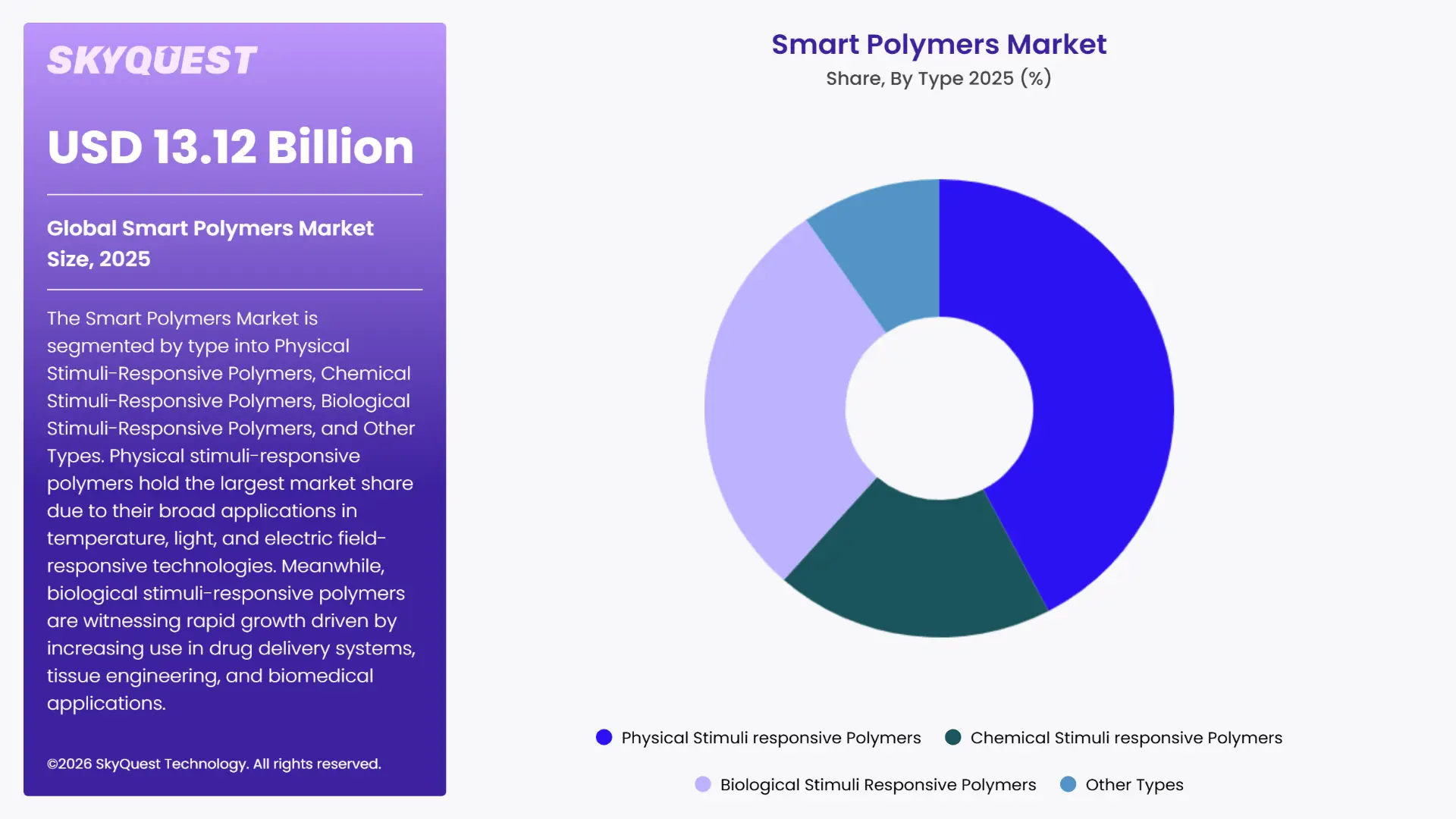
Global smart polymers market is segmented by Type, End-Use Industry and region. Based on Type, the market is segmented into Physical Stimuli responsive Polymers, Chemical Stimuli responsive Polymers, Biological Stimuli Responsive Polymers, Other Types. Based on End-Use Industry, the market is segmented into Biomedical & Biotechnology, Textile, Electrical & Electronics, Automotive and Others. Based on region, the market is segmented into North America, Europe, Asia Pacific, Latin America and Middle East & Africa.
As per global smart polymers market analysis, in 2024, the physical segment emerged as the dominant category in the market. These polymers respond to changes in temperature, light, and pressure, making them highly desirable for applications in biomedical, drug delivery, and wearable technologies. Their ability to adapt quickly and reversibly to environmental changes has led to increased adoption in healthcare, textiles, and robotics. Additionally, lower production costs and simpler processing techniques make physical smart polymers more commercially viable.
On the other hand, the chemical segment is growing at the fastest rate due to advancements in pH-sensitive, enzyme-responsive, and redox-sensitive materials. These polymers are gaining traction in targeted drug delivery, self-healing coatings, and bioengineering applications. The rising focus on precision medicine and controlled drug release systems is fueling demand for chemical smart polymers, positioning them as the next frontier in high-performance, adaptive materials.
In 2024, the biotechnology & medicine segment emerged as the dominant in the smart polymers market. The increasing demand for advanced drug delivery systems, self-healing biomaterials, and tissue engineering solutions has driven the widespread adoption of smart polymers in this sector. These materials offer precise, stimuli-responsive properties that enable controlled drug release, targeted therapy, and improved biocompatibility, making them highly valuable for medical innovations.
As per the global smart polymers market outlook, the textile segment is experiencing the fastest growth, driven by the rising demand for smart fabrics with adaptive properties. Innovations in temperature-regulating, moisture-wicking, and shape-memory textiles are gaining traction in the fashion, sportswear, and military industries. As wearable technology advances, smart polymers are increasingly integrated into clothing, enhancing comfort, performance, and durability, thus propelling rapid market expansion in this sector.
To get detailed segments analysis, Request a Free Sample Report
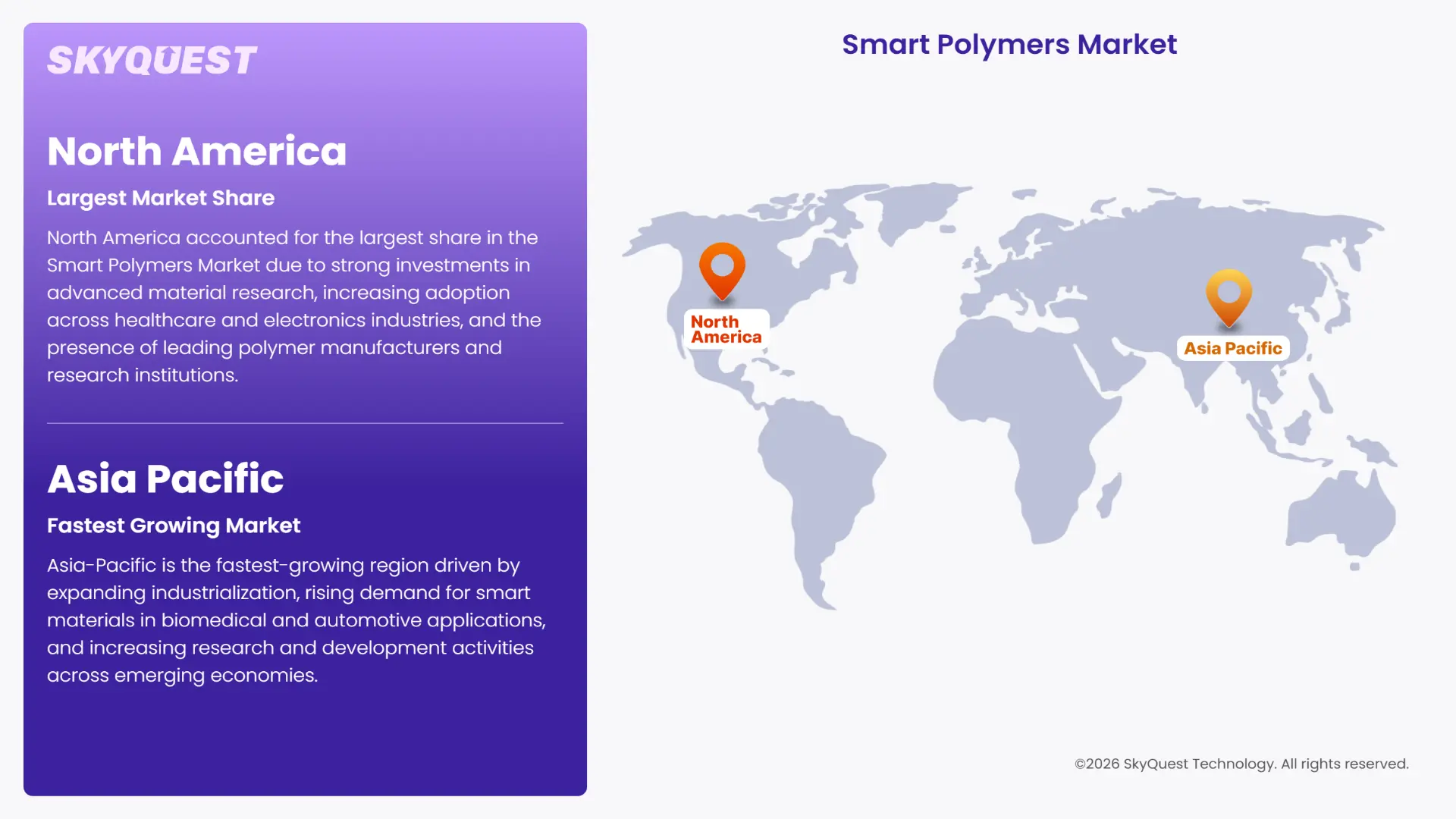
North America dominated the smart polymers market share due to its advanced research and development (R&D) capabilities, strong industrial base, and growing demand for smart materials in healthcare, automotive, and electronics. The region benefits from the presence of major industry players such as Dow, Lubrizol, and DuPont, which are actively investing in innovative polymer technologies. Additionally, collaborations between research institutions and private companies drive advancements in stimuli-responsive materials, self-healing polymers, and shape-memory materials.
Government funding and regulatory support also play a crucial role in market growth. The U.S. National Science Foundation (NSF) and Department of Energy (DOE) provide grants for polymer research, particularly in sustainable and bio-based smart materials.
The region accounts for a significant share of the North America market, with the United States leading in innovation and application. The U.S. has witnessed major investments in stimuli-responsive polymers, particularly for biomedical applications such as drug delivery, tissue engineering, and self-healing materials. Companies like Dow and Lubrizol are at the forefront, driving advancements in polymer-based medical technologies. Additionally, regulatory support and funding for sustainable and high-performance materials contribute to the market’s robust growth in the region.
Canada is emerging as the fastest-growing market in North America due to its increasing focus on sustainable and eco-friendly smart polymer applications. The country is making significant strides in green chemistry and biodegradable polymers, with research institutions and startups actively innovating in this space. Investments in smart coatings and shape-memory polymers for aerospace and automotive applications are on the rise. Recent developments include collaborations between Canadian universities and industry leaders to develop temperature-sensitive polymers for energy-efficient coatings, reducing carbon footprints in industrial sectors.
Asia Pacific is witnessing rapid expansion in the smart polymers market share, driven by industrialization, growing demand for high-performance materials, and increased R&D investments. The region is home to key manufacturing hubs, particularly in China and Japan, where smart polymer applications are flourishing in electronics, automotive, and healthcare. Asia Pacific’s market share continues to rise as multinational companies establish production facilities to cater to the increasing demand for advanced polymer materials.
China holds the largest smart polymers market share in Asia Pacific due to its strong manufacturing sector and heavy investments in advanced materials research. The country is a global leader in producing shape-memory polymers and conductive polymers, which are widely used in flexible electronics, smart textiles, and biomedical applications. Chinese companies, in collaboration with research institutions, are developing self-healing polymers and thermo-responsive materials to enhance durability and efficiency across various industries. In recent years, government initiatives promoting sustainable materials have further fueled market expansion.
India is experiencing the fastest growth in the smart polymers market, driven by increasing demand for advanced materials in healthcare, packaging, and automotive sectors. The country is investing heavily in polymer research, with initiatives to develop biodegradable and eco-friendly smart polymers gaining traction. Recent innovations include temperature-sensitive hydrogels for agricultural applications, which optimize water retention and release in response to environmental conditions. The government’s push for smart infrastructure and sustainable solutions further accelerates market growth.
Europe remains a key player in the smart polymers market trends due to its strong regulatory framework, focus on sustainability, and advanced research landscape. The region leads in high-performance polymer development, particularly for medical, aerospace, and energy applications. Countries such as Germany and France are at the forefront of innovation, investing in stimuli-responsive and biodegradable polymers to reduce environmental impact.
Germany dominates the Europe smart polymers market growth, backed by its robust industrial base and cutting-edge research in high-performance materials. The country is home to major chemical companies like BASF and Evonik, which are pioneering smart polymer applications in drug delivery, coatings, and flexible electronics. Germany’s emphasis on sustainable manufacturing and smart materials in the automotive industry has driven significant advancements, with companies developing self-healing coatings and light-responsive polymers for energy-efficient applications.
France is emerging as the fastest-growing market in Europe due to its increasing investments in biotechnology and sustainable polymers. The country is leading the development of bio-based smart polymers for medical and environmental applications, including biodegradable shape-memory materials for surgical implants. French research institutes and startups are working on innovations such as pH-responsive polymers for targeted drug delivery and smart coatings for aerospace applications, positioning the country as a rising force in the smart polymers industry.
To know more about the market opportunities by region and country, click here to
Buy The Complete Report
Increasing Demand for Biomedical Applications
Growing Emphasis on Sustainable and Recyclable Materials
High Production Costs and Complex Manufacturing
Limited Commercialization Due to Technical Barriers
Request Free Customization of this report to help us to meet your business objectives.
The global smart polymers industry is highly competitive, with key players focusing on innovation, sustainability, and strategic collaborations to strengthen their market presence. Companies such as Dow, BASF, Evonik, and Lubrizol are investing heavily in R&D to develop advanced smart polymers with enhanced responsiveness to stimuli such as temperature, pH, and light. Sustainability is a significant driver, prompting firms to introduce bio-based and recyclable smart polymers to align with global environmental regulations.
A prime example of strategic expansion is Evonik's launch of the 'Smart Effects' business line in 2024, which merged its Silica and Silanes divisions to enhance innovation in smart material applications. This move aims to cater to high-growth industries such as automotive and electronics by providing smart coatings and adaptive materials.
Integration of Artificial Intelligence in Smart Polymer Development
Expansion of Smart Polymers in 3D Printing Technologies
SkyQuest’s ABIRAW (Advanced Business Intelligence, Research & Analysis Wing) is our Business Information Services team that Collects, Collates, Correlates, and Analyses the Data collected by means of Primary Exploratory Research backed by robust Secondary Desk research.
As per SkyQuest analysis, the rise in technology and growing innovation in the textile industry is propelling the demand for smart polymers. These polymers deliver novel properties or functions to end-use products such as technical textiles, functional textiles, and electronic textiles, such as thermal response and sensitivity against light, moisture, and pH values. The utilization of smart polymers has increased over the past years owing to the high demand from end-use industries. Still, increasing concerns about the use of polymer-based products are expected to hamper global smart polymers market growth. The market growth in Asia Pacific is attributed to the rise of economies in the region. Countries in the region, such as India and China, are the fastest growing economies.
| Report Metric | Details |
|---|---|
| Market size value in 2024 | USD 11.68 Billion |
| Market size value in 2033 | USD 33.18 Billion |
| Growth Rate | 12.3% |
| Base year | 2024 |
| Forecast period | 2026–2033 |
| Forecast Unit (Value) | USD Billion |
| Segments covered |
|
| Regions covered | North America (US, Canada), Europe (Germany, France, United Kingdom, Italy, Spain, Rest of Europe), Asia Pacific (China, India, Japan, Rest of Asia-Pacific), Latin America (Brazil, Rest of Latin America), Middle East & Africa (South Africa, GCC Countries, Rest of MEA) |
| Companies covered | |
| Customization scope | Free report customization with purchase. Customization includes:-
|
To get a free trial access to our platform which is a one stop solution for all your data requirements for quicker decision making. This platform allows you to compare markets, competitors who are prominent in the market, and mega trends that are influencing the dynamics in the market. Also, get access to detailed SkyQuest exclusive matrix.
Table Of Content
Executive Summary
Market overview
Parent Market Analysis
Market overview
Market size
KEY MARKET INSIGHTS
COVID IMPACT
MARKET DYNAMICS & OUTLOOK
Market Size by Region
KEY COMPANY PROFILES
Methodology
For the Smart Polymers Market, our research methodology involved a mixture of primary and secondary data sources. Key steps involved in the research process are listed below:
1. Information Procurement: This stage involved the procurement of Market data or related information via primary and secondary sources. The various secondary sources used included various company websites, annual reports, trade databases, and paid databases such as Hoover's, Bloomberg Business, Factiva, and Avention. Our team did 45 primary interactions Globally which included several stakeholders such as manufacturers, customers, key opinion leaders, etc. Overall, information procurement was one of the most extensive stages in our research process.
2. Information Analysis: This step involved triangulation of data through bottom-up and top-down approaches to estimate and validate the total size and future estimate of the Smart Polymers Market.
3. Report Formulation: The final step entailed the placement of data points in appropriate Market spaces in an attempt to deduce viable conclusions.
4. Validation & Publishing: Validation is the most important step in the process. Validation & re-validation via an intricately designed process helped us finalize data points to be used for final calculations. The final Market estimates and forecasts were then aligned and sent to our panel of industry experts for validation of data. Once the validation was done the report was sent to our Quality Assurance team to ensure adherence to style guides, consistency & design.
Analyst Support
Customization Options
With the given market data, our dedicated team of analysts can offer you the following customization options are available for the Smart Polymers Market:
Product Analysis: Product matrix, which offers a detailed comparison of the product portfolio of companies.
Regional Analysis: Further analysis of the Smart Polymers Market for additional countries.
Competitive Analysis: Detailed analysis and profiling of additional Market players & comparative analysis of competitive products.
Go to Market Strategy: Find the high-growth channels to invest your marketing efforts and increase your customer base.
Innovation Mapping: Identify racial solutions and innovation, connected to deep ecosystems of innovators, start-ups, academics, and strategic partners.
Category Intelligence: Customized intelligence that is relevant to their supply Markets will enable them to make smarter sourcing decisions and improve their category management.
Public Company Transcript Analysis: To improve the investment performance by generating new alpha and making better-informed decisions.
Social Media Listening: To analyze the conversations and trends happening not just around your brand, but around your industry as a whole, and use those insights to make better Marketing decisions.
REQUEST FOR SAMPLE
 REQUEST FREE CUSTOMIZATION
Global Smart Polymers Market size was valued at USD 11.68 Billion in 2024 and is poised to grow from USD 13.12 Billion in 2025 to USD 33.18 Billion by 2033, growing at a CAGR of 12.3% during the forecast period (2026–2033).
Key vendors in the Smart Polymers Market include BASF SE, Covestro AG, Arkema S.A., Lubrizol Corporation, SMP Technologies Inc., Autonomic Materials Inc., Merck KGaA, Evonik Industries AG, Dow Inc., and DuPont de Nemours Inc.. These companies focus on advanced material innovation, responsive polymer technologies, biomedical applications, and sustainable smart material solutions globally.
The key driver of the Smart Polymers Market is the increasing demand for advanced responsive materials across healthcare, automotive, electronics, and biotechnology industries. Rising adoption of shape-memory materials, self-healing polymers, and stimuli-responsive technologies for medical devices, drug delivery systems, and smart packaging applications is significantly driving market growth globally.
The key market trend in the Smart Polymers Market is the growing adoption of stimuli-responsive and self-healing polymer technologies in healthcare and wearable electronics. Manufacturers are increasingly focusing on biodegradable smart polymers, advanced drug delivery systems, and sustainable high-performance materials to support innovation across biomedical, automotive, and consumer electronics applications globally.
North America accounted for the largest share in the Smart Polymers Market due to strong investments in advanced material research, growing demand from healthcare and electronics industries, and the presence of major technology and polymer manufacturers. Increasing adoption of smart materials in biomedical applications and expanding research activities further support regional market dominance.


Want to customize this report? This report can be personalized according to your needs. Our analysts and industry experts will work directly with you to understand your requirements and provide you with customized data in a short amount of time. We offer $1000 worth of FREE customization at the time of purchase.
Feedback From Our Clients


 USA (+1) 351-333-4748

