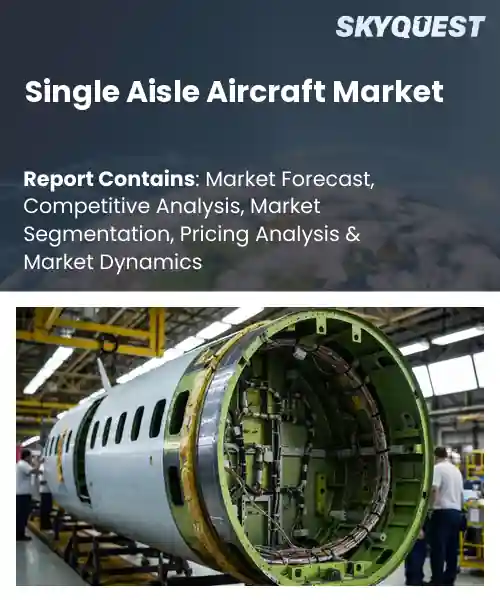
Single Aisle Aircraft Market
Report ID: SQMIG20A2719
Report ID: SQMIG20A2719
[email protected]
USA +1 351-333-4748
Report ID:
SQMIG20A2719 |
Region:
Global |
Published Date: July, 2026
Pages:
157
|Tables:
146
|Figures:
78


Global Single Aisle Aircraft Market size was valued at USD 111.53 Billion in 2024 and is poised to grow from USD 117.44 Billion in 2025 to USD 177.52 Billion by 2033, growing at a CAGR of 5.3% during the forecast period (2026-2033).
The global single aisle aircraft market growth is comprised of jets like the Airbus A320 family and Boeing 737 series, which are the workhorses for short-to-medium range routes for legacy carriers and low-cost airlines. The importance here is in the density of seats that these planes bring. Airlines can keep utilization up and keep their operating expenses under control. The primary driver is the emergence of low-cost carriers that need efficient, high-capacity aircraft to support aggressive fare structures. Regulatory liberalization, fuel-price volatility and passenger demand have shaped the industry’s trajectory since the early 1970s, with narrow-body designs and a fleet now in excess of 15,000 becoming the norm in the US and Europe since deregulation.
The single aisle aircraft market share is being pushed by the shift to more fuel-efficient engines, like the Pratt & Whitney PW1000G and CFM LEAP families, which reduce operating costs by 15 percent per seat-kilometer. Airlines that pick these engines will have a competitive advantage because lower fuel prices help them to maintain margins while increasing route networks, as demonstrated by Southwest's recent use of 737-MAX aircraft to U.S. cities. This cost advantage is amplified by the growth of online booking platforms that favor frequent, short‑haul services, creating opportunities for manufacturers to introduce upgraded variants like the A321neo XLR, opening up thin‑margin markets and further entrenching single‑aisle dominance.
How is AI-driven Predictive Maintenance Influencing Cost Efficiency in the Single-Aisle Aircraft Market?
AI-powered predictive maintenance is transforming the cost structures of single-aisle operators by converting unscheduled repairs into scheduled interventions. Sensors stream performance data continuously, and machine-learning models detect early signs of wear, so that technicians can replace parts before they break. It cuts down aircraft down time, reduces the inventory of spare parts and lowers labor costs as crews work on specific tasks and not on routine checks.
Airlines can operate more aircraft, boosting fleet utilization, and serving the robust appetite for single-aisle capacity that has persisted through recent years. The tech also feeds back into design cycles, letting manufacturers improve components for longer life and easier servicing, further boosting efficiency across the single aisle aircraft market trends.
Airbus, March 2025, unveiled its next-generation single-aisle jet incorporating AI-driven predictive maintenance, helping airlines reduce operating costs and sustain growth in the segment.
Market snapshot - (2026-2033)
Global Market Size
USD 111.53 Billion
Largest Segment
Short-Range (< 1,500 km)
Fastest Growth
Short-Range (< 1,500 km)
Growth Rate
5.3% CAGR
To get more insights on this market click here to Request a Free Sample Report
Global single aisle aircraft market is segmented by flight range, cabin configuration, propulsion, delivery, end user and region. Based on flight range, the market is segmented into short-range (< 1,500 km) and medium-range (1,500–4,000 km). Based on cabin configuration, the market is segmented into single-class, two-class and three-class. Based on propulsion, the market is segmented into conventional turbofan engines, next-gen efficient turbofans and hydrogen / hybrid-electric (future). Based on delivery, the market is segmented into new aircraft orders, aircraft leasing and used / pre-owned aircraft. Based on end user, the market is segmented into full-service network carriers (FSNCs), low-cost carriers (LCCs) and charter / regional airlines. Based on region, the market is segmented into North America, Europe, Asia Pacific, Latin America and Middle East & Africa.
What is the Role of Next Generation Efficient Turbofan Engines in Addressing Key Challenges in the Single Aisle Aircraft Market?
The next generation efficient turbofan engines segment is expected to be the largest segment in the market during the forecast period. Airlines are focusing on fuel efficiency and low emissions without compromising performance, which has led the OEMs to employ advanced aerodynamic designs and lightweight materials. This focus gives an edge to aircraft with these engines, as per the regulatory pressure and sustainability targets of companies. So, manufacturers that embed next generation turbofans are rewarded with larger order books, further cementing their market leadership in single aisle platforms worldwide across various carrier portfolios.
However, the fastest growing segment in the single aisle aircraft market is hydrogen or hybrid electric propulsion. Early demonstrators and supportive policy frameworks are driving interest and airlines are looking for radical emission cuts and brand differentiation. This new powerplant is opening up new routes and financing models and accelerating single aisle aircraft market forecast.
What Role Does Aircraft Leasing Play in Expanding Fleet Flexibility for Single Aisle Operators?
Aircraft leasing segment is dominant as it provides airlines with flexible capacity without large capital outlays allowing airlines to quickly adjust fleet to meet fluctuating demand. Leasing companies have an array of different airframes and offer tailored terms that reduce financial risk and improve balance sheet metrics. This accessibility results in growth-stage carriers and established operators alike expanding route networks, making leasing a pillar of single-aisle fleet strategies throughout the industry lifecycle and beyond.
Used or pre owned aircraft is seeing the strongest growth momentum in the single aisle aircraft market on the other side. Cost conscious airlines are increasingly looking to certified second hand fleets to acquire proven performance while preserving cash, and refurbishment programs are extending aircraft lifecycles. That adds depth to the market and opens up new opportunities for resale.
To get detailed segments analysis, Request a Free Sample Report
North America continues to dominate the single aisle aircraft space due to a mature airline network, deep engineering expertise and strong financing ecosystems. Manufacturers and carriers have longstanding relationships that continue to drive innovation in design and operational efficiency in the region. Safety and environmental stewardship are supported by a strong regulatory framework and a culture of strategic partnerships that enable the adoption of next-generation technologies. The presence of major aerospace hubs and an extensive supply chain in the region strengthens its competitive advantage, enabling it to attract high-value contracts and maintain a leading role in global market dynamics.
Single aisle aircraft market outlook in the United States thrives on a dense web of legacy carriers and low‑cost operators that prioritize flexibility and rapid turnaround. The country’s extensive domestic route network creates sustained demand for efficient, medium‑capacity aircraft. A vibrant financing environment and close collaboration with manufacturers support continuous fleet renewal, while strong regulatory oversight ensures operational reliability and safety. Innovation corridors and a skilled workforce reinforce the United States as a pivotal arena for technology integration and passenger experience enhancements.
Single aisle aircraft market regional forecast in Canada is shaped by a focus on connectivity across vast and remote regions, driving airlines to seek versatile aircraft capable of operating in diverse weather conditions. The nation’s commitment to sustainable aviation encourages the exploration of fuel‑efficient designs and alternative propulsion concepts. Collaborative relationships with North American manufacturers facilitate access to advanced technology, while a regulatory climate that emphasizes safety and environmental responsibility underpins market confidence. These factors collectively sustain a resilient demand for single aisle solutions within the Canadian air transport landscape.
The fast growth of Europe in the single aisle aircraft segment is driven by the integration of liberalized air travel policies, the rise in point-to-point connectivity and the increased focus on environmental performance. Airlines across the continent are turning to more efficient aircraft to meet strict emissions targets and to respond to changing passenger expectations for comfort and reliability. A strong presence of manufacturers on the continent drives the collaborative development of tailored solutions, and a dense network of airports supports frequent short-haul operations. Moreover, a culture of innovation among carriers encourages the use of digital tools that enhance route optimization and operational resilience, further cementing Europe’s position as a vibrant center for single aisle growth.
Single aisle aircraft market analysis in Germany benefits from a robust industrial base and a tradition of engineering excellence that drives demand for high‑performance aircraft. Major carriers and a growing segment of low‑cost airlines prioritize fleet modernization to align with efficiency targets and environmental standards. Close proximity to leading manufacturers facilitates rapid integration of technological advancements, while a comprehensive regulatory environment ensures rigorous safety and sustainability practices. These dynamics collectively sustain Germany’s dominant role within the European single aisle landscape.
Single aisle aircraft market penetration in the United Kingdom experiences accelerated growth as airlines adapt to a competitive landscape that favors flexible capacity and cost‑effective operations. The market is energized by a strong emphasis on reducing carbon footprints, prompting carriers to seek aircraft with lower fuel consumption and newer engine technologies. Collaborative initiatives between airlines and manufacturers accelerate the adoption of cutting‑edge designs, while a supportive regulatory framework encourages innovation in noise and emission reduction. This confluence of factors positions the United Kingdom as a leading driver of expansion in the region.
Single aisle aircraft sector in France is emerging as a vibrant segment fueled by a mix of legacy carriers and agile low‑cost operators seeking to enhance network reach. The French market places a premium on environmental stewardship, encouraging airlines to prioritize aircraft that deliver superior fuel efficiency and reduced emissions. Strong ties with European manufacturers enable swift access to the latest technological developments, while a regulatory climate that balances safety and sustainability supports continuous market evolution. These elements collectively nurture the emerging status of France within the broader European context.
Rapid urbanization, growing middle‑class travel demand and strategic focus on fleet diversification are strengthening the dominance of the Asia Pacific region in the single aisle aircraft space. Airlines are increasingly exploiting the operational flexibility of single aisle platforms to serve growing regional destinations and high density domestic routes . Working with manufacturers to customize aircraft for local market characteristics, including range and climate adaptability, is another focus. A progressive regulatory approach that fosters innovation and growing investments in aviation infrastructure are also helping the region’s ability to accommodate larger fleets and more frequent services, strengthening its position as an emerging leader in the global market.
Single aisle aircraft industry outlook in Japan is characterized by a focus on reliability and technological sophistication to meet the demands of densely populated corridors. Domestic carriers prioritize aircraft that deliver consistent performance in a range of operational conditions, emphasizing fuel efficiency and low noise footprints. Strong partnerships with manufacturers facilitate the integration of advanced avionics and safety systems, while a rigorous regulatory regime reinforces high standards of operational excellence. These attributes sustain Japan’s pivotal role in the regional single aisle ecosystem.
Single aisle aircraft industry trends in South Korea is shaped by a dynamic airline environment that values agility and cost efficiency for both domestic and short‑haul international routes. Carriers are keen on adopting aircraft that balance capacity with fuel savings, aligning with national goals for environmental responsibility. Collaboration with aerospace firms drives the customization of aircraft to suit local operational requirements, including enhanced performance in diverse weather patterns. Supportive government policies and ongoing investment in airport capacity further empower South Korea’s growing participation in the single aisle sector.
To know more about the market opportunities by region and country, click here to
Buy The Complete Report
Rising Passenger Demand Across Regions
Advancements In Fuel Efficient Technologies
Stringent Emission Regulation Policies
High Manufacturing Cost Pressures
Request Free Customization of this report to help us to meet your business objectives.
The competitive landscape is shaped by major OEMs accelerating technology development and targeting fast‑growing emerging markets; Airbus is advancing key technologies for a next‑generation single‑aisle aircraft slated for the late 2030s, while Boeing’s commercial outlook emphasizes market expansion driven by a rising middle class and strategic partnerships with regional carriers to capture demand.
Top Player’s Company Profile
Recent Developments in the Single Aisle Aircraft Market
SkyQuest’s ABIRAW (Advanced Business Intelligence, Research & Analysis Wing) is our Business Information Services team that Collects, Collates, Correlates, and Analyses the Data collected by means of Primary Exploratory Research backed by robust Secondary Desk research. As per SkyQuest analysis the single-aisle market is driven by increasing passenger demand, which forces carriers to increase capacity with fuel-efficient jets. The second driver is the flexibility of aircraft leasing, which allows airlines to adjust their fleet size to market fluctuations without substantial capital expenditure, according to SkyQuest analysis. The main limitation is due to stringent emission regulation policies which increase the cost of development and prevent the adoption of new models. North America continues to be the dominant region, supported by mature networks and strong financing ecosystems. The propulsion segment has the largest market share, especially next-generation efficient turbofan engines as airlines focus on lower fuel burn and emissions.
| Report Metric | Details |
|---|---|
| Market size value in 2024 | USD 111.53 Billion |
| Market size value in 2033 | USD 177.52 Billion |
| Growth Rate | 5.3% |
| Base year | 2024 |
| Forecast period | (2026-2033) |
| Forecast Unit (Value) | USD Billion |
| Segments covered |
|
| Regions covered | North America (US, Canada), Europe (Germany, France, United Kingdom, Italy, Spain, Rest of Europe), Asia Pacific (China, India, Japan, Rest of Asia-Pacific), Latin America (Brazil, Rest of Latin America), Middle East & Africa (South Africa, GCC Countries, Rest of MEA) |
| Companies covered |
|
| Customization scope | Free report customization with purchase. Customization includes:-
|
To get a free trial access to our platform which is a one stop solution for all your data requirements for quicker decision making. This platform allows you to compare markets, competitors who are prominent in the market, and mega trends that are influencing the dynamics in the market. Also, get access to detailed SkyQuest exclusive matrix.
Table Of Content
Executive Summary
Market overview
Parent Market Analysis
Market overview
Market size
KEY MARKET INSIGHTS
COVID IMPACT
MARKET DYNAMICS & OUTLOOK
Market Size by Region
KEY COMPANY PROFILES
Methodology
For the Single Aisle Aircraft Market, our research methodology involved a mixture of primary and secondary data sources. Key steps involved in the research process are listed below:
1. Information Procurement: This stage involved the procurement of Market data or related information via primary and secondary sources. The various secondary sources used included various company websites, annual reports, trade databases, and paid databases such as Hoover's, Bloomberg Business, Factiva, and Avention. Our team did 45 primary interactions Globally which included several stakeholders such as manufacturers, customers, key opinion leaders, etc. Overall, information procurement was one of the most extensive stages in our research process.
2. Information Analysis: This step involved triangulation of data through bottom-up and top-down approaches to estimate and validate the total size and future estimate of the Single Aisle Aircraft Market.
3. Report Formulation: The final step entailed the placement of data points in appropriate Market spaces in an attempt to deduce viable conclusions.
4. Validation & Publishing: Validation is the most important step in the process. Validation & re-validation via an intricately designed process helped us finalize data points to be used for final calculations. The final Market estimates and forecasts were then aligned and sent to our panel of industry experts for validation of data. Once the validation was done the report was sent to our Quality Assurance team to ensure adherence to style guides, consistency & design.
Analyst Support
Customization Options
With the given market data, our dedicated team of analysts can offer you the following customization options are available for the Single Aisle Aircraft Market:
Product Analysis: Product matrix, which offers a detailed comparison of the product portfolio of companies.
Regional Analysis: Further analysis of the Single Aisle Aircraft Market for additional countries.
Competitive Analysis: Detailed analysis and profiling of additional Market players & comparative analysis of competitive products.
Go to Market Strategy: Find the high-growth channels to invest your marketing efforts and increase your customer base.
Innovation Mapping: Identify racial solutions and innovation, connected to deep ecosystems of innovators, start-ups, academics, and strategic partners.
Category Intelligence: Customized intelligence that is relevant to their supply Markets will enable them to make smarter sourcing decisions and improve their category management.
Public Company Transcript Analysis: To improve the investment performance by generating new alpha and making better-informed decisions.
Social Media Listening: To analyze the conversations and trends happening not just around your brand, but around your industry as a whole, and use those insights to make better Marketing decisions.
REQUEST FOR SAMPLE
 REQUEST FREE CUSTOMIZATION
Global Single Aisle Aircraft Market size was valued at USD 111.53 Billion in 2024 and is poised to grow from USD 117.44 Billion in 2025 to USD 177.52 Billion by 2033, growing at a CAGR of 5.3% during the forecast period (2026-2033).
The competitive landscape is shaped by major OEMs accelerating technology development and targeting fast‑growing emerging markets; Airbus is advancing key technologies for a next‑generation single‑aisle aircraft slated for the late 2030s, while Boeing’s commercial outlook emphasizes market expansion driven by a rising middle class and strategic partnerships with regional carriers to capture demand. 'Airbus SE', 'Boeing Company', 'COMAC', 'Embraer S.A. )', 'Mitsubishi Aircraft Corporation (SpaceJet)', 'Bombardier Aviation', 'Yakovlev', 'Tupolev (Russia)', 'Irkut Corporation', 'ATR Group (Airbus / Leonardo)', 'CFM International (LEAP engines)', 'Pratt & Whitney (PW1100G)', 'GE Aerospace (GE9X, CF34)', 'Honeywell Aerospace', 'Safran Aircraft Engines', 'TransDigm Group Inc.', 'Heico Corporation', 'Spirit AeroSystems Holdings Inc.', 'GKN Aerospace', 'Air Lease Corporation'
Rising passenger demand across regions drives airlines to expand their fleets with single‑aisle aircraft, as these planes offer optimal capacity for short‑to medium‑haul routes and enable higher flight frequencies. Airlines prioritize efficient turnaround times and lower operating costs, which align with the need to serve growing market segments. This demand encourages manufacturers to accelerate development cycles and introduce versatile cabin configurations, thereby reinforcing market growth through sustained order pipelines and enhanced product appeal. The resulting network expansion also supports ancillary revenue streams and strengthens airline competitiveness in increasingly crowded markets.
Digital Cockpit Integration: The adoption of fully digital cockpits is reshaping how airlines configure single‑aisle fleets. Manufacturers embed high‑resolution displays, touch interfaces, and augmented‑reality overlays, enabling pilots to access flight data, navigation, and system monitoring through a unified visual platform. This simplifies cabin architecture, reduces weight, and cuts maintenance cycles, while airlines benefit from enhanced situational awareness and streamlined training programs. As airlines prioritize operational efficiency and passenger experience, digital cockpits become a decisive factor in aircraft selection and long‑term fleet planning overall.
Why does North America Dominate the Global Single Aisle Aircraft Market? |@12


Want to customize this report? This report can be personalized according to your needs. Our analysts and industry experts will work directly with you to understand your requirements and provide you with customized data in a short amount of time. We offer $1000 worth of FREE customization at the time of purchase.
Feedback From Our Clients


 USA (+1) 351-333-4748

