
Rybrevant Market
Report ID: SQMIG35H2459
Report ID: SQMIG35H2459
[email protected]
USA +1 351-333-4748
Report ID:
SQMIG35H2459 |
Region:
Global |
Published Date: March, 2026
Pages:
157
|Tables:
168
|Figures:
70


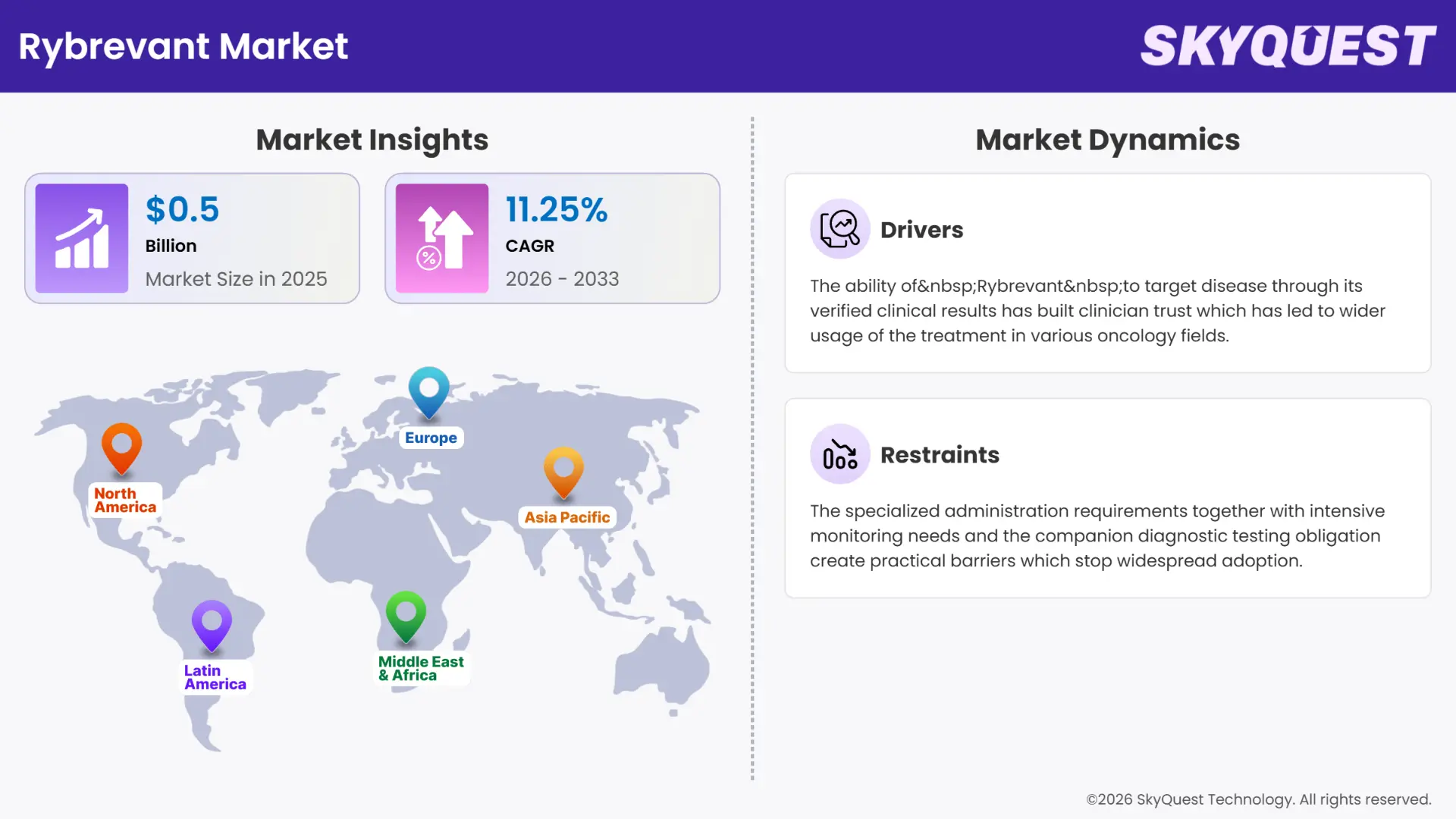
Global Rybrevant Market size was valued at USD 0.45 Billion in 2024 and is poised to grow from USD 0.5 Billion in 2025 to USD 1.17 Billion by 2033, growing at a CAGR of 11.25% during the forecast period (2026-2033).
Key Takeaways: Market Trends & Insights
The global Rybrevant market growth is driven because the drug serves as a specialized treatment for non-small cell lung cancer which is caused by EGFR exon 20 insertion mutations that do not respond to first- and second-generation EGFR inhibitors. The importance of Rybrevant as a bispecific antibody which activates both EGFR and MET, lies in its ability to give patients with limited treatment options a new treatment possibility, while its 2021 accelerated regulatory approval stemmed from positive response results among patients who had received prior platinum-based treatment.
Moreover, the global rybrevant market outlook transformed from treating patients with off-label chemotherapy to utilizing precision oncology because next-generation sequencing technology enabled the discovery of uncommon mutations which created new patient groups for treatment. The Rybrevant market will expand according to three diagnostic testing developments and two label expansions and three payer coverage decisions which arise from real-world data, because next-generation sequencing will enable doctors to identify more EGFR exon 20 patients, thereby expanding the market to reach new investment levels needed for distribution and sales. The positive combination trial results which involve EGFR TKIs or chemotherapy create new treatment opportunities because they lead doctors to use Rybrevant before it becomes necessary for refractory cases, thus establishing new business potential in developing countries which approve drugs after testing.
How will AI-enabled Diagnostics Influence Rybrevant Adoption in EGFR Exon 20 NSCLC?
The adoption of AI enabled diagnostics will improve Rybrevant usage because it enables better identification of patients with EGFR exon 20 insertions for needed therapy. The essential elements include advanced molecular testing capabilities and advanced result interpretation techniques which allow doctors to detect uncommon mutations that standard testing procedures fail to identify. The present situation demonstrates inconsistent testing methods together with prolonged diagnostic processes which restrict the application of targeted therapies. The combination of AI with liquid biopsy and NGS interpretation assists in both accelerating treatment initiation and identifying more patients who can be recognized as eligible for treatment. AI now detects rare EGFR patterns through its flagging system, while automated reporting provides clinicians with decision-making assistance in real-world applications. In January 2026, ORIC Pharmaceuticals revealed its partnership with Johnson and Johnson for clinical trials which will test enozertinib together with amivantamab. The development links targeted drug combinations with improved molecular screening through AI enabled diagnostics, which enable faster identification of eligible patients for broader and more efficient Rybrevant usage.
To get more insights on this market click here to Request a Free Sample Report
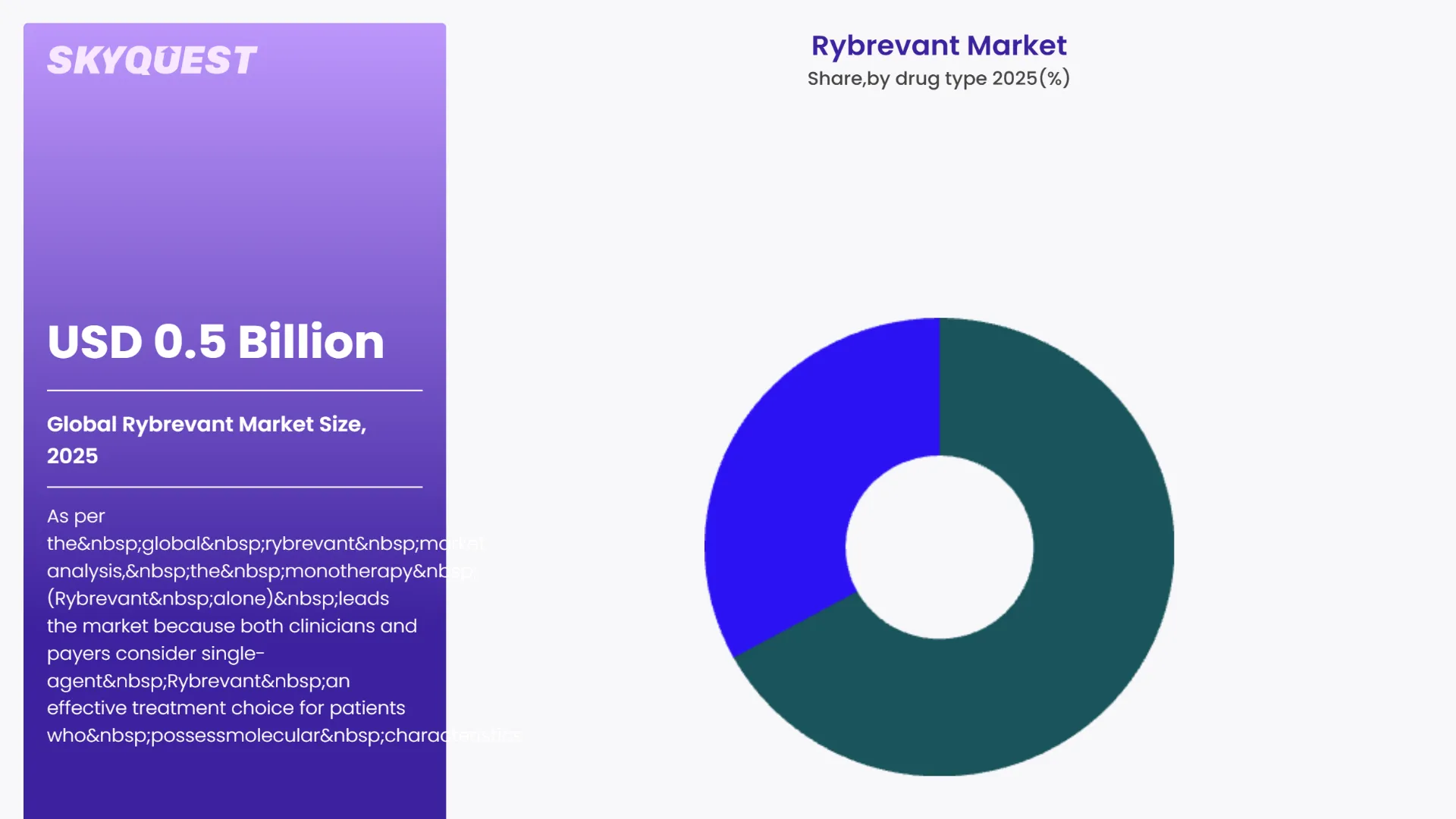
The global Rybrevant market is segmented based on drug type, line of treatment, route of administration, indication areas, end user, distribution channel, and region. By drug type, the market includes monotherapy (Rybrevant alone) and targeted therapies. In terms of line of treatment, it is categorized into first-line treatment and second-line or post-chemotherapy treatment. Based on route of administration, the market is divided into intravenous (IV infusion) and subcutaneous injection. By indication areas, the market covers lung cancer and other cancers. In terms of end users, it comprises hospitals, specialty cancer clinics, oncology centers, and research institutes. Based on distribution channel, the market includes hospital pharmacies, specialty pharmacies, and others. Geographically, the market spans North America, Europe, Asia Pacific, Latin America, and the Middle East and Africa.
As per the global rybrevant market analysis, the monotherapy (Rybrevant alone) leads the market because both clinicians and payers consider single-agent Rybrevant an effective treatment choice for patients who possessmolecular characteristics. The established clinical protocols of the system streamline treatment processes, which enable doctors to use the system in regular cancer care procedures. The combination of clear safety and efficacy information together with predictable supply and reimbursement processes and streamlined administration systems creates a strong appeal for doctors, which results in Rybrevant monotherapy being the preferred treatment option in medical institutions.
However, the combination of existing therapies, which include targeted treatment methods and companion diagnostic tests, enables rapid growth of targeted therapies, because those methods expand the therapeutic applications of Rybrevant. The increased number of clinical trials which test Rybrevant together with other targeted treatments results in enhanced commercial opportunities and clinical usefulness, which leads to the development of new treatment indications and creates extra routes for usage in niche oncology markets.
According to the global rybrevant market forecast, the intravenous (IV infusion) segment dominates because established IV delivery systems and doctor knowledge base establish IV treatment as the standard method for administering complex Rybrevant oncology biologics. The medical staff uses controlled infusion procedures together with infusion monitoring and infusion reaction management, so they can formulate effective treatment plans for Rybrevant that include multiple medications. The predictable pharmacokinetic management and clear administration protocols reduce clinical barriers, which leads to the market acceptance of Rybrevant and its broad usage among all oncology treatment centers.
Whereas the popularity of subcutaneous injection is growing at its fastest rate because patients now want administration methods that are easy to use and need treatment that does not require hospitalization. The development of new drug formulations which allow for shorter treatment schedules and home or clinic administration and require fewer medical resources has driven both clinical studies and commercial product launches. The route enables hospitals to treat more patients through decentralized treatment centers, which leads to increased access to Rybrevant.
To get detailed segments analysis, Request a Free Sample Report
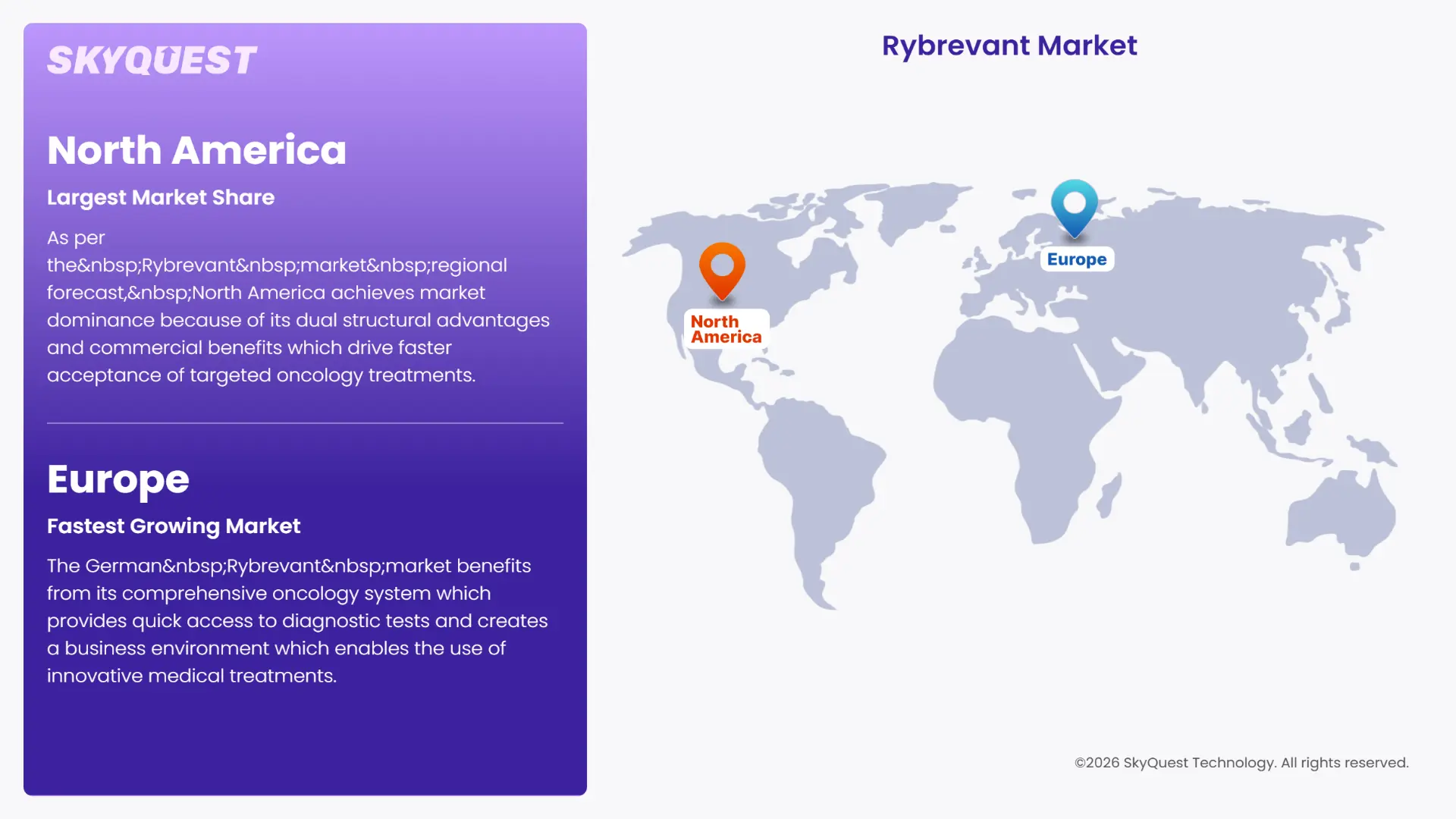
As per the Rybrevant market regional forecast, North America achieves market dominance because of its dual structural advantages and commercial benefits which drive faster acceptance of targeted oncology treatments. The current healthcare system supports quick patient diagnosis and treatment start through its advanced medical facilities and established diagnostic network and medical excellence centers which test for treatment eligibility. The advanced reimbursement systems together with clinical research networks and pharmaceutical funding create a pathway for market entry and scientific validation. The manufacturing system together with the distribution network provides dependable product delivery while the collaborative work between healthcare professionals and academic institutions and patient advocacy groups develops clinical knowledge of treatment methods.
The United States Rybrevant sector benefits from its combination of specialized oncology institutions and integrated health insurance systems together with its comprehensive framework for targeted treatment development. The strong involvement of doctors together with the established patient management system and dedicated patient support services enable faster adoption processes. Companies use their commercial techniques to create product recognition and customer access while providing specialized product delivery services. The collaborative efforts of healthcare organizations together with academic institutions and advocacy organizations streamline the process of introducing new treatment methods. The main treatment centers together with regional referral networks demonstrate high therapy use and advanced medical care delivery.
The Canadian Rybrevant industry develops through its unified provincial healthcare system which operates centralized cancer treatment facilities while providing equal treatment access for all patients. The assessment of specialized diagnostic services together with specialist networks establishes the treatment path for targeted therapies which payers evaluate during their decision-making process. The active participation of stakeholders establishes two main priorities which include delivering direct assistance to patients and educating doctors about treatment options. The process of adopting new technologiesdepends on three elements which include cross-border partnerships and research projects with academic institutions and strategic planning for managing vaccine distribution.
The Rybrevant market in Europe is expanding quickly because new healthcare policies and better precision oncology technologies and improved payer engagement enable patients to receive targeted treatments. The process of developing consistent identification methods across markets depends on two factors which include standardized regulatory frameworks and the ability to perform molecular diagnostic tests. The two main collaborative approaches to research between public and private organizations enable researchers to produce evidence which meets regional requirements. The commercial models which use multiple channels to sell products will establish distribution networks which will operate both hospital portals and specialty distribution systems across various medical treatment environments. The national reimbursement systems of each country together with their academic research frameworks determine how fast each country will adopt new therapies while doctor-patient relationships will determine how fast each country will incorporate new therapies into standard cancer treatment programs. The country-specific innovations for managed entry agreements together with their diagnostic pathways and their treatment facilities make it easier to penetrate the market and achieve ongoing integration of clinical services.
The German Rybrevant market benefits from its comprehensive oncology system which provides quick access to diagnostic tests and creates a business environment which enables the use of innovative medical treatments. The hospital-based adoption procedures together with reimbursement systems enable specialist centers to incorporate new treatments. The combined efforts of manufacturers and medical networks make patients aware of treatments while helping them choose suitable candidates for treatment. Academic hospitals create evidence-based medical studies through their collaboration with interdisciplinary tumor boards while regional medical centers create equal treatment access between different medical locations.
The United Kingdom Rybrevant market operates through NHS centralized commissioning which expands clinicians practice with targeted agents while technology assessments control access to treatment pathways. The healthcare system supports patient identification through its focus on precise diagnostic methods and collaborative medical treatment. The industry works to provide real-world evidence together with educational programs for clinicians. The medical centers of excellence and their referral networks create a continuous pathway for patients to receive treatment. The stakeholders who control these processes will enable innovations to replace existing medical treatment standards while establishing logicians to communicate their treatment standards.
The Rybrevant market in France depends on three main factors which include regulatory agencies taking initiative to develop new diagnostic facilities and hospital systems which help doctors use their medical knowledge. The national programs which improve patient access together with hospital systems which acquire medical products through joint purchasing systems create a platform for better system-wide acceptance. The close collaboration between industrial partners and medical professionals helps to build awareness of treatments and enables doctors to choose the right patients for suitable treatment. The generation of evidence from real-world databases and delivery of patient support services help healthcare providers to use medical products while local hospitals create access to treatment across the country.
Asia Pacific is establishing itself as a market leader in Rybrevant through its improvements in diagnostic facilities and increased clinical research activities and its partnerships which connect worldwide innovation with local treatment methods. Precision medicine projects receive more governmental and health system backing as tertiary centers develop their capacity to find suitable patients. The combination of enhanced regulatory pathways and payer connections together with biopharma companies and academic institutions who actively participate in treatment evidence development and market access activities leads to improved evidence development and market access capabilities. Supply chain resilience investments together with customized commercial strategies enables businesses to meet the unique requirements of different regions. The region's healthcare system uses cross border partnerships and localized patient support systems to raise clinician understanding about targeted therapies and to maintain their long-terminclusion into standard oncology treatment methods.
The Japan's Rybrevant market gains advantages from its developed clinical research framework and its extensive hospital-based oncology networks and its advanced diagnostic systems which enable precise cancer treatment. The pathways for regulatory approval together with payer participation enable targeted therapies to become integrated into healthcare practices. The companies which create domestic products together with academic institutions and international organizations develop evidence through their partnerships which help doctors become acquainted with the new medical evidence. Patient support programs and specialized treatment centers enable continuous patient identification through their services which operate in different clinical environments.
The South Korean Rybrevant market shows rapid diagnostic technology implementation and has multiple dedicated oncology centers which participate in global clinical research partnerships. The hospital network operates together with its referral services to provide targeted therapy identification for patients through their efficient patient identification system. The joint work between product manufacturers and medical professionals and public health organizations enables the creation of access programs together with the development of medical research evidence. The combination of precision medicine practices and ongoing payer conversations together with patient assistance systems drives clinical integration growth across all medical facilities.
To know more about the market opportunities by region and country, click here to
Buy The Complete Report
Rising Targeted Therapy Adoption
The ability of Rybrevant to target disease through its verified clinical results has built clinician trust which has led to wider usage of the treatment in various oncology fields. The introduction of Rybrevant as a treatment for previously unserved patient groups will lead to increased testing and referral patterns which result in better treatment adherence. The manufacturer programs for physician education together with diagnostic pathway integration and infusion logistics backing helps to drive treatment adoption. The treatment method establishes predictable pathways which lead to medical guideline development and healthcare stakeholders to select the therapy as a priority treatment option. The support for clinical practice from product alignment with clinical practice will sustain demand for products.
Expanded Regulatory Approvals Globally
The extended regulatory approvals together with improved product labels across multiple regions have enabled medical facilities to adopt products and payers to recognize them, which results in wider product availability. The specific regulatory endorsements create a clear path for health systems and clinicians to develop treatment guidelines which treatment pathways should follow. The patient selection process and access program definition by manufacturers together with regulatory and payer partners will create pathways for product uptake. The regulatory progress will boost supply chain investment and commercial operations, which will lead to market growth through improved patient access and institutional trust. The overall regulatory environment creates a secure atmosphere which increases stakeholder confidence levels.
High Treatment Complexity and costs
The specialized administration requirements together with intensive monitoring needs and the companion diagnostic testing obligation create practical barriers which stop widespread adoption. The need for training and infrastructure development and treatment coordination systems will boost implementation costs which health systems and clinics need to deliver treatment in a safe manner. The high operational complexity of their work leads payers and providers to avoid investing resources in those areas, which causes them to restrict their operations to specialized centers. The operational challenges of running medical facilities together with the need for resources will prevent the market from expanding despite high demand for medical services. The process of expanding to new care environments has reached its limits.
Limited Patient Awareness and access
The lack of awareness about specific patient populations among both patients and generalist physicians together with the limited diagnostic screening processes in many locations results in fewer candidates being found for therapy. The geographic distribution of healthcare services together with the referral network bottlenecks create obstacles which prevent patients from receiving timely treatment and the complex treatment procedures create problems which lead some doctors to delay their specialty consultations. The combination of these factors results in many eligible patients remaining untreated, which restricts actual utilization for those who are diagnosed. This limits potential uptake.
Request Free Customization of this report to help us to meet your business objectives.
The global Rybrevant market faces competitive challenges which drive companies to acquire new technologies through strategic alliances and platform development. BioNTech acquired bispecific assets while Janssen established collaboration agreements and Ottimo Pharma secured substantial funding to develop their PD1 VEGFR2 bifunctional treatment and Flagship started Ampersand to create a partnership with Pfizer.
Targeted Therapy Adoption Accelerates: The increasing focus on precision oncology and biomarker-based treatment methods drives doctors to start using Rybrevant for patients who need antibody-based treatments. Doctors' familiar with the therapy and medical facilities understanding real-world patient experience both enable doctors to do correct prescribing for patients who need the therapy. The payer dialogue which occurs between payers and the process of including pathways into treatment guidelines both help create a smoother process for establishing eligibility to use medicines and determine which treatments should be started first. The trend establishes Rybrevant as a standard treatment for lung cancer which develops with specific mutations by making it acceptable throughout various oncology treatment centers and their teams.
Collaborative Research Partnerships: The development of Rybrevant depends on strategic alliances between biopharmaceutical companies and academic institutions and specialty oncology centers which enable partners to share their knowledge about antibody development and clinical study design and patient safety assessment. Evidence generation will proceed faster through partnership-based methods which will also help develop customized patient support solutions and create various methods for regional partners to focus on commercial distribution. Co-development and distribution agreements help organizations build stronger supply chains while they conduct business in multiple regions and handle different regulatory requirements. The collaborative structures between organizations lead to better resource distribution for clinical activities, while they establish diverse pathways for commercial distribution which can adjust to changes in treatment patterns.
SkyQuest’s ABIRAW (Advanced Business Intelligence, Research & Analysis Wing) is our Business Information Services team that Collects, Collates, Correlates, and Analyses the Data collected by means ofPrimary Exploratory Research backed by robust Secondary Desk research.
As per SkyQuest analysis, the primary driver for treatment adoption occurs because Rybrevant delivers a targeted bispecific approach which effectively treats EGFR exon 20 insertion mutations that have previously lacked treatment solutions. The expanding base of diagnostic testing together with a successful combination of study outcomes develops a broader patient group who can qualify for treatment at earlier stages. The high treatment costs and complicated systems that require both infusion systems and companion diagnostic tests create barriers which stop most patients from receiving treatment. North America dominates the healthcare market because it has advanced diagnostic tools and reimbursement systems and numerous oncology treatment centers. The Monotherapy segment dominates the market because it provides doctors with easy-to-follow treatment methods and superior safety information and better eligibility for product distribution and active commercial backing.
| Report Metric | Details |
|---|---|
| Market size value in 2024 | USD 0.45 Billion |
| Market size value in 2033 | USD 1.17 Billion |
| Growth Rate | 11.25% |
| Base year | 2024 |
| Forecast period | 2026-2033 |
| Forecast Unit (Value) | USD Billion |
| Segments covered |
|
| Regions covered | North America (US, Canada), Europe (Germany, France, United Kingdom, Italy, Spain, Rest of Europe), Asia Pacific (China, India, Japan, Rest of Asia-Pacific), Latin America (Brazil, Rest of Latin America), Middle East & Africa (South Africa, GCC Countries, Rest of MEA) |
| Companies covered |
|
| Customization scope | Free report customization with purchase. Customization includes:-
|
To get a free trial access to our platform which is a one stop solution for all your data requirements for quicker decision making. This platform allows you to compare markets, competitors who are prominent in the market, and mega trends that are influencing the dynamics in the market. Also, get access to detailed SkyQuest exclusive matrix.
Table Of Content
Executive Summary
Market overview
Parent Market Analysis
Market overview
Market size
KEY MARKET INSIGHTS
COVID IMPACT
MARKET DYNAMICS & OUTLOOK
Market Size by Region
KEY COMPANY PROFILES
Methodology
For the Rybrevant Market, our research methodology involved a mixture of primary and secondary data sources. Key steps involved in the research process are listed below:
1. Information Procurement: This stage involved the procurement of Market data or related information via primary and secondary sources. The various secondary sources used included various company websites, annual reports, trade databases, and paid databases such as Hoover's, Bloomberg Business, Factiva, and Avention. Our team did 45 primary interactions Globally which included several stakeholders such as manufacturers, customers, key opinion leaders, etc. Overall, information procurement was one of the most extensive stages in our research process.
2. Information Analysis: This step involved triangulation of data through bottom-up and top-down approaches to estimate and validate the total size and future estimate of the Rybrevant Market.
3. Report Formulation: The final step entailed the placement of data points in appropriate Market spaces in an attempt to deduce viable conclusions.
4. Validation & Publishing: Validation is the most important step in the process. Validation & re-validation via an intricately designed process helped us finalize data points to be used for final calculations. The final Market estimates and forecasts were then aligned and sent to our panel of industry experts for validation of data. Once the validation was done the report was sent to our Quality Assurance team to ensure adherence to style guides, consistency & design.
Analyst Support
Customization Options
With the given market data, our dedicated team of analysts can offer you the following customization options are available for the Rybrevant Market:
Product Analysis: Product matrix, which offers a detailed comparison of the product portfolio of companies.
Regional Analysis: Further analysis of the Rybrevant Market for additional countries.
Competitive Analysis: Detailed analysis and profiling of additional Market players & comparative analysis of competitive products.
Go to Market Strategy: Find the high-growth channels to invest your marketing efforts and increase your customer base.
Innovation Mapping: Identify racial solutions and innovation, connected to deep ecosystems of innovators, start-ups, academics, and strategic partners.
Category Intelligence: Customized intelligence that is relevant to their supply Markets will enable them to make smarter sourcing decisions and improve their category management.
Public Company Transcript Analysis: To improve the investment performance by generating new alpha and making better-informed decisions.
Social Media Listening: To analyze the conversations and trends happening not just around your brand, but around your industry as a whole, and use those insights to make better Marketing decisions.
REQUEST FOR SAMPLE
 REQUEST FREE CUSTOMIZATION
Global Rybrevant Market size was valued at USD 0.45 Billion in 2024 and is poised to grow from USD 0.5 Billion in 2025 to USD 1.17 Billion by 2033, growing at a CAGR of 11.25% during the forecast period (2026-2033).
Competitive pressures in the global Rybrevant market center on next generation bispecific and bifunctional antibodies that target EGFR and the tumor microenvironment, driving firms to pursue acquisitions, strategic collaborations, and platform innovation. Real examples include BioNTech’s acquisition activity around bispecific assets, Janssen’s collaboration deals, Ottimo Pharma’s large early financing to advance a PD1 VEGFR2 bifunctional, and Flagship founded Ampersand partnering with Pfizer. 'Johnson & Johnson', 'F. Hoffmann-La Roche', 'AstraZeneca', 'Pfizer', 'Merck & Co.', 'Novartis', 'Bristol Myers Squibb', 'Sanofi', 'Amgen', 'Eli Lilly and Company', 'GlaxoSmithKline'
Rybrevant's targeted mechanism and demonstrated clinical benefit have increased clinician confidence and broadened its therapeutic uptake across oncology practices. As a therapy addressing previously unmet patient populations, Rybrevant encourages earlier testing and referral patterns, leading to more consistent prescribing. Manufacturer initiatives to educate physicians, integrate diagnostic pathways, and support infusion logistics further promote adoption. These factors collectively enhance market penetration by creating predictable treatment pathways, fostering guideline consideration, and motivating healthcare stakeholders to prioritize the therapy within treatment algorithms. Consequently, this alignment between clinical practice and product support strengthens sustained demand.
Targeted Therapy Adoption Accelerates: Clinical adoption of Rybrevant is driven by growing emphasis on precision oncology and biomarker-guided treatment pathways, encouraging physicians to integrate novel antibody-based therapies into earlier lines of care. Enhanced clinician familiarity, real world experience, and institutional protocols support more consistent prescribing for appropriate patient subsets. Payer dialogue and pathway inclusion efforts contribute to smoother formulary placement and treatment sequencing decisions. This trend promotes broader acceptance across oncology centers and teams, reinforcing Rybrevant’s role in mutation-directed lung cancer management in practice.
North America Dominate the Global Rybrevant Market.
The Monotherapy (Rybrevant alone) segment currently dominates the market due to its established clinical efficacy, streamlined treatment protocols, and strong physician acceptance for patients with specific molecular profiles.
Targeted Therapies are anticipated to experience the fastest growth as ongoing clinical trials and combination treatment approaches expand the therapeutic applications of Rybrevant in oncology.
AI-enabled diagnostics are improving the detection of EGFR exon 20 insertion mutations through advanced molecular testing and next-generation sequencing interpretation, helping identify eligible patients faster and supporting broader adoption of Rybrevant therapies.


Want to customize this report? This report can be personalized according to your needs. Our analysts and industry experts will work directly with you to understand your requirements and provide you with customized data in a short amount of time. We offer $1000 worth of FREE customization at the time of purchase.
Feedback From Our Clients


 USA (+1) 351-333-4748

