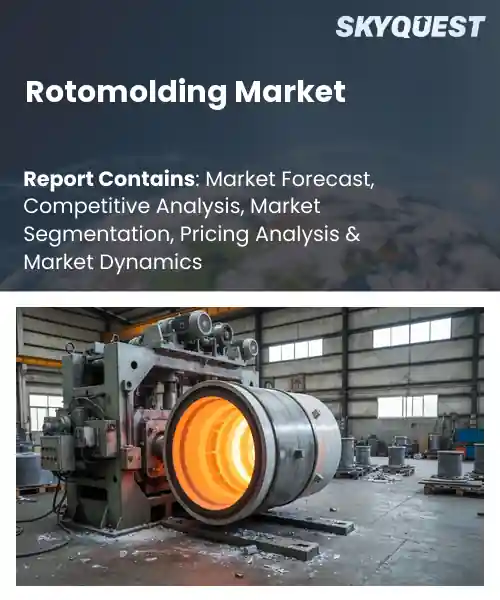
Rotomolding Market
Report ID: SQMIG15A2808
Report ID: SQMIG15A2808
[email protected]
USA +1 351-333-4748
Report ID:
SQMIG15A2808 |
Region:
Global |
Published Date: July, 2026
Pages:
157
|Tables:
128
|Figures:
77


Global Rotomolding Market size was valued at USD 8.16 Billion in 2024 and is poised to grow from USD 8.58 Billion in 2025 to USD 12.78 Billion by 2033, growing at a CAGR of 5.1% during the forecast period (2026-2033).
The global rotomolding market revolves around rotational molding, a polymer processing technique that creates hollow parts by heating a resin inside a rotating mold. Its primary driver is the rising demand for lightweight, corrosion‑resistant components in sectors such as automotive, agriculture and marine.
The next key factor propelling market expansion is the convergence of regulatory pressure and consumer demand for recyclable packaging, which pushes companies toward rotomolded solutions that use polyolefins. Because rotomolding eliminates weld lines and allows 100 % material recovery, manufacturers can claim lower carbon footprints, a claim that translates into higher brand loyalty in sectors like cold‑chain logistics and recreational equipment. Furthermore, advent of alloys HDPE‑MD and bio‑based resin blends creates opportunities for electric‑vehicle battery housings and offshore wind‑farm components. These developments generate a cycle where stricter standards stimulate innovation, which in turn opens revenue streams for suppliers and end‑users alike.
How is AI-driven automation impacting product development cycles in the rotomolding market?
AI-driven automation is reshaping rotomolding product development by shortening design cycles and reducing physical prototyping. Machine‑learning algorithms analyse material flow, wall thickness and cooling patterns, allowing engineers to run thousands of virtual simulations instantly. This predictive capability lets teams iterate designs faster, catch defects early and optimize tooling before a single mold is built. The technology also integrates with CAD systems, so designers receive real‑time feedback on manufacturability as they sketch, turning development into a more collaborative and data‑rich process. As a result, companies bring new containers, tanks and hobby‑grade products to market with far less waste and shorter time‑to‑sale, reinforcing the sector’s growth momentum.
Rotoplas in June 2026, showcased an AI‑driven design optimisation platform at its expo, demonstrating how automated simulation cuts development time and fuels quicker product launches in the rotomolding market.
Market snapshot - (2026-2033)
Global Market Size
USD 8.16 Billion
Largest Segment
Polyethylene
Fastest Growth
Polycarbonate
Growth Rate
5.1% CAGR
To get more insights on this market click here to Request a Free Sample Report
Global rotomolding market is segmented by material type, machine type, application, end-use industry and region. Based on material type, the market is segmented into Polyethylene, Polypropylene, PVC Plastisol, Nylon and Polycarbonate. Based on machine type, the market is segmented into Rock & Roll Machines, Shuttle Machines, Carousel Machines, Clamshell Machines and Vertical / Up-Down Machines. Based on application, the market is segmented into Storage Tanks & Containers, Automotive Components, Material Handling, Marine Equipment, Playground & Furniture, Toys and Others. Based on end-use industry, the market is segmented into Agriculture, Automotive & Transportation, Construction & Infrastructure, Marine, Consumer Goods and Others. Based on region, the market is segmented into North America, Europe, Asia Pacific, Latin America and Middle East & Africa.
Polyethylene segment dominates with large rotomolding market share because its melt flow characteristics align perfectly with the rotational molding process, enabling uniform wall thickness and high surface quality. Its broad compatibility with additives and colorants allows manufacturers to produce a wide array of durable parts without compromising mechanical strength. This versatility meets the cost sensitive demand of mass production customers, reinforcing its central role in the rotomolding ecosystem across diverse sectors worldwide and supporting rapid product cycles.
As per As per rotomolding market regional forecast, polypropylene segment is witnessing the strongest growth momentum because its higher temperature resistance opens new opportunities for temperature critical containers and automotive components. Innovations in catalytic polymerization are improving impact resistance, prompting designers to adopt it for lightweight yet robust parts, thereby accelerating market expansion and creating fresh application avenues.
Storage tanks & containers segment leads because rotomolding uniquely delivers seamless leak free structures ideal for bulk fluid handling. The process eliminates weld lines, reducing contamination risk and extending service life, which is critical for chemicals, water and fuels. Manufacturers benefit from low tooling costs and rapid tooling changes, enabling customization for varied capacities, thereby satisfying the high demand for reliable containment solutions across multiple industries in today’s supply chains globally.
Meanwhile, marine equipment segment is emerging as the key high growth area because rotomolded housings provide corrosion resistance for offshore devices. Advances in composite blends are extending durability in saltwater environments, prompting shipbuilders and offshore wind developers to adopt rotomolding for pontoons, cable enclosures and safety gear, fueling new market opportunities.
To get detailed segments analysis, Request a Free Sample Report
The dominance of Asia Pacific drives from a convergence of advanced manufacturing expertise, cost‑effective production capabilities, and a broad spectrum of end‑use industries that prioritize rotomolding solutions. The region benefits from a deep pool of skilled engineers, well‑established supply chains for raw materials, and a culture of continuous process innovation that drives product quality while maintaining competitive pricing. Strong demand from automotive, consumer goods, and infrastructure sectors further fuels adoption, while supportive regulatory frameworks encourage investment in modern equipment and sustainable practices. Collaborative networks between original equipment manufacturers and downstream users accelerate design iteration, ensuring that Asia Pacific remains at the forefront of both volume production and technological advancement in rotomolding.
As per rotomolding market regional outlook, Japan is characterised by a meticulous focus on precision engineering and high‑quality standards, serving sectors such as automotive, electronics, and medical devices. Domestic manufacturers leverage extensive research capabilities to develop specialized polymers that meet stringent performance criteria. A robust distribution network ensures timely delivery of raw materials, while close collaboration between suppliers and end users facilitates rapid prototyping and customization. The emphasis on reliability and durability positions Japan as a benchmark for premium rotomolded products within the global landscape.
As per rotomolding market regional analysis, South Korea benefits from a dynamic blend of technological proficiency and agile production processes, catering to automotive, consumer electronics, and renewable energy applications. The industry’s capacity for rapid scaling is supported by a responsive supply chain and a strong emphasis on innovation in polymer formulation. Collaborative initiatives between research institutions and manufacturers drive the development of lightweight yet durable solutions, aligning with market demands for efficiency and sustainability. This combination of speed, quality, and forward‑looking R&D sustains South Korea’s influential role in the regional rotomolding ecosystem.
Europe’s rapid expansion is propelled by heightened emphasis on sustainability, regulatory encouragement for lightweight and recyclable solutions, and a mature industrial base that values engineering excellence. The continent’s automotive sector seeks rotomolded components that reduce weight and improve fuel efficiency, while the renewable energy arena adopts custom tanks and enclosures that align with green objectives. Strong collaborative ecosystems among manufacturers, research institutions, and policy makers foster continuous material innovation and process optimization. Additionally, demand for versatile packaging and consumer goods drives diversification, reinforcing Europe’s position as a hub where environmental responsibility meets advanced manufacturing capabilities.
As per rotomolding industry analysis, Germany is distinguished by a leadership position in engineering precision and industrial-grade applications, particularly within automotive and heavy equipment sectors. German manufacturers integrate sophisticated design tools with robust material science expertise to produce high‑performance rotomolded parts. The country’s dense network of suppliers ensures reliable access to premium polymers, while strong collaboration with OEMs accelerates product development cycles. This focus on quality, reliability, and technical innovation sustains Germany’s dominant influence across the European rotomolding landscape.
United Kingdom is experiencing accelerated growth through a strategic focus on green technologies and customized solutions for emerging sectors such as renewable energy and advanced packaging. Industry participants prioritize lightweight, recyclable designs that meet stringent environmental standards, fostering collaboration with research hubs to explore novel polymer blends. The market’s agility in responding to shifting consumer expectations and regulatory incentives fuels its reputation as a fast‑growing segment within Europe, attracting investment and broadening its application portfolio.
France is emerging as a dynamic contributor to the European scene, with a particular emphasis on lightweight constructions for aerospace and high‑performance consumer products. French firms combine creative design approaches with advanced material engineering to deliver versatile rotomolded components that meet exacting performance criteria. Partnerships with academic institutions encourage exploration of innovative polymer technologies, positioning France as an emerging hub where creativity and technical prowess intersect in the rotomolding domain.
North America reinforces its position through a blend of expansive consumer demand, commitment to technological innovation, and a strategic focus on sustainable manufacturing practices. The region’s large-scale automotive and recreation markets drive extensive use of rotomolded solutions, while continuous R&D efforts yield advanced polymer formulations that enhance durability and environmental performance. Close integration between material suppliers and end‑user manufacturers facilitates rapid customization and efficient production cycles. Investment in automation and digital process control further elevates productivity, ensuring that North America remains a pivotal player in shaping the future direction of rotomolding globally.
United States is characterized by a broad application spectrum spanning automotive, recreational, and industrial sectors, underpinned by strong research and development capabilities. Domestic manufacturers emphasize customized design, rapid prototyping, and integration of advanced automation to meet diverse client needs. Collaborative partnerships with material innovators enable the adoption of high‑performance polymers that address durability and sustainability requirements. This focus on flexibility, innovation, and scale sustains the United States’ influential role within the North American rotomolding ecosystem.
Canada is shaped by a growing emphasis on environmentally responsible production and support for resource‑intensive industries such as energy and forestry. Canadian firms prioritize the development of lightweight, corrosion‑resistant components that align with green initiatives and operational efficiency. Strong ties between academic research centers and manufacturers foster exploration of novel polymer blends and process enhancements. This collaborative, sustainability‑driven approach positions Canada as a forward‑looking contributor to the North American rotomolding landscape.
To know more about the market opportunities by region and country, click here to
Buy The Complete Report
Increasing Demand for Lightweight Solutions
Advancements In Material Formulations
High Initial Equipment Investment
Limited Technical Expertise Availability
Request Free Customization of this report to help us to meet your business objectives.
The competitive landscape is shaped by intense rivalry among the leading rotomolding firms, driven by surging demand for lightweight, high‑volume components in automotive and consumer goods. Companies are accelerating growth through strategic joint ventures with OEMs to co‑develop new parts, acquiring niche rotomolding specialists to broaden material portfolios, and investing in advanced rotational‑molding equipment that reduces cycle time and improves product consistency.
SkyQuest’s ABIRAW (Advanced Business Intelligence, Research & Analysis Wing) is our Business Information Services team that Collects, Collates, Correlates, and Analyses the Data collected by means of Primary Exploratory Research backed by robust Secondary Desk research.
As per SkyQuest analysis the global rotomolding market growth driven primarily by the rising demand for lightweight solutions that lower vehicle weight and improve fuel efficiency, while a second catalyst comes from rapid advancements in material formulations that deliver higher impact resistance and temperature tolerance. Polyethylene remains the dominant segment because its melt flow properties suit the process and support cost‑sensitive mass production. Asia Pacific dominates the market due to its deep manufacturing base and strong end‑use demand across automotive and consumer goods. However, the high initial equipment investment required for modern rotational‑molding machines restrains entry for many small and medium enterprises. The global rotomolding market trend driven by increasing demand for lightweight, durable, and cost-effective plastic products across industries such as automotive, construction, agriculture, material handling, and consumer goods.
| Report Metric | Details |
|---|---|
| Market size value in 2024 | USD 8.16 Billion |
| Market size value in 2033 | USD 12.78 Billion |
| Growth Rate | 5.1% |
| Base year | 2024 |
| Forecast period | (2026-2033) |
| Forecast Unit (Value) | USD Billion |
| Segments covered |
|
| Regions covered | North America (US, Canada), Europe (Germany, France, United Kingdom, Italy, Spain, Rest of Europe), Asia Pacific (China, India, Japan, Rest of Asia-Pacific), Latin America (Brazil, Rest of Latin America), Middle East & Africa (South Africa, GCC Countries, Rest of MEA) |
| Companies covered |
|
| Customization scope | Free report customization with purchase. Customization includes:-
|
To get a free trial access to our platform which is a one stop solution for all your data requirements for quicker decision making. This platform allows you to compare markets, competitors who are prominent in the market, and mega trends that are influencing the dynamics in the market. Also, get access to detailed SkyQuest exclusive matrix.
Table Of Content
Executive Summary
Market overview
Parent Market Analysis
Market overview
Market size
KEY MARKET INSIGHTS
COVID IMPACT
MARKET DYNAMICS & OUTLOOK
Market Size by Region
KEY COMPANY PROFILES
Methodology
For the Rotomolding Market, our research methodology involved a mixture of primary and secondary data sources. Key steps involved in the research process are listed below:
1. Information Procurement: This stage involved the procurement of Market data or related information via primary and secondary sources. The various secondary sources used included various company websites, annual reports, trade databases, and paid databases such as Hoover's, Bloomberg Business, Factiva, and Avention. Our team did 45 primary interactions Globally which included several stakeholders such as manufacturers, customers, key opinion leaders, etc. Overall, information procurement was one of the most extensive stages in our research process.
2. Information Analysis: This step involved triangulation of data through bottom-up and top-down approaches to estimate and validate the total size and future estimate of the Rotomolding Market.
3. Report Formulation: The final step entailed the placement of data points in appropriate Market spaces in an attempt to deduce viable conclusions.
4. Validation & Publishing: Validation is the most important step in the process. Validation & re-validation via an intricately designed process helped us finalize data points to be used for final calculations. The final Market estimates and forecasts were then aligned and sent to our panel of industry experts for validation of data. Once the validation was done the report was sent to our Quality Assurance team to ensure adherence to style guides, consistency & design.
Analyst Support
Customization Options
With the given market data, our dedicated team of analysts can offer you the following customization options are available for the Rotomolding Market:
Product Analysis: Product matrix, which offers a detailed comparison of the product portfolio of companies.
Regional Analysis: Further analysis of the Rotomolding Market for additional countries.
Competitive Analysis: Detailed analysis and profiling of additional Market players & comparative analysis of competitive products.
Go to Market Strategy: Find the high-growth channels to invest your marketing efforts and increase your customer base.
Innovation Mapping: Identify racial solutions and innovation, connected to deep ecosystems of innovators, start-ups, academics, and strategic partners.
Category Intelligence: Customized intelligence that is relevant to their supply Markets will enable them to make smarter sourcing decisions and improve their category management.
Public Company Transcript Analysis: To improve the investment performance by generating new alpha and making better-informed decisions.
Social Media Listening: To analyze the conversations and trends happening not just around your brand, but around your industry as a whole, and use those insights to make better Marketing decisions.
REQUEST FOR SAMPLE
 REQUEST FREE CUSTOMIZATION
Global Rotomolding Market size was valued at USD 8.16 Billion in 2024 and is poised to grow from USD 8.58 Billion in 2025 to USD 12.78 Billion by 2033, growing at a CAGR of 5.1% during the forecast period (2026-2033).
The competitive landscape is shaped by intense rivalry among the leading rotomolding firms, driven by surging demand for lightweight, high‑volume components in automotive and consumer goods. Companies are accelerating growth through strategic joint ventures with OEMs to co‑develop new parts, acquiring niche rotomolding specialists to broaden material portfolios, and investing in advanced rotational‑molding equipment that reduces cycle time and improves product consistency. 'Ocean Plastic Intertrade Co., Ltd.', 'A.G. Industries Pvt. Ltd.', 'Top Rotomolding Technology Co., Ltd.', 'Ningbo Fly Plastic Co., Ltd.', 'Yantai Fangda Rotational Molding Co., Ltd.', 'Comos Corporation Co., Ltd.', 'Changzhou Treering Plastic Co., Ltd.', 'Swastik Rotomatic', 'N.A. Roto Machines & Moulds', 'Charloma, Inc.', 'Rotoplast SAS', 'Partner Plast Group', 'Dutchland Plastics', 'Roto Dynamics Inc.', 'Sherman Roto Tank', 'Rototek Limited', 'Elkhart Plastics, Inc.', 'Den Hartog Industries Inc.', 'Centro Incorporated', 'Western Industries Plastic Products LLC'
The shift toward fuel‑efficient vehicles and portable equipment drives manufacturers to seek materials that reduce overall weight without compromising strength, and rotomolded components meet these criteria through uniform wall thickness and complex geometry capabilities; this alignment with sustainability goals encourages broader adoption across automotive, aerospace, and consumer product sectors, thereby expanding the market as designers prioritize lightweight construction to achieve performance targets and regulatory compliance, fostering continuous demand for rotomolding technologies in both high‑volume and niche applications throughout global supply chains.
Sustainable Packaging Expansion: The rotomolding industry is experiencing rapid adoption by consumer goods manufacturers seeking lightweight, single‑wall containers that reduce material waste and simplify end‑of‑life recycling. Designers appreciate the process’s ability to produce seamless, leak‑proof bottles and crates without secondary machining, enabling faster time‑to‑market for eco‑focused product lines. As retailers tighten sustainability criteria, brands are turning to rotomolded packaging to lower carbon footprints, meet consumer expectations for green solutions, and differentiate through innovative, reusable designs across global distribution channels and retail shelves today.
Why does Asia Pacific Dominate the Global Rotomolding Market? |@12


Want to customize this report? This report can be personalized according to your needs. Our analysts and industry experts will work directly with you to understand your requirements and provide you with customized data in a short amount of time. We offer $1000 worth of FREE customization at the time of purchase.
Feedback From Our Clients


 USA (+1) 351-333-4748

