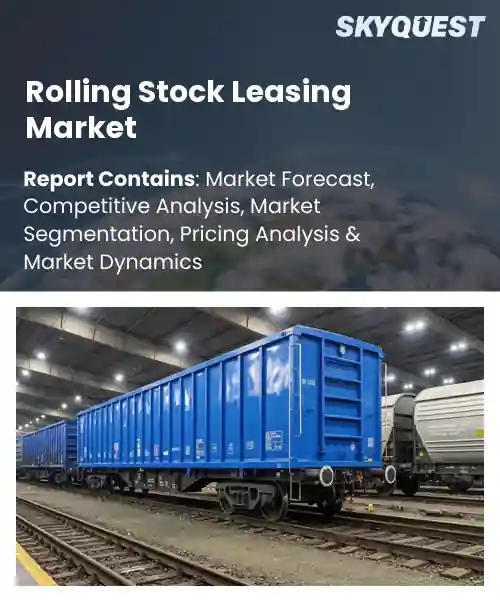
Rolling Stock Leasing Market
Report ID: SQMIG20J2012
Report ID: SQMIG20J2012
[email protected]
USA +1 351-333-4748
Report ID:
SQMIG20J2012 |
Region:
Global |
Published Date: February, 2026
Pages:
157
|Tables:
199
|Figures:
80


Global Rolling Stock Leasing Market size was valued at USD 1.87 Billion in 2024 and is poised to grow from USD 1.96 Billion in 2025 to USD 2.83 Billion by 2033, growing at a CAGR of 4.7% during the forecast period (2026-2033).
Rolling stock leasing is the business of owning locomotives passenger coaches and freight wagons that are leased to rail operators over medium to long term, and its primary driver is capital intensity which pushes operators to convert large upfront purchases into predictable operating leases. This market matters because it reduces financing barriers accelerates fleet renewal and transfers technical obsolescence and maintenance risk to specialized lessors. It developed from privatization waves and strategies of the 1990s when companies such as Porterbrook and Eversholt in the UK scaled to finance new rolling stock, and expanded globally as emerging markets sought modern fleets.Regulatory decarbonization targets and commitments to electrify networks serve as a pivotal factor shaping global rolling stock leasing because stricter emissions rules force operators to replace diesel fleets with modern electric or hydrogen units, and the high cost of those assets prompts reliance on leasing. Consequently lessors that can underwrite large procurements gain market share by offering long-term leases coupled with maintenance and performance guarantees, which accelerates fleet deployment and reduces operators' technological risk. This dynamic creates opportunities for green financing secondary leasing markets and data-driven maintenance services, illustrated by recent European EMU orders financed via leasing and green bonds.
How can IoT enhance maintenance predictability in the rolling stock leasing market?
IoT improves maintenance predictability in the rolling stock leasing market by turning assets into continuous sources of condition data. Key aspects are onboard sensors for vibration temperature and brake performance cloud analytics and the creation of digital twins. The current market context sees lessors focused on availability life cycle value and risk transfer while operators seek lower unplanned downtime. By monitoring wheelsets axles and braking systems in service IoT signals detect early degradation and enable planned interventions during scheduled windows. Real world examples include onboard axle vibration sensing and wayside telematics which make maintenance planning more transparent and lease terms more tailored to actual asset condition.Porterbrook December 2025, agreed a major supply of new intermodal wagons with Freightliner which highlights how new fleet deliveries offer a chance to install IoT telematics at build stage and so improve maintenance predictability availability and remarketing efficiency.
Market snapshot - (2026-2033)
Global Market Size
USD 1.87 Billion
Largest Segment
Operating Lease
Fastest Growth
Sale and Leaseback
Growth Rate
4.7% CAGR
To get more insights on this market click here to Request a Free Sample Report
Global rolling stock leasing market is segmented by leasing type, rolling stock type, service type, contract duration, market channel, application, end-user and region. Based on leasing type, the market is segmented into Operating Lease, Finance Lease, Sale and Leaseback and Others. Based on rolling stock type, the market is segmented into Locomotives, Passenger Coaches, Electric Multiple Units (EMU), Diesel Multiple Units (DMU), High-Speed Trains, Light Rail Vehicles (LRVs) and Freight Wagons. Based on service type, the market is segmented into Lease Without Maintenance and Lease With Maintenance. Based on contract duration, the market is segmented into Short-term Lease and Long-term Lease. Based on market channel, the market is segmented into Direct Leasing and Brokerage Services. Based on application, the market is segmented into Passenger Transportation, Freight Transportation and Maintenance & Infrastructure Support. Based on end-user, the market is segmented into Freight Operators and Passenger Operators. Based on region, the market is segmented into North America, Europe, Asia Pacific, Latin America and Middle East & Africa.
Operating Lease segment dominates because it provides lessees flexible access to rolling stock without direct ownership, allowing operators to match fleet capacity to service demand while preserving capital for operations. Lessors can redeploy assets across customers, reducing idle time and improving utilization. The structure reduces residual value exposure for operators and supports frequent fleet modernization, encouraging broad adoption among both passenger and freight operators seeking operational agility and balance sheet efficiency.
However, Sale and Leaseback is emerging as the most rapidly expanding leasing type as operators monetize rolling stock to fund fleet upgrades and network investment. By converting owned assets into liquid capital while retaining operational control, it enables faster fleet renewal, fosters closer lessor-operator partnerships, and creates innovative financing pathways that accelerate future capacity projects and unlock new market opportunities.
Freight Wagons segment dominates because their long service life, modular configurations, and compatibility with diverse cargo types create steady demand from freight operators, enabling lessors to build predictable lease pools with stable cash flows. Lower technological obsolescence reduces residual value uncertainty, making them suited for long-duration leases. Standardized maintenance routines and interchangeability across carriers support high utilization and simpler asset management, strengthening underwriting and portfolio resilience for leasing firms.
However, Electric Multiple Units (EMU) are the fastest expanding type as electrification and passenger capacity upgrades drive demand for energy-efficient trains. Modular EMU designs and accelerated renewal cycles increase leasing appeal, enabling operators to meet environmental mandates while giving lessors opportunities to offer lifecycle services, capture aftermarket revenue, and support broader electrification-led fleet transformations.
To get detailed segments analysis, Request a Free Sample Report
Europe commands the global rolling stock leasing landscape through a convergence of mature rail infrastructure, harmonized technical standards, and an entrenched leasing ecosystem that links manufacturers, lessors, operators, and maintenance providers. Cross-border passenger and freight corridors create demand for interoperable, modular fleets and flexible contract structures favoured by both public transit agencies and private operators. Sophisticated financing markets, established secondary asset channels, and a policy environment that prioritizes sustainability and modal shift strengthen lessor ability to offer lifecycle solutions and refurbishment programs. A concentration of specialized engineering expertise and proactive adoption of electrification and digital asset management further elevates the region by enabling lessors to tailor offerings for energy efficient operations, reinforcing market depth and cross-border leasing sophistication.
Rolling Stock Leasing Market in Germany benefits from dense passenger and freight corridors, strong engineering and manufacturing base, and established leasing operators that work closely with infrastructure managers and private operators. A culture of refurbishment, technical standards harmonization, and long-term fleet planning supports secondary market activity and modular leasing solutions that prioritize reliability and lifecycle optimization, attracting both domestic and pan-European leasing arrangements.
Rolling Stock Leasing Market in United Kingdom benefits from dense urban rail systems, open access operators, and a sophisticated leasing ecosystem integrating operators, lessors, and maintenance providers. Emphasis on refurbishment programs, fleet standardization, and flexible contract structures supports rapid deployment of capacity and private investment. Regulatory clarity, competitive tendering practices, and strong aftermarket capabilities encourage a diverse set of leasing models and long-term partnerships across regional and commuter services networks.
Rolling Stock Leasing Market in France combines national rail operator engagement, extensive regional services, and a strong tradition of public-private collaboration that fosters innovative leasing formats and bespoke technical solutions. Focus on intermodal integration, sustainability credentials, and lifecycle maintenance enables lessors to offer tailored financing and retrofit programs. Coordination between infrastructure managers and operators promotes standardized procurement and supports a resilient secondary market for mid-life assets across cross-border corridors operations.
Rapid expansion in North America is being driven by a combination of fleet modernization needs, demand for asset-light operating models, and a vibrant private leasing industry that meets both freight and passenger requirements. Operators favour leasing to access cutting-edge rolling stock, outsource maintenance burdens, and preserve capital for service improvements. Well developed financing markets and experienced lessors provide tailored contracts, lifecycle services, and refurbishment programs that align with long-distance freight economics and dense commuter networks alike. Strong collaboration between manufacturers, maintenance providers, and leasing firms accelerates technology deployment such as digital diagnostics and energy efficient traction, while regulatory clarity and procurement practices in key markets encourage adoption of diverse leasing structures across urban, regional, and intermodal corridors. This environment supports new contract innovation, secondary market activity, and resilient operational planning.
Rolling Stock Leasing Market in United States is shaped by a dominant freight rail sector, extensive intercity corridors, and strong private investment appetite for asset-light operating models. Lessors provide tailored solutions for long-haul freight, commuter fleets, and Amtrak-type services, combining financing, maintenance, and refurbishment offerings. Presence of large leasing firms and comprehensive aftermarket ecosystems enables rapid scaling and flexible contract innovation that aligns with operator needs and evolving modal strategies.
Rolling Stock Leasing Market in Canada benefits from regional freight corridors, expanding passenger services, and collaborative procurement between provinces and operators. Leasing providers supply lifecycle management, retrofit programs, and financing tailored to mixed traffic and cold climate operations. Cooperation with maintenance depots and manufacturers supports durable fleets and adaptive contract terms, enabling operators to balance capacity and capital constraints while promoting integrated solutions for intermodal connections and regional mobility goals.
Asia Pacific is strengthening its role in rolling stock leasing through a blend of advanced manufacturing capabilities, targeted government support for rail investments, and growing regional demand for modern, energy efficient fleets. Domestic producers and leasing firms collaborate on export-oriented strategies that pair technical excellence with financing solutions, enabling cross-border leasing and turnkey maintenance offerings. Rapid adoption of digital asset management, electrification initiatives, and modular train designs allows lessors to offer flexible, retrofitable fleets suited to diverse operating contexts. Strategic partnerships, consolidated maintenance hubs, and an emphasis on lifecycle performance are expanding the region influence, positioning it as a key source of innovative rolling stock leasing models for neighboring markets. Maturing financing options, pilot projects with new traction technologies, and increasing standardization across networks are further unlocking demand, while a growing service ecosystem supports long term leasing relationships across the wider Asia Pacific.
Rolling Stock Leasing Market in Japan leverages advanced rail technology, stringent safety standards, and a mature maintenance and refurbishment ecosystem to support diverse urban, regional, and high-speed fleets. Lessors and manufacturers collaborate on bespoke leasing schemes that emphasize lifecycle performance, energy efficiency, and rapid maintenance turnarounds. Strong domestic supply chains and precision engineering enable flexible contract designs and export-oriented leasing solutions that serve internal networks and regional partnerships across markets.
Rolling Stock Leasing Market in South Korea is supported by a competitive rolling stock manufacturing sector, advanced signaling and digital maintenance capabilities, and industry collaboration. Leasing firms focus on modular electric multiple units, retrofit programs, and export-ready fleet solutions. Close ties among manufacturers, lessors, and maintenance providers enable turnkey offerings that emphasize energy efficiency, rapid deployment, and lifecycle management, positioning the market as a regional hub for innovative leasing models.
To know more about the market opportunities by region and country, click here to
Buy The Complete Report
Rising Urban Passenger Transport Demand
Focus on Fleet modernization Initiatives
High Initial Contractual Complexity
Limited Secondary Market Liquidity
Request Free Customization of this report to help us to meet your business objectives.
Competition in the global rolling stock leasing market is intensifying as incumbents pursue consolidation, bespoke financing platforms, and technology partnerships to win decarbonization contracts. Recent M and A activity such as Alstom's acquisition of Bombardier reshaped supplier scale. New financing alliances and platforms for zero emission fleets like Rock Road and collaborative digital maintenance projects between asset owners and operators have become decisive competitive strategies.
Top Player’s Company Profile
Recent Developments
SkyQuest’s ABIRAW (Advanced Business Intelligence, Research & Analysis Wing) is our Business Information Services team that Collects, Collates, Correlates, and Analyses the Data collected by means of Primary Exploratory Research backed by robust Secondary Desk research. As per SkyQuest analysis, the global rolling stock leasing market is gaining traction as operators choose leasing to avoid heavy capital outlays. One key driver is rising urban passenger transport demand that pushes fleet expansion and modernization. One restraint is high contractual complexity which can deter smaller operators and lengthen deal cycles. Dominating region is Europe, supported by mature infrastructure, harmonized standards and a deep leasing ecosystem. Dominating segment is Operating Lease, providing flexibility and balance sheet benefits. A second driver is regulatory decarbonization and electrification commitments, which increase demand for modern EMUs and green financing, encouraging lessors to offer lifecycle services and data-driven maintenance to reduce operator risk.
| Report Metric | Details |
|---|---|
| Market size value in 2024 | USD 1.87 Billion |
| Market size value in 2033 | USD 2.83 Billion |
| Growth Rate | 4.7% |
| Base year | 2024 |
| Forecast period | (2026-2033) |
| Forecast Unit (Value) | USD Billion |
| Segments covered |
|
| Regions covered | North America (US, Canada), Europe (Germany, France, United Kingdom, Italy, Spain, Rest of Europe), Asia Pacific (China, India, Japan, Rest of Asia-Pacific), Latin America (Brazil, Rest of Latin America), Middle East & Africa (South Africa, GCC Countries, Rest of MEA) |
| Companies covered |
|
| Customization scope | Free report customization with purchase. Customization includes:-
|
To get a free trial access to our platform which is a one stop solution for all your data requirements for quicker decision making. This platform allows you to compare markets, competitors who are prominent in the market, and mega trends that are influencing the dynamics in the market. Also, get access to detailed SkyQuest exclusive matrix.
Table Of Content
Executive Summary
Market overview
Parent Market Analysis
Market overview
Market size
KEY MARKET INSIGHTS
COVID IMPACT
MARKET DYNAMICS & OUTLOOK
Market Size by Region
KEY COMPANY PROFILES
Methodology
For the Rolling Stock Leasing Market, our research methodology involved a mixture of primary and secondary data sources. Key steps involved in the research process are listed below:
1. Information Procurement: This stage involved the procurement of Market data or related information via primary and secondary sources. The various secondary sources used included various company websites, annual reports, trade databases, and paid databases such as Hoover's, Bloomberg Business, Factiva, and Avention. Our team did 45 primary interactions Globally which included several stakeholders such as manufacturers, customers, key opinion leaders, etc. Overall, information procurement was one of the most extensive stages in our research process.
2. Information Analysis: This step involved triangulation of data through bottom-up and top-down approaches to estimate and validate the total size and future estimate of the Rolling Stock Leasing Market.
3. Report Formulation: The final step entailed the placement of data points in appropriate Market spaces in an attempt to deduce viable conclusions.
4. Validation & Publishing: Validation is the most important step in the process. Validation & re-validation via an intricately designed process helped us finalize data points to be used for final calculations. The final Market estimates and forecasts were then aligned and sent to our panel of industry experts for validation of data. Once the validation was done the report was sent to our Quality Assurance team to ensure adherence to style guides, consistency & design.
Analyst Support
Customization Options
With the given market data, our dedicated team of analysts can offer you the following customization options are available for the Rolling Stock Leasing Market:
Product Analysis: Product matrix, which offers a detailed comparison of the product portfolio of companies.
Regional Analysis: Further analysis of the Rolling Stock Leasing Market for additional countries.
Competitive Analysis: Detailed analysis and profiling of additional Market players & comparative analysis of competitive products.
Go to Market Strategy: Find the high-growth channels to invest your marketing efforts and increase your customer base.
Innovation Mapping: Identify racial solutions and innovation, connected to deep ecosystems of innovators, start-ups, academics, and strategic partners.
Category Intelligence: Customized intelligence that is relevant to their supply Markets will enable them to make smarter sourcing decisions and improve their category management.
Public Company Transcript Analysis: To improve the investment performance by generating new alpha and making better-informed decisions.
Social Media Listening: To analyze the conversations and trends happening not just around your brand, but around your industry as a whole, and use those insights to make better Marketing decisions.
REQUEST FOR SAMPLE
 REQUEST FREE CUSTOMIZATION


Want to customize this report? This report can be personalized according to your needs. Our analysts and industry experts will work directly with you to understand your requirements and provide you with customized data in a short amount of time. We offer $1000 worth of FREE customization at the time of purchase.
Feedback From Our Clients


 USA (+1) 351-333-4748

