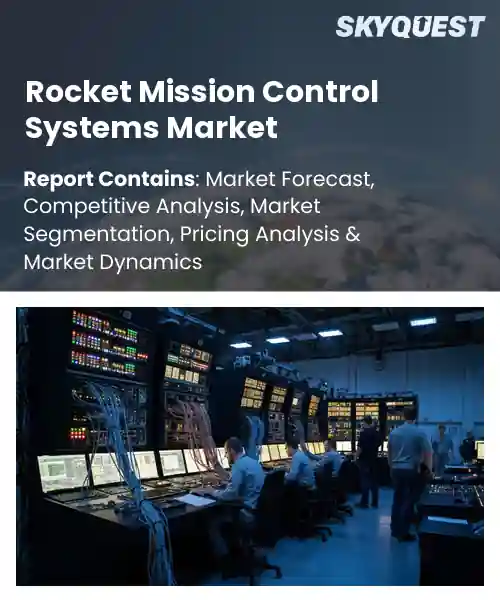
Rocket Mission Control Systems Market
Report ID: SQMIG20A2892
Report ID: SQMIG20A2892
[email protected]
USA +1 351-333-4748
Report ID:
SQMIG20A2892 |
Region:
Global |
Published Date: August, 2026
Pages:
157
|Tables:
115
|Figures:
77


Global Rocket Mission Control Systems Market size was valued at USD 1.37 Billion in 2024 and is poised to grow from USD 1.56 Billion in 2025 to USD 4.43 Billion by 2033, growing at a CAGR of 13.9% during the forecast period (2026-2033).
The global rocket mission control systems market encompasses hardware, software, and telemetry solutions that enable real‑time guidance, navigation, and communication for launch vehicles. Its significance stems from the increasing dependence of both government agencies and commercial operators on precise, reliable control to protect costly payloads and ensure crew safety. Historically, the sector grew alongside the Cold War space race, when the United States and USSR invested heavily in ground‑based command centers. Decades later, the advent of reusable launchers such as SpaceX’s Falcon 9 accelerated demand for flexible, software‑defined architectures, prompting vendors to shift from legacy hard‑wired consoles to modular platforms.
The key trend driving the global rocket mission control systems sector is the surge in commercial constellation deployments, which forces operators to demand higher‑frequency command cycles and automated anomaly detection. As companies such as OneWeb and Amazon Kuiper expand to thousands of satellites, mission‑control software must scale horizontally, integrating AI‑driven analytics that predict telemetry deviations before they become failures. This technical pressure has spurred venture‑backed startups to offer SaaS‑based control suites that reduce ground‑station footprints while maintaining 99.9 % availability. Consequently, established aerospace firms are acquiring these innovators, creating a consolidation trend that broadens product portfolios and accelerates the transition toward autonomous launch‑control ecosystems.
How is AI-Driven Automation Reshaping the Rocket Mission Control Systems Market?
AI is transforming the global rocket mission control systems market by enabling faster data analysis, predictive fault detection, autonomous decision-making, and adaptive mission planning. Because rockets and spacecraft generate enormous telemetry volumes, AI can identify anomalies faster than human operators, reducing response times and improving mission reliability. AI-enabled ground-control systems can also automatically recommend corrective commands, optimize trajectories, and prioritize critical events, increasing operational efficiency and reducing workload. Lockheed Martin reports that AI/ML is being integrated into ground-based command-and-control stations to accelerate decision-making and enhance situational awareness.
In December 2025, its Skunk Works demonstrated AI-driven mission-contingency management that enabled ground C2 systems to analyze problems and generate replanning options within seconds.
Market snapshot - (2026-2033)
Global Market Size
USD 1.37 Billion
Largest Segment
Software
Fastest Growth
Services
Growth Rate
13.9% CAGR
To get more insights on this market click here to Request a Free Sample Report
Global rocket mission control systems market is segmented by offering, deployment, mission type, end user and region. Based on offering, the market is segmented into software and services. Based on deployment, the market is segmented into on-premises and cloud-based. Based on mission type, the market is segmented into orbital missions, suborbital missions and deep space missions. Based on end user, the market is segmented into government & defense agencies, commercial space companies and research & academic organizations. Based on region, the market is segmented into North America, Europe, Asia Pacific, Latin America and Middle East & Africa.
Based on the global rocket mission control systems market growth, software segment dominates because it provides the core algorithms that process telemetry, execute flight critical logic, and integrate sensor data in real time. Vendors invest heavily in advanced code verification, modular architectures, and cybersecurity safeguards, which build confidence among launch operators. The ability to customize interfaces and embed updates quickly also aligns with the fast paced development cycles of launch vehicles, cementing software as the backbone of mission control.
However, services offering emerges as the most rapidly expanding area because customers increasingly demand managed mission control platforms, continuous monitoring, and expert support that reduce internal staffing burdens. Outsourced expertise accelerates adoption of new launch profiles, while subscription models lower upfront costs, encouraging broader uptake and fostering integration of emerging analytics.
Cloud based segment dominates because it delivers scalable compute resources that can handle the massive data streams generated during launches, while also enabling remote collaboration among geographically dispersed teams. Providers integrate advanced networking, automated backup, and elastic storage, which simplify system upgrades and ensure high availability. The pay as you go model aligns with variable demand across mission phases, allowing operators to optimize costs and focus on core launch activities.
On the other hand, on premises deployment is witnessing the strongest growth momentum because heightened cybersecurity mandates and mission critical latency concerns drive operators to retain data within secured facilities. The need for deterministic response times and regulatory compliance fuels investment in dedicated hardware, prompting vendors to offer turnkey on site solutions that expand market depth.
To get detailed segments analysis, Request a Free Sample Report
As per the global rocket mission control systems market share, North America leads the market through a combination of mature aerospace infrastructure, deep investment in research and development, and robust government‑space agency collaborations. The region benefits from an extensive network of launch sites, advanced telemetry and data‑handling capabilities, and a strong ecosystem of defense and commercial contractors. Strategic partnerships between private enterprises and federal programs foster rapid technology iteration and integration of cutting‑edge control algorithms. Additionally, a highly skilled talent pool in engineering, software development, and systems integration sustains continuous innovation, reinforcing North America’s position as the benchmark for reliability and performance in mission control solutions.
Rocket mission control systems market in the United States thrives on a legacy of pioneering space missions and a vibrant commercial launch sector. Extensive collaboration between government agencies and private firms drives the adoption of sophisticated command‑and‑control platforms, while dedicated research institutions contribute breakthroughs in autonomous navigation and real‑time data analytics. The ecosystem supports rapid prototyping and scaling, enabling the United States to maintain a leadership role in mission assurance and operational excellence.
Rocket mission control systems market in Canada benefits from strong government support for aerospace research and a collaborative approach among provincial universities and industry partners. Emphasis on modular architecture and interoperable software solutions allows Canadian stakeholders to integrate with broader North American launch networks. Focus on safety standards and rigorous testing protocols ensures high reliability, while emerging private ventures contribute innovative concepts that enhance Canada’s contribution to the regional mission control landscape.
Based on global rocket mission control systems regional forecast, Europe’s expansion is propelled by coordinated multinational space initiatives, substantial public funding for satellite constellations, and a growing emphasis on sustainable launch practices. The continent’s diverse industrial base integrates advanced sensor fusion, artificial intelligence, and secure communication protocols into mission control architectures. Collaborative frameworks among European space agencies and private enterprises accelerate technology transfer and standardization across borders. Additionally, a strong focus on regulatory compliance and environmental stewardship positions Europe as a forward‑looking market, attracting global partners keen on leveraging its sophisticated, resilient control systems for emerging space endeavors.
Rocket mission control systems market in Germany is emerging through concentrated investment in high‑precision instrumentation and robust software engineering capabilities. Partnerships between leading research institutes and automotive‑derived technology firms foster cross‑industry innovation, enhancing reliability and efficiency in control systems. German manufacturers emphasize modular designs that facilitate rapid adaptation to varied mission profiles, supporting the country’s growing role in collaborative European space projects.
Rocket mission control systems market in the United Kingdom is the fastest growing segment, driven by a vibrant startup ecosystem and strategic government incentives for space technology. The UK leverages its expertise in telecommunications and cybersecurity to develop resilient command‑and‑control platforms, while academic‑industry collaborations accelerate the integration of artificial intelligence into mission monitoring. This dynamic environment enables rapid scaling of solutions, positioning the United Kingdom as a pivotal contributor to Europe’s evolving space infrastructure.
Rocket mission control systems market in France remains dominant within Europe, underpinned by a longstanding aerospace heritage and strong state‑backed research programs. French firms excel in precision navigation, real‑time telemetry, and robust ground‑segment operations, ensuring high reliability across diverse missions. The nation’s emphasis on collaborative projects with European partners reinforces its leadership, while ongoing investment in next‑generation software tools sustains France’s competitive edge in mission control excellence.
As per global rocket mission control systems regional outlook, Asia Pacific is advancing its position through rapid modernization of launch facilities, ambitious national space agendas, and strategic alliances with global technology providers. The region’s focus on integrating cutting‑edge digital twins, autonomous decision‑making algorithms, and resilient communication networks elevates mission control capabilities. Growing domestic markets for satellite services and increasing private sector participation stimulate demand for sophisticated control solutions, while talent development programs nurture expertise in systems engineering and software development. This confluence of infrastructure upgrades, innovation focus, and collaborative ecosystems empowers Asia Pacific to emerge as a pivotal hub for advanced rocket mission control technologies.
Rocket mission control systems market in Japan leverages its precision engineering culture and strong governmental commitment to space exploration. Japanese firms prioritize reliability and redundancy in control architectures, integrating advanced robotics and high‑resolution sensor arrays. Collaboration between research universities and established aerospace manufacturers drives continual improvement, while a focus on miniaturized satellite constellations expands the scope of mission control applications within the country’s dynamic space sector.
Rocket mission control systems market in South Korea is propelled by aggressive investment in aerospace capabilities and a thriving electronics industry. Korean companies apply expertise in high‑speed data processing and secure communication to develop robust control platforms. Government initiatives encourage partnerships with international launch service providers, fostering technology transfer and integration of innovative software solutions, thereby strengthening South Korea’s role in the regional mission control landscape.
To know more about the market opportunities by region and country, click here to
Buy The Complete Report
Rising Commercial Launch Activities
Advancements In Autonomous Navigation
Stringent Regulatory Compliance Requirements
High Development and Integration Costs
Request Free Customization of this report to help us to meet your business objectives.
The competitive landscape in the global rocket mission control systems market outlook is shaped by intense rivalry among legacy aerospace giants and agile newcomers, driving rapid adoption of integrated mission‑control architectures, AI‑enabled telemetry analytics, and cloud‑based ground‑segment services. Recent M&A such as Lockheed Martin’s acquisition of Aerojet Rocketdyne, strategic partnerships like Blue Origin’s joint development with NASA on reusable command modules, and technology breakthroughs exemplified by SpaceX’s Starlink‑ground‑station integration are accelerating market momentum.
Top Player’s Company Profile
Recent Developments
SkyQuest’s ABIRAW (Advanced Business Intelligence, Research & Analysis Wing) is our Business Information Services team that Collects, Collates, Correlates, and Analyses the Data collected by means of Primary Exploratory Research backed by robust Secondary Desk research.
As per SkyQuest analysis, the global rocket mission control systems industry is being propelled primarily by the surge in commercial launch activities, which demand scalable, real‑time software platforms to manage multiple payloads and frequent missions. A second strong driver is the rapid progress in autonomous navigation, allowing spacecraft to self‑adjust trajectories and reducing ground‑operator load. The software segment remains dominant because it houses the core algorithms and AI‑driven analytics essential for reliability. North America leads the market, benefiting from a mature aerospace ecosystem and extensive government‑private collaborations. However, stringent regulatory compliance requirements act as a restraint, extending certification timelines and increasing costs for both incumbents and new entrants.
| Report Metric | Details |
|---|---|
| Market size value in 2024 | USD 1.37 Billion |
| Market size value in 2033 | USD 4.43 Billion |
| Growth Rate | 13.9% |
| Base year | 2024 |
| Forecast period | (2026-2033) |
| Forecast Unit (Value) | USD Billion |
| Segments covered |
|
| Regions covered | North America (US, Canada), Europe (Germany, France, United Kingdom, Italy, Spain, Rest of Europe), Asia Pacific (China, India, Japan, Rest of Asia-Pacific), Latin America (Brazil, Rest of Latin America), Middle East & Africa (South Africa, GCC Countries, Rest of MEA) |
| Companies covered |
|
| Customization scope | Free report customization with purchase. Customization includes:-
|
To get a free trial access to our platform which is a one stop solution for all your data requirements for quicker decision making. This platform allows you to compare markets, competitors who are prominent in the market, and mega trends that are influencing the dynamics in the market. Also, get access to detailed SkyQuest exclusive matrix.
Table Of Content
Executive Summary
Market overview
Parent Market Analysis
Market overview
Market size
KEY MARKET INSIGHTS
COVID IMPACT
MARKET DYNAMICS & OUTLOOK
Market Size by Region
KEY COMPANY PROFILES
Methodology
For the Rocket Mission Control Systems Market, our research methodology involved a mixture of primary and secondary data sources. Key steps involved in the research process are listed below:
1. Information Procurement: This stage involved the procurement of Market data or related information via primary and secondary sources. The various secondary sources used included various company websites, annual reports, trade databases, and paid databases such as Hoover's, Bloomberg Business, Factiva, and Avention. Our team did 45 primary interactions Globally which included several stakeholders such as manufacturers, customers, key opinion leaders, etc. Overall, information procurement was one of the most extensive stages in our research process.
2. Information Analysis: This step involved triangulation of data through bottom-up and top-down approaches to estimate and validate the total size and future estimate of the Rocket Mission Control Systems Market.
3. Report Formulation: The final step entailed the placement of data points in appropriate Market spaces in an attempt to deduce viable conclusions.
4. Validation & Publishing: Validation is the most important step in the process. Validation & re-validation via an intricately designed process helped us finalize data points to be used for final calculations. The final Market estimates and forecasts were then aligned and sent to our panel of industry experts for validation of data. Once the validation was done the report was sent to our Quality Assurance team to ensure adherence to style guides, consistency & design.
Analyst Support
Customization Options
With the given market data, our dedicated team of analysts can offer you the following customization options are available for the Rocket Mission Control Systems Market:
Product Analysis: Product matrix, which offers a detailed comparison of the product portfolio of companies.
Regional Analysis: Further analysis of the Rocket Mission Control Systems Market for additional countries.
Competitive Analysis: Detailed analysis and profiling of additional Market players & comparative analysis of competitive products.
Go to Market Strategy: Find the high-growth channels to invest your marketing efforts and increase your customer base.
Innovation Mapping: Identify racial solutions and innovation, connected to deep ecosystems of innovators, start-ups, academics, and strategic partners.
Category Intelligence: Customized intelligence that is relevant to their supply Markets will enable them to make smarter sourcing decisions and improve their category management.
Public Company Transcript Analysis: To improve the investment performance by generating new alpha and making better-informed decisions.
Social Media Listening: To analyze the conversations and trends happening not just around your brand, but around your industry as a whole, and use those insights to make better Marketing decisions.
REQUEST FOR SAMPLE
 REQUEST FREE CUSTOMIZATION
Global Rocket Mission Control Systems Market size was valued at USD 1.37 Billion in 2024 and is poised to grow from USD 1.56 Billion in 2025 to USD 4.43 Billion by 2033, growing at a CAGR of 13.9% during the forecast period (2026-2033).
The competitive landscape is shaped by intense rivalry among legacy aerospace giants and agile newcomers, driving rapid adoption of integrated mission‑control architectures, AI‑enabled telemetry analytics, and cloud‑based ground‑segment services; recent M&A such as Lockheed Martin’s acquisition of Aerojet Rocketdyne, strategic partnerships like Blue Origin’s joint development with NASA on reusable command modules, and technology breakthroughs exemplified by SpaceX’s Starlink‑ground‑station integration are accelerating market momentum. 'RTX Corporation', 'Lockheed Martin Corporation', 'The Boeing Company', 'Northrop Grumman Corporation', 'L3Harris Technologies, Inc.', 'General Dynamics Corporation', 'BAE Systems plc', 'Thales S.A.', 'Airbus SE', 'Safran S.A.', 'Leonardo S.p.A.', 'Kongsberg Gruppen ASA', 'Kratos Defense & Security Solutions, Inc.', 'Rocket Lab USA, Inc.', 'Sierra Space Corporation', 'Blue Origin, LLC', 'Space Exploration Technologies Corp.', 'Firefly Aerospace, Inc.', 'Mitsubishi Electric Corporation', 'Israel Aerospace Industries Ltd.'
Companies expanding launch services must integrate sophisticated mission control platforms capable of handling multiple payloads, real‑time telemetry, and complex trajectory calculations; this necessity drives investment in scalable software, robust communication links, and enhanced ground‑segment infrastructure, thereby accelerating market growth as operators seek reliable and flexible systems to support increasing mission frequencies and diverse customer requirements, while the push for higher launch cadence encourages adoption of integrated command suites that can be remotely updated, ensuring operational continuity and reducing downtime across the aerospace ecosystem.
Autonomous Mission Sequencing: Space agencies and commercial launch providers are increasingly integrating autonomous mission sequencing capabilities into control systems, allowing real‑time decision making without human intervention. This shift reduces latency in response to anomalies, enhances safety during critical phases, and supports more complex, multi‑payload missions. Operators benefit from streamlined workflows, while AI‑driven analytics provide predictive insights that preempt failures, fostering higher launch success rates and enabling rapid re‑tasking of assets in dynamic orbital environments across international partner networks and emerging commercial constellations today.
Why does North America Dominate the Global Rocket Mission Control Systems Market? |@12


Want to customize this report? This report can be personalized according to your needs. Our analysts and industry experts will work directly with you to understand your requirements and provide you with customized data in a short amount of time. We offer $1000 worth of FREE customization at the time of purchase.
Feedback From Our Clients


 USA (+1) 351-333-4748

