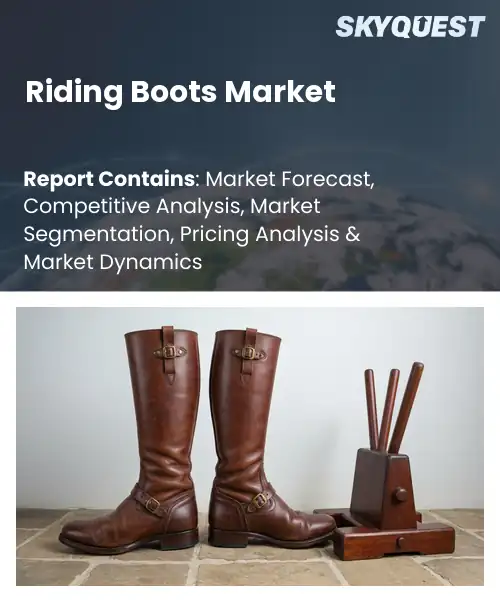
Riding Boots Market
Report ID: SQMIG25K2191
Report ID: SQMIG25K2191
[email protected]
USA +1 351-333-4748
Report ID:
SQMIG25K2191 |
Region:
Global |
Published Date: May, 2026
Pages:
157
|Tables:
144
|Figures:
78


Global Riding Boots Market size was valued at USD 1.22 Billion in 2024 and is poised to grow from USD 1.3 Billion in 2025 to USD 2.22 Billion by 2033, growing at a CAGR of 6.91% during the forecast period (2026-2033).
As a narrow subsector in the larger world of footwear products, the riding boots market encompasses the production and consumption of specialty boots that are worn during horseback riding sports and as fashionable wear, with their driving force being the combination of practical requirements alongside the desire of consumers to be part of a certain lifestyle. In terms of context, there exists a connection between the practical aspect associated with the protection, traction, and support provided by the footwear with the emergence of designer versions of this footwear that entered the realm of fashion through the luxury trend.
Owing to the significant pace of market revenue, an important consideration for growth is omnichannel accessibility in conjunction with the premiumization of products, because better discoverability online and targeted campaigns will allow for better brand visibility that will inspire the creation of riding boots with premium margins in order to appeal to the consumer’s lifestyle. As consumers from developing countries have increased disposable incomes, they will look to purchase luxury products in order to achieve social status, which will encourage the heritage equestrian brands and luxury labels to produce collections that carry premium price tags, while also inspiring retailers to develop virtual try-on technology in order to decrease returns.
How is AI Transforming Product Development in the Global Riding Boots Market?
The evolution in technology brought by artificial intelligence will revolutionize product development in the global market of riding boots by bringing greater personalization and making design processes data-based. Such innovations involve the use of fit engineering, which entails using three-dimensional scans and machine learning algorithms, generative design for rapid iterations, and modeling of material that enhances comfort and light construction. The current situation involves the use of traditional craftsmanship techniques alongside digital configurators and knit or engineered uppers that help bring bespoke products on a large scale. AI brings about an advantage in helping the manufacturer cut down on wastage and increase product delivery time. This ensures that the end user gets their perfect pair according to biomechanics.
Market snapshot - (2026-2033)
Global Market Size
USD 1.22 Billion
Largest Segment
Tall Riding Boots
Fastest Growth
Western Boots
Growth Rate
6.91% CAGR
To get more insights on this market click here to Request a Free Sample Report
Global riding boots market is segmented by type, material, application, end-user, distribution and region. Based on type, the market is segmented into Tall Riding Boots, Ankle/Paddock Boots, Western Boots and Jodhpur Boots. Based on material, the market is segmented into Leather and Synthetic. Based on application, the market is segmented into Equestrian Sports, Fashion/Casual and Work/Utility. Based on end-user, the market is segmented into Professional Riders, Amateur Riders and Fashion Consumers. Based on distribution, the market is segmented into Specialty Equestrian Stores, Online and Department Stores. Based on region, the market is segmented into North America, Europe, Asia Pacific, Latin America and Middle East & Africa.
What Role do Tall Riding Boots Play in Rider Performance and Safety?
The Tall Riding Boots category dominates owing to its status as the go-to product for formal equestrian activities and training, providing comprehensive protection for legs and a snug feel along with the saddle. Durability and the ability to customize contribute to the buyers' selection of this product, whereas performance and safety considerations make serious horseback riders invest in this category.
In contrast, the Ankle/Paddock Boots category is expected to witness the highest growth rate owing to their multi-functionality. The Ankle/Paddock Boots serve as the preferred choice for both stable chores and casual riding activities. This product has broad appeal amongst amateur horse riders, as well as crossing over into fashionable clothing options.
How is Online Distribution Reshaping Consumer Access to Riding Boots?
The online segment is leading because of the lack of restrictions from physical stores, offering an extensive range of products as well as easy discovery and direct access to niche riding boots and made-to-order footwear. Improved information about the products and reviews by consumers help reduce barriers to purchase and increase repurchase behavior in addition to increased efficiency of logistics and marketing, reaching a wider range of consumers and thus increasing inventory turns.
Nevertheless, the specialty equestrian stores segment has shown the greatest growth momentum due to their focus on the experiential retail model which attracts consumers interested in receiving expert advice on choosing the correct fit, personal attention and trying out premium products. Collaboration with trainers and custom services facilitates sales, as do curated collections and organizing events.
To get detailed segments analysis, Request a Free Sample Report
Europe retains its dominance in the riding boot industry owing to its rich equestrian culture, focused artisan production of footwear, and high-level luxury-performance fashion sector. Brands and workshops focus on high quality materials, construction methods, and authentic design elements that will please both performance-minded riders and fashion-conscious customers. Well-developed networks of specialty retail stores, tack stores, and custom shoe manufacturers support curation and tailored fit options. The collaboration between designers, saddlers, and athletes inspires innovation and ergonomic improvements. The cultural association with horseback riding sports, long-established brand reputation, and dedication to quality and sustainability ensure premium positioning and unique products. Investment into advanced materials technology, innovative protective coatings, and performance-enhancing footbeds, along with solid aftersales systems and active participation in trade shows, ensures market resilience and global impact.
Germany Riding Boots Market is one that integrates both precision engineering and equestrian culture to produce highly durable boots that fit properly. The manufacturers pay close attention to design elements, protection, and materials that can be used under various conditions for different disciplines. There is an extensive network of dedicated stores offering custom-fitting and customer service, and the involvement of professional riders helps in improving the designs through iterations.
Market for Riding Boots United Kingdom combines classic equestrian tradition with current fashion trends, making boots that combine classic design with comfortable wear. Local designers and heritages rely on bespoke services, shoe polishers, and repairers, as well as fine leathercrafting techniques. Retailers specializing in this market offer high customer engagement potential. Working together with trainers and riding academies provides credible marketing for their products, while blending fashion offers an additional dimension to attract lifestyle customers.
Riding Boots Market France represents a tradition of craftsmanship shoemaking in combination with a luxury fashion approach, resulting in boots that highlight quality finishing, shape, and materials used. Famous workshops and custom-made designers provide unique and haute-couture items. The strong link between riding and craftsmanship centers ensures demand for performance-oriented and fashion-forward riding boots. Retail stores incorporate workshop elements and repair services into their operation.
The North American riding boots sector witnesses rapid growth, propelled by rising consumer involvement in equestrian sports, incorporation of equestrian fashion into daily living, and flexible retail strategies. The brands employ direct to consumer and omni channel retailing tactics to target various consumer demographics, and domestic manufacturers and importers concentrate on delivering a wide range of functional and stylistic riding boots. The importance given to the use of comfortable, versatile designs, and high-quality materials ensures the crossover between the sport-oriented product and regular footwear. The cooperation with riding academies, trendsetters, and outdoor fashion brands improves the company’s image and reputation. Retailers and distributors customize their selections according to regional preferences, while aftersales services and custom fit products improve customer satisfaction and loyalty among both urban and rural customers.
Market Riding Boots in the United States spans a broad range of boot styles from the more durable Western variety to the sleek discipline English boots, capturing the different types of riding environments and needs. High consumer demand for durability, weather-proofing, and comfort is the catalyst for differentiation within the market. Leading retailers and brands provide their products, while custom manufacturers target high-performance riding customers. Collaboration with riding instructors and competitions raises product credibility.
The Riding Boots Market in Canada suggests a functional approach to footwear suitable for various climate conditions and riding experiences. The manufacturers prioritize such features as thermal insulation, reliable soles, strong fastenings, and sturdy upper material in order to satisfy performance requirements without compromising fashion aspects. Small businesses offer personalized services in cooperation with riding instructors and clothing producers, which encourages customers to try various equestrian activities in different environments.
With the increased consumer demand for equestrian activities, rapid retail evolution, and proper investment into the manufacturing sector, Asia Pacific is gaining prominence in the riding boots industry. Both up-and-coming fashion designers and manufacturers in Asia Pacific have been embracing international manufacturing standards and material usage. However, they provide localized designs and fittings of products. Increased growth of specialty shops, e-commerce websites, and the evolution of retail concepts has enhanced access to riding boots. Partnerships with international brands and training institutes have helped to increase their credibility and skill sets. With the emphasis on efficient production, quality control, and distinct designs, the region has been able to satisfy the demands from both domestic and export markets, thus becoming a dynamic supplement to existing market centers through efficiency and competitive value.
Japan Riding Boots market places emphasis on excellence in craftsmanship, elegant aesthetics, and perfect fitting as per expectations of consumers within the country. Local brands and workshops combine the craft of leather-making with modern design principles to produce boots that would be suitable for competitive riders as well as stylish individuals. The market offers bespoke fitting services and care by way of specialist boutiques as well as collaboration with fashion designers across Japan and internationally.
The market for Riding Boots South Korea is heavily influenced by consumers who have a high level of interest in fashion, with a preference for design-oriented footwear. Manufacturers and designers in the country emphasize perfect fit, advanced materials, and sleek lines that would appeal to both riders and those interested in lifestyles associated with riding. Technology also plays a key role in promoting trends through ecommerce platforms and social media.
To know more about the market opportunities by region and country, click here to
Buy The Complete Report
Rising Consumer Interest in Equestrian Activities
The increase in the number of consumers interested in horse riding has generated an increased demand for horse riding boots due to the changing lifestyles of consumers, which calls for an expansion of product variety from manufacturers alongside the creation of a brand identity focused on heritage and utility. Horse enthusiasts prefer boots that provide safety, comfort, and aesthetic appeal in sports and leisure environments, thus necessitating the development of different materials and styles in order to accommodate this demand.
Increase in Demand for Premium Designs
The growing interest in luxurious designs and artisanal craftsmanship has increased the value of riding boots, thus prompting companies to launch their luxury products to create brand loyalty. Attention to elegant designs, custom fitting, and durable finishes fosters the use of superior materials and high-quality manufacturing processes. Retailers follow suit through luxury offerings and quality-oriented retail experiences, which lead to segment expansion and improved margins, attracting selective consumers and driving growth in the market for riding boots.
High Production Costs and Materials
Higher prices caused by increased costs for high-quality leather, innovative materials, and expert craftsmanship make manufacturing expensive for companies, restricting their pricing options and narrowing profit margins. Manufacturers might struggle to handle such costs without affecting either the quality of the goods or raising prices on consumers, leading to lower consumer demands and making the product less accessible. Increased costs can also become an obstacle to expansion and innovation of the company, hindering new product development and the ability to adapt to evolving consumer tastes.
Limited Retail Distribution Channels
The limited distribution channels and the presence of retailers in certain areas hamper consumers from having various choices of riding boots available, thus limiting the brands from reaching both the niche and the general markets. Relying on specialized dealers or on disjointed networks of dealers can impede the process of market entry, thus creating an environment that does not provide much exposure for mass marketing. In cases where retailers are not well trained to articulate the benefits of the products to the customers, the resultant sales performance can be greatly hampered.
Request Free Customization of this report to help us to meet your business objectives.
The competitive environment for the global riding boot industry involves old horse riding brands trying to hold their competition credentials whereas new brands try to earn their podium credentials via sponsorship and performance of their products. Some examples of such concrete measures are the recent acquisition of the Hunter brand by Authentic Brands Group, supplier partnership in which Parlanti works with Michelin on performance soles, and the use of athletic boot technology by incumbent brands to target competition riders.
Sustainable Material Innovation: With manufacturers looking for ways to cater to consumers seeking environmentally friendly products, it is not surprising that leather, synthetic, and recycled materials are becoming more popular in the industry. Such a trend encourages companies to invest in alternative sources, collaborate with suppliers, and promote sustainability through clear messages about the origin and quality of their products. The result is that retail collections offer sustainable product lines, allowing brands to secure higher positioning and loyalty from performance-oriented yet environmentally conscious riders.
Personalization and Direct Sales: Tailored fit, modular design, and styling are emerging trends due to the growing need of consumers for differentiation and functionality. The direct-to-consumer model and social commerce provide better feedback mechanisms, quicker iterations, and more engaged customers without relying on the conventional distribution cycle through wholesalers. In retail stores, the use of virtual fitting technologies and luxury customer touchpoints are becoming more common to add to the perception of value. Such personalization strategies foster loyalty, engagement, and product innovation for niche rider groups.
SkyQuest’s ABIRAW (Advanced Business Intelligence, Research & Analysis Wing) is our Business Information Services team that Collects, Collates, Correlates, and Analyses the Data collected by means ofPrimary Exploratory Research backed by robust Secondary Desk research.
As per SkyQuest analysis, a key factor is the increasing consumer interest in horseback riding activities, creating a growing demand for riding boots, while another factor, i.e., the increased interest in high-end and fashionable products, will help to drive premiumization in this market. However, one main limitation is the high cost of production, affecting pricing, while the dominance of Europe in the global riding boots market can be attributed to its equestrian tradition and high-quality craftsmanship. The major segment in the riding boots market is the tall riding boots segment, supported by the formal nature of equestrian activities.
| Report Metric | Details |
|---|---|
| Market size value in 2024 | USD 1.22 Billion |
| Market size value in 2033 | USD 2.22 Billion |
| Growth Rate | 6.91% |
| Base year | 2024 |
| Forecast period | (2026-2033) |
| Forecast Unit (Value) | USD Billion |
| Segments covered |
|
| Regions covered | North America (US, Canada), Europe (Germany, France, United Kingdom, Italy, Spain, Rest of Europe), Asia Pacific (China, India, Japan, Rest of Asia-Pacific), Latin America (Brazil, Rest of Latin America), Middle East & Africa (South Africa, GCC Countries, Rest of MEA) |
| Companies covered |
|
| Customization scope | Free report customization with purchase. Customization includes:-
|
To get a free trial access to our platform which is a one stop solution for all your data requirements for quicker decision making. This platform allows you to compare markets, competitors who are prominent in the market, and mega trends that are influencing the dynamics in the market. Also, get access to detailed SkyQuest exclusive matrix.
Table Of Content
Executive Summary
Market overview
Parent Market Analysis
Market overview
Market size
KEY MARKET INSIGHTS
COVID IMPACT
MARKET DYNAMICS & OUTLOOK
Market Size by Region
KEY COMPANY PROFILES
Methodology
For the Riding Boots Market, our research methodology involved a mixture of primary and secondary data sources. Key steps involved in the research process are listed below:
1. Information Procurement: This stage involved the procurement of Market data or related information via primary and secondary sources. The various secondary sources used included various company websites, annual reports, trade databases, and paid databases such as Hoover's, Bloomberg Business, Factiva, and Avention. Our team did 45 primary interactions Globally which included several stakeholders such as manufacturers, customers, key opinion leaders, etc. Overall, information procurement was one of the most extensive stages in our research process.
2. Information Analysis: This step involved triangulation of data through bottom-up and top-down approaches to estimate and validate the total size and future estimate of the Riding Boots Market.
3. Report Formulation: The final step entailed the placement of data points in appropriate Market spaces in an attempt to deduce viable conclusions.
4. Validation & Publishing: Validation is the most important step in the process. Validation & re-validation via an intricately designed process helped us finalize data points to be used for final calculations. The final Market estimates and forecasts were then aligned and sent to our panel of industry experts for validation of data. Once the validation was done the report was sent to our Quality Assurance team to ensure adherence to style guides, consistency & design.
Analyst Support
Customization Options
With the given market data, our dedicated team of analysts can offer you the following customization options are available for the Riding Boots Market:
Product Analysis: Product matrix, which offers a detailed comparison of the product portfolio of companies.
Regional Analysis: Further analysis of the Riding Boots Market for additional countries.
Competitive Analysis: Detailed analysis and profiling of additional Market players & comparative analysis of competitive products.
Go to Market Strategy: Find the high-growth channels to invest your marketing efforts and increase your customer base.
Innovation Mapping: Identify racial solutions and innovation, connected to deep ecosystems of innovators, start-ups, academics, and strategic partners.
Category Intelligence: Customized intelligence that is relevant to their supply Markets will enable them to make smarter sourcing decisions and improve their category management.
Public Company Transcript Analysis: To improve the investment performance by generating new alpha and making better-informed decisions.
Social Media Listening: To analyze the conversations and trends happening not just around your brand, but around your industry as a whole, and use those insights to make better Marketing decisions.
REQUEST FOR SAMPLE
 REQUEST FREE CUSTOMIZATION
Global Riding Boots Market size was valued at USD 1.22 Billion in 2024 and is poised to grow from USD 1.3 Billion in 2025 to USD 2.22 Billion by 2033, growing at a CAGR of 6.91% during the forecast period (2026-2033).
The competitive landscape for the global riding boots market is shaped by legacy equestrian manufacturers defending competition credentials while newer labels chase podium credibility through targeted sponsorships and product performance. Recent concrete strategies include M&A and rescue deals exemplified by Authentic Brands Group acquiring the Hunter brand, supplier partnerships such as Parlanti collaborating with Michelin on performance soles, and incumbents applying athletic footwear engineering to riding boots to capture competition riders. 'Ariat International', 'Cavallo GmbH', 'Mountain Horse AB', 'Konig Boots (Harry Hall)', 'Le Chameau', 'Dubarry of Ireland', 'Toggi Equestrian', 'Aigle SAS', 'Tredstep Ireland', 'Parlanti International', 'Spanish Top Boots', 'EQUILINE', 'Dehner (Boot manufacturer)', 'LeMieux', 'Petrie Boots', 'Veredus', 'Tattini Boots', 'De Niro Boot Co.', 'Pikeur (Eskadron)', 'Ego7 Boots'
Consumer interest in equestrian and recreational riding has expanded lifestyle-driven demand for specialized riding boots, encouraging manufacturers to broaden product offerings and invest in brand positioning that emphasizes heritage and functionality. Enthusiasts seek boots that combine safety, comfort, and style for both sport and leisure contexts, prompting suppliers to develop varied materials and fitting options to meet expectations. This dynamic supports market growth by increasing willingness to purchase higher-quality boots, fostering product differentiation strategies and stimulating marketing initiatives that reinforce the perceived value of dedicated riding footwear.
Sustainable Material Innovation: Manufacturers and brands are prioritizing eco-conscious leathers, plant-based synthetics and recycled components to meet consumer demand for lower environmental impact and transparent supply chains. This trend drives investment in alternative material sourcing, collaborative supplier relationships and marketing narratives that emphasize provenance and durability. Retail assortments increasingly feature clearly labeled sustainable lines, enabling brands to command premium positioning while fostering long-term loyalty among ethically minded riders seeking performance without compromising environmental values and supporting regulatory and industry-wide sustainability initiatives globally recognized.
Why does Europe Dominate the Global Riding Boots Market? |@12


Want to customize this report? This report can be personalized according to your needs. Our analysts and industry experts will work directly with you to understand your requirements and provide you with customized data in a short amount of time. We offer $1000 worth of FREE customization at the time of purchase.
Feedback From Our Clients


 USA (+1) 351-333-4748

