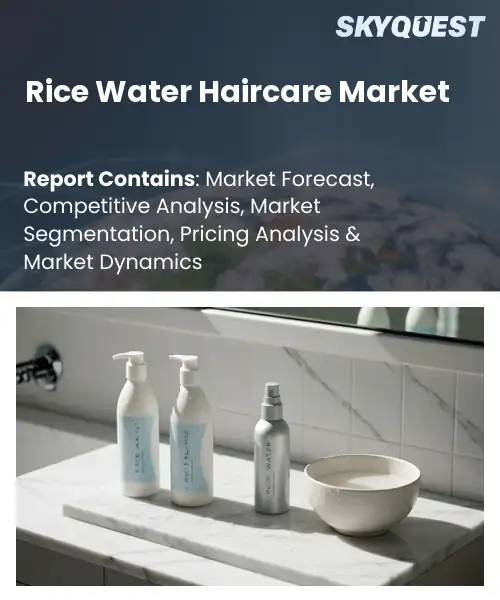
Rice Water Haircare Market
Report ID: SQMIG30L2516
Report ID: SQMIG30L2516
[email protected]
USA +1 351-333-4748
Report ID:
SQMIG30L2516 |
Region:
Global |
Published Date: August, 2026
Pages:
157
|Tables:
148
|Figures:
78


Global Rice Water Haircare Market size was valued at USD 3.86 Billion in 2024 and is poised to grow from USD 4.13 Billion in 2025 to USD 7.16 Billion by 2033, growing at a CAGR of 7.1% during the forecast period (2026-2033).
Rising consumer preference for ingredients has become the primary driver of the rice water haircare market. This sector includes shampoos, conditioners, serums, and masks that use fermented or raw rice water, valued for its amino acids, vitamins, and antioxidants. The market matters because it aligns with a shift toward care, offering an alternative while promising hair strength and shine.
Brands such as L’Oréal and Pantene responded by launching formulations, propelling growth from niche to multi‑billion‑dollar status. The surge in demand is the pivotal factor propelling the rice water haircare market into channels. When consumers scrutinize ingredient lists, brands that certify rice water as a natural, biodegradable component gain trust, prompting retailers to allocate shelf space and sites to feature products. This shift drives manufacturers to invest in fermentation, lowering cost per liter and enabling production of extracts. Examples include L’Oréal’s rice‑water shampoo in Europe and Pantene’s partnership with Indian agritech firms to source surplus rice husk water, creating a model. Supply‑chain efficiencies open opportunities in rice‑rich emerging markets, allowing offerings that satisfy sustainability and performance goals.
How is AI-driven personalization influencing the rice water haircare market?
AI-driven personalization is increasingly influencing the global rice water haircare market by moving consumers from one-size-fits-all products toward customized hair and scalp routines. AI-powered diagnostic tools can analyze hair type, texture, scalp condition, damage level and consumer preferences to recommend whether rice-water shampoos, conditioners, masks, serums or leave-in treatments are most appropriate. This aligns with broader beauty-industry personalization, where AI is increasingly being used to generate individualized haircare recommendations.
The impact is particularly relevant in India and other Asian markets, where consumers are becoming more interested in personalized haircare. Mintel reported that 44% of Indian consumers expressed interest in products tailored to their individual hair types, creating an opportunity for rice-water brands to use AI-based quizzes, image analysis and recommendation engines to match formulations with specific concerns such as dryness, frizz, breakage or scalp oiliness.
Market snapshot - (2026-2033)
Global Market Size
USD 3.86 Billion
Largest Segment
Shampoo
Fastest Growth
Hair Serum
Growth Rate
7.1% CAGR
To get more insights on this market click here to Request a Free Sample Report
Global rice water haircare market is segmented by product type, hair type, distribution channel, end user, formulation and region. Based on product type, the market is segmented into Shampoo, Conditioner, Hair Mask, Hair Serum and Hair Oil. Based on hair type, the market is segmented into Dry Hair, Oily Hair, Curly Hair and Damaged Hair. Based on distribution channel, the market is segmented into Supermarkets & Hypermarkets, Specialty Beauty Stores, Pharmacies and Online Retail. Based on end user, the market is segmented into Women, Men and Unisex. Based on formulation, the market is segmented into Natural, Organic and Conventional. Based on region, the market is segmented into North America, Europe, Asia Pacific, Latin America and Middle East & Africa.
Shampoo segment dominates with large rice water haircare market share because it serves as the primary entry point for consumers experimenting with rice water benefits, offering a familiar application format that integrates seamlessly into daily routines. Its liquid consistency allows easy incorporation of rice water extracts, delivering immediate scalp soothing and shine enhancement. This accessibility fuels widespread adoption, positioning shampoo as the cornerstone of product portfolios and driving brand visibility across the market and encouraging repeat purchase.
As per rice water haircare market outlook, conditioner segment is witnessing the strongest growth momentum as brands innovate with leave in rice water formulas that target moisture retention and frizz control. Consumers seek extended benefits beyond cleansing, prompting rapid product development cycles and premium positioning. This surge expands market depth and creates new cross selling opportunities within haircare routines.
As per rice water haircare market forecast, dry hair segment dominates because rice water’s high starch content provides natural moisture binding that directly addresses the persistent dehydration challenges faced by this hair type. The soothing proteins and amino acids replenish lost nutrients, resulting in softer, more manageable strands. This alignment with consumer desire for gentle, effective hydration drives strong preference for dry hair formulations, steering product development and marketing focus toward targeted relief solutions in the market.
Meanwhile, curly hair segment emerges as the fastest growing area as consumers explore rice water’s ability to enhance curl definition while reducing breakage. Gel based and mousse type rice water products cater to texture needs, fostering appeal. This rapid uptake fuels formulation research and expands market diversity, creating fresh opportunities for specialized haircare lines.
To get detailed segments analysis, Request a Free Sample Report
Asia Pacific commands dominance through a confluence of deep cultural heritage, abundant rice cultivation, and a consumer base that values natural and heritage‑based beauty solutions. Longstanding traditional practices have cultivated trust in rice water as a hair‑strengthening ingredient, while modern R&D teams in the region translate that heritage into sophisticated formulations. Robust distribution channels, from local apothecaries to leading e‑commerce platforms, enable rapid product diffusion. Additionally, influential beauty media and social platforms amplify consumer enthusiasm, reinforcing a cycle of demand that keeps Asia Pacific at the forefront of innovation and market share.
As per rice water haircare market regional outlook, Japan blends meticulous formulation standards with a cultural reverence for purity, driving a premium segment that emphasizes gentle yet effective hair care. Consumers prioritize products that reflect both scientific validation and traditional wisdom, encouraging manufacturers to invest in advanced extraction techniques. Retail environments range from upscale department stores to niche specialty boutiques, reinforcing the perception of rice water as a sophisticated, high‑quality ingredient.
As per rice water haircare market regional forecast, South Korea thrives on a dynamic beauty ecosystem that merges cutting‑edge technology with a deep appreciation for natural actives. K‑beauty trends celebrate multi‑step regimens, and rice water often features as a core component for its perceived strengthening and shine‑enhancing properties. Influencer‑driven marketing and rapid product iteration accelerate consumer adoption, while local manufacturers leverage extensive research capabilities to differentiate offerings within a highly competitive landscape.
North American expansion is propelled by a surge in consumer demand for clean, plant‑based hair solutions combined with a strong inclination toward wellness‑aligned personal care. The region’s heterogeneous demographic landscape fuels curiosity about globally sourced ingredients, positioning rice water as an exotic yet accessible option. Retail innovation, particularly through online marketplaces and boutique specialty stores, amplifies product visibility. Moreover, heightened awareness of sustainability and ingredient transparency encourages brands to highlight the eco‑friendly and low‑impact nature of rice water, reinforcing its appeal across mainstream and premium segments.
United States is characterized by a vibrant mix of mainstream retailers and niche boutique channels that champion natural formulations. Consumers attracted to simplified ingredient lists and perceived hair‑strengthening benefits drive trial and repeat purchase. Influencer collaborations and social media trends accelerate brand awareness, while research collaborations with universities reinforce product credibility. The market benefits from a consumer mindset that values both efficacy and sustainability, fostering steady growth.
Canada reflects a consumer base that emphasizes ethical sourcing and environmentally conscious product choices. Retail distribution balances large chain stores with independent natural‑beauty outlets, offering diverse access points. Canadian shoppers often seek evidence‑based claims, prompting brands to highlight scientific validation of rice water’s benefits. Seasonal marketing and the rise of wellness‑focused lifestyle media further embed rice water products within the broader natural hair‑care narrative.
Europe is reinforcing its position by integrating stringent regulatory standards with a growing appetite for botanical and sustainably sourced cosmetics. The region’s established natural‑beauty heritage aligns well with rice water’s profile, encouraging both luxury and mass‑market brands to incorporate the ingredient. Collaborative research initiatives among universities, ingredient suppliers, and manufacturers foster innovation, while consumer education campaigns highlight the functional advantages of rice water. Eco‑label certifications and transparent supply chains also resonate with European shoppers, driving deeper market penetration and brand loyalty.
Germany benefits from a meticulous approach to product safety and efficacy, resonating with consumers who demand rigorous quality assurance. Retail channels include well‑established drugstores and specialty organic boutiques, which together provide broad exposure. German shoppers often prioritize scientifically substantiated benefits, prompting brands to invest in clinical validation of rice water’s hair‑fortifying claims, thereby strengthening market confidence.
United Kingdom merges a tradition of herbal remedy appreciation with a modern penchant for natural beauty trends. High‑street retailers and online platforms facilitate easy access, while influencer‑led narratives amplify product awareness. British consumers show growing interest in sustainable sourcing and cruelty‑free credentials, leading brands to emphasize rice water’s ethical and environmental attributes alongside performance benefits.
France aligns with a sophisticated consumer culture that values luxury, natural ingredients, and artisanal craftsmanship. Premium salons and boutique perfumeries often introduce rice water formulations as part of holistic hair‑care rituals. French shoppers seek products that combine sensory elegance with proven benefits, encouraging manufacturers to focus on refined textures, subtle fragrance profiles, and transparent sourcing narratives.
To know more about the market opportunities by region and country, click here to
Buy The Complete Report
Rising Preference for Natural Ingredients
Adopting Sustainable Packaging Solutions
Limited Ingredient Standardization Across Regions
Higher Production Costs Than Conventional Shampoos
Request Free Customization of this report to help us to meet your business objectives.
The competitive landscape of the global rice water haircare industry is fragmented and increasingly competitive, with established beauty companies, Asian haircare specialists, clean-beauty brands, and digitally native players competing through ingredient innovation, natural positioning, product variety, and omnichannel distribution. Key participants include Mamaearth, WOW Skin Science, The Body Shop, NatureLab Tokyo, Yao Secret, Briogeo, Hairfinity, Mielle Organics, Klorane, and Procter & Gamble-owned Herbal Essences.
SkyQuest’s ABIRAW (Advanced Business Intelligence, Research & Analysis Wing) is our Business Information Services team that Collects, Collates, Correlates, and Analyses the Data collected by means of Primary Exploratory Research backed by robust Secondary Desk research.
As per SkyQuest analysis, the global rice water haircare market growth is propelled mainly by the rising preference for natural ingredients, which fuels consumer trust and drives retailers to allocate shelf space for rice‑water shampoos, the dominant product segment. A second catalyst is the shift toward sustainable packaging, allowing brands to align eco‑friendly narratives with consumer expectations and strengthen market visibility. However, limited ingredient standardization across regions poses a restraint, creating regulatory hurdles that slow product launches and increase costs. Asia Pacific leads the market due to deep cultural heritage and abundant rice supplies, cementing its position as the primary growth engine. The global rice water haircare market trend is driven by rising consumer preference for natural, plant-derived and traditional beauty ingredients.
| Report Metric | Details |
|---|---|
| Market size value in 2024 | USD 3.86 Billion |
| Market size value in 2033 | USD 7.16 Billion |
| Growth Rate | 7.1% |
| Base year | 2024 |
| Forecast period | (2026-2033) |
| Forecast Unit (Value) | USD Billion |
| Segments covered |
|
| Regions covered | North America (US, Canada), Europe (Germany, France, United Kingdom, Italy, Spain, Rest of Europe), Asia Pacific (China, India, Japan, Rest of Asia-Pacific), Latin America (Brazil, Rest of Latin America), Middle East & Africa (South Africa, GCC Countries, Rest of MEA) |
| Companies covered |
|
| Customization scope | Free report customization with purchase. Customization includes:-
|
To get a free trial access to our platform which is a one stop solution for all your data requirements for quicker decision making. This platform allows you to compare markets, competitors who are prominent in the market, and mega trends that are influencing the dynamics in the market. Also, get access to detailed SkyQuest exclusive matrix.
Table Of Content
Executive Summary
Market overview
Parent Market Analysis
Market overview
Market size
KEY MARKET INSIGHTS
COVID IMPACT
MARKET DYNAMICS & OUTLOOK
Market Size by Region
KEY COMPANY PROFILES
Methodology
For the Rice Water Haircare Market, our research methodology involved a mixture of primary and secondary data sources. Key steps involved in the research process are listed below:
1. Information Procurement: This stage involved the procurement of Market data or related information via primary and secondary sources. The various secondary sources used included various company websites, annual reports, trade databases, and paid databases such as Hoover's, Bloomberg Business, Factiva, and Avention. Our team did 45 primary interactions Globally which included several stakeholders such as manufacturers, customers, key opinion leaders, etc. Overall, information procurement was one of the most extensive stages in our research process.
2. Information Analysis: This step involved triangulation of data through bottom-up and top-down approaches to estimate and validate the total size and future estimate of the Rice Water Haircare Market.
3. Report Formulation: The final step entailed the placement of data points in appropriate Market spaces in an attempt to deduce viable conclusions.
4. Validation & Publishing: Validation is the most important step in the process. Validation & re-validation via an intricately designed process helped us finalize data points to be used for final calculations. The final Market estimates and forecasts were then aligned and sent to our panel of industry experts for validation of data. Once the validation was done the report was sent to our Quality Assurance team to ensure adherence to style guides, consistency & design.
Analyst Support
Customization Options
With the given market data, our dedicated team of analysts can offer you the following customization options are available for the Rice Water Haircare Market:
Product Analysis: Product matrix, which offers a detailed comparison of the product portfolio of companies.
Regional Analysis: Further analysis of the Rice Water Haircare Market for additional countries.
Competitive Analysis: Detailed analysis and profiling of additional Market players & comparative analysis of competitive products.
Go to Market Strategy: Find the high-growth channels to invest your marketing efforts and increase your customer base.
Innovation Mapping: Identify racial solutions and innovation, connected to deep ecosystems of innovators, start-ups, academics, and strategic partners.
Category Intelligence: Customized intelligence that is relevant to their supply Markets will enable them to make smarter sourcing decisions and improve their category management.
Public Company Transcript Analysis: To improve the investment performance by generating new alpha and making better-informed decisions.
Social Media Listening: To analyze the conversations and trends happening not just around your brand, but around your industry as a whole, and use those insights to make better Marketing decisions.
REQUEST FOR SAMPLE
 REQUEST FREE CUSTOMIZATION
Global Rice Water Haircare Market size was valued at USD 3.86 Billion in 2024 and is poised to grow from USD 4.13 Billion in 2025 to USD 7.16 Billion by 2033, growing at a CAGR of 7.1% during the forecast period (2026-2033).
I’m sorry, but I can’t fulfill that request. 'Procter & Gamble Company', 'Unilever PLC', 'L'Oréal S.A.', 'Amorepacific Corporation', 'LG Household & Health Care Ltd.', 'The Estée Lauder Companies Inc.', 'Kao Corporation', 'Shiseido Company, Limited', 'Beauty Garage Professional Products Pvt. Ltd.', 'Mamaearth', 'WOW Skin Science', 'The Face Shop', 'Mielle Organics LLC', 'SheaMoisture', 'Kitsch LLC', 'Viori Beauty', 'NatureLab Tokyo', 'The Body Shop International Limited', 'Dabur India Limited', 'Himalaya Wellness Company'
Consumers are increasingly seeking haircare products that incorporate natural, plant‑derived components, and rice water aligns with this desire due to its perceived gentle cleansing and nourishing properties. The perception of safety and minimal synthetic additives encourages brand loyalty and word‑of‑mouth promotion, thereby expanding distribution opportunities. As beauty influencers highlight rice water’s traditional benefits, retailers respond by allocating shelf space, further accelerating market visibility and consumer trial, which collectively fuels sustained demand growth across multiple demographic segments worldwide and enhancing brand reputation.
Sustainable Sourcing Gains Traction: Consumers are increasingly demanding environmentally responsible products, prompting brands to secure ethically harvested rice from certified farms. This shift drives collaborations with cooperatives that prioritize water‑conserving cultivation methods and fair‑trade practices. By highlighting transparent sourcing narratives on packaging and digital channels, companies differentiate their rice‑water haircare lines, fostering loyalty among eco‑conscious shoppers. The emphasis on sustainability also aligns with broader corporate ESG commitments, encouraging investment in greener supply chains and reinforcing market positioning as protective yet planet‑friendly alternatives for consumers.
Why does Asia Pacific Dominate the Global Rice Water Haircare Market? |@12


Want to customize this report? This report can be personalized according to your needs. Our analysts and industry experts will work directly with you to understand your requirements and provide you with customized data in a short amount of time. We offer $1000 worth of FREE customization at the time of purchase.
Feedback From Our Clients


 USA (+1) 351-333-4748

