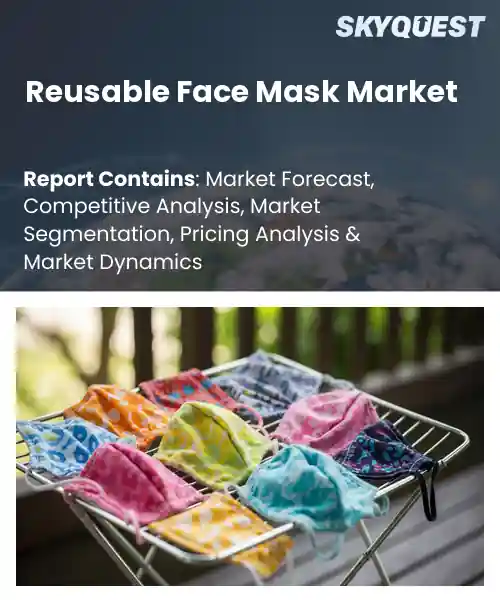
Reusable Face Mask Market
Report ID: SQMIG30L2386
Report ID: SQMIG30L2386
[email protected]
USA +1 351-333-4748
Report ID:
SQMIG30L2386 |
Region:
Global |
Published Date: May, 2026
Pages:
157
|Tables:
209
|Figures:
80


Global Reusable Face Mask Market size was valued at USD 7.9 Billion in 2024 and is poised to grow from USD 8.23 Billion in 2025 to USD 11.44 Billion by 2033, growing at a CAGR of 4.2% during the forecast period (2026-2033).
The global reusable face mask market is mainly characterized by the sale of multi-use respirators meant for washing and filtration, and the key motivating factor is a blend of public health concerns and environmental conservation. The market started as an alternative option for individuals suffering from allergies and certain employees but saw significant growth following the outbreak of COVID-19. As a result, demand grew as consumers needed affordable and durable solutions to single-use face masks. This occurred following regulatory and corporate initiatives alongside creativity from fashion and technology companies. For example, there are companies that manufacture washable respirators that can be fitted with filter inserts by apparel brands in collaboration with health tech organizations. In this light, one could argue that the key driver of future growth is ongoing innovations in filtration technology, health perception, and consumer behavior.
As mask designs include the integration of multiple layers of fabric, replaceable filter cartridges, and antimicrobial coating technology, companies begin to use reusable masks for their workers, thus providing huge orders that result in economies of scale and help reduce per-unit cost of production. Enhanced certification and third-party validation serve to drive purchases from schools, transit authorities, and even airlines, while online retail and subscription-based models develop loyal customer bases among consumers.
How is AI Enhancing Design And Personalization In The Reusable Face Mask Market?
The integration of AI is transforming the way reusable face masks are being designed and personalized with respect to fit analysis, materials, and try-on virtual simulations. Such characteristics are comprised of three dimensional AI-based face scanning, suggesting the optimal ergonomics of the product, generative design that recommends the mask's form and filter placement, and textile simulations aimed at ensuring the right levels of breathability and sustainability. Currently, consumers prioritize comfortable and reusable masks. Thus, many brands resort to AI technology to decrease the number of prototypes necessary, increase the first-time fit quality, and personalize their designs to provide an individual aesthetic experience. From virtual fitting tools applied in cosmetics and fashion transitioning to protective masks to material platforms allowing engineers to experiment with various textiles via simulations – these examples illustrate the fastening and user-centric process of product development thanks to AI technology.
Market snapshot - (2026-2033)
Global Market Size
USD 7.9 Billion
Largest Segment
Cloth Face Masks
Fastest Growth
Smart/Functional Face Masks
Growth Rate
4.2% CAGR
To get more insights on this market click here to Request a Free Sample Report
Global reusable face mask market is segmented by product type, material type, filter type, distribution channel, end user, usage application, price range and region. Based on product type, the market is segmented into Cloth Face Masks, Respirator-Style Reusable Masks, Transparent Face Masks, Fashion & Designer Face Masks, Sports & Performance Face Masks and Smart/Functional Face Masks. Based on material type, the market is segmented into Cotton, Polypropylene, Polyester, Silicone & Rubber, Neoprene and Others. Based on filter type, the market is segmented into Replaceable Filter Masks, Non-Replaceable Filter Masks and No Filter Masks. Based on distribution channel, the market is segmented into Online Retail, Supermarkets & Hypermarkets, Pharmacies & Drug Stores, Specialty Stores and Institutional & Bulk Sales. Based on end user, the market is segmented into Individual Consumers, Healthcare Institutions, Industrial & Commercial Users and Sports & Fitness Users. Based on usage application, the market is segmented into Personal Protection, Healthcare Use, Industrial Safety, Sports & Outdoor Activities and Fashion & Lifestyle. Based on price range, the market is segmented into Economy, Mid-Range and Premium. Based on region, the market is segmented into North America, Europe, Asia Pacific, Latin America and Middle East & Africa.
The dominant segment is the Cloth Face Masks segment as they feature the combination of comfort, familiarity, and washability that makes them the best choice for everyday use. The high material versatility allows for personalization and washing without any effect on efficiency, which sustains consumer preference. Companies prefer them due to the low cost of production and popularity of the masks on the market, which ensures a self-reinforcing demand cycle.
On the other hand, the fastest growing category of face masks is the Smart/Functional Face Masks segment as these products are designed according to rising health awareness and the need for convenience in wearing face coverings. Their fast development and advanced technological features ensure popularity among the first users and businesses, encouraging R&D efforts.
Replaceable Filter Masks category products lead since the concept of modular filters allows combining reusable masks with guarantee of particles' capture by the user, which is important both from the perspectives of the consumer need to be sustainable and to have reliable protection. The opportunity to replace only the filtration system inside the shell makes people more interested due to the lower cost of using the mask over a period of time. Companies promote their filter mechanisms and certification standards in order to increase their sales.
At the same time, the growth of Non-Replaceable Filter Masks segment appears to be the biggest among all others due to the advantages of maintenance free masks. In spite of being smaller in size and lower in cost than other masks, such products are certified and thus become more popular.
To get detailed segments analysis, Request a Free Sample Report
The Asia-Pacific region takes the lead owing to a combination of factors including its manufacturing prowess, technological advancements in textiles, and the wide cultural acceptability of wearing face coverings. With well-established supply chains and cost-effective manufacturing processes, the region can scale up its operations and offer a diverse range of products based on different levels of performance and aesthetic designs. The high density of population in cities and the prevalence of online shopping platforms ensure a consistent demand from within, and its focus on exports gives the region a geographical edge. In partnership with technology companies, textile manufacturers, and fashion designers, there is an improvement in material qualities and designs that are attractive.
The Reusable Face Mask Market in Japan combines strict quality measures with a customer focus on hygiene and fashion. Manufacturers emphasize efficient filtering fabrics as well as ergonomic designs, whereas the designers opt for subtle aesthetic features attractive to customers. The well-developed sales network, together with technological cooperation, ensures effective product manufacturing and delivery, and high consumer demand for long-lasting products ensures that manufacturers emphasize performance and sustainability.
South Korea Reusable Face Masks Market reflects the combination of the trend-setting behavior of the consumer community with innovative fabric technologies. The local producers apply their fashion sense to offer attractive designs for the masks. Scientific developments in the field of advanced textiles ensure that the masks are comfortable and breathable. Effective online marketing channels facilitate quick adoption by city dwellers. Synergy between the beauty and technology industries ensures product differentiation.
Growth in North America stems from the synergy of increased health consciousness, consumer inclination towards sustainable products, and thriving retail and online markets. Corporate needs arising from the workplace and transport sectors supplement personal purchases, while advancements within the private sector offer unique materials, better ergonomics, and innovative designs. Branding through marketing, partnerships with influencers and fashion designers, and wider acceptance by the fashion industry expand the customer base to those purchasing for reasons other than functionality. Clarity in regulation and standards increases product legitimacy, making it easier for businesses to buy the product and sell it in retail environments. The ability to adapt product range due to local manufacturing and international supply chain networks, along with increasing investment in sustainable textile technology, drives further product development and market penetration among different consumer groups. Subscription services, customization options, and alliances with medical professionals and testing facilities enhance consumer trust and create recurring sales.
Market for Reusable Face Masks in the United States is marked by brand rivalry, extensive retail reach, and emphasis on performance testing and certification. Customers expect products that combine filtration effectiveness with comfort and styling, leading to development in both areas. Government organizations' and corporate well-being programs' purchases ensure consistent sales, whereas influencer campaigns and media reports generate awareness. Sustainable materials and laundering products have become differentiating factors among consumer segments and retail outlets.
Sustainable Reusable Face Mask Market Canada stresses the importance of being sustainable as well as meeting quality and regulatory standards that make product supply reliable. Both consumers and organizations seek masks that last long and feel good on their face, leading brands to focus more on providing clean-up solutions and recyclability of products. Local brands and smaller companies rely heavily on environmental initiatives and engaging with the local community, whereas foreign trade is another channel used for mask distribution.
The European region is gaining influence through stringent testing and certification processes, vast knowledge of textiles and an increased focus on sustainability and circularity. Testing methods that are standardized across the region along with certification processes ensure greater credibility, thus facilitating their use by consumers and institutional purchasers alike. Cooperation between research into material sciences and the conventional textile manufacturing sector allows for the creation of masks that not only provide effective filtration but are comfortable and built to last. Designers who specialize in fashion work hand in hand with technical designers to create fashionable yet highly effective masks, thus resulting in distinct categorization into ordinary and premium products.
Reusable Face Mask Market in Germany is characterized by high precision in engineering, high standards of quality, and manufacturing strength. The buyers prefer proven performance and durability along with workplace use of masks, which compels manufacturers to concentrate on tough construction of face masks along with proper cleaning techniques. Purchasing of face masks by the industry as well as health sector guarantees that the reusable masks have certification. The consumer demand for durability and effective design drives retail market sales.
United Kingdom Reusable Face Mask Market relies on advantages like urban retailing, high design impact, and scientific research. Style, comfort, and eco-friendliness are among customers' demands that make producers come up with attractive reusable masks with real performance characteristics. Wide distribution is provided by retailers and Internet resources, while innovative reusable masks are achieved by cooperation between designers and technical manufacturers.
Market Reusable Masks France is a combination of fashion sense and textile engineering, as well as eco-friendliness. Fashion designers and luxury brands treat reusable face masks as lifestyle items, increasing aesthetic appeal while demanding practical performance from them. Both boutique stores and regular retail outlets feature masks that strike a perfect balance between stylish looks and functional efficiency. Innovation in textiles paired with atelier craftsmanship leads to top-quality material.
To know more about the market opportunities by region and country, click here to
Buy The Complete Report
Rising Health Awareness
The increased knowledge about respiratory protection and infections control among individuals and organizations is resulting in the preference of washable masks as opposed to disposable masks. The adoption of better masks means that manufacturers will have incentives to produce more masks as well as come up with innovative ways of manufacturing masks. With increased demand for more sustainable masks, retailers will adopt reusable policies that help to increase sales as well as the market base of masks.
Technological Material Innovations
Improvements in the fields of textile engineering and filtration have allowed producers to produce a mask that provides a blend of breathability, filtration effectiveness, and durability, making it more appealing to a larger portion of society. In addition to incorporating antimicrobial coatings, adjustable designs, and washable filters, these developments add value to a reusable face covering while extending its lifespan, resulting in an incentive for repurchasing and loyalty. As mask designers improve comfort and fit, institutions as well as individuals are more likely to buy higher-end products, driving collaboration and innovation in the industry.
Consumer Convenience Preferences
Consumer resistance to the use of reusable face masks because of their convenience and initial cost results in consumers preferring disposable masks. Most users will not adhere to the routine maintenance procedures needed when using reusable products because they prefer ease and hygiene during one-time usage. As such, consumers will continue to use disposable face masks despite having access to better products in the market since they cannot adhere to the extra maintenance needed with reusable face masks.
Regulatory Standards Variation
Different regulations and certifications required in different regions make it difficult for manufacturers who want to sell their reusable face masks abroad, which affects their design, labeling, and even filtering capacity. Differences in testing methods and time required for getting approvals lead to compliance difficulties, which may discourage small companies from entering foreign markets. Having to adhere to different standards makes production more expensive and decreases standardization opportunities, thus lowering economies of scale.
Request Free Customization of this report to help us to meet your business objectives.
Incumbents and nimble new players competing in areas of durability, filtering capability, and supply linkages form the competitive landscape, which creates opportunities for product differentiation and swift go-to-market activities. Companies focus on mergers and acquisitions (M&As) and collaborations in manufacturing in order to increase their capacity, as has been witnessed from the latest innovations in the industry. Start-ups emphasize intelligent sensing and circular manufacturing processes.
Sustainable Materials Shift: The demand for reusable face masks now depends heavily on the need for sustainability, leading manufacturers to develop more sustainable products such as those made from biodegradable fibers and recycled materials. It emphasizes the importance of sustainable sourcing and lifecycle of the products, creating opportunities for partnerships within the supply chain. Brands are using sustainable initiatives as a way of building brand loyalty and justifying premium pricing while procurement buyers prefer brands that can prove their sustainability.
Smart Integration with Wearables: The manufacturers of reusable masks are looking at ways of integrating their products within wearables ecosystems, whereby they will offer users more value by incorporating sensors and connectivity to health platforms. This move ensures that masks become part of a broader set of personal protective systems that help to provide support to occupational safety programs, monitor health remotely, and offer consumers additional convenience. Cooperation with technology companies allows for innovation and service provision based on data, thus creating differentiation.
SkyQuest’s ABIRAW (Advanced Business Intelligence, Research & Analysis Wing) is our Business Information Services team that Collects, Collates, Correlates, and Analyses the Data collected by means ofPrimary Exploratory Research backed by robust Secondary Desk research.
As per SkyQuest analysis, the global market for reusable face masks has been fueled by the increasing health consciousness resulting in the need for washable products. In addition, technological innovations concerning materials continue to fuel the industry. Nevertheless, the consumers' desire for one-time-use products poses a challenge that affects their usage. In terms of regions, the APAC region has remaineddominant in the industry due to factors such as scale of manufacture, textile advances and social practices. Cloth face masks form the biggest market share due to reasons such as familiarity, affordability and simplicity of use.
| Report Metric | Details |
|---|---|
| Market size value in 2024 | USD 7.9 Billion |
| Market size value in 2033 | USD 11.44 Billion |
| Growth Rate | 4.2% |
| Base year | 2024 |
| Forecast period | (2026-2033) |
| Forecast Unit (Value) | USD Billion |
| Segments covered |
|
| Regions covered | North America (US, Canada), Europe (Germany, France, United Kingdom, Italy, Spain, Rest of Europe), Asia Pacific (China, India, Japan, Rest of Asia-Pacific), Latin America (Brazil, Rest of Latin America), Middle East & Africa (South Africa, GCC Countries, Rest of MEA) |
| Companies covered |
|
| Customization scope | Free report customization with purchase. Customization includes:-
|
To get a free trial access to our platform which is a one stop solution for all your data requirements for quicker decision making. This platform allows you to compare markets, competitors who are prominent in the market, and mega trends that are influencing the dynamics in the market. Also, get access to detailed SkyQuest exclusive matrix.
Table Of Content
Executive Summary
Market overview
Parent Market Analysis
Market overview
Market size
KEY MARKET INSIGHTS
COVID IMPACT
MARKET DYNAMICS & OUTLOOK
Market Size by Region
KEY COMPANY PROFILES
Methodology
For the Reusable Face Mask Market, our research methodology involved a mixture of primary and secondary data sources. Key steps involved in the research process are listed below:
1. Information Procurement: This stage involved the procurement of Market data or related information via primary and secondary sources. The various secondary sources used included various company websites, annual reports, trade databases, and paid databases such as Hoover's, Bloomberg Business, Factiva, and Avention. Our team did 45 primary interactions Globally which included several stakeholders such as manufacturers, customers, key opinion leaders, etc. Overall, information procurement was one of the most extensive stages in our research process.
2. Information Analysis: This step involved triangulation of data through bottom-up and top-down approaches to estimate and validate the total size and future estimate of the Reusable Face Mask Market.
3. Report Formulation: The final step entailed the placement of data points in appropriate Market spaces in an attempt to deduce viable conclusions.
4. Validation & Publishing: Validation is the most important step in the process. Validation & re-validation via an intricately designed process helped us finalize data points to be used for final calculations. The final Market estimates and forecasts were then aligned and sent to our panel of industry experts for validation of data. Once the validation was done the report was sent to our Quality Assurance team to ensure adherence to style guides, consistency & design.
Analyst Support
Customization Options
With the given market data, our dedicated team of analysts can offer you the following customization options are available for the Reusable Face Mask Market:
Product Analysis: Product matrix, which offers a detailed comparison of the product portfolio of companies.
Regional Analysis: Further analysis of the Reusable Face Mask Market for additional countries.
Competitive Analysis: Detailed analysis and profiling of additional Market players & comparative analysis of competitive products.
Go to Market Strategy: Find the high-growth channels to invest your marketing efforts and increase your customer base.
Innovation Mapping: Identify racial solutions and innovation, connected to deep ecosystems of innovators, start-ups, academics, and strategic partners.
Category Intelligence: Customized intelligence that is relevant to their supply Markets will enable them to make smarter sourcing decisions and improve their category management.
Public Company Transcript Analysis: To improve the investment performance by generating new alpha and making better-informed decisions.
Social Media Listening: To analyze the conversations and trends happening not just around your brand, but around your industry as a whole, and use those insights to make better Marketing decisions.
REQUEST FOR SAMPLE
 REQUEST FREE CUSTOMIZATION
Global Reusable Face Mask Market size was valued at USD 7.9 Billion in 2024 and is poised to grow from USD 8.23 Billion in 2025 to USD 11.44 Billion by 2033, growing at a CAGR of 4.2% during the forecast period (2026-2033).
Competitive landscape is shaped by incumbents and agile entrants competing on durability, filtration technology, and supply partnerships, which drives product differentiation and rapid go to market activity. Manufacturers pursue M&A and contract manufacturing tie ups to scale production, as seen in recent industry innovation pushes. Startups push smart sensing and circular production models, exemplified by VitalMask and Contingenci. '3M Company', 'Honeywell International Inc.', 'Kimberly-Clark Corporation', 'Ansell Limited', 'Alpha Pro Tech, Ltd.', 'Moldex-Metric, Inc.', 'Prestige Ameritech', 'Cambridge Mask Co.', 'Airinum AB', 'Respro Ltd.', 'Totobobo Pte. Ltd.', 'Vogmask', 'RZ Mask', 'Debrief Me Ltd.', 'idMASK Co., Ltd.', 'Maskc LLC', 'Happy Masks', 'Freka Medical', 'Dettol', 'Unicharm Corporation'
Growing public awareness of respiratory health and infection prevention has led consumers and institutions to prioritize durable, washable face coverings over disposables. This shift encourages investment in higher quality reusable masks that offer long-term protection, comfort, and cost efficiency, prompting manufacturers to expand product lines and innovate materials. As demand emphasizes sustainability and repeated use, retailers and employers adopt reuse-friendly procurement policies, reinforcing supply chain scaling and marketing efforts that further normalize reusable masks and support consistent market expansion.
Sustainable Materials Shift: Demand for reusable face masks is increasingly driven by sustainability priorities across consumer and institutional buyers, prompting manufacturers to innovate with biodegradable fibers, recycled textiles and closed-loop production models. This trend elevates product differentiation through transparent sourcing, lifecycle claims and end-of-life solutions, encouraging partnerships across supply chains. Brands are leveraging sustainable narratives to build loyalty and justify premium positioning while procurement buyers favor vendors that demonstrate reduced environmental impact and measurable circularity commitments and verified traceability.
Why does Asia Pacific Dominate the Global Reusable Face Mask Market? |@12


Want to customize this report? This report can be personalized according to your needs. Our analysts and industry experts will work directly with you to understand your requirements and provide you with customized data in a short amount of time. We offer $1000 worth of FREE customization at the time of purchase.
Feedback From Our Clients


 USA (+1) 351-333-4748

