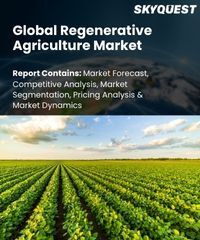
Top Regenerative Agriculture Companies

Skyquest Technology's expert advisors have carried out comprehensive research and identified these companies as industry leaders in the Regenerative Agriculture Market. This Analysis is based on comprehensive primary and secondary research on the corporate strategies, financial and operational performance, product portfolio, market share and brand analysis of all the leading Regenerative Agriculture industry players.

Regenerative Agriculture Market Competitive Landscape

Global Regenerative Agriculture Market is relatively fragmented, with several small and large players operating in the market. The key companies are increasingly focusing on implementing regenerative agriculture practices, such as cover cropping, crop rotation, reduced tillage, and the use of natural fertilizers and pesticides. They are also investing in innovative technologies, such as precision agriculture tools and blockchain-based traceability systems, to enhance the sustainability and transparency of their operations. In addition to these players, there are also several non-profit organizations, research institutions, and government agencies that are actively involved in promoting and implementing regenerative agriculture practices. For example, the Rodale Institute, the Savory Institute, and the Soil Health Institute are some of the leading organizations that are working to advance regenerative agriculture practices and research.

Top Players in Regenerative Agriculture Market

  • General Mills Inc. (USA) 
  • Danone S.A. (France) 
  • Nestlé S.A. (Switzerland) 
  • Cargill, Inc. (USA) 
  • Alter Eco Americas, Inc. (USA) 
  • Bluebird Grain Farms (USA) 
  • CIBO Technologies (USA) 
  • Continuum Ag (USA) 
  • EcoFarm (South Africa) 
  • Grounded South Africa (South Africa) 
  • RegenAG (Australia) 
  • Regeneration Canada (Canada) 
  • Soil Capital Ltd. (UK) 
  • White Oak Pastures (USA) 
  • Green Cover (USA) 
  • Propagate Ventures (USA) 
  • VIRENXIA (India) 
  • Community Alliance with Family Farmers (CAFF) (USA) 
  • Carbon Underground (USA) 
  • Mad Agriculture (USA)

Regenerative Agriculture Market

REQUEST FOR SAMPLE

Want to customize this report? REQUEST FREE CUSTOMIZATION

FAQs

Segments of the regenerative agriculture market include product (crop-based and livestock-based), application (farming and pastoralism), practice (ex., agroforestry, silvopasture), end user (farmers, institutions), and region (North America, Europe, Asia Pacific, etc.).

Regenerative agriculture is mainly an application in farming and pastoralism. Within farming the activities includes crop rotation and reduced tillage, while pastoralism may be based on holistic grazing and using mixed-species livestock for sustainable solutions for environmental and soil health.

Government policies can help or hinder the adoption of regenerative agriculture through regulations and funding. Strong funding in favor of regenerative agriculture (like the U.S. Agriculture Improvement Act) will certainly encourage people to consider regenerative practices. However, if some government funding subsidizes conventional farming methods this can hurt regenerative practice because the NGO, co-op, or funders may incentivize the use of regulated subsidized funding as they are more confident in their application rather than being innovative through stratified risk. This is a significant policy influence barrier. 

North America is the most dominant region as government and institutional support is prominent, consumer demand for sustainable products is active, and significant players reside in this region. Initiatives across North America, specifically the United States with its funding of agricultural research and coordinated subsidies through the Agriculture Improvement Act, have established the road map to make regenerative agriculture a common practice. 

The market for regenerative agriculture is expected to have a CAGR of 14.6% from 2025 to 2032.

Key drivers include consumer demand for sustainable and ethical food options and mounting concerns about climate change. Regenerative practices may help lower greenhouse gas emissions, enhance soil health and achieve consumer and government sustainability expectations. 

Innovations include blockchain-based traceability, precision agriculture, and microbes. Large partnerships such as Nestlé's NESCAFÉ Plan 2030, and General Mills' collaboration with Regrow Agriculture implement regenerative practices within shared global farmland.

Growing trends include the increase in demand for organic, natural food, increasing understanding of eco-friendly farming ideas and growing investments in sustainable inputs (e.g., crop inputs) and sustainable services (e.g., education and support). Businesses are advancing sustainability objectives, and governments are beginning or enhancing efforts for legitimate approaches to sustainability.

Regenerative Agriculture Market size was valued at USD 9.98 Billion in 2024 and is poised to grow from USD 11.44 Billion in 2025 to USD 34.03 Billion by 2033, growing at a CAGR of 14.6% during the forecast period (2026–2033).

Global Regenerative Agriculture Market is relatively fragmented, with several small and large players operating in the market. The key companies are increasingly focusing on implementing regenerative agriculture practices, such as cover cropping, crop rotation, reduced tillage, and the use of natural fertilizers and pesticides. They are also investing in innovative technologies, such as precision agriculture tools and blockchain-based traceability systems, to enhance the sustainability and transparency of their operations. In addition to these players, there are also several non-profit organizations, research institutions, and government agencies that are actively involved in promoting and implementing regenerative agriculture practices. For example, the Rodale Institute, the Savory Institute, and the Soil Health Institute are some of the leading organizations that are working to advance regenerative agriculture practices and research. 'General Mills Inc. (USA) ', 'Danone S.A. (France) ', 'Nestlé S.A. (Switzerland) ', 'Cargill, Inc. (USA) ', 'Alter Eco Americas, Inc. (USA) ', 'Bluebird Grain Farms (USA) ', 'CIBO Technologies (USA) ', 'Continuum Ag (USA) ', 'EcoFarm (South Africa) ', 'Grounded South Africa (South Africa) ', 'RegenAG (Australia) ', 'Regeneration Canada (Canada) ', 'Soil Capital Ltd. (UK) ', 'White Oak Pastures (USA) ', 'Green Cover (USA) ', 'Propagate Ventures (USA) ', 'VIRENXIA (India) ', 'Community Alliance with Family Farmers (CAFF) (USA) ', 'Carbon Underground (USA) ', 'Mad Agriculture (USA)'

As consumers become more environmentally conscious, they are looking for sustainable and ethical food production practices. This demand for sustainable agriculture practices has led to a rise in regenerative agriculture, which is viewed as a more sustainable and environmentally friendly approach to farming. Consumers are willing to pay a premium for products that are produced using a regenerative practice, which has led to an increase in the number of farmers adopting these practices. In addition, many companies are starting to invest in regenerative agriculture to meet consumer demand and improve their sustainability profiles.

Rising demand for organic and natural food products: Consumers are increasingly looking for food products that are organic, natural, and sustainably produced. This has led to a growing demand for products that are produced using regenerative agriculture practices, as they are perceived as healthier, more environmentally friendly, and of higher quality. As a result, many food producers and retailers are starting to source ingredients from regenerative agriculture farms, and some are even investing in regenerative agriculture practices themselves to meet this demand. This trend is expected to continue as more consumers become aware of the benefits of regenerative agriculture and demand for sustainable and environmentally friendly products grows.

North America dominated the Global Regenerative Agriculture Market. The region is expected to witness substantial growth due to the increasing adoption of regenerative agriculture practices and the presence of several key players in the region. The United States is expected to dominate the North American market, driven by favorable government initiatives and subsidies, rising consumer awareness, and increasing demand for sustainable agriculture products. The U.S. government has implemented several initiatives to promote regenerative agriculture practices, such as the Agriculture Improvement Act of 2018, which provides funding for regenerative agriculture research and supports farmers' transition to sustainable agriculture practices. Moreover, the increasing demand for organic and sustainable food products among consumers is driving the growth of the regenerative agriculture market in North America. Consumers are becoming more aware of the negative impact of conventional agriculture practices on the environment and are demanding sustainable and eco-friendly food products. This is creating opportunities for farmers and companies to adopt regenerative agriculture practices and cater to the growing demand for sustainable food products.

Request Free Customization

Want to customize this report? This report can be personalized according to your needs. Our analysts and industry experts will work directly with you to understand your requirements and provide you with customized data in a short amount of time. We offer $1000 worth of FREE customization at the time of purchase.

logo-images

Feedback From Our Clients

Global Regenerative Agriculture Market
Regenerative Agriculture Market

Report ID: SQMIG30H2078

sales@skyquestt.com
USA +1 351-333-4748

BUY NOW GET FREE SAMPLE


