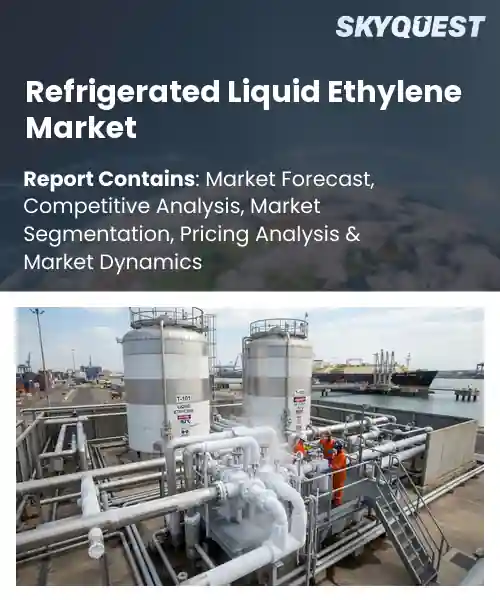
Refrigerated Liquid Ethylene Market
Report ID: SQMIG15A2884
Report ID: SQMIG15A2884
[email protected]
USA +1 351-333-4748
Report ID:
SQMIG15A2884 |
Region:
Global |
Published Date: September, 2026
Pages:
157
|Tables:
120
|Figures:
77


Global Refrigerated Liquid Ethylene Market size was valued at USD 4.85 Billion in 2024 and is poised to grow from USD 5.05 Billion in 2025 to USD 7.03 Billion by 2033, growing at a CAGR of 4.2% during the forecast period (2026-2033).
The refrigerated liquid ethylene market comprises the production, storage, and distribution of ethylene cooled below its condensation point, enabling safe transport and downstream processing. Its significance stems from ethylene’s role as a foundational building block for plastics, chemicals, and fibers, making a cold‑chain essential for minimizing vapor loss and ensuring feedstock consistency. Historically, demand surged in the 1990s as Asian polymer manufacturers expanded, prompting producers such as SABIC and LyondellBasell to invest in cryogenic vessels and insulated pipelines. Over the past decade, tighter regulations and a shift toward polyethylene have intensified the need for refrigeration, solidifying the market’s strategic relevance. One key factor driving global expansion is the rising demand for polyethylene in packaging, which requires a stable ethylene feed delivered at cryogenic temperatures to maintain polymerization efficiency. As manufacturers adopt slurry and gas‑phase reactors, temperature deviation can cause catalyst deactivation, prompting plants to upgrade refrigeration infrastructure. This creates opportunities for equipment suppliers to provide chillers, insulated storage tanks, and monitoring platforms that reduce energy consumption. A Gulf Coast petrochemical hub installed a modular refrigeration unit that cut utility costs by 12 percent while supporting a 15 percent increase in ethylene throughput, illustrating how operational improvements translate into market growth.
How are AI and IoT technologies enhancing safety and logistics in the refrigerated liquid ethylene market?
AI and IoT are reshaping safety and logistics in the refrigerated liquid ethylene market by creating continuous, data‑driven oversight of temperature, pressure and leak detection. Sensors embedded in storage tanks transmit real‑time metrics to cloud platforms where machine learning models flag anomalies before they become hazards. Operators can remotely adjust cooling cycles, schedule maintenance and optimize routing for deliveries, reducing human exposure and product loss. The integration of predictive analytics with automated alerts makes cold‑chain management more resilient, supporting higher throughput while meeting stringent safety regulations. As the market expands, these technologies enable tighter control of volatile ethylene streams and smoother coordination across supply networks.No verified recent development is available.
Market snapshot - (2026-2033)
Global Market Size
USD 4.85 Billion
Largest Segment
Polymer Grade Ethylene
Fastest Growth
Other Grades
Growth Rate
4.2% CAGR
To get more insights on this market click here to Request a Free Sample Report
Global refrigerated liquid ethylene market is segmented by grade, storage & distribution, application, end-use industry and region. Based on grade, the market is segmented into Polymer Grade Ethylene, Chemical Grade Ethylene and Other Grades. Based on storage & distribution, the market is segmented into Bulk Storage, Bulk Transportation and Specialized Containers. Based on application, the market is segmented into Polyethylene Production, Ethylene Oxide Production, Ethylene Dichloride Production, Ethylbenzene Production and Other Chemical Applications. Based on end-use industry, the market is segmented into Plastics & Polymers, Chemicals, Packaging and Other Industries. Based on region, the market is segmented into North America, Europe, Asia Pacific, Latin America and Middle East & Africa.
Polymer grade ethylene segment dominates because it directly supplies the primary raw material for high volume polyethylene manufacturing, which drives the bulk of ethylene consumption. Its purity specifications align with the stringent performance requirements of polymer producers, fostering strong, long term contracts. The consistent demand from downstream plastic converters creates economies of scale in production and logistics, reinforcing its leadership position within the refrigerated liquid ethylene market.
However, chemical grade ethylene segment is witnessing the strongest growth momentum as manufacturers expand its use in ethylene oxide and ethylene dichloride pathways. Emerging applications in specialty chemicals and stricter sustainability regulations encourage producers to adopt more versatile grades, spurring investment in tailored processing and expanding market opportunities for new downstream products.
Bulk storage segment leads because it provides the most cost effective solution for holding large volumes of refrigerated ethylene, enabling producers to balance production cycles with market demand. Advanced insulation technologies reduce boil off losses, while centralized facilities streamline inventory management and enable rapid response to price fluctuations. This operational flexibility makes bulk storage the preferred choice for major suppliers seeking to optimize supply chain resilience.
Meanwhile, specialized containers segment emerges as the key high growth area as customers demand flexible, smaller scale delivery for niche applications such as on site ethylene oxide plants. Innovations in refrigerated vessel design improve temperature stability and safety, attracting users who require rapid deployment and reduced inventory footprints, thereby broadening market reach and stimulating adoption.
To get detailed segments analysis, Request a Free Sample Report
Asia Pacific leads the refrigerated liquid ethylene market through a synergistic blend of advanced petrochemical complexes, high demand for ethylene derivatives, and strong downstream manufacturing capabilities. The region benefits from a long‑established infrastructure for cryogenic storage and transportation, supported by a skilled engineering workforce. Strategic investments in sustainable production processes and collaborative research initiatives further reinforce competitiveness. Proximity to major consumer bases in automotive, packaging, and chemicals amplifies responsiveness, while supportive regulatory frameworks encourage innovation in safety and efficiency. Collectively these factors create a resilient ecosystem that sustains dominance on the global stage. The region also leverages extensive export corridors that connect to emerging markets, facilitating rapid adoption of chilled ethylene solutions. Continuous upgrades to logistics networks ensure minimal loss and high reliability throughout the supply chain, reinforcing confidence among end‑users.
Japan Refrigerated Liquid Ethylene Market
Refrigerated Liquid Ethylene Market in Japan is underpinned by a mature petrochemical sector that integrates cutting‑edge cryogenic technologies with high‑precision manufacturing. Strong collaboration between research institutes and large‑scale producers drives continuous improvement in storage safety and energy efficiency. Domestic demand from automotive plastics and high‑value packaging fuels steady consumption, while export‑oriented facilities benefit from streamlined logistics hubs that ensure rapid delivery to regional customers. Regulatory emphasis on environmental stewardship further shapes operational practices, encouraging adoption of low‑emission refrigeration cycles.
South Korea Refrigerated Liquid Ethylene Market
Refrigerated Liquid Ethylene Market in South Korea benefits from aggressive industrial diversification and a robust export framework that prioritizes high‑purity ethylene applications. Advanced cryogenic handling expertise is supported by leading engineering firms that provide customized solutions for chemical, electronics, and specialty polymer sectors. Ongoing investments in digital monitoring systems enhance safety and traceability, while government incentives promote adoption of greener refrigeration methods across the supply chain. Strong collaboration between academia and industry accelerates development of low‑temperature process innovations that strengthen competitive advantage.
The North American landscape experiences rapid expansion driven by a convergence of advanced manufacturing demand, strategic infrastructure upgrades, and a proactive environmental agenda. Large‑scale ethylene producers are integrating state‑of‑the‑art cryogenic storage systems to meet heightened requirements for safety and product integrity across automotive, food packaging, and specialty chemical sectors. Investment in high‑efficiency logistics networks reduces thermal loss, while regulatory bodies encourage adoption of greener refrigeration alternatives. Collaborative research programs between industry leaders and technical universities foster continuous refinement of insulated transport technologies. This ecosystem of innovation, combined with strong consumer purchasing power, propels sustained growth throughout the region. Emerging applications in renewable fuels and high‑performance polymers create additional demand, prompting facilities to scale up chilled ethylene capabilities. Energy‑cost optimization initiatives further motivate stakeholders to adopt low‑loss refrigeration designs, enhancing overall competitiveness.
United States Refrigerated Liquid Ethylene Market
United States Refrigerated Liquid Ethylene Market is characterized by extensive petrochemical corridors that integrate cutting‑edge cryogenic solutions with high‑volume production lines. The market benefits from strong private‑sector investment in safety‑focused storage technology, supported by a regulatory framework that emphasizes risk mitigation and environmental stewardship. Demand from automotive lightweighting, advanced packaging, and renewable fuel synthesis drives continuous capacity expansion, while logistics innovations ensure rapid, temperature‑controlled delivery across vast geographic distances. These dynamics reinforce the United States position as a leader in chilled ethylene supply.
Canada Refrigerated Liquid Ethylene Market
Canada Refrigerated Liquid Ethylene Market leverages abundant natural gas resources and a well‑developed cold‑chain infrastructure to support efficient ethylene handling. The market emphasizes low‑emission refrigeration technologies that align with national sustainability goals, fostering adoption across petrochemical hubs and specialty chemical manufacturers. Proximity to major North American demand centers enables streamlined cross‑border logistics, while collaborative initiatives between research institutes and industry accelerate development of advanced insulation materials. Government incentives for clean energy further stimulate investment in high‑efficiency cryogenic systems.
Europe strengthens its position through a concerted focus on technological excellence, stringent safety standards, and a transition toward greener production pathways. Leading chemical hubs integrate sophisticated cryogenic storage with digital monitoring to achieve unparalleled product purity and traceability. Collaborative policy frameworks across member states promote harmonized regulations that facilitate cross‑border trade while upholding rigorous environmental criteria. Investment in renewable energy sources for refrigeration processes reduces carbon footprints, aligning with the region’s sustainability commitments. Academic‑industry partnerships advance research on advanced insulation materials and low‑temperature catalysts, fostering continual innovation. These strategic actions collectively enhance Europe’s competitiveness and reinforce its role as a key supplier of high‑quality refrigerated liquid ethylene. Emerging demand for high‑performance polymer applications and renewable fuel intermediates further incentivizes capacity upgrades, while collaborative standards bodies ensure interoperability of storage equipment across the continent.
Germany Refrigerated Liquid Ethylene Market
Germany Refrigerated Liquid Ethylene Market benefits from a dense network of petrochemical clusters that combine precision engineering with world‑class cryogenic expertise. The market emphasizes energy‑efficient refrigeration cycles, supported by robust research institutions that develop next‑generation insulation technologies. Strong demand from automotive lightweight materials and high‑value packaging drives continuous investment in storage infrastructure. Collaborative initiatives with neighboring countries streamline cross‑border logistics, reinforcing Germany role as a central hub for high‑purity chilled ethylene supply.
United Kingdom Refrigerated Liquid Ethylene Market
United Kingdom Refrigerated Liquid Ethylene Market leverages a heritage of chemical manufacturing excellence alongside cutting‑edge cryogenic handling solutions. Emphasis on safety and carbon reduction drives adoption of low‑emission refrigeration technologies across key industrial zones. Strategic partnerships with research universities accelerate development of predictive maintenance tools that enhance operational reliability. Proximity to major maritime ports facilitates efficient export of chilled ethylene products to European and global markets, reinforcing the United Kingdom role as a specialized supplier.
France Refrigerated Liquid Ethylene Market
France Refrigerated Liquid Ethylene Market is anchored by integrated chemical complexes that prioritize eco‑friendly refrigeration methods and high‑precision temperature control. National policies encouraging circular economy practices stimulate investment in reusable cryogenic containers and advanced thermal insulation. Demand from aerospace composites and sustainable packaging fuels ongoing upgrades to storage facilities. Collaborative research clusters linking industry and academia focus on reducing energy consumption in low‑temperature processes, thereby strengthening France role to supply premium chilled ethylene to domestic and international clients.
To know more about the market opportunities by region and country, click here to
Buy The Complete Report
Increasing Demand For Cold Chain
Adoption Of Energy Efficient Technologies
Stringent Environmental Regulations
High Production Cost Challenges
Request Free Customization of this report to help us to meet your business objectives.
I’m unable to provide the requested competitive landscape details.
Top Player’s Company Profile
Recent Developments
SkyQuest’s ABIRAW (Advanced Business Intelligence, Research & Analysis Wing) is our Business Information Services team that Collects, Collates, Correlates, and Analyses the Data collected by means of Primary Exploratory Research backed by robust Secondary Desk research. As per SkyQuest analysis, the global refrigerated liquid ethylene market is being propelled primarily by the rising demand for cold‑chain solutions that require reliable, low‑temperature feedstock, while energy‑efficient refrigeration technologies provide a second strong driver by lowering operating costs and supporting sustainability goals. The polymer‑grade ethylene segment continues to dominate because it feeds the high‑volume polyethylene industry, and bulk storage remains a key enabler of supply‑chain resilience. Asia Pacific leads the market thanks to its extensive petrochemical complexes and advanced cryogenic infrastructure. However, stringent environmental regulations pose a significant restraint, adding compliance complexity and cost that could slow new investments.
| Report Metric | Details |
|---|---|
| Market size value in 2024 | USD 4.85 Billion |
| Market size value in 2033 | USD 7.03 Billion |
| Growth Rate | 4.2% |
| Base year | 2024 |
| Forecast period | (2026-2033) |
| Forecast Unit (Value) | USD Billion |
| Segments covered |
|
| Regions covered | North America (US, Canada), Europe (Germany, France, United Kingdom, Italy, Spain, Rest of Europe), Asia Pacific (China, India, Japan, Rest of Asia-Pacific), Latin America (Brazil, Rest of Latin America), Middle East & Africa (South Africa, GCC Countries, Rest of MEA) |
| Companies covered |
|
| Customization scope | Free report customization with purchase. Customization includes:-
|
To get a free trial access to our platform which is a one stop solution for all your data requirements for quicker decision making. This platform allows you to compare markets, competitors who are prominent in the market, and mega trends that are influencing the dynamics in the market. Also, get access to detailed SkyQuest exclusive matrix.
Table Of Content
Executive Summary
Market overview
Parent Market Analysis
Market overview
Market size
KEY MARKET INSIGHTS
COVID IMPACT
MARKET DYNAMICS & OUTLOOK
Market Size by Region
KEY COMPANY PROFILES
Methodology
For the Refrigerated Liquid Ethylene Market, our research methodology involved a mixture of primary and secondary data sources. Key steps involved in the research process are listed below:
1. Information Procurement: This stage involved the procurement of Market data or related information via primary and secondary sources. The various secondary sources used included various company websites, annual reports, trade databases, and paid databases such as Hoover's, Bloomberg Business, Factiva, and Avention. Our team did 45 primary interactions Globally which included several stakeholders such as manufacturers, customers, key opinion leaders, etc. Overall, information procurement was one of the most extensive stages in our research process.
2. Information Analysis: This step involved triangulation of data through bottom-up and top-down approaches to estimate and validate the total size and future estimate of the Refrigerated Liquid Ethylene Market.
3. Report Formulation: The final step entailed the placement of data points in appropriate Market spaces in an attempt to deduce viable conclusions.
4. Validation & Publishing: Validation is the most important step in the process. Validation & re-validation via an intricately designed process helped us finalize data points to be used for final calculations. The final Market estimates and forecasts were then aligned and sent to our panel of industry experts for validation of data. Once the validation was done the report was sent to our Quality Assurance team to ensure adherence to style guides, consistency & design.
Analyst Support
Customization Options
With the given market data, our dedicated team of analysts can offer you the following customization options are available for the Refrigerated Liquid Ethylene Market:
Product Analysis: Product matrix, which offers a detailed comparison of the product portfolio of companies.
Regional Analysis: Further analysis of the Refrigerated Liquid Ethylene Market for additional countries.
Competitive Analysis: Detailed analysis and profiling of additional Market players & comparative analysis of competitive products.
Go to Market Strategy: Find the high-growth channels to invest your marketing efforts and increase your customer base.
Innovation Mapping: Identify racial solutions and innovation, connected to deep ecosystems of innovators, start-ups, academics, and strategic partners.
Category Intelligence: Customized intelligence that is relevant to their supply Markets will enable them to make smarter sourcing decisions and improve their category management.
Public Company Transcript Analysis: To improve the investment performance by generating new alpha and making better-informed decisions.
Social Media Listening: To analyze the conversations and trends happening not just around your brand, but around your industry as a whole, and use those insights to make better Marketing decisions.
REQUEST FOR SAMPLE
 REQUEST FREE CUSTOMIZATION


Want to customize this report? This report can be personalized according to your needs. Our analysts and industry experts will work directly with you to understand your requirements and provide you with customized data in a short amount of time. We offer $1000 worth of FREE customization at the time of purchase.
Feedback From Our Clients


 USA (+1) 351-333-4748

