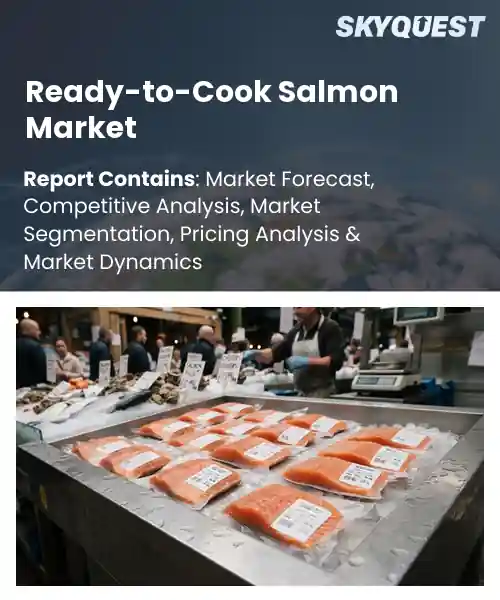
Ready-to-Cook Salmon Market
Report ID: SQMIG30I3259
Report ID: SQMIG30I3259
[email protected]
USA +1 351-333-4748
Report ID:
SQMIG30I3259 |
Region:
Global |
Published Date: September, 2026
Pages:
157
|Tables:
123
|Figures:
77


Global Ready-To-Cook Salmon Market size was valued at USD 1.76 Billion in 2024 and is poised to grow from USD 1.88 Billion in 2025 to USD 3.27 Billion by 2033, growing at a CAGR of 7.1% during the forecast period (2026-2033).
The ready‑to‑cook salmon segment encompasses pre‑marinated, portioned fillets and convenience kits that consumers can heat at home without further preparation. Its relevance stems from rising health consciousness, demand for omega‑3 rich proteins, and the shift toward time‑saving meals among urban dwellers. Historically, the market emerged in the early 2010s when retailers introduced vacuum‑sealed fillets, and it accelerated after 2015 as grocery chains partnered with sustainable fisheries to certify traceability. For instance, a major North American supermarket launched a line of responsibly sourced salmon trays that quickly captured millennial shoppers, illustrating how supply‑side innovations and consumer trends have jointly propelled growth. Regulatory endorsement of sustainable aquaculture functions as a catalyst for market expansion, because compliance with trace‑ability standards reassures buyers and unlocks premium pricing channels. As governments tighten import restrictions, producers invest in closed‑system farms that reduce wild‑catch pressure, thereby increasing year‑round supply and stabilizing costs. This reliability enables restaurant chains to incorporate ready‑to‑cook salmon into menu rotations without fearing seasonal shortages, exemplified by a European fast‑casual brand that rolled out a salmon bowl across 150 locations after securing a certified supply contract. Consequently, the convergence of policy pressure and supply certainty fuels new product development, geographic penetration, and higher margins.
How is AI-driven automation influencing product personalization in the ready‑to‑cook salmon market?
AI-driven automation is reshaping how ready‑to‑cook salmon is tailored to individual tastes. Algorithms analyze shopper purchase history, dietary preferences and seasonal trends to generate custom kits that match flavor intensity, seasoning blends and cooking time. Manufacturers now use robotic mixing stations to blend marinades on demand, while smart packaging adjusts portion size based on household size. Retail platforms integrate these signals to suggest bundles that pair salmon with complementary sides, creating a seamless experience from selection to dinner. The result is a market that feels more responsive, reduces waste and encourages repeat purchases. Chefs also contribute curated recipes that the system learns from, further refining the personalization loop.Blue Apron in March 2024, launched an AI‑powered kit builder that creates salmon meals matched to each subscriber’s flavor profile and cooking skill, cutting prep time and boosting engagement, which fuels market growth through faster adoption of personalized ready‑to‑cook options. It also enables dynamic inventory management that reduces overstock and aligns supply with real‑time demand.
Market snapshot - (2026-2033)
Global Market Size
USD 1.76 Billion
Largest Segment
Salmon Fillets
Fastest Growth
Salmon Burgers & Patties
Growth Rate
7.1% CAGR
To get more insights on this market click here to Request a Free Sample Report
Global ready-to-cook salmon market is segmented by product type, preparation type, packaging, distribution channel and region. Based on product type, the market is segmented into Salmon Fillets, Salmon Portions, Salmon Burgers & Patties and Other Ready-to-Cook Salmon Products. Based on preparation type, the market is segmented into Marinated, Seasoned, Breaded & Coated, Stuffed & Filled and Other Preparations. Based on packaging, the market is segmented into Vacuum-Packed, Modified Atmosphere Packaging, Tray & Film Packaging and Other Packaging Formats. Based on distribution channel, the market is segmented into Supermarkets & Hypermarkets, Convenience Stores, Specialty Seafood Stores, Online Retail and Foodservice. Based on region, the market is segmented into North America, Europe, Asia Pacific, Latin America and Middle East & Africa.
Marinated segment dominates because consumers seek ready-to-cook salmon that delivers bold flavors with minimal effort, and marination delivers that instantly. The convenience of pre‑infused taste eliminates additional seasoning steps, aligning with busy lifestyles. Producers leverage diverse marinades to cater to health‑focused and indulgent palettes, creating repeat purchase loops. This synergy of flavor, convenience, and brand differentiation solidifies marinated products as the leading preparation choice in the market.
However, breaded & coated preparation is witnessing the strongest growth momentum as consumers increasingly favor crispy textures that mimic restaurant‑style dishes at home. Innovation in healthier coating blends and air‑frying suitability fuels adoption, expanding the appeal beyond traditional salmon eaters and opening new occasions for quick, indulgent meals.
Vacuum‑Packed segment dominates because it extends product freshness while preserving delicate salmon texture, meeting shopper demands for quality and convenience. The airtight environment slows oxidation, ensuring flavor stability and reducing waste. Brands emphasize this packaging as a premium attribute, reinforcing trust and encouraging repeat purchases, which entrenches vacuum‑packed formats as the preferred choice for ready‑to‑cook salmon. This assurance resonates across diverse retail shelves, reinforcing shelf‑life confidence among consumers.
Meanwhile, modified atmosphere packaging is emerging as the key high‑growth area because it combines extended shelf life with the ability to showcase vibrant product appearance. Advances in gas mixture technology enable manufacturers to preserve color and moisture, attracting health‑conscious buyers who desire fresh‑looking salmon without preservatives, thereby expanding market reach and spurring product innovation.
To get detailed segments analysis, Request a Free Sample Report
North America commands leadership in the ready‑to‑cook salmon segment due to a confluence of mature retail ecosystems, deep consumer familiarity with seafood convenience products, and sophisticated processing infrastructure that preserves flavor and nutritional integrity. Consumers across the United States and Canada prioritize healthful meals that are quick to prepare, driving sustained retailer investment in expanded shelf‑stable and frozen assortments. Supply chains benefit from proximity to high‑quality Atlantic and Pacific fisheries, enabling rapid turnover and consistent product availability. Moreover, strong culinary traditions that celebrate salmon in everyday cooking reinforce demand, while rigorous food‑safety standards bolster consumer confidence in ready‑to‑cook formats. Retailers also leverage sophisticated marketing campaigns that highlight the convenience and health benefits, further entrenching consumer loyalty. The region’s blend of purchasing power, distribution efficiency, and cultural affinity for salmon solidifies its dominant position globally.
Ready-to-Cook Salmon Market in United States benefits from a retail landscape where national chains and specialty stores allocate prominent shelf space to premium salmon options. Consumer preferences for portion‑controlled packages and innovative flavor profiles stimulate product diversification. Continuous investment in cold‑chain logistics ensures freshness, while culinary influencers promote ready‑to‑cook recipes that reinforce everyday relevance. These dynamics collectively sustain robust demand across urban and suburban markets throughout the country.
Ready-to-Cook Salmon Market in Canada thrives on a consumer base that values natural nutrition and convenience, supported by strong seasonal demand for salmon during colder months. Retailers emphasize locally sourced Atlantic varieties alongside imported options, creating a balanced portfolio. Advanced freezing technologies preserve texture, while promotional campaigns link salmon to family‑friendly meals. This alignment of health orientation and ease of preparation sustains steady interest across provinces throughout the national market.
Europe experiences swift expansion of ready‑to‑cook salmon as consumers increasingly seek nutritionally rich, time‑saving meals that align with a growing emphasis on sustainable sourcing. Premium grocery chains and discounters alike have expanded dedicated seafood aisles, offering versatile portion formats that cater to diverse cooking skill levels. Culinary heritage that celebrates salmon in both traditional and modern dishes fuels interest, while strong regulatory frameworks guarantee product safety and traceability. Collaborative initiatives between fisheries and processors enhance supply reliability, and targeted marketing underscores the health benefits of omega‑rich salmon, reinforcing consumer confidence and accelerating market uptake across the continent. E‑commerce platforms further broaden accessibility, delivering ready‑to‑cook salmon directly to urban households, while culinary tourism highlights regional salmon dishes, inspiring home‑cooking experimentation. The confluence of these factors creates a virtuous cycle of demand and innovation.
Ready-to-Cook Salmon Market in Germany is anchored by a retail network that emphasizes high‑quality standards and sourcing. Consumers favour portioned products that integrate seamlessly into both traditional German meals and fusion recipes. Strong environmental awareness drives preference for certified sustainable salmon, prompting retailers to highlight eco‑labels. Ongoing collaboration between local processors and Nordic fisheries ensures consistent availability, while culinary magazines promote ready‑to‑cook salmon as a convenient element of balanced nutrition.
Ready-to-Cook Salmon Market in United Kingdom accelerates through consumer appetite for quick, nutritious meals that complement a lifestyle. Retail chains allocate shelf space to salmon formats, from fillets to portions paired with grain blends. Growing interest in British‑inspired recipes that emphasize produce fuels demand for salmon as a versatile protein. Partnerships with sustainable fisheries reinforce trust, while digital cooking platforms showcase easy preparation methods that resonate with a tech‑savvy audience.
Ready-to-Cook Salmon Market in France is emerging as consumers embrace convenience without compromising culinary elegance. Supermarket chains introduce salmon dishes that incorporate classic French herbs and sauces, appealing to both traditional and modern palates. Emphasis on traceable, sustainably sourced salmon aligns with growing environmental consciousness. Culinary schools and media outlets highlight quick yet refined salmon preparations, encouraging home cooks to adopt ready‑to‑cook options as a staple for nutritionally balanced meals.
Asia Pacific is solidifying its role in the ready‑to‑cook salmon arena by leveraging rapid urbanization, an expanding affluent consumer base, and deep cultural appreciation for seafood. Modern retail channels and sophisticated cold‑chain logistics enable wide distribution of high‑quality pre‑portioned salmon that meets expectations for freshness and convenience. Regional producers are forming strategic alliances with Pacific fisheries to secure sustainable supplies, while culinary innovators integrate salmon into both traditional dishes and contemporary fast‑casual concepts. Growing digital grocery platforms further extend market reach, encouraging home‑cooked salmon meals that align with health‑focused lifestyles across the region. Governments are also promoting seafood consumption through public‑health campaigns that highlight omega‑3 benefits, while food‑service operators introduce ready‑to‑cook salmon kits in school cafeterias and corporate canteens, reinforcing habitual trial. These coordinated efforts create a reinforcing loop of demand, product innovation, and supply‑chain investment that propels the region toward a leading global position.
Ready-to-Cook Salmon Market in Japan blends traditional sushi sensibilities with convenience, appealing to time‑pressed urban dwellers who still value authentic flavor. Retailers stock pre‑marinated salmon that pairs with classic Japanese seasonings, facilitating quick assembly of nigiri‑style dishes at home. High consumer trust in meticulous food safety standards ensures acceptance of frozen ready‑to‑cook formats. Collaborative efforts between domestic processors and Nordic suppliers emphasize sustainability, reinforcing Japan’s reputation for premium seafood experiences.
Ready-to-Cook Salmon Market in South Korea benefits from a food culture that embraces grilled and spicy preparations, prompting manufacturers to offer salmon kits with Korean marinades. Convenience‑driven shoppers value portion‑controlled packages that fit seamlessly into quick home cooking routines. Strong emphasis on labeling reassures consumers about origin, while collaborations with sustainable fisheries align with growing environmental awareness. These factors drive increasing shelf presence and consumer trial across major retail chains.
To know more about the market opportunities by region and country, click here to
Buy The Complete Report
Increasing Consumer Health Awareness
Growth of Convenient Meal Solutions
High Production and Cold‑Chain Costs
Regulatory Compliance and Food Safety Concerns
Request Free Customization of this report to help us to meet your business objectives.
The ready‑to‑cook salmon segment is shaped by intense rivalry among major processors and retailers, with competition driving rapid product innovation, strategic acquisitions, and collaborative supply‑chain agreements. Recent moves include a leading seafood conglomerate’s acquisition of a niche premium brand to broaden its ready‑to‑cook portfolio, and a multinational retailer’s partnership with a European processor to co‑develop heat‑stable fillet formats, underscoring the market’s focus on expanding convenience offerings through M&A and joint‑product development.
Top Player’s Company Profile
Recent Developments
SkyQuest’s ABIRAW (Advanced Business Intelligence, Research & Analysis Wing) is our Business Information Services team that Collects, Collates, Correlates, and Analyses the Data collected by means of Primary Exploratory Research backed by robust Secondary Desk research. As per SkyQuest analysis the global ready‑to‑cook salmon market is being propelled primarily by rising consumer health awareness that drives demand for omega‑3‑rich easy‑prep meals, while the parallel surge in convenient meal solutions further fuels growth by appealing to busy households. The marinated preparation segment leads the market because pre‑infused flavors deliver instant convenience, and North America remains the dominant region thanks to mature retail networks and strong seafood familiarity. However, high production and cold‑chain costs act as a restraint, lifting prices and limiting adoption in price‑sensitive segments. Manufacturers are responding by investing in sustainable packaging and AI‑driven personalization to differentiate their offerings, which may help offset some cost pressures and attract eco‑conscious shoppers.
| Report Metric | Details |
|---|---|
| Market size value in 2024 | USD 1.76 Billion |
| Market size value in 2033 | USD 3.27 Billion |
| Growth Rate | 7.1% |
| Base year | 2024 |
| Forecast period | (2026-2033) |
| Forecast Unit (Value) | USD Billion |
| Segments covered |
|
| Regions covered | North America (US, Canada), Europe (Germany, France, United Kingdom, Italy, Spain, Rest of Europe), Asia Pacific (China, India, Japan, Rest of Asia-Pacific), Latin America (Brazil, Rest of Latin America), Middle East & Africa (South Africa, GCC Countries, Rest of MEA) |
| Companies covered |
|
| Customization scope | Free report customization with purchase. Customization includes:-
|
To get a free trial access to our platform which is a one stop solution for all your data requirements for quicker decision making. This platform allows you to compare markets, competitors who are prominent in the market, and mega trends that are influencing the dynamics in the market. Also, get access to detailed SkyQuest exclusive matrix.
Table Of Content
Executive Summary
Market overview
Parent Market Analysis
Market overview
Market size
KEY MARKET INSIGHTS
COVID IMPACT
MARKET DYNAMICS & OUTLOOK
Market Size by Region
KEY COMPANY PROFILES
Methodology
For the Ready-to-Cook Salmon Market, our research methodology involved a mixture of primary and secondary data sources. Key steps involved in the research process are listed below:
1. Information Procurement: This stage involved the procurement of Market data or related information via primary and secondary sources. The various secondary sources used included various company websites, annual reports, trade databases, and paid databases such as Hoover's, Bloomberg Business, Factiva, and Avention. Our team did 45 primary interactions Globally which included several stakeholders such as manufacturers, customers, key opinion leaders, etc. Overall, information procurement was one of the most extensive stages in our research process.
2. Information Analysis: This step involved triangulation of data through bottom-up and top-down approaches to estimate and validate the total size and future estimate of the Ready-to-Cook Salmon Market.
3. Report Formulation: The final step entailed the placement of data points in appropriate Market spaces in an attempt to deduce viable conclusions.
4. Validation & Publishing: Validation is the most important step in the process. Validation & re-validation via an intricately designed process helped us finalize data points to be used for final calculations. The final Market estimates and forecasts were then aligned and sent to our panel of industry experts for validation of data. Once the validation was done the report was sent to our Quality Assurance team to ensure adherence to style guides, consistency & design.
Analyst Support
Customization Options
With the given market data, our dedicated team of analysts can offer you the following customization options are available for the Ready-to-Cook Salmon Market:
Product Analysis: Product matrix, which offers a detailed comparison of the product portfolio of companies.
Regional Analysis: Further analysis of the Ready-to-Cook Salmon Market for additional countries.
Competitive Analysis: Detailed analysis and profiling of additional Market players & comparative analysis of competitive products.
Go to Market Strategy: Find the high-growth channels to invest your marketing efforts and increase your customer base.
Innovation Mapping: Identify racial solutions and innovation, connected to deep ecosystems of innovators, start-ups, academics, and strategic partners.
Category Intelligence: Customized intelligence that is relevant to their supply Markets will enable them to make smarter sourcing decisions and improve their category management.
Public Company Transcript Analysis: To improve the investment performance by generating new alpha and making better-informed decisions.
Social Media Listening: To analyze the conversations and trends happening not just around your brand, but around your industry as a whole, and use those insights to make better Marketing decisions.
REQUEST FOR SAMPLE
 REQUEST FREE CUSTOMIZATION


Want to customize this report? This report can be personalized according to your needs. Our analysts and industry experts will work directly with you to understand your requirements and provide you with customized data in a short amount of time. We offer $1000 worth of FREE customization at the time of purchase.
Feedback From Our Clients


 USA (+1) 351-333-4748

