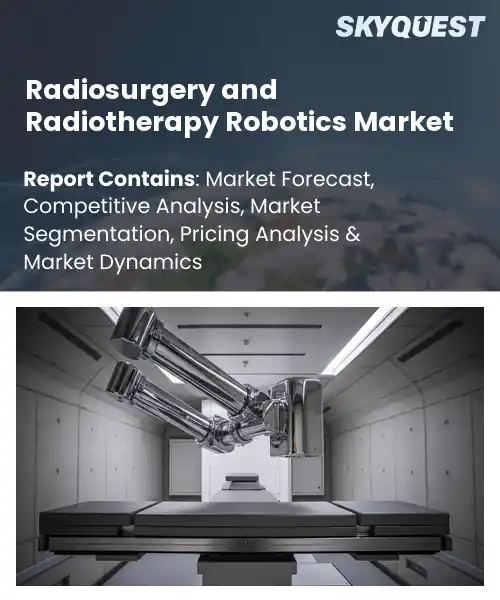
Radiosurgery and Radiotherapy Robotics Market
Report ID: SQMIG35A3977
Report ID: SQMIG35A3977
[email protected]
USA +1 351-333-4748
Report ID:
SQMIG35A3977 |
Region:
Global |
Published Date: June, 2026
Pages:
157
|Tables:
122
|Figures:
77


Global Radiosurgery And Radiotherapy Robotics Market size was valued at USD 5.84 Billion in 2024 and is poised to grow from USD 6.33 Billion in 2025 to USD 12.07 Billion by 2033, growing at a CAGR of 8.4% during the forecast period (2026-2033).
The radiosurgery and radiotherapy robotics market globally is comprised of robotic systems delivering precisely targeted doses of radiation directly to tumors by integrating multiple imaging modalities, motion tracking, and beam modulation. This is important because it allows cancer patients to receive a curative dose of radiation while preserving nearby normal tissue, resulting in shorter treatment cycles and reduced levels of toxicity. The timeline for development of the market has progressed from the static linear accelerators used in the 1970s, to the advanced imaging-guided systems developed in the 1990s, and then to fully robotic solutions like CyberKnife (commercially introduced in 1994) and MR-guided Accuray Unity (commercialized in 2018). This represents a trend away from the manual process of aligning radiation beams to the automated, real-time adaptive method used today; this trend will continue to expand worldwide.
The primary driving force behind market growth is regulatory endorsement of adaptive radiotherapy; it establishes a basis for the clinical advantages of using robotic technologies for delivering high-quality doses of radiation and creates opportunities for reimbursement. Consequently, hospitals adopting systems like Varian's Edge or Elekta's Unity will see increased throughput from their facilities because they can now treat significantly more patients on any given day and can expand their treatment capabilities into previously untreatable areas (such as, treating lung cancer patients with tumors that move when the patient breathes). Increased efficiencies result in increased revenue generation, creating a loop that drives further investment and stimulates research to develop AI-enabled planning tools. Consequently, emerging economies witness rapid uptake as models prove viable, creating a worldwide expansion of the robotics‑enabled radiotherapy ecosystem significant.
How is AI-driven Automation Shaping The Radiosurgery And Radiotherapy Robotics Market?
The advancement of robotics for radiation treatment and radiosurgery is changing because of automation driven by artificial intelligence; embedding intelligent image analysis, real-time motion tracking, and autonomous dose optimization into clinical applications is enabling robots to adapt to the patient’s anatomy while reducing the need for manual adjustments, ultimately improving treatment accuracy. Manufacturers are incorporating machine learning algorithms to predict the most optimal path for treatment beams and to assist in the quality assurance process, this in turn has led to less time spent on treatment procedures and giving clinicians more time to complete tasks with higher levels of value than skills performed in their daily work.
Hospitals are using these systems in an effort to enhance patient throughput and at the same time maintain safety standards, leading to a virtuous cycle of reinvestment into smarter robotic systems and expanding the reach of the market into other specialties. To demonstrate how intelligent automation is driving growth and efficiency in the radiosurgery and radiotherapy robotics industry, Accuray introduced an adaptive planning platform enhanced by AI that reduces procedure time and increasing accuracy and improving patient outcomes.
Market snapshot - (2026-2033)
Global Market Size
USD 5.84 Billion
Largest Segment
Robotic Systems
Fastest Growth
Software Solutions
Growth Rate
8.4% CAGR
To get more insights on this market click here to Request a Free Sample Report
Global radiosurgery and radiotherapy robotics market is segmented by offering component, underlying technology, clinical application focus, healthcare end user and region. Based on offering component, the market is segmented into Robotic Systems, Software Solutions, 3D Position Monitoring Cameras and Technical Services. Based on underlying technology, the market is segmented into Linear Accelerators, Stereotactic Radiation Systems and Particle Therapy Systems. Based on clinical application focus, the market is segmented into Prostate Cancer, Brain Tumors, Lung Cancer, Spinal Lesions, Liver Lesions and Others. Based on healthcare end user, the market is segmented into Hospitals, Ambulatory Surgery Centers, Specialty Cancer Clinics and Academic Research Institutions. Based on region, the market is segmented into North America, Europe, Asia Pacific, Latin America and Middle East & Africa.
The Robotic Systems segment is the largest segment, which is largely driven by providing the fundamental mechanical accuracy for today’s radiosurgery and radiotherapy treatment methodologies. Due to their highly precise, sub millimeter movement capabilities, robotic systems allow physicians to precisely target tumors while conserving as much healthy tissue as possible, thereby addressing the single most important clinical requirement of accuracy. The value of the robotic system is further enhanced through integration with imaging systems and treatment planning systems, as well as being the primary technological platform to fuel the adoption of robotic systems throughout institutions that are in need of better treatment outcomes and more long term patient recovery.
The Software Solutions area is the fastest growing segment due to the ongoing improvements to algorithms and AI enabled treatment planning, which are providing physicians the ability to get new levels of personalized approaches to treatment. As these improvements have occurred, the length of procedures has decreased while the conformity of the dose has increased, this has driven higher levels of usage and greater investment into the segment, thus encouraging overall segment growth and providing new clinical opportunities.
Robotic systems are dominant in brain tumor procedures due to their high precision and safety. Robotic technologies can navigate the complex anatomy of the human body and require significant investment into technology, such as advanced motion management, to support the use of robotic systems. The need for advanced imaging technology to ensure the safety of the case is a major driver of robotic systems as the leading demonstration of the successful implementation of technology and a major contributor to vendor revenues both in the short and long term, and in the long term, continue to improve patient outcomes for brain tumor patients globally.
Prostate cancer is currently growing the most because advancements in robotics have enabled hypofractionated treatments for prostate cancer patients to have increased convenience and decreased toxicities. As a result, urologic oncology has quickly adopted robotic-assisted procedures, and the expansion of market access by robotic manufacturers now supports the development of robotics for use specifically in the pelvic region.
To get detailed segments analysis, Request a Free Sample Report
North America has a strong foundation in healthcare because of high-quality healthcare infrastructure, an established research base, and many years of practice using advanced precision therapeutic technologies. The US has a large network of top research and technology institutions that work together to speed up the process of developing products and validating them clinically. Hospitals are able to develop many robotic platforms due to the existence of good reimbursement systems that allow for this innovation. In addition, US manufacturers of advanced precision therapeutic technologies have a good understanding of the regulatory process, and this also adds to the confidence of manufacturers to invest in product development. Canada supports research and development through a publicly funded health care system, emphasizing adopting innovative products across both borders, and contributing to developing human capital through a highly skilled workforce. Overall, these factors work together synergistically to create an environment conducive to attracting investment, developing talent, and creating a continuous cycle of improvement, meaning North America will continue to lead in the world.
Hospitals, research universities, and a significant investment into innovation and research have allowed the Radiosurgery and Radiotherapy Robotics Market in the US to have access to modern treatment options. The cooperative programming approach used by clinicians and engineers allows for quicker translation of products into the clinic; whilst the reimbursement environment supports the implementation of products widely throughout clinical practices. The radiosurgery market has benefitted from high levels of venture capital investment; in addition, robotics technologies are adopted at a rapid rate throughout various clinical environments due to the culture of using technologically advanced tools and techniques in modern medicine.
The Radiosurgery and Radiotherapy Robotics Market in Canada is characterized by providing access to advanced technologies, through a publicly funded healthcare system that aims at providing equal access for all Canadians to the most advanced therapies available. Provincial health organizations partner with academic institutions to evaluate the clinical value of the technologies, which helps to ensure that there is a consistent and progressive adoption of technologies throughout Canada. The Canadian government also provides significant financial support for innovation grants and collaborates with international manufacturers to support technology transfer to Canadian companies; thus, robotics technologies are integrated into joint care protocols nationwide due to the presence of multidisciplinary networks across Canada.
Europe’s expansion is propelled by strong governmental commitment to precision health, a well‑established network of specialized cancer centers, and a collaborative research culture that spans borders. Regulatory frameworks promote safety while encouraging innovation, allowing manufacturers to bring sophisticated robotic systems to market with confidence. Reimbursement policies in several countries reward outcome‑based treatments, motivating hospitals to invest in high‑accuracy platforms. Additionally, public‑private partnerships and academic consortia accelerate clinical trials and technology refinement. The region’s emphasis on patient‑centered care and cost‑effectiveness fosters a receptive environment where emerging robotic solutions can be rapidly evaluated and adopted, reinforcing Europe’s reputation as a hub for advanced oncological therapies.
Radiosurgery and Radiotherapy Robotics Market in Germany benefits from an integrated medical technology ecosystem and a strong engineering heritage. Leading research hospitals collaborate closely with local manufacturers to co‑develop customized solutions that address clinical needs. Robust reimbursement structures reward precision interventions, encouraging widespread deployment. Government initiatives that fund translational projects further strengthen the pipeline, while a skilled workforce ensures rapid adoption and continuous improvement of robotic technologies across the nation.
Radiosurgery and Radiotherapy Robotics Market in United Kingdom is accelerated by a vibrant NHS environment that prioritizes innovative care pathways. Collaborative networks between academic institutions and specialist clinics foster clinical evaluation of robotic platforms. Policy frameworks that emphasize reimbursement stimulate investment in precision equipment, while national research funding programs support technology development. This confluence of clinical ambition and supportive policy creates ground for swift expansion of advanced robotic treatment options.
Radiosurgery and Radiotherapy Robotics Market in France is emerging through an emphasis on collaborative research and innovation. National health agencies encourage adoption of precision technologies by aligning reimbursement incentives with outcomes. Partnerships between leading oncology centers and technology firms enable tailored solution development that addresses local practice patterns. Training programs ensure clinicians acquire expertise to integrate robotic systems effectively, fostering significant growth of advanced treatment capabilities across the healthcare landscape.
Asia Pacific is strengthening its position through a combination of rapid clinical adoption, strategic investment in domestic technology development, and growing expertise in precision oncology. Leading medical centers in the region are actively incorporating robotic platforms to address increasing demand for minimally invasive cancer treatments. Government initiatives that support research collaborations and provide funding incentives encourage local manufacturers to innovate and tailor solutions for regional patient populations. Additionally, the emergence of skilled engineering talent pools and partnerships with global industry players accelerate knowledge transfer and enhance the overall ecosystem. Academic institutions are expanding curricula to include hands‑on training with robotic systems, ensuring that the next generation of oncologists is proficient in these advanced techniques and can deliver improved patient outcomes. This collaborative momentum propels the region toward a more prominent role in shaping the future of radiosurgery and radiotherapy robotics worldwide.
Radiosurgery and Radiotherapy Robotics Market in Japan is driven by a healthcare system that emphasizes technological precision and safety. National cancer programs promote the integration of robotic platforms to enhance treatment accuracy, while leading research hospitals collaborate with domestic manufacturers to customize equipment for local clinical protocols. Strong regulatory oversight assures reliability, and professional education equips practitioners with the expertise required to seamlessly adopt robotic solutions across the oncology landscape.
Radiosurgery and Radiotherapy Robotics Market in South Korea is propelled by government support for advanced medical technologies and a biotech sector. Collaborative initiatives between university hospitals and innovative manufacturers accelerate development of robotic systems tailored to regional treatment preferences. Reimbursement policies that recognize the value of precision therapy incentivize hospitals to acquire modern equipment. Investment in specialist training ensures clinicians are capable of delivering robot‑assisted cancer care throughout the nation.
To know more about the market opportunities by region and country, click here to
Buy The Complete Report
Increasing Demand For Precision Treatments
Advancements In Robotic Integration
High Capital Investment Requirements
Regulatory Approval Complexity
Request Free Customization of this report to help us to meet your business objectives.
The market is shaped by intense competition as leading firms leverage massive fundraising to accelerate product pipelines and forge hospital alliances. CMR Surgical’s $1.2 billion capital raise underpins the rollout of its Versius system across North America, while Apptronik’s $1.0 billion funding fuels development of modular robotic platforms for precision radiotherapy.
SkyQuest’s ABIRAW (Advanced Business Intelligence, Research & Analysis Wing) is our Business Information Services team that Collects, Collates, Correlates, and Analyses the Data collected by means of Primary Exploratory Research backed by robust Secondary Desk research.
As per SkyQuest analysis, the market is being propelled primarily by the increasing demand for precision treatments that deliver sub‑millimeter accuracy and reduce tissue damage, which is the key driver. A second driver is the rapid integration of AI‑driven automation that streamlines planning, improves dose conformity and shortens procedure times, encouraging wider adoption. The biggest hurdle remains the high capital investment required for acquiring and installing robotic systems, serving as a significant restraint. North America continues to dominate the market due to its advanced healthcare infrastructure, strong reimbursement frameworks and robust research ecosystem. Within offerings, the robotic systems segment leads the market, providing the core mechanical precision that underpins modern radiosurgery and radiotherapy.
| Report Metric | Details |
|---|---|
| Market size value in 2024 | USD 5.84 Billion |
| Market size value in 2033 | USD 12.07 Billion |
| Growth Rate | 8.4% |
| Base year | 2024 |
| Forecast period | (2026-2033) |
| Forecast Unit (Value) | USD Billion |
| Segments covered |
|
| Regions covered | North America (US, Canada), Europe (Germany, France, United Kingdom, Italy, Spain, Rest of Europe), Asia Pacific (China, India, Japan, Rest of Asia-Pacific), Latin America (Brazil, Rest of Latin America), Middle East & Africa (South Africa, GCC Countries, Rest of MEA) |
| Companies covered |
|
| Customization scope | Free report customization with purchase. Customization includes:-
|
To get a free trial access to our platform which is a one stop solution for all your data requirements for quicker decision making. This platform allows you to compare markets, competitors who are prominent in the market, and mega trends that are influencing the dynamics in the market. Also, get access to detailed SkyQuest exclusive matrix.
Table Of Content
Executive Summary
Market overview
Parent Market Analysis
Market overview
Market size
KEY MARKET INSIGHTS
COVID IMPACT
MARKET DYNAMICS & OUTLOOK
Market Size by Region
KEY COMPANY PROFILES
Methodology
For the Radiosurgery and Radiotherapy Robotics Market, our research methodology involved a mixture of primary and secondary data sources. Key steps involved in the research process are listed below:
1. Information Procurement: This stage involved the procurement of Market data or related information via primary and secondary sources. The various secondary sources used included various company websites, annual reports, trade databases, and paid databases such as Hoover's, Bloomberg Business, Factiva, and Avention. Our team did 45 primary interactions Globally which included several stakeholders such as manufacturers, customers, key opinion leaders, etc. Overall, information procurement was one of the most extensive stages in our research process.
2. Information Analysis: This step involved triangulation of data through bottom-up and top-down approaches to estimate and validate the total size and future estimate of the Radiosurgery and Radiotherapy Robotics Market.
3. Report Formulation: The final step entailed the placement of data points in appropriate Market spaces in an attempt to deduce viable conclusions.
4. Validation & Publishing: Validation is the most important step in the process. Validation & re-validation via an intricately designed process helped us finalize data points to be used for final calculations. The final Market estimates and forecasts were then aligned and sent to our panel of industry experts for validation of data. Once the validation was done the report was sent to our Quality Assurance team to ensure adherence to style guides, consistency & design.
Analyst Support
Customization Options
With the given market data, our dedicated team of analysts can offer you the following customization options are available for the Radiosurgery and Radiotherapy Robotics Market:
Product Analysis: Product matrix, which offers a detailed comparison of the product portfolio of companies.
Regional Analysis: Further analysis of the Radiosurgery and Radiotherapy Robotics Market for additional countries.
Competitive Analysis: Detailed analysis and profiling of additional Market players & comparative analysis of competitive products.
Go to Market Strategy: Find the high-growth channels to invest your marketing efforts and increase your customer base.
Innovation Mapping: Identify racial solutions and innovation, connected to deep ecosystems of innovators, start-ups, academics, and strategic partners.
Category Intelligence: Customized intelligence that is relevant to their supply Markets will enable them to make smarter sourcing decisions and improve their category management.
Public Company Transcript Analysis: To improve the investment performance by generating new alpha and making better-informed decisions.
Social Media Listening: To analyze the conversations and trends happening not just around your brand, but around your industry as a whole, and use those insights to make better Marketing decisions.
REQUEST FOR SAMPLE
 REQUEST FREE CUSTOMIZATION
Global Radiosurgery And Radiotherapy Robotics Market size was valued at USD 5.84 Billion in 2024 and is poised to grow from USD 6.33 Billion in 2025 to USD 12.07 Billion by 2033, growing at a CAGR of 8.4% during the forecast period (2026-2033).
The market is shaped by intense competition as leading firms leverage massive fundraising to accelerate product pipelines and forge hospital alliances. CMR Surgical’s $1.2 billion capital raise underpins the rollout of its Versius system across North America, while Apptronik’s $1.0 billion funding fuels development of modular robotic platforms for precision radiotherapy. 'Siemens Healthineers AG', 'Elekta AB', 'Accuray Incorporated', 'Brainlab AG', 'Panacea Medical Technologies Pvt. Ltd.', 'IBA Proton Therapy', 'Mevion Medical Systems Inc.', 'Hitachi Ltd.', 'Sumitomo Heavy Industries Ltd.', 'ProTom International Inc.', 'Optivus Proton Therapy Inc.', 'RaySearch Laboratories AB', 'DosiSoft SA', 'ScandiDos AB', 'Vision RT Ltd.', 'CIVCO Radiotherapy', 'LAP GmbH Laser Applikationen', 'Linatech Inc.', 'Best Medical International Inc.', 'Advanced Oncotherapy plc'
The shift toward minimally invasive oncology creates strong preference for robotic radiosurgery platforms that can deliver dose with sub‑millimeter accuracy, thereby reducing collateral tissue damage and shortening recovery periods. Clinicians view such precision as essential for treating complex tumor geometries, which drives hospital procurement strategies aimed at expanding their therapeutic portfolio. Consequently, institutions are allocating resources to acquire and integrate these systems, reinforcing market momentum and prompting manufacturers to accelerate product development cycles while also enhancing institutional reputation for cutting edge care.
Ai‑Driven Treatment Planning: The infusion of artificial intelligence into radiosurgery and radiotherapy robotics is reshaping clinical workflows by enabling imaging analysis, automated contouring, and predictive dose optimization, which together reduce planning time and enhance precision. Clinicians can now rely on algorithmic suggestions for target selection, while safety protocols are continuously validated through machine‑learning feedback loops. This shift supports personalized treatment pathways, allowing institutions to expand access to advanced procedures without proportionally increasing staffing burdens and driving higher patient satisfaction improving overall clinical outcomes.
Why does North America Dominate the Global Radiosurgery and Radiotherapy Robotics Market? |@12


Want to customize this report? This report can be personalized according to your needs. Our analysts and industry experts will work directly with you to understand your requirements and provide you with customized data in a short amount of time. We offer $1000 worth of FREE customization at the time of purchase.
Feedback From Our Clients


 USA (+1) 351-333-4748

