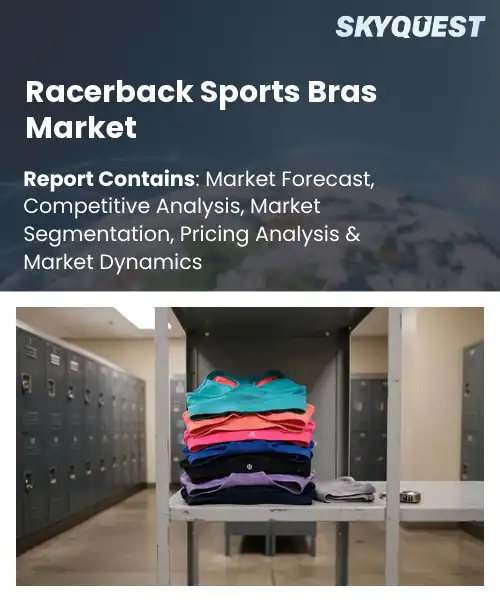
Racerback Sports Bras Market
Report ID: SQMIG25K2286
Report ID: SQMIG25K2286
[email protected]
USA +1 351-333-4748
Report ID:
SQMIG25K2286 |
Region:
Global |
Published Date: October, 2026
Pages:
157
|Tables:
147
|Figures:
78


Global Racerback Sports Bras Market size was valued at USD 4.15 Billion in 2024 and is poised to grow from USD 4.47 Billion in 2025 to USD 8.16 Billion by 2033, growing at a CAGR of 7.8% during the forecast period (2026-2033).
The global racerback sports bra market comprises supportive, form‑fitting garments designed for high‑impact activities, and its relevance stems from both health trends and evolving consumer expectations. Over the past decade demand has shifted from generic cotton bras to engineered performance wear, driven by rising participation in yoga, CrossFit, and running among women aged 18‑34. Early adopters in North America sparked a cascade of product launches, prompting brands such as Lululemon and Nike to integrate moisture‑wicking fabrics and seamless construction. This evolution reflects a broader cultural emphasis on active lifestyles, creating a foundation on which the market now expands globally significantly. The next major growth driver originates from technological integration that links garment performance with digital health ecosystems, thereby amplifying consumer willingness to invest. Smart textiles embedded with compression sensors now transmit biomechanical data to mobile apps, enabling athletes to monitor posture and impact forces in real time; this feedback loop encourages repeat purchases and pricing. Consequently retailers such as Under Armour have launched connected bra lines, while e‑commerce platforms leverage AI‑driven sizing algorithms to reduce fit‑related returns. These innovations expand addressable market segments, open licensing opportunities with fitness‑tracking firms, and ultimately accelerate revenue streams across both established and emerging regions.
How is AI influencing design and customization in the Racerback sports bra market?
AI is reshaping the racerback sports bra market by turning data into design insight. Machine learning models analyze body scans, activity patterns and fabric performance to generate shapes that support specific movements while reducing pressure points. Virtual fitting tools let consumers see a 3D representation of a bra on their own body, enabling instant size adjustments without physical samples. Generative design algorithms explore countless pattern variations, surfacing styles that balance aesthetics with functional support. Production teams use predictive analytics to forecast demand for personalized colorways and material blends, cutting waste and shortening lead times. Together these capabilities create a more responsive, consumer centric product cycleNike introduced an AI driven customization platform for its racerback sports bras in May 2023, allowing shoppers to input personal measurements and style preferences to receive a digitally rendered fit that adapts to movement. This innovation shortens design cycles and boosts consumer confidence, driving market growth
Market snapshot - (2026-2033)
Global Market Size
USD 4.15 Billion
Largest Segment
Low-Impact Support
Fastest Growth
High-Impact Support
Growth Rate
7.8% CAGR
To get more insights on this market click here to Request a Free Sample Report
Global racerback sports bras market is segmented by support level, product type, material, price category, distribution channel and region. Based on support level, the market is segmented into Low-Impact Support, Medium-Impact Support and High-Impact Support. Based on product type, the market is segmented into Compression Sports Bras, Encapsulation Sports Bras and Combination Sports Bras. Based on material, the market is segmented into Polyester-Based Fabrics, Nylon-Based Fabrics, Cotton Blends and Other Performance Fabrics. Based on price category, the market is segmented into Economy, Mid-Range and Premium. Based on distribution channel, the market is segmented into Online Retail, Sports & Fitness Specialty Stores, Department Stores, Brand-Owned Stores and Other Retail Channels. Based on region, the market is segmented into North America, Europe, Asia Pacific, Latin America and Middle East & Africa.
Premium segment dominates because affluent shoppers associate higher price points with superior fit, advanced materials, and exclusive design details that enhance confidence during workouts. Brands leverage limited edition releases, personalized fitting services, and upscale branding to create emotional attachment, driving repeat purchases. This premium experience reinforces consumer loyalty, prompting customers to stay within the brand ecosystem and recommend the racerback style to peers. This cross disciplinary endorsement enhances perceived value and deepens brand resonance.
Meanwhile, Online Retail segment is witnessing the strongest growth momentum because digital platforms provide instant access to style catalogs, virtual fitting tools, and personalization that resonate with consumers. Seamless checkout, fast shipping, and influencer collaborations amplify visibility, encouraging trial among buyers. This expansion fuels market size by lowering barriers to adoption and creating engagement opportunities.
High Impact Support segment dominates because athletes and active wear enthusiasts prioritize maximal stability during intense workouts, and the racerback cut delivers unrestricted arm movement while anchoring the bra securely. This need drives manufacturers to invest heavily in engineered straps, reinforced stitching, and moisture wicking liners, creating products that match performance expectations. Consequently, brands that excel in delivering reliable high impact protection become the preferred choice, reinforcing market leadership among fitness communities worldwide today.
However, Combination Sports Bras segment emerges as the fastest growing because it merges compression and encapsulation benefits, offering versatile support for varied activity levels. Fabric innovations and consumer desire for comfort accelerate adoption, prompting brands to expand design options. This momentum expands the market by attracting user groups seeking multifunctional racerback solutions.
To get detailed segments analysis, Request a Free Sample Report
North America maintains a lead in the racerback sports bra segment thanks to a mature retail ecosystem, strong brand heritage, and a consumer base that values performance‑focused apparel. Extensive distribution networks blend specialty boutiques, department stores, and e‑commerce platforms, enabling rapid product diffusion. A cultural emphasis on active lifestyles combined with high disposable income fuels demand for technically engineered support garments. Close collaboration between manufacturers and athletic institutions accelerates material and fit innovation, while digital engagement through fitness influencers expands brand visibility. Growing environmental awareness prompts leading brands to adopt recycled fibers and sustainable production methods, reinforcing consumer trust. A supportive regulatory framework ensures rigorous testing and performance validation. These intertwined elements create a resilient market structure that sustains North America’s dominant position worldwide.
Racerback Sports Bras Market in United States benefits from a diversified retail landscape where premium activewear brands coexist with mass‑market retailers. Consumer enthusiasm for multi‑tasking apparel drives demand for designs that blend fashion appeal with superior support. Innovation hubs in key metropolitan areas foster rapid prototyping, allowing brands to respond swiftly to emerging fitness trends. Influencer networks further amplify product awareness, creating a cycle of sustained interest and brand loyalty.
Racerback Sports Bras Market in Canada reflects a consumer base that values comfort, functional design, and environmentally responsible sourcing. Retail channels blend boutique specialty stores with an online presence, enabling broad accessibility. Collaboration between local designers and international manufacturers yields products tailored to climate considerations while maintaining performance standards. Community‑driven fitness events and social media advocacy promote brand discovery, reinforcing a market environment where innovation and sustainability are closely linked.
European consumers exhibit a heightened awareness of active‑wear functionality combined with fashion sensibility, propelling rapid expansion of racerback sports bras across the continent. Integration of advanced textile technologies with sleek design aesthetics appeals to a lifestyle that balances performance and style. Strong support from regional athletic federations encourages product adoption among diverse sport participants. E‑commerce platforms and omnichannel retail strategies enhance market reach, while localized marketing campaigns resonate with culturally distinct preferences. Sustainability considerations are deeply embedded in purchasing decisions, prompting brands to adopt recycled materials and transparent supply‑chain practices. Collaborative research initiatives among universities and manufacturers accelerate innovation cycles, ensuring continuous improvement in fit and moisture‑management performance. Collectively, these dynamics forge a robust environment that sustains accelerated growth throughout Europe.
Germany Racerback Sports Bras Market showcases a consumer segment that prioritizes engineering precision and high‑performance fabrics. Retail distribution combines department chains with sport‑focus outlets, ensuring comprehensive product availability. Collaborative efforts between technical universities and leading manufacturers foster material advancements, particularly in compression and breathability. Environmental stewardship is integral, prompting widespread adoption of recycled polyester and closed‑loop production processes. Strong brand heritage coupled with digital storytelling reinforces loyalty among performance‑oriented athletes.
United Kingdom Racerback Sports Bras Market is characterized by consumers who blend athletic pursuits with lifestyle fashion. Retail channels integrate flagship stores, boutique gyms and online marketplaces for shopping. Influencer collaborations and fitness events boost brand visibility and drive trial across a demographic. Sustainable sourcing aligns with regional green expectations, encouraging eco‑friendly fabrics. Feedback loops between shoppers and designers enable iteration, keeping products attuned to evolving performance and aesthetic preferences.
France Racerback Sports Bras Market is emerging with a focus on performance apparel that resonates with active consumers. Boutique sport stores and department chains provide selections that emphasize elegance alongside support. Local designers collaborate with textile innovators to introduce fabrics that balance breathability and fashion appeal. Consumer demand for produced products drives adoption of recycled materials and manufacturing practices. Social media amplifies brand narratives, fostering engagement and accelerating market acceptance.
Asia Pacific is reinforcing its role in the racerback sports bra arena through a confluence of cultural enthusiasm for active living and rapid adoption of innovative textile solutions. Regional manufacturers leverage agile supply chains to introduce lightweight, moisture‑wicking fabrics that align with humid climate requirements. Growing middle‑class populations prioritize health and fitness, expanding the consumer base for performance‑oriented apparel. Digital commerce ecosystems, powered by mobile‑first platforms, provide seamless access to a wide array of brands, accelerating market penetration. Collaboration between local design studios and research institutes drives aesthetic diversification while maintaining functional excellence. Sustainability is increasingly central, with firms integrating recycled fibers and low‑impact dyeing processes. These combined forces nurture a dynamic market environment that propels Asia Pacific toward greater global influence in racerback sports bras.
Japan Racerback Sports Bras Market reflects a consumer segment that values precision engineering and minimalist aesthetics. Retail channels integrate department stores with sport boutiques, delivering experiences. Collaboration between textile research centers and apparel brands yields fabrics that emphasize breathability, compression and antimicrobial properties suited to the climate. Environmental consciousness drives demand for recycled polyester and manufacturing. Influencer‑led campaigns and wellness events amplify brand reach, fostering a community of performance‑focused athletes.
South Korea Racerback Sports Bras Market is driven by a consumer base that values functional fashion and design. Retail ecosystems combine department outlets with online platforms that use fitting technology. Partnerships between local innovators and global material scientists produce fabrics offering superior moisture management and compression. Environmental awareness encourages use of biodegradable fibers and production. Culture collaborations and celebrity endorsements elevate brand perception, accelerating adoption among a youthful, performance‑oriented demographic.
To know more about the market opportunities by region and country, click here to
Buy The Complete Report
Increasing Health Consciousness Among Women
Rise Of Athleisure Fashion Trends
Price Sensitivity Among Budget Shoppers
Limited Awareness Of Technical Benefits
Request Free Customization of this report to help us to meet your business objectives.
Insufficient data to generate the requested Competitive Landscape section.
Top Player’s Company Profile
Recent Developments
SkyQuest’s ABIRAW (Advanced Business Intelligence, Research & Analysis Wing) is our Business Information Services team that Collects, Collates, Correlates, and Analyses the Data collected by means of Primary Exploratory Research backed by robust Secondary Desk research. As per SkyQuest analysis, the global racerback sports bras market is propelled foremost by growing health consciousness among women, which fuels demand for supportive, performance‑focused activewear. A second catalyst is the surge in digital fit personalization, where AI‑driven sizing tools and virtual try‑ons boost shopper confidence and reduce returns. The market is most strongly anchored in North America, where mature retail channels and high disposable income sustain leadership. Within the product mix the premium price segment commands the greatest share, as affluent consumers associate higher price points with superior fit and innovative fabrics. However, price sensitivity among budget‑focused shoppers restrains broader adoption, limiting growth of lower‑priced options.
| Report Metric | Details |
|---|---|
| Market size value in 2024 | USD 4.15 Billion |
| Market size value in 2033 | USD 8.16 Billion |
| Growth Rate | 7.8% |
| Base year | 2024 |
| Forecast period | (2026-2033) |
| Forecast Unit (Value) | USD Billion |
| Segments covered |
|
| Regions covered | North America (US, Canada), Europe (Germany, France, United Kingdom, Italy, Spain, Rest of Europe), Asia Pacific (China, India, Japan, Rest of Asia-Pacific), Latin America (Brazil, Rest of Latin America), Middle East & Africa (South Africa, GCC Countries, Rest of MEA) |
| Companies covered |
|
| Customization scope | Free report customization with purchase. Customization includes:-
|
To get a free trial access to our platform which is a one stop solution for all your data requirements for quicker decision making. This platform allows you to compare markets, competitors who are prominent in the market, and mega trends that are influencing the dynamics in the market. Also, get access to detailed SkyQuest exclusive matrix.
Table Of Content
Executive Summary
Market overview
Parent Market Analysis
Market overview
Market size
KEY MARKET INSIGHTS
COVID IMPACT
MARKET DYNAMICS & OUTLOOK
Market Size by Region
KEY COMPANY PROFILES
Methodology
For the Racerback Sports Bras Market, our research methodology involved a mixture of primary and secondary data sources. Key steps involved in the research process are listed below:
1. Information Procurement: This stage involved the procurement of Market data or related information via primary and secondary sources. The various secondary sources used included various company websites, annual reports, trade databases, and paid databases such as Hoover's, Bloomberg Business, Factiva, and Avention. Our team did 45 primary interactions Globally which included several stakeholders such as manufacturers, customers, key opinion leaders, etc. Overall, information procurement was one of the most extensive stages in our research process.
2. Information Analysis: This step involved triangulation of data through bottom-up and top-down approaches to estimate and validate the total size and future estimate of the Racerback Sports Bras Market.
3. Report Formulation: The final step entailed the placement of data points in appropriate Market spaces in an attempt to deduce viable conclusions.
4. Validation & Publishing: Validation is the most important step in the process. Validation & re-validation via an intricately designed process helped us finalize data points to be used for final calculations. The final Market estimates and forecasts were then aligned and sent to our panel of industry experts for validation of data. Once the validation was done the report was sent to our Quality Assurance team to ensure adherence to style guides, consistency & design.
Analyst Support
Customization Options
With the given market data, our dedicated team of analysts can offer you the following customization options are available for the Racerback Sports Bras Market:
Product Analysis: Product matrix, which offers a detailed comparison of the product portfolio of companies.
Regional Analysis: Further analysis of the Racerback Sports Bras Market for additional countries.
Competitive Analysis: Detailed analysis and profiling of additional Market players & comparative analysis of competitive products.
Go to Market Strategy: Find the high-growth channels to invest your marketing efforts and increase your customer base.
Innovation Mapping: Identify racial solutions and innovation, connected to deep ecosystems of innovators, start-ups, academics, and strategic partners.
Category Intelligence: Customized intelligence that is relevant to their supply Markets will enable them to make smarter sourcing decisions and improve their category management.
Public Company Transcript Analysis: To improve the investment performance by generating new alpha and making better-informed decisions.
Social Media Listening: To analyze the conversations and trends happening not just around your brand, but around your industry as a whole, and use those insights to make better Marketing decisions.
REQUEST FOR SAMPLE
 REQUEST FREE CUSTOMIZATION


Want to customize this report? This report can be personalized according to your needs. Our analysts and industry experts will work directly with you to understand your requirements and provide you with customized data in a short amount of time. We offer $1000 worth of FREE customization at the time of purchase.
Feedback From Our Clients


 USA (+1) 351-333-4748

