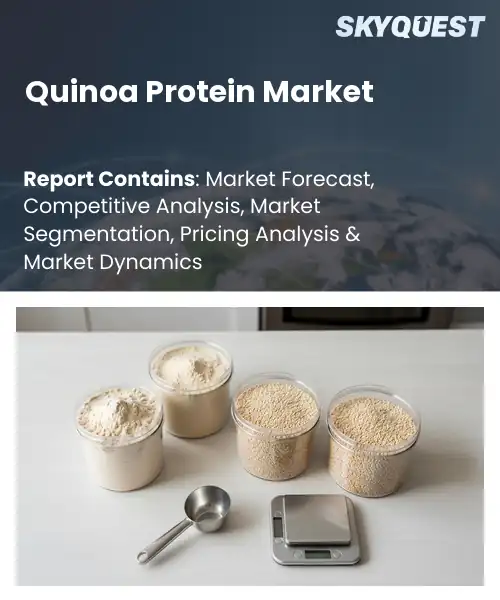
Quinoa Protein Market
Report ID: SQMIG30H2391
Report ID: SQMIG30H2391
[email protected]
USA +1 351-333-4748
Report ID:
SQMIG30H2391 |
Region:
Global |
Published Date: March, 2026
Pages:
157
|Tables:
113
|Figures:
77


Global Quinoa Protein Market size was valued at USD 270.00 Million in 2024 and is poised to grow from USD 295.92 Million in 2025 to USD 616.11 Million by 2033, growing at a CAGR of 9.6% during the forecast period (2026-2033).
Growing demand for plant-based proteins, increasing consumer preference for sustainable and nutrient-dense food sources, rising popularity of vegan and flexitarian diets, advancements in protein extraction technologies, and expanding use in functional foods are driving sales of quinoa protein.
Nutritional awareness, as well as developments in the supply chain that facilitated technological improvements and large-scale manufacturing of quinoa protein, helped increase its accessibility. Following the improvements mentioned above, supply chain integration has become an important factor in the development of the industry by lowering costs and ensuring consistent quality of the raw materials. The use of mechanical harvesting as well as advanced methods of saponin removal has enhanced both yield and protein purity, thus ensuring that quinoa is more readily available for mass consumption and utilization in various consumer goods. With prices becoming cheaper, more private-label products will be seen in stores. Growing health and wellness awareness among consumers worldwide, coupled with a strong shift toward plant-based nutrition, is expected to primarily drive quinoa protein market growth. Convergence of consumer demand for complete amino acid profiles and sustainable food sources is also boosting quinoa protein consumption.
On the contrary, high production and processing costs, limited large-scale cultivation compared to other plant proteins, price volatility of raw quinoa, and competition from alternative protein sources such as soy and pea protein are anticipated to slow down quinoa protein market penetration.
How is AI Improving Quinoa Protein Production Efficiency?
AI is enhancing the production of quinoa protein through the integration of intelligent breeding, precision agriculture, and improved processing. The use of machine learning makes it possible to breed quinoa with high protein content at an accelerated pace using genomics. The technologies of computer vision and remote sensing are applied in the monitoring of crop conditions and decision-making in the agricultural sector. Automated control systems in cleaning and milling operations ensure protein quality and minimize losses.
In June 2025, Archer Daniels Midland announced a cold milling processing unit in Thailand. When combined with AI-driven process control and predictive maintenance, such developments help preserve protein quality, increase production efficiency, and reduce processing losses, supporting overall demand outlook.
Market snapshot - 2026-2033
Global Market Size
USD 270.0 Million
Largest Segment
Protein Powder
Fastest Growth
Protein Bars
Growth Rate
9.6% CAGR
To get more insights on this market click here to Request a Free Sample Report
Global quinoa protein market is segmented by product type, application, distribution channel, formulation, and region. Based on product type, the market is segmented into protein powder and protein bars. Based on application, the market is segmented into sports nutrition and meal replacement. Based on distribution channel, the market is segmented into online retail and offline retail. Based on formulation, the market is segmented into whole grain and processed forms. Based on region, the market is segmented into North America, Europe, Asia Pacific, Latin America, and Middle East & Africa.
The protein powder segment is estimated to account for the highest global quinoa protein market share in the future. Alignment of protein powders with core nutritional positioning of quinoa protein and the ability to offer concentrated protein delivery and formulation flexibility helps this segment hold sway over others. In powder form, the product can be easily added to shakes as well as used for fortifying various foods. The suitability for use in sports nutrition and meals replacements encourages more research and wider product range.
However, protein bars are the most rapidly expanding segment as per this quinoa protein industry analysis. High demand for convenient protein snacks and innovation in texture and flavor are creating new business scope. Portability and clear labeling in terms of nutritional content make the products attractive to consumers who are always on the go, allowing for further sales through shelves and impulse selling to boost the expansion of the product line.
The online retail segment is forecasted to lead the global quinoa protein market revenue generation in the long run. Direct consumer engagement and efficient distribution pathways offered by online channels help this segment maintain its dominance. These platforms facilitate rich product storytelling subscriptions as well as marketing efforts that create lower entry barriers while fostering product diversification. The ability of the channel to generate replenishment based on analytics and its low-cost nature makes it easy to test different products and remain visible.
On the other hand, offline retail is becoming the fastest growing method of distribution in the market since retailers are beginning to introduce special lines of health products. Sampling within retail outlets provides discovery for mainstream customers thereby pushing manufacturers to increase supply of their products to meet the growing demand.
To get detailed segments analysis, Request a Free Sample Report
Increased consumer preference for plant-based protein and clean label ingredients is driving consistent quinoa protein demand in this region. A well-established distribution network in both the retail and foodservice splits has resulted in the rapid availability of quinoa-based products to consumers. Collaborative partnerships between research institutions and the quinoa protein manufacturing industry are also playing an important role in the development of formulation and their technical adoption. Regulatory clarifications as well as a large abundance of market participants focused on sustainable quinoa protein supply will continue to help strengthen the reliability of the supply chain and establish North America as a leader in product innovation and global sourcing. Robust investments in R&D of novel quinoa protein offerings and expansion of processing capacity is also cementing the dominance of this region.
Deep consumer familiarity with plant-based nutrition and a mature innovation ecosystem helps boost quinoa protein consumption in the United States. Joint research and marketing efforts help promote consumer awareness, leading to fast adoption within snack food, beverages, and meal replacement platforms. Innovation is encouraged by retail and specialized retail routes, while sports nutrition and clinical nutrition contribute to premium offerings. Raw material suppliers and co-packing partners emphasize functionality and clean labels.
High emphasis on sustainability and traceability as core purchase drivers are shaping quinoa protein sales in Canada. Collaboration among sectors involving ingredient manufacturers, growers, and regulatory authorities facilitates the development and entry into markets, boosting domestic production and export capabilities. Functionalization is a key consideration for manufacturers to satisfy flavor and mouthfeel requirements without compromising clean-label attributes. Expansion of natural food retailing alongside advancements in foodservice is a positive trend.
Shifting dietary preferences toward plant-based nutrition and heightened focus on provenance and environmental impact are shaping quinoa protein demand in Europe. Manufacturers and consumers value functional benefits of quinoa, include its protein content, and seek out clean label and environmentally friendly ingredients that support innovation in the use of quinoa allows this to occur. Research centres and certification agencies have provided assistance in maintaining the integrity and reliability of quinoa's supply chain; the growth of e-commerce and targeted advertising has increased consumer awareness and market share of quinoa based products; cross-border trade and collaboration between new and established food manufacturers has resulted in the rapid commercialization of quinoa and increasing market share and access to customers in both mass and specialty channels.
High consumer interest in functional, sustainable ingredients and a robust industrial ingredient infrastructure support strong quinoa protein demand in Germany. Cooperation between ingredient providers and food manufacturers facilitates innovation, and regulatory efforts focus on food quality and accurate labeling. Manufacturers emphasize technical performance and clean-label claims for incorporation into meat substitutes, bakery goods, and health foods. Trade relations strengthen the regional importance of Germany in procurement and innovation.
Challenger brands innovation, investment, and flexible sales channels will be some of the major factors behind the development of the quinoa protein market in the United Kingdom. The consumer demand for food alternatives and functional nutrition results in quick releases in snack foods, drinks, and sports nutrition items. Flexible sales channels such as online platforms and physical stores enable a rapid consumer reaction and uptake. Incubators and startups for food technologies forge alliances with producers to improve product qualities.
The factors that influence the consumption of quinoa protein in France are premium positioning, culinary incorporation, and provenance. Manufacturers emphasize taste and quality based on consumer demands while certification enhances consumer confidence. The partnership between ingredient suppliers and culinary institutes enables customized application of quinoa protein. Thus, its application goes beyond the niche to reach mainstream applications due to rising consumer interest.
Rising health consciousness, modernization of food supply chains, and ingredient adaptation to regional taste profiles helps govern quinoa protein sales in the region. Product developers are creating strategic alliances with international ingredient suppliers to both transfer technology and establish quality control over finished products. The growth of retail development and ecommerce will further enhance the reach of potential consumers. The establishment of local R&D centres and connections to seed suppliers will enhance the sourcing story for ingredients. Brands are working to integrate quinoa protein into traditional recipes through attention to texture and nutrition in order to attract both health-conscious and culinary-oriented consumers, while building manufacturing capacity to support sales throughout the region. Food producers and ingredient companies are increasing their investments in processing and formulation expertise to enhance the function and sensory experience of beverages, convenience foods, and fortified foods.
Emphasis on functional quality, food safety, and culinary integration governs the sales of quinoa protein in Japan. Convenience outlets provide opportunities for sampling and repurchasing. Consumer confidence in product quality allows acceptance of new plant-based protein ingredients in the national diet. Product development focuses on sensory aspects and solubility for beverages, main dishes, and dietary supplements. Ingredient companies work with research institutions to develop innovations.
Rising consumer interest in high quality plant-based nutrition and functional ingredients is boosting quinoa protein demand in South Korea. Innovation centers work together with ingredient suppliers to enhance the mouth feel and solubility of quinoa protein, while online and offline channels facilitate testing by consumers. Food processors modify their recipes to suit the local palate and add quinoa protein to their drinks, snacking products, and meal replacement shakes.
To know more about the market opportunities by region and country, click here to
Buy The Complete Report
Rising Consumer Demand For Protein
Innovation In Product Formulations
Limited Raw Material Supply
Higher Production And Processing Costs
Request Free Customization of this report to help us to meet your business objectives.
Competitive landscape in the global quinoa protein market is driven by technology driven startups and strategic corporate plays. Corporates pursue partnerships and plant protein brand launches such as Cargill's PlantEver, while startups like Starfield and Kinoko commercialize fermentation and ingredient innovation to secure ingredient supply deals. Common strategies include growth financing to scale manufacturing and distribution alliances with quick service chains.
SkyQuest’s ABIRAW (Advanced Business Intelligence, Research & Analysis Wing) is our Business Information Services team that Collects, Collates, Correlates, and Analyses the Data collected by means of Primary Exploratory Research backed by robust Secondary Desk research.
As per SkyQuest analysis, rising demand for plant-based proteins and increasing consumer preference for sustainable and nutrient-dense food sources are anticipated to drive the demand for quinoa protein going forward. However, high production and processing costs, price volatility of raw quinoa, and competition from alternative protein sources such as soy and pea protein are slated to slow down the adoption of quinoa protein in the future. North America is slated to spearhead the demand for quinoa protein owing to the strong presence of health-conscious consumers, high adoption of plant-based diets, and well-established food processing industry. Advancements in protein extraction technologies, integration of AI in farming and processing, and expansion of clean-label and functional food applications are anticipated to be key trends driving the quinoa protein sector going forward.
| Report Metric | Details |
|---|---|
| Market size value in 2024 | USD 270.00 Million |
| Market size value in 2033 | USD 616.11 Million |
| Growth Rate | 9.6% |
| Base year | 2024 |
| Forecast period | 2026-2033 |
| Forecast Unit (Value) | USD Million |
| Segments covered |
|
| Regions covered | North America (US, Canada), Europe (Germany, France, United Kingdom, Italy, Spain, Rest of Europe), Asia Pacific (China, India, Japan, Rest of Asia-Pacific), Latin America (Brazil, Rest of Latin America), Middle East & Africa (South Africa, GCC Countries, Rest of MEA) |
| Companies covered |
|
| Customization scope | Free report customization with purchase. Customization includes:-
|
To get a free trial access to our platform which is a one stop solution for all your data requirements for quicker decision making. This platform allows you to compare markets, competitors who are prominent in the market, and mega trends that are influencing the dynamics in the market. Also, get access to detailed SkyQuest exclusive matrix.
Table Of Content
Executive Summary
Market overview
Parent Market Analysis
Market overview
Market size
KEY MARKET INSIGHTS
COVID IMPACT
MARKET DYNAMICS & OUTLOOK
Market Size by Region
KEY COMPANY PROFILES
Methodology
For the Quinoa Protein Market, our research methodology involved a mixture of primary and secondary data sources. Key steps involved in the research process are listed below:
1. Information Procurement: This stage involved the procurement of Market data or related information via primary and secondary sources. The various secondary sources used included various company websites, annual reports, trade databases, and paid databases such as Hoover's, Bloomberg Business, Factiva, and Avention. Our team did 45 primary interactions Globally which included several stakeholders such as manufacturers, customers, key opinion leaders, etc. Overall, information procurement was one of the most extensive stages in our research process.
2. Information Analysis: This step involved triangulation of data through bottom-up and top-down approaches to estimate and validate the total size and future estimate of the Quinoa Protein Market.
3. Report Formulation: The final step entailed the placement of data points in appropriate Market spaces in an attempt to deduce viable conclusions.
4. Validation & Publishing: Validation is the most important step in the process. Validation & re-validation via an intricately designed process helped us finalize data points to be used for final calculations. The final Market estimates and forecasts were then aligned and sent to our panel of industry experts for validation of data. Once the validation was done the report was sent to our Quality Assurance team to ensure adherence to style guides, consistency & design.
Analyst Support
Customization Options
With the given market data, our dedicated team of analysts can offer you the following customization options are available for the Quinoa Protein Market:
Product Analysis: Product matrix, which offers a detailed comparison of the product portfolio of companies.
Regional Analysis: Further analysis of the Quinoa Protein Market for additional countries.
Competitive Analysis: Detailed analysis and profiling of additional Market players & comparative analysis of competitive products.
Go to Market Strategy: Find the high-growth channels to invest your marketing efforts and increase your customer base.
Innovation Mapping: Identify racial solutions and innovation, connected to deep ecosystems of innovators, start-ups, academics, and strategic partners.
Category Intelligence: Customized intelligence that is relevant to their supply Markets will enable them to make smarter sourcing decisions and improve their category management.
Public Company Transcript Analysis: To improve the investment performance by generating new alpha and making better-informed decisions.
Social Media Listening: To analyze the conversations and trends happening not just around your brand, but around your industry as a whole, and use those insights to make better Marketing decisions.
REQUEST FOR SAMPLE
 REQUEST FREE CUSTOMIZATION
Global Quinoa Protein Market size was valued at USD 270.0 Million in 2024 and is poised to grow from USD 295.92 Million in 2025 to USD 616.11 Million by 2033, growing at a CAGR of 9.6% during the forecast period (2026-2033).
Competitive landscape in the global quinoa protein market is driven by technology driven startups and strategic corporate plays. Corporates pursue partnerships and plant protein brand launches such as Cargill's PlantEver, while startups like Starfield and Kinoko commercialize fermentation and ingredient innovation to secure ingredient supply deals. Common strategies include growth financing to scale manufacturing and distribution alliances with quick service chains. 'Ancient Harvest', 'Quinoa Corporation', 'NutraGreen', 'Andean Valley', 'The Enlightened Kitchen', 'Purely Quinoa', 'Alter Eco', 'Quinoa Express', 'Bob's Red Mill', 'Manitoba Harvest', 'Quinoa Farm', 'Quinoa International', 'Terrasoul Superfoods', 'Quinola', 'The Protein Works', 'Simply Quinoa', 'Gogo Quinoa', 'Nuttzo', 'Thrive Market', 'Nature's Path'
The growing preference among health conscious consumers for plant-based protein sources and clean label ingredients drives demand for quinoa protein, as its favorable amino acid profile and perceived naturalness align with dietary priorities. Food manufacturers leverage quinoa protein to reformulate products that target vegetarian, vegan, and flexitarian consumers, enabling broader product differentiation. Retailers respond by increasing shelf space for quinoa containing items, which reinforces visibility and consumer trial. Together, these dynamics create a supportive environment for market expansion by linking consumer preferences directly to product development and distribution strategies.
Clean Label Demand: Consumers and manufacturers prioritize minimally processed, transparent ingredient lists, positioning quinoa protein as a favored clean-label alternative. Its perception as natural, allergen-friendly and sustainably sourced supports brand narratives focused on health, traceability and environmental responsibility. Food developers reformulate snacks, beverages and protein-rich meals to replace synthetic additives and obscure protein isolates with quinoa-derived formulations that meet clean-label criteria. The trend favors suppliers who demonstrate origin transparency, simple processing methods and supply chain certifications that align with rapidly evolving consumer expectations.
North America as a leader in product innovation and global sourcing. Robust investments in R&D of novel quinoa protein offerings and expansion of processing capacity is also cementing the dominance of this region.
The market faces challenges such as high production and processing costs, limited large-scale cultivation, and price volatility of raw quinoa, along with strong competition from alternative proteins like soy and pea.
The protein powder segment holds the largest market share due to its versatility, high protein concentration, and wide application in sports nutrition and meal replacement products.
Online retail is the leading distribution channel, driven by direct consumer engagement, wider product availability, and efficient supply chains that support market expansion.


Want to customize this report? This report can be personalized according to your needs. Our analysts and industry experts will work directly with you to understand your requirements and provide you with customized data in a short amount of time. We offer $1000 worth of FREE customization at the time of purchase.
Feedback From Our Clients


 USA (+1) 351-333-4748

