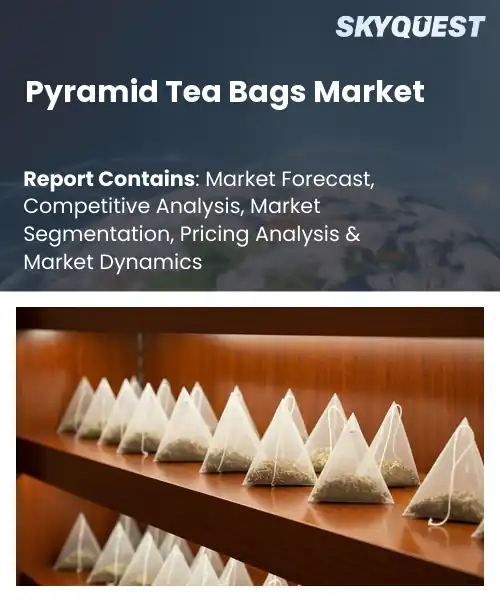
Pyramid Tea Bags Market
Report ID: SQMIG30I2948
Report ID: SQMIG30I2948
[email protected]
USA +1 351-333-4748
Report ID:
SQMIG30I2948 |
Region:
Global |
Published Date: June, 2026
Pages:
157
|Tables:
116
|Figures:
77


Global Pyramid Tea Bags Market size was valued at USD 3.6 Billion in 2024 and is poised to grow from USD 3.89 Billion in 2025 to USD 7.26 Billion by 2033, growing at a CAGR of 8.1% during the forecast period (2026-2033).
The pyramid tea bags market focuses on three dimensional sachets that let whole leaves expand so infusions extract more aroma and flavor than standard flat filters. This sector matters because consumers seek premium sensory experiences and convenience, prompting brands to move away from commodity perception toward craft storytelling and differentiated packaging. Early adoption occurred among specialty tea houses in Europe and North America where demonstration of leaf quality supported margins, and over time manufacturing advances brought pyramids into retail. For instance, luxury labels used fine mesh to show leaf shape while later iterations emphasized compostable materials to meet sustainability expectations.Following adoption, sustainability and material innovation drive the market because regulatory scrutiny and consumer backlash against plastic forced manufacturers to redesign filters with compostable plant fibers. Consequently brands claim eco credentials that boost appeal in premium retail and subscription channels and enable margins to justify tooling investments. In practice hotels and specialty cafes select pyramid sachets to deliver consistent and visually appealing single servings while ecommerce subscription services emphasize whole leaf infusion as a differentiator. As a result investment in scalable biodegradable production and supply chain transparency creates opportunities for new entrants and partnerships across the value chain and exports.
How is AI optimizing supply chain efficiency in the pyramid tea bags market?
AI improves efficiency in the pyramid tea bags market by tightening demand sensing, inventory control, supplier coordination and production planning. Core functions include machine learning that reads retail and seasonal signals, computer vision for leaf grading and bag inspection, and prescriptive analytics that sequence small batch runs to reduce waste. The market’s premium positioning and varied blends create planning complexity so brands adopt digital twins and automated planning to shorten lead times, improve traceability and maintain product quality expected by consumers.Unilever March 2026, the company announced a partnership with Google Cloud to scale AI across its consumer goods operations which helps tea brands improve forecasting and supplier visibility and supports more efficient pyramid tea bag production and faster new product introduction.
Market snapshot - (2026-2033)
Global Market Size
USD 3.6 Billion
Largest Segment
Black Tea Bags
Fastest Growth
Herbal Tea Bags
Growth Rate
8.1% CAGR
To get more insights on this market click here to Request a Free Sample Report
Global pyramid tea bags market is segmented by product type, material type, flavor profile, packaging size and region. Based on product type, the market is segmented into Herbal Tea Bags, Green Tea Bags and Black Tea Bags. Based on material type, the market is segmented into Silken Bags, Paper Bags and Biodegradable Bags. Based on flavor profile, the market is segmented into Fruity Flavors, Spicy Flavors and Classic Flavors. Based on packaging size, the market is segmented into Single-Serve Packs and Multi-Serve Packs. Based on region, the market is segmented into North America, Europe, Asia Pacific, Latin America and Middle East & Africa.
Herbal Tea Bags segment dominates because consumers increasingly prioritize wellness and functional benefits, and pyramid construction magnifies infusion of botanical compounds for pronounced flavor and perceived efficacy. Brands capitalize on herbal diversity to create artisanal blends and storytelling that support premium shelf placement, while supplier partnerships and formulation expertise ensure consistent quality and broad retail and direct-to-consumer availability, reinforcing market leadership.
However, Green Tea Bags are emerging as the fastest growing area due to heightened interest in antioxidant-forward, clean-label beverages and product innovations like whole-leaf and matcha-infused pyramid formats that appeal to health-focused buyers. Enhanced sourcing transparency and novel flavor extensions broaden consumption occasions, enabling accelerated distribution gains and creating new opportunities for premium and ready-to-brew offerings.
Silken Bags segment leads because its fine, spacious weave allows superior water circulation around whole leaves in pyramid tea bags, delivering faster infusion and fuller flavor extraction that aligns with consumer expectations for convenience and quality. Manufacturers favor silken construction for premium positioning since it showcases ingredients visually, supports single-brew performance, and enhances perceived brew superiority, driving repeat purchases and retailer emphasis on premium SKUs.
However, Biodegradable Bags are the fastest growing material type as brands respond to sustainability demands and regulatory momentum by adopting compostable fibers and bio-based films for pyramid tea bags. Advancements in certified biodegradable materials and clearer end-of-life claims increase retailer acceptance and consumer trust, unlocking new co-manufacturing partnerships and expanding shelf space for environmentally positioned products.
To get detailed segments analysis, Request a Free Sample Report
Europe leads the global pyramid tea bags market through a confluence of mature consumer tastes, robust retail ecosystems and a strong tradition of product innovation. A pronounced shift toward premium, artisan and health oriented beverages has created sustained demand for formats that highlight flavor extraction and presentation. Well established brands and private label operators invest in sustainable materials and refined packaging, reinforcing quality perceptions. Diverse distribution channels from specialty boutiques to mainstream supermarkets, supported by sophisticated marketing and retail partnerships, enable rapid adoption. Regulatory frameworks and trade networks that prioritize food safety and traceability further strengthen supply chain confidence, and support ongoing innovation.
Pyramid Tea Bags Market in Germany benefits from discerning consumers, well developed retail channels and a strong focus on quality and sustainability. Established brands and private label operators emphasize premium blends and innovative biodegradable materials. Marketing around wellness and artisanal sourcing resonates with urban shoppers, while efficient logistics and trade linkages support broad distribution. Product format innovation and retailer collaborations continue to reinforce market depth and consumer engagement and loyalty.
Pyramid Tea Bags Market in United Kingdom features a mature tea culture combined with evolving tastes toward specialty and convenience offerings. Retailers and artisanal brands expand assortment with single origin teas, infusions and sustainable packaging, appealing to health oriented and ethically minded consumers. Strong tea service heritage and café trends drive trial of premium formats, while marketing collaborations and online channels extend reach and consumer awareness across urban segments nationwide.
Pyramid Tea Bags Market in France is shaped by a growing appreciation for specialty teas and culinary pairing, with cafés and gourmet retailers championing premium formats. Emphasis on provenance, flavor craftsmanship and sustainable sourcing aligns with consumer values, prompting brands to innovate in aroma preservation and elegant presentation. Distribution through both traditional grocers and upscale boutiques, coupled with active promotional strategies, enhances visibility and reinforces premium positioning among discerning consumers.
Asia Pacific expansion is propelled by rapid urban lifestyle shifts, escalating demand for convenient premium beverages and expanding retail and online channels that facilitate product discovery. Consumers increasingly value functional and artisanal experiences, encouraging brands to develop single origin blends, innovative infusions and convenience oriented packaging. Local tea traditions in markets like Japan and South Korea blend with modern preferences for wellness and sustainability, fostering adoption of pyramid formats that enhance infusion and aroma. Retail modernization, café culture and strategic marketing partnerships amplify trial and premium positioning. Manufacturers and retailers also prioritize biodegradable materials and transparent sourcing narratives to meet evolving expectations, and encourage local innovation ecosystems.
Pyramid Tea Bags Market in Japan is influenced by a cultural appreciation for delicate flavor profiles and meticulous preparation. Brands emphasize high grade leaf selection and delicate infusion performance to meet discerning palates. Convenience channel innovation and specialty retailers support sampling of artisanal blends, while sustainability and provenance narratives resonate with consumers. Collaboration between traditional tea producers and modern brands fosters a blend of heritage and convenience that elevates adoption.
Pyramid Tea Bags Market in South Korea is shaped by modern café culture and interest in wellness oriented beverages. Consumers favor innovative flavors, functional infusions and aesthetically appealing packaging suited to gifting and consumption. E commerce and specialty cafés serve as discovery channels, enabling niche brands to reach trend conscious buyers. Focus on quality sourcing and sustainable production builds credibility and encourages experimentation with premium pyramid formats in urban markets.
North America is strengthening its position in the pyramid tea bags market through a combination of product innovation, channel expansion and shifting consumer preferences toward specialty beverages. Increased interest in functional blends, artisanal sourcing and premium presentation has encouraged both legacy brands and new entrants to introduce diverse flavors and sustainable packaging options. Retailers and food service channels are showcasing premium tea formats alongside coffee and ready to drink offerings, enhancing visibility and trial. E commerce and social media campaigns support direct to consumer engagement, while collaborations with cafés and wellness influencers amplify credibility. Investment in domestic manufacturing and supply chain efficiencies further improves availability and responsiveness to local trends, enabling broader mainstream acceptance.
Pyramid Tea Bags Market in United States reflects rising interest in specialty and functional teas, with retailers and online channels enabling discovery of artisanal blends and innovative infusions. Café and food service partnerships expose consumers to premium formats, while established brands and private label offerings emphasize sustainable materials and refined packaging. Marketing centered on provenance and sensory experience drives trial, and expanding distribution broadens access across diverse consumer segments nationally.
Pyramid Tea Bags Market in Canada shows increasing interest in premium, sustainably sourced teas and functional infusions. Specialty retailers, cafés and online channels provide access to artisanal and single origin blends that emphasize provenance and clean ingredients. Brands engage local growers and adopt biodegradable packaging to align with eco conscious preferences. Targeted retail placements and sampling initiatives raise awareness, prompting trial among urban consumers and supporting expansion into retail channels.
To know more about the market opportunities by region and country, click here to
Buy The Complete Report
Convenience Enhances Brewing Quality
Premiumization and Specialty Teas
High Production and Packaging Costs
Regulatory Ambiguity For Compostable Materials
Request Free Customization of this report to help us to meet your business objectives.
Competitive intensity in the global pyramid tea bags market is shaped by sustainability and premiumization, prompting concrete moves such as packaging partnerships, targeted acquisitions, and infusion technology investments. Brands and suppliers are forming packaging alliances to launch biodegradable pyramid sachets, while specialty firms deploy product and traceability innovations to differentiate on flavor and provenance.
Top Player’s Company Profile
Recent Developments
SkyQuest’s ABIRAW (Advanced Business Intelligence, Research & Analysis Wing) is our Business Information Services team that Collects, Collates, Correlates, and Analyses the Data collected by means of Primary Exploratory Research backed by robust Secondary Desk research. As per SkyQuest analysis, the global pyramid tea bags market is propelled primarily by premiumization and consumer demand for specialty teas that support higher price points and artisanal storytelling. Convenience and superior infusion performance from the pyramid format act as a second key driver by delivering fuller flavor with simple preparation. However high production and packaging costs remain a significant restraint, limiting expansion for smaller manufacturers and pressuring margins. Europe remains the dominant region due to mature tastes, robust retail channels and sustainability focus, while the herbal tea bags segment leads the market by tapping wellness trends and functional blends that resonate with premium and health conscious consumers.
| Report Metric | Details |
|---|---|
| Market size value in 2024 | USD 3.6 Billion |
| Market size value in 2033 | USD 7.26 Billion |
| Growth Rate | 8.1% |
| Base year | 2024 |
| Forecast period | (2026-2033) |
| Forecast Unit (Value) | USD Billion |
| Segments covered |
|
| Regions covered | North America (US, Canada), Europe (Germany, France, United Kingdom, Italy, Spain, Rest of Europe), Asia Pacific (China, India, Japan, Rest of Asia-Pacific), Latin America (Brazil, Rest of Latin America), Middle East & Africa (South Africa, GCC Countries, Rest of MEA) |
| Companies covered |
|
| Customization scope | Free report customization with purchase. Customization includes:-
|
To get a free trial access to our platform which is a one stop solution for all your data requirements for quicker decision making. This platform allows you to compare markets, competitors who are prominent in the market, and mega trends that are influencing the dynamics in the market. Also, get access to detailed SkyQuest exclusive matrix.
Table Of Content
Executive Summary
Market overview
Parent Market Analysis
Market overview
Market size
KEY MARKET INSIGHTS
COVID IMPACT
MARKET DYNAMICS & OUTLOOK
Market Size by Region
KEY COMPANY PROFILES
Methodology
For the Pyramid Tea Bags Market, our research methodology involved a mixture of primary and secondary data sources. Key steps involved in the research process are listed below:
1. Information Procurement: This stage involved the procurement of Market data or related information via primary and secondary sources. The various secondary sources used included various company websites, annual reports, trade databases, and paid databases such as Hoover's, Bloomberg Business, Factiva, and Avention. Our team did 45 primary interactions Globally which included several stakeholders such as manufacturers, customers, key opinion leaders, etc. Overall, information procurement was one of the most extensive stages in our research process.
2. Information Analysis: This step involved triangulation of data through bottom-up and top-down approaches to estimate and validate the total size and future estimate of the Pyramid Tea Bags Market.
3. Report Formulation: The final step entailed the placement of data points in appropriate Market spaces in an attempt to deduce viable conclusions.
4. Validation & Publishing: Validation is the most important step in the process. Validation & re-validation via an intricately designed process helped us finalize data points to be used for final calculations. The final Market estimates and forecasts were then aligned and sent to our panel of industry experts for validation of data. Once the validation was done the report was sent to our Quality Assurance team to ensure adherence to style guides, consistency & design.
Analyst Support
Customization Options
With the given market data, our dedicated team of analysts can offer you the following customization options are available for the Pyramid Tea Bags Market:
Product Analysis: Product matrix, which offers a detailed comparison of the product portfolio of companies.
Regional Analysis: Further analysis of the Pyramid Tea Bags Market for additional countries.
Competitive Analysis: Detailed analysis and profiling of additional Market players & comparative analysis of competitive products.
Go to Market Strategy: Find the high-growth channels to invest your marketing efforts and increase your customer base.
Innovation Mapping: Identify racial solutions and innovation, connected to deep ecosystems of innovators, start-ups, academics, and strategic partners.
Category Intelligence: Customized intelligence that is relevant to their supply Markets will enable them to make smarter sourcing decisions and improve their category management.
Public Company Transcript Analysis: To improve the investment performance by generating new alpha and making better-informed decisions.
Social Media Listening: To analyze the conversations and trends happening not just around your brand, but around your industry as a whole, and use those insights to make better Marketing decisions.
REQUEST FOR SAMPLE
 REQUEST FREE CUSTOMIZATION


Want to customize this report? This report can be personalized according to your needs. Our analysts and industry experts will work directly with you to understand your requirements and provide you with customized data in a short amount of time. We offer $1000 worth of FREE customization at the time of purchase.
Feedback From Our Clients


 USA (+1) 351-333-4748

