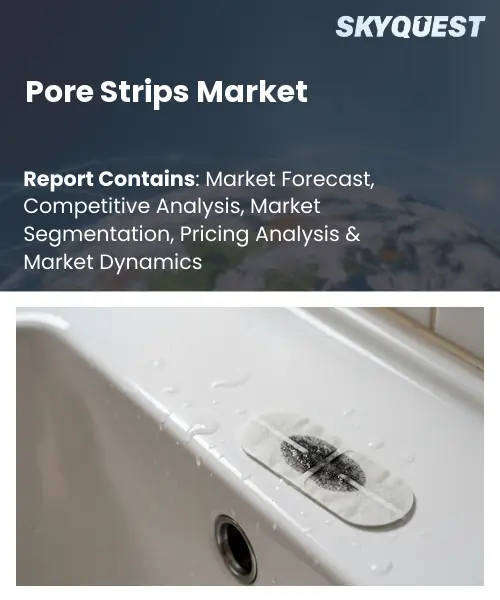
Pore Strips Market
Report ID: SQMIG30L2385
Report ID: SQMIG30L2385
[email protected]
USA +1 351-333-4748
Report ID:
SQMIG30L2385 |
Region:
Global |
Published Date: May, 2026
Pages:
157
|Tables:
178
|Figures:
79


Global Pore Strips Market size was valued at USD 1.7 Billion in 2024 and is poised to grow from USD 1.8 Billion in 2025 to USD 2.9 Billion by 2033, growing at a CAGR of 6.1% during the forecast period (2026-2033).
As a research analyst, I view the primary driver of the pore strips market as consumer demand for rapid visible removal of comedones and surface oil, which produces frequent repurchase and incentivizes formulation advances. The market includes over‑the‑counter adhesive patches aimed at blackhead and sebum removal from nose and T-zone, and it matters because it bridges mass cosmetics and dermatological hygiene by offering low-cost, immediate alternatives to clinic extraction. Since the introduction of pioneer brands the category has evolved into SKUs with charcoal, salicylic acid and sensitive-skin variants while distribution shifted from pharmacies into supermarkets and online, increasing household penetration.
Rising household penetration has made digital commerce and influencer-driven discovery the pivotal growth factor in the global pore strips market, as easier trial access and visual before-after content accelerate adoption and normalize routine use. Online platforms reduce entry costs so niche brands scale faster, which prompts retailers to broaden assortments and develop private-label options. Real-world cases include social campaigns driving immediate purchases before events, travel-sized kits in subscription boxes and male grooming bundles sold through e-commerce. Those shifts cause higher purchase frequency, expand demographic reach and create opportunities for premium positioning, functionalized formulas and targeted sensitive-skin claims and international distribution.
How is AI transforming product development in the pore strips market?
AI is revolutionizing pore strip development, from testing formulations to personalizing them. Key aspects include predictive formulation - suggesting polymers and actives that are compatible for better adhesion and pore lift; computer vision - analysing images of the skin to target pore depth and debris; and generative models - quickening prototype design. Today, ingredient houses and beauty brands are using AI to model ingredient interactions and consumer responses, saving time in the lab and guiding R&D towards ideas with high potential. This makes the market more responsive and allows a faster roll-out of targeted pore care innovations.
Givaudan Active Beauty April 2026 AI-driven ingredient simulations and SkinGPT personalization enable brands to accelerate formulation cycles and tailor pore strip adhesives and actives to skin profiles. This breakthrough helps to grow in the market and accelerate the iteration through minimizing the development and commercialization of targeted pore solutions.
Market snapshot - (2026-2033)
Global Market Size
USD 1.7 Billion
Largest Segment
Nose Pore Strips
Fastest Growth
Charcoal Pore Strips
Growth Rate
6.1% CAGR
To get more insights on this market click here to Request a Free Sample Report
Global pore strips market is segmented by product type, material type, skin type, distribution channel, end user, application and region. Based on product type, the market is segmented into Nose Pore Strips, Face Pore Strips, Charcoal Pore Strips, Peel-Off Pore Strips and Others. Based on material type, the market is segmented into Fabric-Based, Hydrocolloid-Based, Adhesive Gel-Based and Others. Based on skin type, the market is segmented into Oily Skin, Dry Skin, Combination Skin and Sensitive Skin. Based on distribution channel, the market is segmented into Supermarkets & Hypermarkets, Pharmacies & Drugstores, Specialty Beauty Stores, Online Retail and Others. Based on end user, the market is segmented into Men, Women and Teenagers. Based on application, the market is segmented into Blackhead Removal, Acne Control, Deep Cleansing and Oil Control. Based on region, the market is segmented into North America, Europe, Asia Pacific, Latin America and Middle East & Africa.
Fabric Based segment is expected to dominate the market as gentle conformability and reliable adhesion of fabric-based pore strips is widely accepted across different skin types and daily routines. The breathable structure reduces the possibility of irritation, while providing good contact with the pores. Fabric substrate for cost efficient production and consistent performance are preferred by manufacturers. This drives retailer preference and consumer loyalty, as fabric formats facilitate application and removal and allow formulation variations for oil control and blackhead extraction.
Hydrocolloid-Based, however, is the fastest growing material type, driven by clinical perceptions of better gentle extraction and moisture management. Development of products is accelerated by innovations in adapting hydrocolloid technology to cosmetic use and demand for multifunctional treatments that address acne and protect skin barrier creating cross channel opportunities for premium offerings.
The charcoal pore strips segment is anticipated to hold the largest share in the market due to the fact that charcoal has proven to have strong adsorptive properties that are in line with the demand of consumers for deep detoxifying cleanses and that have become a part of pore care routines. Activated charcoal formulations provide tangible impurity removal and strong marketing stories of toxin extraction that drive trial and repeat purchase. Charcoal varieties are preferred by brands/retailers for shelf appeal and perceived efficacy leading to higher investments in innovation and distribution.
However, Peel-Off Pore Strips are gaining the strongest growth momentum due to improvements in gentle peel technologies and multifunctional formulations that combine exfoliation with oil control. Demand is increasing with social media led demonstrations and at-home spa trends. Brands are creating new less painful peel mechanisms for safer use, to increase their appeal and drive premiumization.
To get detailed segments analysis, Request a Free Sample Report
North America is expected to dominate the global pore strips market owing to the presence of mature distribution infrastructure, high consumer awareness and continuous investment in product innovation. Established brands have deep access to pharmacies, specialty retailers and sophisticated e-commerce channels that allow fast product rollout and repeat purchase behaviour. Consumers are more confident with clear regulatory pathways and dermatologist recommendations. Visibility and adoption of trends are aided by proactive marketing and influencer participation. The area allows for a spectrum of positioning from mass market to premium, which encourages a range of formulation and targeted solutions. In addition, collaborations between companies and professional practitioners are also enhancing credibility and accelerating market acceptance of new formats and ingredient combinations, further boosting regional market leadership.
United States Pore Strips Market is marked by retail penetration and consumer participation in trend-driven skin care. Trial and Fidelity Dermatologist Recommended Omnichannel Available There is a huge range of products for all skin problems and types and online groups and experts are a big influence on skin routines. Innovation and brand credibility remain important not only in the mass market but also in the premium segments.
Canada Pore Strips Market is indicative of consumer preference for mild yet effective formulations with strong inclination towards ingredient transparency. There are retail chains and boutique outlets for varied access and online channels for niche and mainstream brands. Natural formulations and solutions for sensitive skin are the major reasons for the differentiation of products. Trust is built through professional recommendations and marketing. Cross border brand strategies and local adaptation to consumer tastes further enhance the engagement with the market.
The Asia Pacific pore strips market is likely to witness rapid growth, driven by rising beauty awareness, the potent influence of local beauty trends, and the dynamic evolution of retail. Consumers are open to targeted skincare solutions, and have an appetite for innovation – hence, brands are offering a variety of formulations to meet local needs. Evolving e-commerce ecosystems and social media communities have accelerated product discovery and trial. Cross border brands are customizing offerings to resonate with regional sensibilities. Growth is driven by a growing number of urban consumers looking for visible, convenient treatments and partnerships between brands and beauty professionals that add credibility. The focus on ingredient transparency, softer formulations and value focused product positioning has helped both domestic champions and international challengers to garner attention and penetrate deeper across diverse markets.
The Japanese pore strips market points to the sophisticated consumer who values subtle effectiveness, high-quality ingredients and elegant product presentation. Brands are focusing on gentle formulas to match multi step routines and to emphasize safety and refinement. Curated experiences through specialty beauty retailers and select online channels Local preferences were for mild but effective solutions. We can create strong brand loyalty and product consideration by working with beauty professionals and honing in on packaging features.
South Korea market for pore strips is driven by a forward-looking beauty culture embracing innovative textures, targeted active ingredients and eye-catching packaging. The speed of product launches and new formats is dictated by the uptake of trends on digital platforms. To get attention brands need influencer partnerships and experiential retail and research and formula improvement pay off with one-of-a-kind products. Visible result and sensory experience are prerequisites for domestic creativity and strong export potential.
Europe is emerging as a credible player in the pore strips arena, with high quality standards, growing consumer interest in sustainable and transparent beauty and a vibrant innovation scene from legacy and indie brands. High retail environment visibility of products: traditional pharmacies, department stores and beauty stores Discover niche brands in emerging e-commerce ecosystems Value-driven consumers also love clean ingredient lists, recyclable packaging and eco-conscious formulations that are a cut above the rest. Earn your credentials with professional journals and dermatologists. Regional research networks for calibration. Targeted marketing and consumer education campaigns can raise awareness and uptake. Cross border brand strategy helps you to scale concepts across markets. Thus, acceptance is achieved by investment in sensitive skin research and gentle adhesive technologies to cater for the discerning tastes.
Efficacy and regulatory compliance have been the drivers of the German Pore Strips market. German consumers want green packaging and want to know what they are buying. They learn about new products at drug and specialty retailers, and get the nod from the pros. “Brands spend a lot of money testing formulations and working with dermatology experts to make sure they are gentle. We emphasize reliability, clear communication and trust in the brand and we strongly promote adoption through a wide range of distribution channels.
Pore strips have a long history in the beauty retail market and high levels of online engagement with a trend aware consumer base in the UK. Established labels are opening up space for independent brands to develop, and specialty chains and department stores are targeting the discerning shopper with their ethical credentials and breakthrough formulas. The credibility is derived from the endorsement of professional salons and skin care clinics and targeted digital campaigns help in awareness. The Brands are all about sustainability, ingredient transparency and performance.
The beauty culture is deeply ingrained in France and it’s all about sensory experience, refined formulations and elegant packaging, which is driving the France pore strips market. Pharmacies and boutique perfumeries are key points of discovery and consumers want effective and attractive products. Brands talk about where they get their ingredients, about being gentle, and they partner with skincare experts. Heritage, artisanal positioning, and experiential retail are essential in building consumer discernment and sustained engagement.
To know more about the market opportunities by region and country, click here to
Buy The Complete Report
Growing Preference For Home Use
Rising Focus on Skin Hygiene
Safety and Sensitivity Concerns
Regulatory and Environmental Scrutiny
Request Free Customization of this report to help us to meet your business objectives.
Global pore strips market is driven by product and substrate innovation, and strategic acquisitions and brand associations that improve distribution and shelf presence. Digital-first challengers are scaling via licensing and retail partnerships at a fast clip while big incumbents are deploying enzyme and biodegradable substrate technologies. Recent examples include enzyme activated strips, biodegradable pore substrates, refillable packs and DTC brand launches
SkyQuest’s ABIRAW (Advanced Business Intelligence, Research & Analysis Wing) is our Business Information Services team that Collects, Collates, Correlates, and Analyses the Data collected by means of Primary Exploratory Research backed by robust Secondary Desk research.
As per SkyQuest analysis, the global pore strips market is driven by consumer demand for rapid visible removal of comedones and surface oil, while digital commerce and influencer-driven discovery acts as a second driver by accelerating trial, normalizing routine use and enabling niche brands to scale. A restraint is safety and sensitivity concerns which limit adoption among delicate skin types and force reformulation and conservative marketing. North America remains the dominating region due to mature distribution, high consumer awareness and strong e-commerce, and fabric-based products are the dominating segment because they offer gentle conformability, reliable adhesion and cost efficient production that support household penetration and repeat purchase.
| Report Metric | Details |
|---|---|
| Market size value in 2024 | USD 1.7 Billion |
| Market size value in 2033 | USD 2.9 Billion |
| Growth Rate | 6.1% |
| Base year | 2024 |
| Forecast period | (2026-2033) |
| Forecast Unit (Value) | USD Billion |
| Segments covered |
|
| Regions covered | North America (US, Canada), Europe (Germany, France, United Kingdom, Italy, Spain, Rest of Europe), Asia Pacific (China, India, Japan, Rest of Asia-Pacific), Latin America (Brazil, Rest of Latin America), Middle East & Africa (South Africa, GCC Countries, Rest of MEA) |
| Companies covered |
|
| Customization scope | Free report customization with purchase. Customization includes:-
|
To get a free trial access to our platform which is a one stop solution for all your data requirements for quicker decision making. This platform allows you to compare markets, competitors who are prominent in the market, and mega trends that are influencing the dynamics in the market. Also, get access to detailed SkyQuest exclusive matrix.
Table Of Content
Executive Summary
Market overview
Parent Market Analysis
Market overview
Market size
KEY MARKET INSIGHTS
COVID IMPACT
MARKET DYNAMICS & OUTLOOK
Market Size by Region
KEY COMPANY PROFILES
Methodology
For the Pore Strips Market, our research methodology involved a mixture of primary and secondary data sources. Key steps involved in the research process are listed below:
1. Information Procurement: This stage involved the procurement of Market data or related information via primary and secondary sources. The various secondary sources used included various company websites, annual reports, trade databases, and paid databases such as Hoover's, Bloomberg Business, Factiva, and Avention. Our team did 45 primary interactions Globally which included several stakeholders such as manufacturers, customers, key opinion leaders, etc. Overall, information procurement was one of the most extensive stages in our research process.
2. Information Analysis: This step involved triangulation of data through bottom-up and top-down approaches to estimate and validate the total size and future estimate of the Pore Strips Market.
3. Report Formulation: The final step entailed the placement of data points in appropriate Market spaces in an attempt to deduce viable conclusions.
4. Validation & Publishing: Validation is the most important step in the process. Validation & re-validation via an intricately designed process helped us finalize data points to be used for final calculations. The final Market estimates and forecasts were then aligned and sent to our panel of industry experts for validation of data. Once the validation was done the report was sent to our Quality Assurance team to ensure adherence to style guides, consistency & design.
Analyst Support
Customization Options
With the given market data, our dedicated team of analysts can offer you the following customization options are available for the Pore Strips Market:
Product Analysis: Product matrix, which offers a detailed comparison of the product portfolio of companies.
Regional Analysis: Further analysis of the Pore Strips Market for additional countries.
Competitive Analysis: Detailed analysis and profiling of additional Market players & comparative analysis of competitive products.
Go to Market Strategy: Find the high-growth channels to invest your marketing efforts and increase your customer base.
Innovation Mapping: Identify racial solutions and innovation, connected to deep ecosystems of innovators, start-ups, academics, and strategic partners.
Category Intelligence: Customized intelligence that is relevant to their supply Markets will enable them to make smarter sourcing decisions and improve their category management.
Public Company Transcript Analysis: To improve the investment performance by generating new alpha and making better-informed decisions.
Social Media Listening: To analyze the conversations and trends happening not just around your brand, but around your industry as a whole, and use those insights to make better Marketing decisions.
REQUEST FOR SAMPLE
 REQUEST FREE CUSTOMIZATION
Global Pore Strips Market size was valued at USD 1.7 Billion in 2024 and is poised to grow from USD 1.8 Billion in 2025 to USD 2.9 Billion by 2033, growing at a CAGR of 6.1% during the forecast period (2026-2033).
Competitive landscape in the global pore strips market is driven by product and substrate innovation, targeted acquisitions, and brand partnerships that accelerate distribution and shelf presence. Large incumbent firms deploy enzyme and biodegradable substrate technologies while digital first challengers use licensing and retail tie ups to scale quickly. Recent examples include enzyme activated strips, biodegradable pore substrates, refillable packs, and DTC brand rollouts. 'Bioré', 'Nivea', 'Peace Out Skincare', 'TONYMOLY', 'The Face Shop', 'Ulta Beauty Collection', 'Sephora Collection', 'Kose', 'Hero Cosmetics', 'Dermal Korea', 'Holika Holika', 'Etude', 'Skinfood', 'Missha', 'Earth Therapeutics', 'Formula 10.0.6', 'Yes To', 'Neutrogena', 'COSRX', 'Soo'AE'
Home-focused skincare routines have led consumers to seek simple, time-efficient treatments they can perform without professional assistance, and pore strips meet that need by offering visible pore cleansing with minimal preparation. Easy application and quick perceived results make these products appealing for regular personal care, driving repeat purchases and wider household adoption. Retail availability and consumer comfort with do-it-yourself facial steps further reinforce usage, encouraging manufacturers to expand product lines and marketing toward convenience-oriented shoppers who prioritize accessible skincare solutions.
Innovative Ingredient Formulations: Manufacturers are prioritizing novel, skin-friendly formulations that balance efficacy with gentle ingredients to reduce irritation and appeal to sensitive-skin consumers. Emphasis on biocompatible actives, plant-derived extracts, and non-abrasive delivery systems is driving product differentiation and premium positioning. Brands are promoting transparent ingredient lists and sensory benefits, collaborating with dermatologists and influencers to build credibility. This trend fuels portfolio expansion into varied skin types and age groups, enabling targeted claims and customized routines while supporting higher consumer trust and repeat purchases.
Why does North America Dominate the Global Pore Strips Market? |@12


Want to customize this report? This report can be personalized according to your needs. Our analysts and industry experts will work directly with you to understand your requirements and provide you with customized data in a short amount of time. We offer $1000 worth of FREE customization at the time of purchase.
Feedback From Our Clients


 USA (+1) 351-333-4748

