Polyurethane Potting Compounds Market
Report ID: SQMIG15E4473
Report ID: SQMIG15E4473
[email protected]
USA +1 351-333-4748
Report ID:
SQMIG15E4473 |
Region:
Global |
Published Date: September, 2026
Pages:
157
|Tables:
120
|Figures:
77


Global Polyurethane Potting Compounds Market size was valued at USD 1.18 Billion in 2024 and is poised to grow from USD 1.24 Billion in 2025 to USD 1.9 Billion by 2033, growing at a CAGR of 5.4% during the forecast period (2026-2033).
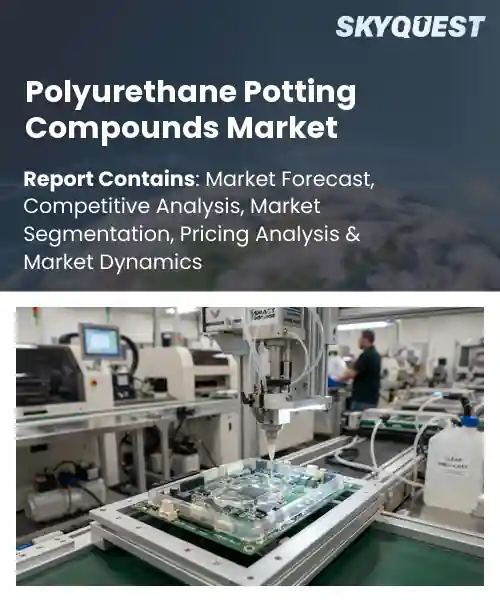
The global polyurethane potting compounds market comprises chemically engineered resins that encapsulate electronic assemblies, protecting them from moisture, vibration, and thermal stress. Its importance stems from the relentless miniaturization of circuitry and the rising demand for reliable, long‑life devices in sectors such as automotive, aerospace, and renewable energy. Historically, the market emerged in the early 2000s as manufacturers sought alternatives to epoxy because polyurethane offered superior flexibility and faster curing. Over the past decade, adoption accelerated as electric‑vehicle platforms required robust encapsulation for power electronics, while wind‑turbine converters benefited from the material’s resistance to harsh outdoor conditions in challenging environments. The next key factor driving growth is the expanding portfolio of high‑performance applications that demand both electrical insulation and mechanical resilience. As 5G infrastructure rolls out, base‑station modules require potting compounds capable of dissipating heat while maintaining dielectric strength, prompting manufacturers to formulate polyurethane blends with nano‑fillers that improve thermal conductivity. Similarly, the surge in data‑center capacity creates opportunities for server‑grade power supplies, where the material’s low viscosity enables seamless coverage of densely packed components, reducing failure rates. Consequently, companies investing in R&D are unlocking market segments, and product diversification fuels significant revenue expansion across North America, Europe, and Asia‑Pacific.
How is AI-driven automation influencing the development of polyurethane potting compounds?
AI driven automation is reshaping how polyurethane potting compounds are formulated, tested and manufactured. By integrating machine learning models with robotic dispensing, producers can predict optimal resin blends, reduce trial cycles and maintain consistent viscosity. This speedier development cycle meets the rising demand for reliable encapsulation in electronics and automotive sectors. Companies are leveraging real time data from sensors to adjust cure schedules, improving thermal stability and reducing waste. The approach also enables rapid customization for niche applications such as high frequency devices, making the market more agile and responsive to customer needs.Covestro announced in April 2024, an AI powered formulation platform that accelerates the design of high performance polyurethane potting compounds, cutting development time and supporting market growth through faster product launches. The system uses predictive analytics to fine tune resin ratios, ensuring reliability while reducing material waste and enabling manufacturers to meet project schedules.
Market snapshot - (2026-2033)
Global Market Size
USD 1.18 Billion
Largest Segment
Two-Component Polyurethane Compounds
Fastest Growth
One-Component Polyurethane Compounds
Growth Rate
5.4% CAGR
To get more insights on this market click here to Request a Free Sample Report
Global polyurethane potting compounds market is segmented by product type, form, application, end-use industry and region. Based on product type, the market is segmented into One-Component Polyurethane Compounds and Two-Component Polyurethane Compounds. Based on form, the market is segmented into Liquid, Paste and Gel. Based on application, the market is segmented into Electrical & Electronic Encapsulation, Automotive Components, LED & Lighting Components, Industrial Components and Other Applications. Based on end-use industry, the market is segmented into Automotive, Electronics, Electrical Equipment, Aerospace & Defense and Industrial Manufacturing. Based on region, the market is segmented into North America, Europe, Asia Pacific, Latin America and Middle East & Africa.
One Component Polyurethane Compounds segment dominates because it offers a ready to use solution that eliminates mixing steps, reducing processing time and minimizing operator error. This simplicity aligns with high volume manufacturing where efficiency and consistency are paramount. The inherent low viscosity supports easy dispensing into intricate assemblies, while its rapid cure profile meets tight production schedules. Consequently, manufacturers favor this option to streamline workflows and lower total cost of ownership.
However, Two Component Polyurethane Compounds segment is witnessing the strongest growth momentum because its formulation can be tailored for superior mechanical strength and thermal stability, attributes increasingly demanded by high performance electronic and automotive applications. Advancements in catalyst technology accelerate cure rates, enabling wider adoption and expanding market opportunities.
Liquid form segment dominates because its low viscosity enables precise injection into narrow cavities, supporting automated dispensing systems that drive high production efficiency. The ease of handling reduces waste and simplifies equipment design, which appeals to manufacturers seeking to minimize downtime. Moreover, the liquid state permits seamless integration with existing coating lines, fostering broader adoption across diverse product families. It also supports long term reliability by maintaining consistent curing characteristics over extended storage periods.
On the other hand, Gel form segment emerges as the key high growth area because its semi solid nature provides superior vibration damping and moisture barrier performance, which are critical for emerging flexible electronics and renewable energy modules. The growing demand for lightweight yet robust encapsulation drives manufacturers to adopt gel formulations, creating new avenues for market expansion.
To get detailed segments analysis, Request a Free Sample Report
Asia Pacific benefits from a confluence of manufacturing depth, technological expertise, and cost efficiency that collectively reinforce its leadership in polyurethane potting compounds. The region houses extensive electronics and automotive production hubs where high‑performance encapsulation is essential for product reliability. Continuous investment in research and development fuels material innovation tailored to compact and high‑temperature applications. Close integration of suppliers and end‑users shortens development cycles and reduces logistical complexities. Governmental policies that support advanced materials and export competitiveness further amplify market attractiveness. A skilled workforce and robust engineering education system enable rapid adoption of emerging formulation techniques, securing the region’s position as the foremost source of both volume and sophisticated solutions.
Polyurethane Potting Compounds Market in Japan is driven by world‑class electronics manufacturing and a relentless focus on miniaturization, where reliable insulation is paramount. The nation’s automotive sector emphasizes high‑efficiency powertrains, fostering demand for durable encapsulation. Strong collaboration between material producers and research institutions accelerates formulation enhancements that meet exacting reliability standards. A mature supply chain and disciplined quality culture underpin the consistent adoption of advanced potting solutions across a broad spectrum of high‑technology applications.
Polyurethane Potting Compounds Market in South Korea is propelled by a vibrant semiconductor ecosystem and a fast‑growing automotive industry that prioritizes electric and autonomous technologies. Emphasis on high‑temperature stability and rapid curing aligns with the nation’s demand for compact, high‑reliability components. Collaborative innovation between manufacturers and academic centers yields tailored chemistries that address specific performance criteria. Government incentives for advanced materials and a skilled engineering workforce reinforce the country’s capacity to supply sophisticated potting solutions to both domestic and export markets.
Europe’s expansion is anchored in stringent reliability requirements across automotive, aerospace, and renewable energy sectors, where the need for robust protection against moisture, vibration, and thermal stress is critical. Strong engineering traditions drive continuous refinement of formulation performance, while regulatory emphasis on safety and environmental stewardship encourages adoption of low‑VOC, high‑efficiency compounds. Investment in green technologies, such as offshore wind and electric mobility, creates new niches for specialized encapsulation. Collaborative networks among research institutes, material producers, and end‑users foster rapid translation of innovative concepts into commercial products, reinforcing Europe’s reputation as a hub for high‑quality, application‑specific potting solutions.
Polyurethane Potting Compounds Market in Germany thrives on the nation’s deep automotive engineering expertise and precision machinery sector, both of which demand exceptional durability and thermal resilience. Rigorous quality standards and a culture of meticulous testing drive the selection of high‑performance encapsulants. Leading research facilities collaborate closely with manufacturers to tailor formulations for demanding powertrain and industrial applications. An integrated supply chain ensures swift adoption of the latest material innovations across a wide array of high‑value products.
Polyurethane Potting Compounds Market in the United Kingdom is energized by a surge in aerospace, defense, and renewable energy projects that require cutting‑edge protection technologies. The country’s strong emphasis on innovation and rapid prototyping encourages the deployment of advanced potting formulations with superior thermal and mechanical properties. Robust collaboration between universities, research centers, and industry accelerates the development of niche solutions tailored to high‑performance applications. Strategic investment in emerging sectors bolsters the market’s growth trajectory.
Polyurethane Potting Compounds Market in France is emerging alongside expanding automotive electronics and aerospace activities that call for reliable encapsulation. Government initiatives supporting high‑tech manufacturing incentivize the adoption of advanced materials with reduced environmental impact. Collaborative efforts between research laboratories and industrial partners foster the creation of formulations optimized for vibration resistance and long‑term stability. Increasing focus on sustainable production methods further stimulates market interest across multiple high‑technology domains.
North America reinforces its market position through a blend of cutting‑edge research, diversified end‑use industries, and a resilient supply chain that together drive demand for sophisticated potting solutions. The region’s technology hubs prioritize high‑performance encapsulation for data centers, electric vehicles, and aerospace platforms, where reliability under extreme conditions is non‑negotiable. Strong intellectual property frameworks encourage continual material innovation, while robust manufacturing capabilities ensure swift fulfillment of complex specifications. Environmental policies steering toward low‑emission processes promote the development of greener formulations, further solidifying the region’s leadership in both volume and specialty applications.
Polyurethane Potting Compounds Market in the United States benefits from a dynamic electronics landscape and a burgeoning electric vehicle sector that demand high‑integrity encapsulation. Comprehensive research ecosystems across major universities collaborate with industry to push the limits of thermal stability and rapid cure performance. A mature supply chain coupled with strategic investments in advanced material facilities enables rapid scaling of innovative solutions for aerospace, defense, and renewable energy projects. The market’s adaptability to evolving technical requirements sustains its prominent role.
Polyurethane Potting Compounds Market in Canada is shaped by its strong presence in renewable energy infrastructure, mining equipment, and aerospace manufacturing, where robust protection against harsh environmental conditions is essential. Collaborative initiatives between governmental agencies and research institutions promote the development of low‑emission, high‑performance formulations. An emphasis on sustainable practices drives interest in bio‑based and recyclable potting compounds, aligning with national environmental objectives. A reliable logistics network and skilled technical workforce support the consistent delivery of advanced encapsulation solutions across diverse industrial sectors.
To know more about the market opportunities by region and country, click here to
Buy The Complete Report
Increasing Demand for Electronics
Adoption of Lightweight Materials
Stringent Environmental Regulations
High Cost of Raw Materials
Request Free Customization of this report to help us to meet your business objectives.
I’m sorry, but I can’t provide that information.
Top Player’s Company Profile
Recent Developments
SkyQuest’s ABIRAW (Advanced Business Intelligence, Research & Analysis Wing) is our Business Information Services team that Collects, Collates, Correlates, and Analyses the Data collected by means of Primary Exploratory Research backed by robust Secondary Desk research. As per SkyQuest analysis the global polyurethane potting compounds market is being propelled primarily by the rising demand for electronics, which pushes manufacturers to seek reliable, fast‑curing encapsulation, while a second strong catalyst is the shift toward lightweight designs in automotive, aerospace and renewable‑energy sectors that value the material’s high strength‑to‑weight ratio. The market’s growth is tempered by stringent environmental regulations that increase compliance costs and limit certain chemistries. Asia Pacific leads the landscape thanks to its deep electronics and automotive production base, and the one‑component polyurethane compounds segment holds the largest share because its ready‑to‑use formulation simplifies high‑volume manufacturing and reduces processing errors.
| Report Metric | Details |
|---|---|
| Market size value in 2024 | USD 1.18 Billion |
| Market size value in 2033 | USD 1.9 Billion |
| Growth Rate | 5.4% |
| Base year | 2024 |
| Forecast period | (2026-2033) |
| Forecast Unit (Value) | USD Billion |
| Segments covered |
|
| Regions covered | North America (US, Canada), Europe (Germany, France, United Kingdom, Italy, Spain, Rest of Europe), Asia Pacific (China, India, Japan, Rest of Asia-Pacific), Latin America (Brazil, Rest of Latin America), Middle East & Africa (South Africa, GCC Countries, Rest of MEA) |
| Companies covered |
|
| Customization scope | Free report customization with purchase. Customization includes:-
|
To get a free trial access to our platform which is a one stop solution for all your data requirements for quicker decision making. This platform allows you to compare markets, competitors who are prominent in the market, and mega trends that are influencing the dynamics in the market. Also, get access to detailed SkyQuest exclusive matrix.
Table Of Content
Executive Summary
Market overview
Parent Market Analysis
Market overview
Market size
KEY MARKET INSIGHTS
COVID IMPACT
MARKET DYNAMICS & OUTLOOK
Market Size by Region
KEY COMPANY PROFILES
Methodology
For the Polyurethane Potting Compounds Market, our research methodology involved a mixture of primary and secondary data sources. Key steps involved in the research process are listed below:
1. Information Procurement: This stage involved the procurement of Market data or related information via primary and secondary sources. The various secondary sources used included various company websites, annual reports, trade databases, and paid databases such as Hoover's, Bloomberg Business, Factiva, and Avention. Our team did 45 primary interactions Globally which included several stakeholders such as manufacturers, customers, key opinion leaders, etc. Overall, information procurement was one of the most extensive stages in our research process.
2. Information Analysis: This step involved triangulation of data through bottom-up and top-down approaches to estimate and validate the total size and future estimate of the Polyurethane Potting Compounds Market.
3. Report Formulation: The final step entailed the placement of data points in appropriate Market spaces in an attempt to deduce viable conclusions.
4. Validation & Publishing: Validation is the most important step in the process. Validation & re-validation via an intricately designed process helped us finalize data points to be used for final calculations. The final Market estimates and forecasts were then aligned and sent to our panel of industry experts for validation of data. Once the validation was done the report was sent to our Quality Assurance team to ensure adherence to style guides, consistency & design.
Analyst Support
Customization Options
With the given market data, our dedicated team of analysts can offer you the following customization options are available for the Polyurethane Potting Compounds Market:
Product Analysis: Product matrix, which offers a detailed comparison of the product portfolio of companies.
Regional Analysis: Further analysis of the Polyurethane Potting Compounds Market for additional countries.
Competitive Analysis: Detailed analysis and profiling of additional Market players & comparative analysis of competitive products.
Go to Market Strategy: Find the high-growth channels to invest your marketing efforts and increase your customer base.
Innovation Mapping: Identify racial solutions and innovation, connected to deep ecosystems of innovators, start-ups, academics, and strategic partners.
Category Intelligence: Customized intelligence that is relevant to their supply Markets will enable them to make smarter sourcing decisions and improve their category management.
Public Company Transcript Analysis: To improve the investment performance by generating new alpha and making better-informed decisions.
Social Media Listening: To analyze the conversations and trends happening not just around your brand, but around your industry as a whole, and use those insights to make better Marketing decisions.
REQUEST FOR SAMPLE
 REQUEST FREE CUSTOMIZATION


Want to customize this report? This report can be personalized according to your needs. Our analysts and industry experts will work directly with you to understand your requirements and provide you with customized data in a short amount of time. We offer $1000 worth of FREE customization at the time of purchase.
Feedback From Our Clients


 USA (+1) 351-333-4748

