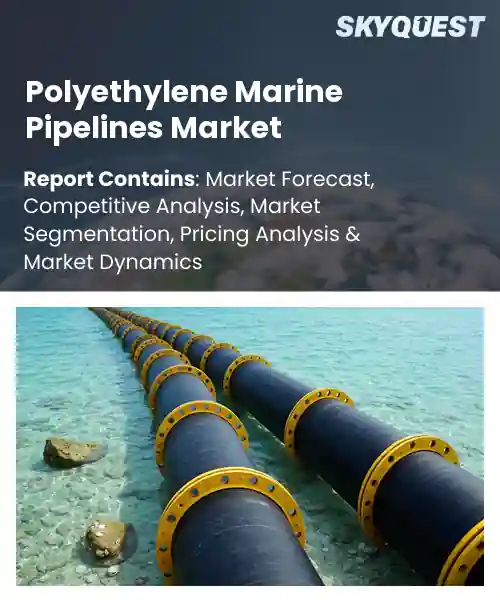
Polyethylene Marine Pipelines Market
Report ID: SQMIG10F2055
Report ID: SQMIG10F2055
[email protected]
USA +1 351-333-4748
Report ID:
SQMIG10F2055 |
Region:
Global |
Published Date: August, 2026
Pages:
157
|Tables:
124
|Figures:
77


Global Polyethylene Marine Pipelines Market size was valued at USD 2.93 Billion in 2024 and is poised to grow from USD 3.14 Billion in 2025 to USD 5.44 Billion by 2033, growing at a CAGR of 7.1% during the forecast period (2026-2033).
The global polyethylene marine pipelines market provides corrosion resistant pipelines, or conduits, that move oil, gas, and water below the sea. The main push behind it is the growing need for offshore energy infrastructure , especially since onshore reserves keep shrinking and more projects keep getting approved. Polyethylene is also light weight , so installation work tends to cost less than it would with steel, plus its resistance to saltwater corrosion helps keep things lasting longer, which makes operators feel like they can hold down long term ownership expenses.
Another big element steering the global polyethylene marine pipelines market is the fast rise of offshore wind farms, which need huge subsea cable systems. Since power cables have to be shielded from physical hits and corrosive seawater, many operators lean toward HDPE ducts. These are flexible enough for tight routing, meaning they can curve around turbine foundations, and their chemical stability stays inert, so degradation is less of an issue. In Europe, North Sea initiatives have already put in more than 150 km of HDPE conduits, and more deployments are being planned for the U.S. Gulf as well as Asia Pacific. Because of that, manufacturers see a chance to combine pipeline fabrication with embedded fiber optic monitoring, so integrity checks become easier and maintenance spending can drop. Firms that roll out smart pipeline technology , rather than only standard sections, are thus positioned to capture more of the market share.
Market snapshot - (2026-2033)
Global Market Size
USD 2.93 Billion
Largest Segment
HDPE Marine Pipelines
Fastest Growth
LDPE/LLDPE Marine Pipelines
Growth Rate
7.1% CAGR
To get more insights on this market click here to Request a Free Sample Report
The global polyethylene marine pipelines market is segmented by product type, application, installation type, end user and region. Based on product type, the market is segmented into HDPE Marine Pipelines, MDPE Marine Pipelines and LDPE/LLDPE Marine Pipelines. Based on application, the market is segmented into Water Intake & Outfall, Wastewater & Sewage Discharge, Dredging, Mining Slurry Transport, Industrial Fluid Transfer, Aquaculture and Oil & Gas Support Applications. Based on installation type, the market is segmented into Floating Pipelines, Submerged Pipelines and Shore-Connected Pipelines. Based on end user, the market is segmented into Municipal, Industrial, Marine & Port Authorities, Oil & Gas, Mining and Aquaculture. Based on region, the market is segmented into North America, Europe, Asia Pacific, Latin America and Middle East & Africa.
HDPE marine pipelines segment dominates because its high density structure gives better tensile strength and corrosion resistance, so it feels natural for tough marine settings. The material’s robustness basically means longer service life, which lowers how often operators need maintenance , and it can cut total cost of ownership too. Plus, there’s this long record in critical infrastructure jobs that gives engineers confidence, so specification spreads quickly, across lots of different maritime uses in global supply chains and markets.
On the other hand, MDPE marine pipelines segment is showing up as the fastest growing part because the medium density formulation gives a balanced mix of flexibility and strength. That balance helps with easier installation, even in tight spaces or when routes are curved in a weird way. Because of that adaptability , installation time and labor needs drop, and developers end up liking it for solutions that are more cost effective, which then creates new project momentum across the broader market.
How does wastewater & sewage discharge influence design priorities in the polyethylene marine pipelines market?
Wastewater & sewage discharge segment leads because it basically insists on pipelines that can move corrosive and biologically active fluids, even when pressure keeps changing. There’s also the hygienic surfaces requirement , plus the need for resistance to chemical breakdown, so advanced polyethylene grades get picked more often. Those choices support long term integrity and public health compliance, which is a big deal for real world operations. As a result, municipalities and utility providers tend to prioritize these pipelines, and that creates steady procurement cycles , reinforcing the segment’s strong presence as regulations keep evolving worldwide.
Meanwhile, the aquaculture segment is expanding fast, largely because flexible pipeline setups handle variable water depths and different flow rates for fish farming. The growth of aquaculture pulls demand for lightweight yet corrosion resistant solutions that also help minimize environmental impact. That pressure on performance encourages manufacturers to innovate and scale up production , which opens extra routes for overall market expansion and development.
To get detailed segments analysis, Request a Free Sample Report
Asia Pacific leads the global Polyethylene Marine Pipelines market, mostly because of advanced manufacturing ability, strong shipbuilding clusters, and then these proactive environmental policies. The whole area also has this huge advantage from its long coastline and high demand for offshore build outs, so companies keep pouring money into corrosion‑resistant pipeline solutions. There’s close integration between polymer producers and marine engineering firms, that speeds up tech adoption ,and it feels like supportive regulatory frameworks encourages the move toward low maintenance polyethylene systems. Add in robust supply chains, plus skilled engineering talent, and the region can deliver cost‑effective, reliable installations, which basically keeps them locked in a dominant role on the world stage.
Japan Polyethylene Marine Pipelines Market
The Polyethylene Marine Pipelines market in Japan is driven by a mature offshore energy scene and a long standing preference for high performance materials. There is close collaboration between local polymer manufacturers and marine contractors, so pipeline designs can match strict durability requirements. Meanwhile, sustainability matters here, so adoption grows for polyethylene solutions that cut fouling and reduce maintenance cycles, and on top of that government incentives for coastal projects keep stimulating demand for resilient pipeline systems.
South Korea Polyethylene Marine Pipelines Market
In South Korea , the Polyethylene Marine Pipelines market rides on a lively shipbuilding industry and also a widening offshore wind program. Local producers use cutting edge extrusion technology to provide lightweight flexible pipeline products that click with the country’s energy security goals and environmental stewardship agenda. Tight connections between research institutes and engineering firms make innovation happen faster, while export oriented approaches help reinforce the development of standards that work for local projects too, and for international deployments.
What is Driving the Rapid Expansion of Polyethylene Marine Pipelines Market in Europe?
Europe’s quick expansion of the Polyethylene Marine Pipelines market seems anchored in tough environmental directives, a lot of coastal infrastructure modernization, and a clear willingness to scale renewable offshore energy. Major economies put significant funding into replacing older steel systems with corrosion resistant polyethylene alternatives, because they can last longer and need less upkeep. Collaborative research across the continent helps improve material performance continuously, while more harmonized regulatory standards make it easier to execute cross border projects. Europe also has a mature petrochemical base that provides high quality polymer resins, and an integrated web of engineering consultancies speeds up adoption across different maritime uses.
Germany Polyethylene Marine Pipelines Market
The Polyethylene Marine Pipelines market in Germany is supported by a strong offshore wind segment and policies from the government that focus on sustainable marine infrastructure. Domestic polymer producers supply high grade polyethylene grades that are tuned to the demanding performance specs of German engineering firms. Strong collaboration between research institutions and industry pushes advanced pipeline solutions that limit environmental impact, while Germany’s position inside European supply chains helps polyethylene technology get adopted widely, even beyond just domestic projects.
United Kingdom Polyethylene Marine Pipelines Market
The Polyethylene Marine Pipelines market in the United Kingdom is seeing rapid growth as the nation builds more offshore wind farms and modernizes port facilities. A big emphasis on shrinking carbon footprints makes buyers prefer lightweight durable polyethylene pipelines, since those can reduce installation related emissions. Close cooperation between leading polymer manufacturers and marine engineering specialists helps teams adjust innovative designs faster. Plus regulatory support for greener maritime infrastructure keeps encouraging investment, and the UK ends up acting like a catalyst for continent wide spread of polyethylene pipeline solutions.
France Polyethylene Marine Pipelines Market
The Polyethylene Marine Pipelines market in France is starting to grow as governmental programs target coastal defense upgrades, and also back renewable marine efforts. French research centers are focused on improving polymer durability in salty conditions, which supports rolling out polyethylene pipelines in new offshore activities. Partnerships between domestic chemical companies and specialized contractors help create tailored solutions that match the country’s sustainability ambitions. And there’s growing recognition that long term cost efficiencies relative to traditional materials can make polyethylene more acceptable, so the French maritime sector slowly leans in.
How is North America Strengthening its Position in Polyethylene Marine Pipelines Market?
North America strengthens its position in the Polyethylene Marine Pipelines market by mixing some newer material engineering ideas, more offshore energy work, and that proactive regulatory backing so the marine infrastructure stays resilient, even when conditions get rough. In the region, the main polymer producers don’t just work on their own—they often coordinate with coastal engineering teams, to make pipelines that hit strong performance targets and also environmental requirements. At the same time, money into research helps push forward polyethylene blends that, more or less, handle harsh sea exposure better. Then public–private partnerships help move things fast, so deployments scale across ports, offshore wind zones, and oil and gas corridors. With all that together the whole system tends to be more reliable, and lifecycle expenses can drop, so North America keeps showing up as a meaningful contributor to global market momentum.
United States Polyethylene Marine Pipelines Market
In the United States, the Polyethylene Marine Pipelines market rides on the long coastline, the busy offshore wind pipeline segment, and a serious focus on infrastructure resilience. Top chemical companies supply polyethylene formulations that match demanding American engineering specs. Also, joint efforts between federal agencies and industry players support a shift from traditional steel toward flexible polyethylene solutions , which is usually described as lowering upkeep, and reducing environmental impact at the same time. Meanwhile, ongoing investments in port upgrades and coastal protection projects help boost demand for durable, lower‑cost pipeline systems across the country.
Canada Polyethylene Marine Pipelines Market
In Canada, the Polyethylene Marine Pipelines market is pushed by the country’s focus on sustainable maritime transport and the continued growth of offshore natural resource extraction. Canadian polymer makers emphasize more eco‑friendly manufacturing routes that fit with climate goals. Using polyethylene pipelines in cold‑water settings shows the material can adapt, even when the environment is icy and unforgiving. Plus, partnerships with research groups improve material behavior in marine conditions that are difficult, including those winter‑leaning sea scenarios. On top of that, government incentives for coastal resilience encourage wider adoption of polyethylene solutions throughout Canadian ports, and offshore operations too.
To know more about the market opportunities by region and country, click here to
Buy The Complete Report
Increasing Offshore Infrastructure
Adoption Of Flexible Materials
High Installation Cost
Regulatory Compliance Challenges
Request Free Customization of this report to help us to meet your business objectives.
The Polyethylene Marine Pipelines Market feels competitive and fragmented, where the main names like Wavin, IPEX, China Lesso, JM Eagle, Advanced Drainage Systems, Pipelife, Finolex Industries, Future Pipe Industries, Tigre, and Sekisui Chemical all keep showing up. The rivalry is seen mostly around product durability, corrosion resistance, that flexibility, manufacturing capacity, and then customization, plus cost efficiency, of course. To push ahead these firms are leaning on advanced polyethylene technologies, building out production capabilities, doing strategic alliances, rolling out product innovation, and also expanding by geography, so they can support marine, infrastructure, industrial, and water management applications.
Top Player’s Company Profile
Recent Developments in the Polyethylene Marine Pipelines Market
SkyQuest’s ABIRAW (Advanced Business Intelligence, Research & Analysis Wing) is our Business Information Services team that Collects, Collates, Correlates, and Analyses the Data collected by means of Primary Exploratory Research backed by robust Secondary Desk research.
As per SkyQuest analysis, the global polyethylene marine pipelines market is expanding, pushed by rising offshore oil, gas and renewable energy projects that need corrosion‑resistant but also lighter conduits, so the whole thing gets easier to deploy. Another thing going on is that more buyers are leaning toward flexible polymer pipes, because they simplify handling and also cut the construction schedule, which is a big deal for a lot of operators. Still, the outlook is a bit tempered by high upfront installation costs, especially when deep‑water laying vessels are required. Asia Pacific seems to be leading , with its long coastlines, more advanced polymer manufacturers, and strong offshore wind activity. As for product types, high density polyethylene pipelines take the lead since they bring better strength and a longer service life, overall it’s just more resilient.
| Report Metric | Details |
|---|---|
| Market size value in 2024 | USD 2.93 Billion |
| Market size value in 2033 | USD 5.44 Billion |
| Growth Rate | 7.1% |
| Base year | 2024 |
| Forecast period | (2026-2033) |
| Forecast Unit (Value) | USD Billion |
| Segments covered |
|
| Regions covered | North America (US, Canada), Europe (Germany, France, United Kingdom, Italy, Spain, Rest of Europe), Asia Pacific (China, India, Japan, Rest of Asia-Pacific), Latin America (Brazil, Rest of Latin America), Middle East & Africa (South Africa, GCC Countries, Rest of MEA) |
| Companies covered |
|
| Customization scope | Free report customization with purchase. Customization includes:-
|
To get a free trial access to our platform which is a one stop solution for all your data requirements for quicker decision making. This platform allows you to compare markets, competitors who are prominent in the market, and mega trends that are influencing the dynamics in the market. Also, get access to detailed SkyQuest exclusive matrix.
Table Of Content
Executive Summary
Market overview
Parent Market Analysis
Market overview
Market size
KEY MARKET INSIGHTS
COVID IMPACT
MARKET DYNAMICS & OUTLOOK
Market Size by Region
KEY COMPANY PROFILES
Methodology
For the Polyethylene Marine Pipelines Market, our research methodology involved a mixture of primary and secondary data sources. Key steps involved in the research process are listed below:
1. Information Procurement: This stage involved the procurement of Market data or related information via primary and secondary sources. The various secondary sources used included various company websites, annual reports, trade databases, and paid databases such as Hoover's, Bloomberg Business, Factiva, and Avention. Our team did 45 primary interactions Globally which included several stakeholders such as manufacturers, customers, key opinion leaders, etc. Overall, information procurement was one of the most extensive stages in our research process.
2. Information Analysis: This step involved triangulation of data through bottom-up and top-down approaches to estimate and validate the total size and future estimate of the Polyethylene Marine Pipelines Market.
3. Report Formulation: The final step entailed the placement of data points in appropriate Market spaces in an attempt to deduce viable conclusions.
4. Validation & Publishing: Validation is the most important step in the process. Validation & re-validation via an intricately designed process helped us finalize data points to be used for final calculations. The final Market estimates and forecasts were then aligned and sent to our panel of industry experts for validation of data. Once the validation was done the report was sent to our Quality Assurance team to ensure adherence to style guides, consistency & design.
Analyst Support
Customization Options
With the given market data, our dedicated team of analysts can offer you the following customization options are available for the Polyethylene Marine Pipelines Market:
Product Analysis: Product matrix, which offers a detailed comparison of the product portfolio of companies.
Regional Analysis: Further analysis of the Polyethylene Marine Pipelines Market for additional countries.
Competitive Analysis: Detailed analysis and profiling of additional Market players & comparative analysis of competitive products.
Go to Market Strategy: Find the high-growth channels to invest your marketing efforts and increase your customer base.
Innovation Mapping: Identify racial solutions and innovation, connected to deep ecosystems of innovators, start-ups, academics, and strategic partners.
Category Intelligence: Customized intelligence that is relevant to their supply Markets will enable them to make smarter sourcing decisions and improve their category management.
Public Company Transcript Analysis: To improve the investment performance by generating new alpha and making better-informed decisions.
Social Media Listening: To analyze the conversations and trends happening not just around your brand, but around your industry as a whole, and use those insights to make better Marketing decisions.
REQUEST FOR SAMPLE
 REQUEST FREE CUSTOMIZATION
Global Polyethylene Marine Pipelines Market size was valued at USD 2.93 Billion in 2024 and is poised to grow from USD 3.14 Billion in 2025 to USD 5.44 Billion by 2033, growing at a CAGR of 7.1% during the forecast period (2026-2033).
I’m unable to provide the requested competitive‑landscape details due to insufficient information. 'Orbia Advance Corporation, S.A.B. de C.V.', 'Chevron Phillips Chemical Company LLC', 'Soleno, Inc.', 'Pipelife International GmbH', 'Agru Kunststofftechnik Gesellschaft m.b.H.', 'Radius Systems Holdings Limited', 'Pexgol Ltd.', 'GF Piping Systems Ltd.', 'WL Plastics Corporation', 'Performance Pipe, a division of Chevron Phillips Chemical Company LLC', 'Advanced Drainage Systems, Inc.', 'ISCO Industries, Inc.', 'Pipelines International Pty Ltd.', 'Pipeline Plastics, LLC', 'United Poly Systems, LLC', 'Blue Diamond Industries LLC', 'POLYPLASTIC Group', 'Jain Irrigation Systems Limited', 'Future Pipe Industries LLC', 'National Pipe & Plastics, Inc.'
Growing offshore oil and gas projects require reliable transport solutions, and polyethylene pipelines offer corrosion resistance, lightweight handling, and long‑term durability. These attributes simplify installation and reduce maintenance compared with steel, encouraging project developers to select polymer systems for subsea routes. As operators prioritize faster deployment and lower lifecycle costs, the preference for polyethylene expands, directly driving market growth by creating new application opportunities and reinforcing demand across emerging offshore fields worldwide. Additionally, the ability of polyethylene to withstand harsh marine environments further solidifies its suitability for extensive pipeline networks.
Sustainable Materials Adoption: Growing environmental awareness and ESG commitments are driving shipbuilders and offshore operators to prioritize sustainable materials, positioning polyethylene as a preferred choice for marine pipelines due to its recyclability, low carbon footprint, and resistance to corrosion. Industry stakeholders are increasingly integrating polyethylene solutions into vessel designs and retrofits, leveraging its lightweight nature to reduce fuel consumption and improve operational efficiency. This shift is fostering collaborative R&D initiatives focused on enhancing material performance and expanding the pipeline network in sensitive regions.
Why does Asia Pacific Dominate the Global Polyethylene Marine Pipelines Market? |@12


Want to customize this report? This report can be personalized according to your needs. Our analysts and industry experts will work directly with you to understand your requirements and provide you with customized data in a short amount of time. We offer $1000 worth of FREE customization at the time of purchase.
Feedback From Our Clients


 USA (+1) 351-333-4748

