

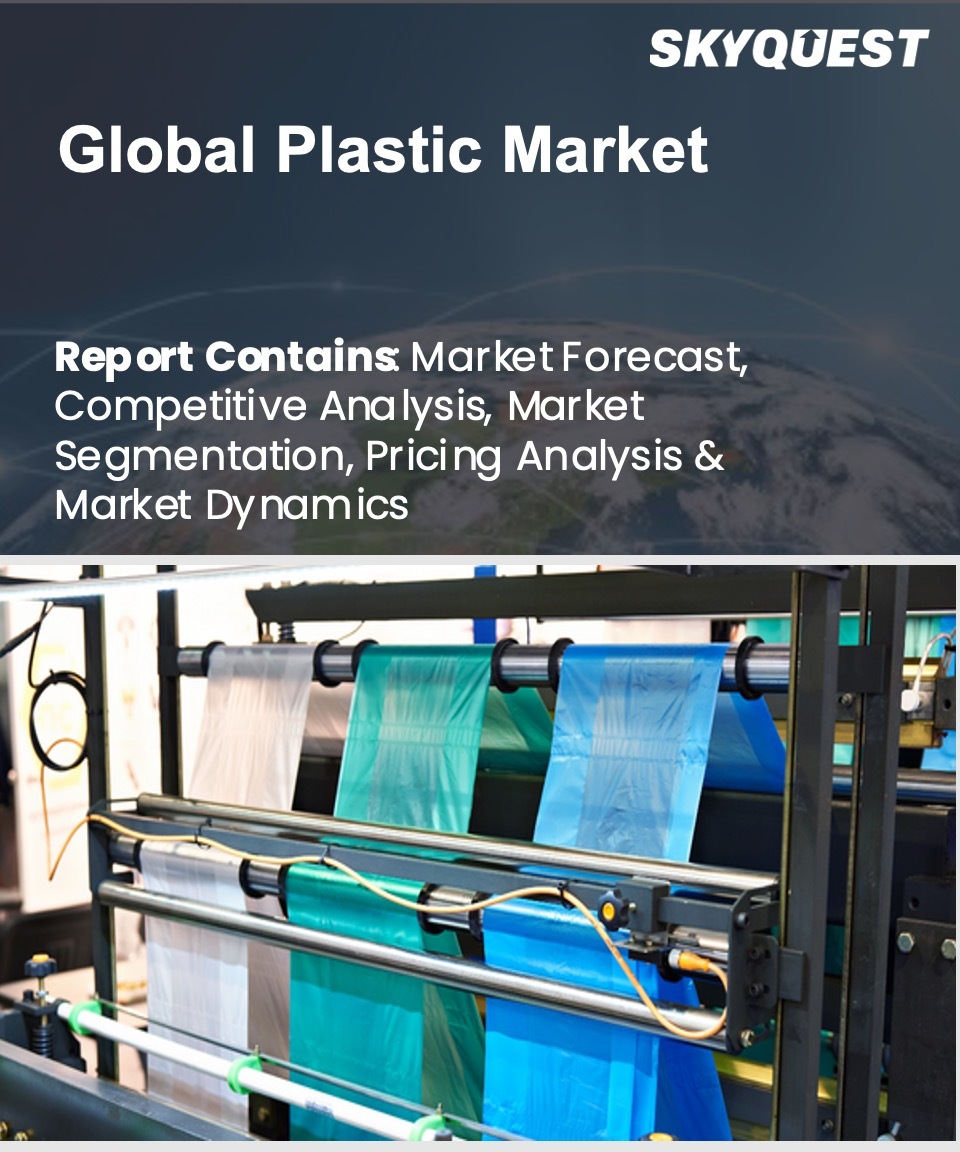
Plastic Market
Report ID: SQMIG15A2572
Skyquest Technology's expert advisors have carried out comprehensive research and identified these companies as industry leaders in the Plastic Market. This Analysis is based on comprehensive primary and secondary research on the corporate strategies, financial and operational performance, product portfolio, market share and brand analysis of all the leading Plastic industry players.


The global market for plastic is a highly competitive one. Leading companies, such as ExxonMobil, Dow, SABIC, LyondellBasell, BASF, etc. have been adopting strategies centred around scaling up, innovation, global outreach and creating strategic partnerships across the value chain. LOTTE Chemical is expanding its partnership with Hyundai Motor and Kia in 2025. The partnership will aim to develop eco-friendly plastics for future mobility. This includes depolymerized recycled PMMA for EV components and a high content (70%) recycled PC/PET material. These innovations will contribute towards reducing carbon emissions while still maintaining performance and flexibility in design. These types of collaborations show how the industry is slowly shifting towards scientific R&D. Other tactics followed by market influencers include focusing on circular economy models, offering recycled-content resins and investing in bioplastics. Startups are focusing on bio-based plastic to standout in the market.
Top Player’s Company Profiles
REQUEST FOR SAMPLE
 REQUEST FREE CUSTOMIZATION
Global Plastic market size was valued at USD 628.42 Billion in 2024 and is poised to grow from USD 654.19 Billion in 2025 to USD 902.21 Billion by 2033, growing at a CAGR of 4.1% in the forecast period (2026–2033).
The global market for plastic is a highly competitive one. Leading companies, such as ExxonMobil, Dow, SABIC, LyondellBasell, BASF, etc. have been adopting strategies centred around scaling up, innovation, global outreach and creating strategic partnerships across the value chain. LOTTE Chemical is expanding its partnership with Hyundai Motor and Kia in 2025. The partnership will aim to develop eco-friendly plastics for future mobility. This includes depolymerized recycled PMMA for EV components and a high content (70%) recycled PC/PET material. These innovations will contribute towards reducing carbon emissions while still maintaining performance and flexibility in design. These types of collaborations show how the industry is slowly shifting towards scientific R&D. Other tactics followed by market influencers include focusing on circular economy models, offering recycled-content resins and investing in bioplastics. Startups are focusing on bio-based plastic to standout in the market. 'BASF SE (Germany)', 'Dow Inc. (United States)', 'SABIC (Saudi Basic Industries Corporation) (Saudi Arabia)', 'INEOS Group (United Kingdom)', 'ExxonMobil Chemical (United States)', 'LyondellBasell Industries N.V. (United States)', 'LG Chem (South Korea)', 'Chevron Phillips Chemical (United States)', 'Formosa Plastics Group (Taiwan)', 'Covestro AG (Germany)', 'TotalEnergies SE (France)', 'DuPont de Nemours, Inc. (United States)', 'Toray Industries, Inc. (Japan)', 'Mitsubishi Chemical Group (Japan)', 'Braskem S.A. (Brazil)', 'Reliance Industries Limited (India)', 'Hanwha Group (South Korea)', 'Sumitomo Chemical Co., Ltd. (Japan)', 'Westlake Corporation (United States)', 'Celanese Corporation (United States)'
The global population is rising at an alarming rate with many people moving into cities and thereby increasing the rate of urbanization as well. According to the United Nations, 55% of the world’s population resides in cities which will increase to 66% by 2050. This rise in population and urbanization results in development of infrastructure. This creates a need for plastic products in construction, such as pipes, insulation materials, and window frames. This need is the driving force behind investments in plastic in emerging economies.
Many producers are investing in bio-based plastics which are derived from renewable sources like corn, sugarcane, and algae. The regulatory pressure and environmental demand surrounding petroleum-based plastics has created this shift to reduce carbon footprints. According to European Bioplastics, the global bioplastics production capacity will increase from about 2.47 million tonnes in 2024 to 5.73 million tonnes in 2029.
As per the 2024 plastic market regional forecast, the Asia Pacific market is predicted to hold the largest share among all regions in 2024. The region sees a high rate of consumption of plastics in the packaging, automotive, electronics, and construction sectors. The manufacturing bases in countries such as China, India, Japan, and South Korea are massive. The production costs are low and domestic demand for plastics is on the rise. China alone accounts for a about 1/3rd of the global plastic production capability. These factors are making Asia-Pacific the most dominant region in the plastic value chain.
Want to customize this report? This report can be personalized according to your needs. Our analysts and industry experts will work directly with you to understand your requirements and provide you with customized data in a short amount of time. We offer $1000 worth of FREE customization at the time of purchase.
Feedback From Our Clients
Report ID: SQMIG15A2572
sales@skyquestt.com
USA +1 351-333-4748
 USA (+1) 351-333-4748

