Pharmacy Repackaging Systems Market
Report ID: SQMIG35D2596
Report ID: SQMIG35D2596
[email protected]
USA +1 351-333-4748
Report ID:
SQMIG35D2596 |
Region:
Global |
Published Date: July, 2026
Pages:
157
|Tables:
152
|Figures:
78


Global Pharmacy Repackaging Systems Market size was valued at USD 1.74 Billion in 2024 and is poised to grow from USD 1.88 Billion in 2025 to USD 3.42 Billion by 2033, growing at a CAGR of 7.8% during the forecast period (2026-2033).
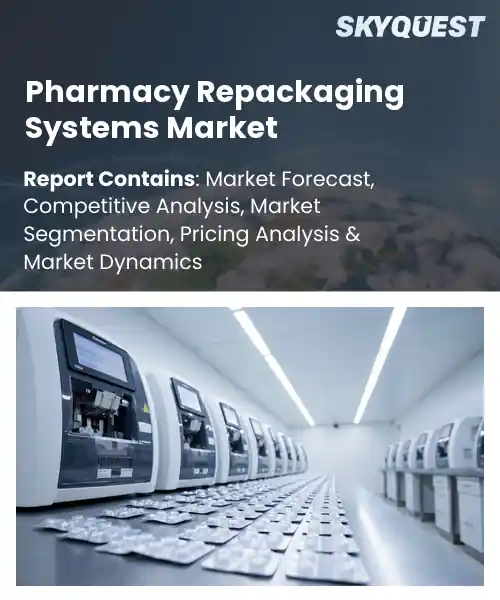
Global pharmacy repackaging systems comprise equipment that transfers bulk medication into containers, ensuring dose accuracy, safety, and compliance. The primary driver of this market is the escalating demand for personalized medicine, which forces pharmacies to move beyond traditional bulk dispensing. Historically, manual repackaging dominated hospital pharmacies, but the surge in chronic disease prevalence and the rise of home‑care infusion therapies have prompted a shift toward robotic solutions. For instance, a U.S. health system replaced its manual line with a repackager in 2022, cutting labeling errors by 45 percent and freeing technicians for tasks. This evolution underscores the sector’s growing relevance.
Building on the personalized‑medicine impetus, regulatory compliance emerges as the next critical factor, because stricter labeling standards and traceability mandates compel pharmacies to adopt repackaging platforms. When authorities require bar‑code verification for every dose, manual processes become error‑prone and financially unsustainable, prompting institutions to invest in robotics that link with health records. A European retail chain recently deployed a system that synchronizes prescription data with packaging, achieving a 30 percent reduction in medication waste and a 20 percent boost in throughput. These efficiency gains unlock revenue streams through dispensing services, while also expanding market entry for vendors offering cloud‑based solutions.
How is AI-Driven Automation Reshaping the Pharmacy Repackaging Systems Market?
Artificial intelligence is transforming the Global Pharmacy Repackaging Systems Market by automating medication verification, package inspection, barcode validation, and inventory optimization. AI-powered vision systems can detect labeling errors, damaged packaging, and incorrect dosages in real time, significantly reducing dispensing mistakes and improving patient safety. Machine learning also predicts medication demand, enabling pharmacies to optimize repackaging schedules, minimize waste, and maintain adequate inventory. As healthcare providers increasingly adopt centralized and automated pharmacy operations, demand for AI-enabled repackaging systems continues to grow.
In May 2025, Omnicell launched new intelligent inventory management solutions for perioperative and outpatient pharmacy settings, integrating RFID technology with AI-enabled workflow analytics. The innovation enhances medication tracking, automates inventory optimization, and improves repackaging accuracy, helping pharmacies reduce errors, streamline dispensing operations, and strengthen regulatory compliance.
Market snapshot - (2026-2033)
Global Market Size
USD 1.74 Billion
Largest Segment
Unit-Dose Packaging Systems
Fastest Growth
Pouch Packaging Automation Systems
Growth Rate
7.8% CAGR
To get more insights on this market click here to Request a Free Sample Report
Global pharmacy repackaging systems market is segmented by product type, automation level, packaging format, end user, distribution channel and region. Based on product type, the market is segmented into blister card/compliance packaging systems, pouch packaging automation systems, bottle filling & pill counting systems, liquid medication repackaging systems, unit-dose packaging systems and others. Based on automation level, the market is segmented into manual systems, semi-automated systems, fully automated systems and robotic integrated systems. Based on packaging format, the market is segmented into unit-dose packaging, multi-dose packaging, strip packaging, blister packaging and bottle packaging. Based on end user, the market is segmented into hospital pharmacies, retail/community pharmacies, long-term care (LTC) pharmacies, mail-order pharmacies and central fill pharmacies. Based on distribution channel, the market is segmented into direct sales, distributors & dealers and online sales. Based on region, the market is segmented into North America, Europe, Asia Pacific, Latin America and Middle East & Africa.
Blister card/compliance packaging systems segment dominates because it provides unrivaled patient adherence support, combining precise dose control with tamper evident protection that meets stringent safety regulations. Pharmacies favor these systems to reduce medication errors and improve therapeutic outcomes, prompting manufacturers to invest heavily in advanced printing and sealing technologies. The synergy of safety, convenience, and regulatory compliance fuels widespread adoption across hospital and community settings, cementing its leadership in the market.
Meanwhile, pouch packaging automation systems are emerging as the key high growth area in the pharmacy repackaging market. Their flexibility for diverse dosage forms, rapid change over capabilities, and compatibility with lean manufacturing drive heightened interest from pharmacies seeking to streamline operations and reduce waste, accelerating market expansion and new opportunity creation.
Fully automated systems segment dominates because they deliver end to end repackaging without human intervention, ensuring quality, minimal error rates, and high throughput required by large scale pharmacy operations. The integration of vision inspection, barcode verification, and synchronized dispensing mechanisms satisfies stringent regulatory demands while lowering labor costs. This automation attracts central fill and mail order pharmacies, reinforcing its position as the market’s leading solution and drives long term sustainability through innovation.
Conversely, robotic integrated systems are witnessing the strongest growth momentum in the pharmacy repackaging market. Their ability to handle complex, irregularly shaped medication packs and perform pick and place tasks with precision expands applicability to specialty drugs, prompting rapid adoption that fuels market expansion and creates new value chains and improves efficiency.
To get detailed segments analysis, Request a Free Sample Report
North America maintains a leading position through a combination of mature healthcare infrastructure, rigorous regulatory oversight, and a culture of patient safety that drives adoption of advanced repackaging technologies. The region benefits from deep pharmaceutical manufacturing capabilities and extensive distribution networks that encourage integration of automation and robotics. Strong collaboration between hospitals, pharmacy chains, and technology providers fosters continuous innovation, while reimbursement frameworks and quality‑centric policies reinforce the value of precise medication handling. This ecosystem creates a compelling environment for both established and emerging players to invest in sophisticated repackaging solutions, reinforcing North America’s dominance.
Pharmacy repackaging systems market in the United States is propelled by large hospital networks and a proactive regulatory stance that emphasizes risk mitigation and compliance. Leading health systems prioritize automation to enhance workflow efficiency and safeguard medication integrity. Partnerships between technology firms and pharmaceutical manufacturers accelerate the deployment of intelligent dispensing units, while a focus on patient safety underpins continuous investment in sophisticated repackaging solutions.
Pharmacy repackaging systems market in Canada is shaped by a national health framework that values safety and cost‑effectiveness. Community pharmacies and health authorities adopt repackaging technologies to reduce errors and streamline inventory management. A supportive regulatory climate encourages the integration of automation, and collaborative initiatives between providers and equipment vendors facilitate the rollout of advanced solutions across the market.
Europe’s expansion is fueled by harmonized regulatory standards that promote uniform safety practices across borders, encouraging widespread adoption of repackaging technologies. Strong pharmaceutical manufacturing clusters, particularly in Germany, provide a foundation for high‑quality equipment development. The region’s focus on sustainability and waste reduction aligns with innovative packaging solutions, while digital health initiatives and integrated supply chains accelerate market penetration. Collaborative research programs and public‑private partnerships further stimulate technology advancement, positioning Europe as a dynamic hub for growth in repackaging systems.
Pharmacy repackaging systems market in Germany leverages a reputation for precision engineering and rigorous quality standards. Leading manufacturers integrate cutting‑edge robotics with stringent compliance protocols to meet the exacting demands of hospital pharmacies and drug distributors. The market benefits from strong industry collaboration, fostering solutions that enhance medication safety and operational efficiency across a sophisticated healthcare landscape.
Pharmacy repackaging systems market in the United Kingdom is accelerated by national health service initiatives that prioritize patient safety and digital transformation. The adoption of smart dispensing technologies is expanding rapidly within community and hospital settings, driven by a commitment to reduce medication errors. Collaborative efforts among health authorities, technology innovators, and pharmacy chains create a fertile environment for continuous market growth.
Pharmacy repackaging systems market in France is emerging as a focal point for safety‑driven innovation within retail and hospital pharmacies. Government incentives and a growing emphasis on error reduction encourage the uptake of advanced repackaging tools. Pharmaceutical distributors and technology providers are increasingly aligning their offerings with French regulatory expectations, fostering gradual market development.
Asia Pacific is advancing its market role through strategic emphasis on high‑technology integration and responsiveness to demographic shifts that heighten the need for medication safety. Nations such as Japan and South Korea capitalize on robust research ecosystems and strong manufacturing capabilities to produce sophisticated repackaging solutions. Government policies that support automation and digital health, combined with a cultural focus on precision, drive the adoption of intelligent packaging across hospitals and pharmacies. Collaboration between local tech firms and global equipment manufacturers enhances knowledge transfer, positioning the region as an emerging leader in innovative repackaging practices.
Pharmacy repackaging systems market in Japan is distinguished by a deep commitment to quality and efficiency within a highly regulated health system. Partnerships between domestic manufacturers and international technology leaders facilitate the introduction of compact, high‑precision repackaging units. Emphasis on reliability and seamless integration with existing hospital workflows supports widespread adoption across the market.
Pharmacy repackaging systems market in South Korea reflects a rapid embrace of digital health tools and a strong technological base. Innovative startups and established electronics firms drive the development of smart packaging solutions that align with global safety standards. This dynamic environment encourages swift integration of advanced repackaging technologies within pharmacy operations.
To know more about the market opportunities by region and country, click here to
Buy The Complete Report
Rising Demand for Patient Safety
Adoption of Automated Packaging Technologies
High Initial Capital Investment
Regulatory Compliance Complexity
Request Free Customization of this report to help us to meet your business objectives.
The global pharmacy repackaging systems market is competitive, with companies focusing on automation, medication safety, workflow efficiency, and regulatory compliance. Key international players include Omnicell, BD (Becton, Dickinson and Company), Parata Systems, TCGRx, ARxIUM, Swisslog Healthcare, Pearson Medical Technologies, and Yuyama Co., Ltd. Omnicell emphasizes integrated automated medication management platforms, while BD expands connected pharmacy solutions through innovation. ARxIUM focuses on robotic dispensing and centralized pharmacy automation, and Swisslog Healthcare strengthens smart hospital logistics with integrated medication packaging technologies.
Top Player’s Company Profile
Recent Developments
SkyQuest’s ABIRAW (Advanced Business Intelligence, Research & Analysis Wing) is our Business Information Services team that Collects, Collates, Correlates, and Analyses the Data collected by means of Primary Exploratory Research backed by robust Secondary Desk research.
As per SkyQuest analysis the global pharmacy repackaging systems market is driven first by a rising demand for patient safety that pushes pharmacies toward precise, tamper‑evident blister‑card and compliance packaging solutions. A second catalyst is the widespread adoption of automated packaging technologies which boost throughput and reduce errors. The market’s strongest headroom comes from North America, where mature healthcare infrastructure and strict regulations accelerate investment. Blister Card/Compliance Packaging Systems remain the dominant product segment, thanks to their ability to enhance adherence and meet regulatory needs. However, high upfront capital costs act as a restraint, especially for smaller pharmacy operators.
| Report Metric | Details |
|---|---|
| Market size value in 2024 | USD 1.74 Billion |
| Market size value in 2033 | USD 3.42 Billion |
| Growth Rate | 7.8% |
| Base year | 2024 |
| Forecast period | (2026-2033) |
| Forecast Unit (Value) | USD Billion |
| Segments covered |
|
| Regions covered | North America (US, Canada), Europe (Germany, France, United Kingdom, Italy, Spain, Rest of Europe), Asia Pacific (China, India, Japan, Rest of Asia-Pacific), Latin America (Brazil, Rest of Latin America), Middle East & Africa (South Africa, GCC Countries, Rest of MEA) |
| Companies covered |
|
| Customization scope | Free report customization with purchase. Customization includes:-
|
To get a free trial access to our platform which is a one stop solution for all your data requirements for quicker decision making. This platform allows you to compare markets, competitors who are prominent in the market, and mega trends that are influencing the dynamics in the market. Also, get access to detailed SkyQuest exclusive matrix.
Table Of Content
Executive Summary
Market overview
Parent Market Analysis
Market overview
Market size
KEY MARKET INSIGHTS
COVID IMPACT
MARKET DYNAMICS & OUTLOOK
Market Size by Region
KEY COMPANY PROFILES
Methodology
For the Pharmacy Repackaging Systems Market, our research methodology involved a mixture of primary and secondary data sources. Key steps involved in the research process are listed below:
1. Information Procurement: This stage involved the procurement of Market data or related information via primary and secondary sources. The various secondary sources used included various company websites, annual reports, trade databases, and paid databases such as Hoover's, Bloomberg Business, Factiva, and Avention. Our team did 45 primary interactions Globally which included several stakeholders such as manufacturers, customers, key opinion leaders, etc. Overall, information procurement was one of the most extensive stages in our research process.
2. Information Analysis: This step involved triangulation of data through bottom-up and top-down approaches to estimate and validate the total size and future estimate of the Pharmacy Repackaging Systems Market.
3. Report Formulation: The final step entailed the placement of data points in appropriate Market spaces in an attempt to deduce viable conclusions.
4. Validation & Publishing: Validation is the most important step in the process. Validation & re-validation via an intricately designed process helped us finalize data points to be used for final calculations. The final Market estimates and forecasts were then aligned and sent to our panel of industry experts for validation of data. Once the validation was done the report was sent to our Quality Assurance team to ensure adherence to style guides, consistency & design.
Analyst Support
Customization Options
With the given market data, our dedicated team of analysts can offer you the following customization options are available for the Pharmacy Repackaging Systems Market:
Product Analysis: Product matrix, which offers a detailed comparison of the product portfolio of companies.
Regional Analysis: Further analysis of the Pharmacy Repackaging Systems Market for additional countries.
Competitive Analysis: Detailed analysis and profiling of additional Market players & comparative analysis of competitive products.
Go to Market Strategy: Find the high-growth channels to invest your marketing efforts and increase your customer base.
Innovation Mapping: Identify racial solutions and innovation, connected to deep ecosystems of innovators, start-ups, academics, and strategic partners.
Category Intelligence: Customized intelligence that is relevant to their supply Markets will enable them to make smarter sourcing decisions and improve their category management.
Public Company Transcript Analysis: To improve the investment performance by generating new alpha and making better-informed decisions.
Social Media Listening: To analyze the conversations and trends happening not just around your brand, but around your industry as a whole, and use those insights to make better Marketing decisions.
REQUEST FOR SAMPLE
 REQUEST FREE CUSTOMIZATION
Global Pharmacy Repackaging Systems Market size was valued at USD 1.74 Billion in 2024 and is poised to grow from USD 1.88 Billion in 2025 to USD 3.42 Billion by 2033, growing at a CAGR of 7.8% during the forecast period (2026-2033).
Insufficient company data to generate a detailed competitive landscape and startup list. 'BD', 'Omnicell Inc', 'Talyst LLC', 'Parata Systems LLC', 'ARxIUM Inc', 'TCGRx Pharmacy Workflow Solutions', 'RxSafe LLC', 'Kirby Lester', 'Capsa Healthcare', 'Yuyama Co Ltd', 'JVAC Co Ltd', 'Tosho Inc', 'Willach Pharmacy Solutions', 'Manrex Limited', 'Pearson Medical Technologies LLC', 'Euclid Medical Products', 'Medical Packaging Inc LLC', 'Swisslog Healthcare', 'AutoMed Technologies Inc', 'MTS Medication Technologies'
The growing emphasis on reducing medication errors drives pharmacies to implement repackaging systems that ensure accurate labeling, dose verification, and tamper‑evident sealing, thereby enhancing overall patient safety and fostering trust among healthcare providers and consumers. This focus on safety creates a compelling incentive for pharmacy chains and hospitals to upgrade their dispensing processes, supporting market expansion through increased demand for advanced repackaging equipment and related consumables. These improvements also streamline workflow, reduce manual handling time, and promote compliance with best‑practice guidelines, further encouraging adoption across diverse pharmacy settings.
Digital Integration Accelerating Operations: Pharmacies and contract manufacturers are increasingly linking repackaging equipment with enterprise resource planning, warehouse management, and track‑and‑trace platforms. This digital convergence enables real‑time inventory visibility, automatic batch segregation, and predictive maintenance alerts, reducing downtime and manual errors. As data streams become standardized, operators can orchestrate multi‑site workflows, optimize line configurations, and respond swiftly to demand shifts, ultimately improving patient safety and supply chain resilience while supporting sustainability goals through reduced waste and energy consumption across global distribution networks worldwide today.
Why does North America Dominate the Global Pharmacy Repackaging Systems Market? |@12


Want to customize this report? This report can be personalized according to your needs. Our analysts and industry experts will work directly with you to understand your requirements and provide you with customized data in a short amount of time. We offer $1000 worth of FREE customization at the time of purchase.
Feedback From Our Clients


 USA (+1) 351-333-4748

