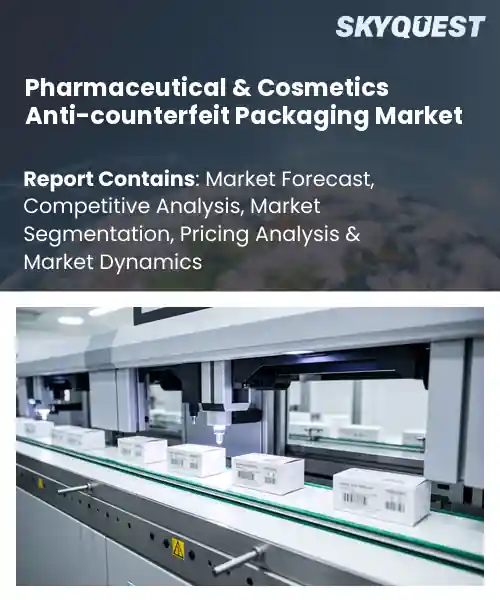
Pharmaceutical & Cosmetics Anti-counterfeit Packaging Market
Report ID: SQMIG15H2200
Report ID: SQMIG15H2200
[email protected]
USA +1 351-333-4748
Report ID:
SQMIG15H2200 |
Region:
Global |
Published Date: June, 2026
Pages:
157
|Tables:
176
|Figures:
79


Global Pharmaceutical & Cosmetics Anti-Counterfeit Packaging Market size was valued at USD 11.2 Billion in 2024 and is poised to grow from USD 12.36 Billion in 2025 to USD 27.29 Billion by 2033, growing at a CAGR of 10.4% during the forecast period (2026-2033).
The increase in the instances of product counterfeiting are the main driver of the pharmaceutical & cosmetics anti-counterfeit packaging market, as these products can jeopardize patients' safety and compromise the integrity of brands. The anti-counterfeiting packaging market offers technology, material and design solutions that make it more difficult for counterfeiters to produce products, including closures that provide evidence of tampering, serialization and forensic tagging. The issues associated with counterfeit drugs and beauty products are very serious, as they can potentially lead to serious adverse events and penalties, resulting in great damage to the manufacturer's reputation, thus both manufacturers and regulators invest in traceability. In the past, demand for these systems increased when there were high-profile instances of contaminated drugs being sited or when patients received fake oncology drugs. The demand also increased after regulations requiring digital serialization were enacted in Europe and as regulations have been rolled out in Asia.
Regulatory requirements pertaining to serialization and digital track-and-trace capabilities are the leading factors influencing the global growth rate for anti-counterfeiting packaging. Specifically, manufacturers are required to uniquely identify every single item they manufacture as well as maintain track-and-trace records for each item through the entire supply chain. If governments require serialization, than manufacturers must upgrade their production lines and purchase software systems that will enable them to implement serialization. As a result, manufacturers will purchase a higher volume of secure labels, tamper evident closures and authentication systems. This reduction in pricing and this increase in demand will result in manufacturers that offer cloud-based analytics, mobile verification systems, and forensic markers increasing market share as upstream distributors utilize this data to identify instances of diversion or theft within their supply chains.
How is blockchain enhancing traceability in pharmaceutical and cosmetics anti-counterfeit packaging?
The introduction of blockchain technology has been used to enhance traceability of packaging used for anti-counterfeiting purposes. Blockchain creates an unalterable digital ledger which is linked to a unique digital identity assigned to individual packages. Some of the main features incorporated in this process are the serialized identification of packages contained in labels or through RFID tags; the trustworthy recording of custody events and ownership of packages and an additional benefit of shared visibility of those events between manufacturers, distributors and regulatory authorities.
The economics of anti-counterfeiting solutions favour integrated solution offerings because counterfeit products can impact patient safety and erode brand reputation. Examples of this can be seen in the creation of QR codes and RFID tags, which link to digitally stored record of each package’s provenance; and, consequently, fundamentally preserves that provenance regardless of transfers or complexity in the channels to market.
In February 2026, Avery Dennison launched AD IdentiFresh (RFID inlays). These RFID inlays enable item level verification despite difficult packaging conditions. When these labels are combined with the functionality of blockchain ledgers, they provide a means for manufacturers and regulators to use the same transaction record for confirming the provenance of any product, through controlled and competent means. Hence, this practical combination of anti-counterfeiting products creates a better business experience for both the manufacturer and regulators, while also improving the overall market’s adoption of legal and compliant anti-counterfeiting traceability solutions.
Market snapshot - (2026-2033)
Global Market Size
USD 11.2 Billion
Largest Segment
Serialization
Fastest Growth
RFID-Based Packaging
Growth Rate
10.4% CAGR
To get more insights on this market click here to Request a Free Sample Report
Global pharmaceutical & cosmetics anti-counterfeit packaging market is segmented by technology, packaging type, application, material type, end user, distribution channel and region. Based on technology, the market is segmented into Serialization, Tamper-Evident Packaging, Authentication Labels & Holograms, RFID-Based Packaging, QR Code & Barcode Packaging and Others. Based on packaging type, the market is segmented into Bottles & Containers, Blister Packs, Cartons & Boxes, Tubes & Sachets and Others. Based on application, the market is segmented into Pharmaceuticals and Cosmetics & Personal Care. Based on material type, the market is segmented into Plastic, Paper & Paperboard, Glass, Metal and Others. Based on end user, the market is segmented into Pharmaceutical Manufacturers, Cosmetic Manufacturers and Contract Packaging Companies. Based on distribution channel, the market is segmented into Direct Sales and Packaging Converters & Suppliers. Based on region, the market is segmented into North America, Europe, Asia Pacific, Latin America and Middle East & Africa.
Serialization segment dominates with pharmaceutical & cosmetics anti-counterfeit packaging market share because serialization delivers unit-level traceability that directly reduces diversion and counterfeit infiltration across complex supply chains. Regulatory compliance and brand protection priorities push manufacturers to embed unique identifiers, enabling precise recalls, batch authentication, and seamless integration with track-and-trace ecosystems.
As per pharmaceutical & cosmetics anti-counterfeit packaging market outlook, RFID-based packaging is emerging as the most rapidly expanding area due to falling tag costs and rising demand for real-time inventory visibility and tamper monitoring. Its automated authentication across checkpoints and seamless IoT integration enable proactive supply chain control and new data-driven anti-counterfeit services, accelerating manufacturer adoption and stimulating innovation in product security.
As per pharmaceutical & cosmetics anti-counterfeit packaging market forecast, blister packs segment stands out because blister packaging offers inherent unit-dose protection and highly visible tamper evidence that deter diversion and contamination. Its form factor allows straightforward incorporation of overt and covert security features like printed tamper indicators, microprinting, and secure sealing technologies, preserving dosing accuracy while protecting product integrity. These characteristics align with stringent safety and quality requirements, making this format preferred for products demanding controlled access and authenticated dispensing.
As per pharmaceutical & cosmetics anti-counterfeit packaging market analysis, cartons & boxes is witnessing the strongest growth momentum as outer packaging becomes a key platform for multi-layer authentication, smart labels, and tamper-evident seals. Demand from cosmetic brands for premium authentication experiences, coupled with easy integration of QR codes and security varnishes, drives innovation and widens anti-counterfeit opportunities across the packaging value chain.
To get detailed segments analysis, Request a Free Sample Report
Asia Pacific is in the forefront, driven by the confluence of concentrated manufacturing capability, high prevalence of complex supply chains and aggressive regulatory attention to product integrity. The sector has developed a vast addressable market and there is broad willingness to spend in serialization, track and trace and advanced overt and covert authentication technologies. Fast uptake in pharmaceutical and cosmetics categories is encouraged by strong collaboration between package inventors, technology providers and logistical partners. Brands are increasingly using multi layered anti counterfeit strategies including smart packaging, tamper evident features and interoperable verification systems across regional markets driven by more advanced customer expectations and broader e commerce distributions. Public commercial partnerships and regional research hubs speed up the development of sensor based and forensic authentication technologies. Exporters participate in cooperative frameworks to protect cross border supply lines and brand reputation. Investment focus on modular systems and scalable solutions enables speedier roll out across varied production nodes in the region.
Japan is driven by the use of modern technologies, tight regulatory compliance and close coordination between packaging suppliers and brand manufacturers. Promote authenticity assurance. Concentrate on serialization, tamper evident seals, and secure holographic elements. We collaborate with global vendors, and innovate in printing and sensing technologies locally. Consumer trust and premium brand protection are driving continued investment across distribution networks and retail channels and regulatory advice.
A convergence of digital tracking, strong industry collaboration and proactive enforcement frameworks local manufacturers are eyeing smart packaging solutions with QR enabled authentication, secure labeling and tamper evident closures to protect brands and consumers. Driven by a strong integration of manufacturing and logistics, the adoption is supported by partnerships with technology providers. Reliability, consumer involvement and supply chain visibility are still what the market is looking for.
North America region is experiencing rapid growth driven by strict regulatory requirements for medicine and cosmetic safety, increased digitization of the supply chain, and significant demand for brand protection in sophisticated consumer markets. Manufacturers and contract packers are adopting serialization, unique IDs and mobile based authentication systems to secure product journeys from manufacturing to point of sale. A high level of collaboration between regulators, technology providers and logistics corporations increases interoperability and standardization. The dynamic ecosystem of innovation supports pilot initiatives and commercial scale rollouts, while rising omnichannel distribution and consumer verification habits encourages further adoption of anti counterfeit packaging across pharmaceutical and cosmetics categories. Public-private ventures and industry consortia speed standards development and facilitate shared infrastructure. Access to technology talent and closeness to major brand offices enables rapid commercialization of enhanced labeling, authentication and sensor enabled packaging that handle complicated distribution networks and customer authentication needs.
United States market is driven by strict regulatory oversight, complex supply chain systems and high demand for provenance assurance. All leading manufacturers and specialist packagers have invested in serialization, authentication labels and digital verification technologies. Interoperability and standards are promoted through public private collaborations. The focus on integration with current manufacturing lines and data systems enables scalable deployments that fulfill the demands of retailers and consumers for secure, verifiable products.
As per pharmaceutical & cosmetics anti-counterfeit packaging industry analysis, Canada emphasizes regulatory alignment, cross border coordination, and supply chain transparency. Domestic firms adopt serialization, tamper evident features, and consumer authentication tools to protect product integrity. Collaboration among regulators, technology vendors, and packagers supports projects and adoption. The market benefits from focus on patient safety, retailer requirements, and e commerce distribution, prompting deployment of interoperable solutions across manufacturing and distribution networks and traceability.
Europe is strengthening its position through harmonized regulatory frameworks, coordinated enforcement, and strong industry consortia that prioritize product authentication and consumer safety. Investments in serialization, enhanced authentication, and interoperable track and trace systems for complex cross border distribution will drive market progress. Brand protection requirements in luxury cosmetics and regulated pharmaceuticals are driving demand for safe packaging technologies. Technology providers, packaging converters and regulators can work together to develop standards and pilot efforts that will enable wider adoption across a range of sectors and be consistent with sustainability and circular economy principles. Supportive infrastructure such as recognized testing labs, customs coordination and brand monitoring services boosts enforcement capability.
As per pharmaceutical & cosmetics anti-counterfeit packaging market regional outlook, Germany market is driven by superior manufacturing and printing competence in compliance with stringent regulatory requirements. Packaging converters and technology companies are focusing on secure labels, covert features and strong serialization integration to protect pharmaceutical and cosmetics brands. Work with laboratories and logistics suppliers to aid traceability and enforcement. Solutions are supported by a focus on engineering quality and sustainable materials to meet brand protection and environmental objectives across the supply chain.
As per pharmaceutical & cosmetics anti-counterfeit packaging market regional forecast, United Kingdom is shaped by strong pharmaceutical heritage, regulatory frameworks, and high consumer expectations for authenticity. Brand owners and packagers invest in serialization, overt and covert authentication, and consumer verification tools. Collaborative initiatives among technology providers, labs, and logistics firms enhance traceability and enforcement. Emphasis on innovation, brand integrity, and alignment with international standards drives adoption across domestic and export supply chains.
France is driven by robust cosmetics and luxury sectors demanding high standards of product protection and brand integrity. Packaging houses and technology providers emphasize integration of authentication features, serialization, and covert technologies to preserve brand equity. Coordination with regulators, testing facilities, and logistics enhances traceability. Market focus blends premium packaging design, consumer verification tools, and sustainable materials to meet protection and environmental priorities.
To know more about the market opportunities by region and country, click here to
Buy The Complete Report
Rising Incidence Of Counterfeits
Regulatory Emphasis On Traceability
High Implementation And Integration Costs
Technology Complexity And Scalability Challenges
Request Free Customization of this report to help us to meet your business objectives.
Technology differentiation and regulation-driven enforcement are propelling increasing competition within the anti-counterfeit packaging sector. Mergers and acquisitions, strategic partnerships, and integrated product innovation are ways for companies to differentiate themselves. Companies like Akerna have invested in Solo Sciences, while others have launched new mobile authentication technologies (Covectra's StellaGuard), entered into partnerships and implemented artificial intelligence (AI) and cloud services to enhance physical security through data intelligence.
SkyQuest’s ABIRAW (Advanced Business Intelligence, Research & Analysis Wing) is our Business Information Services team that Collects, Collates, Correlates, and Analyses the Data collected by means of Primary Exploratory Research backed by robust Secondary Desk research.
As per SkyQuest analysis, the global pharmaceutical and cosmetics anti-counterfeit packaging market growth is being propelled by rising incidents of counterfeit products that threaten patient safety and brand integrity, while high implementation and integration costs remain a significant restraint. Asia Pacific leads the market due to concentrated manufacturing, complex supply chains and proactive regulatory adoption, and serialization dominates as the primary segment because unit-level traceability satisfies compliance, recall and brand protection needs. A second important driver is the rapid adoption of RFID and smart connected authentication technologies that provide real-time verification, enhanced inventory visibility and improved incident response across increasingly digital supply chains.
| Report Metric | Details |
|---|---|
| Market size value in 2024 | USD 11.2 Billion |
| Market size value in 2033 | USD 27.29 Billion |
| Growth Rate | 10.4% |
| Base year | 2024 |
| Forecast period | (2026-2033) |
| Forecast Unit (Value) | USD Billion |
| Segments covered |
|
| Regions covered | North America (US, Canada), Europe (Germany, France, United Kingdom, Italy, Spain, Rest of Europe), Asia Pacific (China, India, Japan, Rest of Asia-Pacific), Latin America (Brazil, Rest of Latin America), Middle East & Africa (South Africa, GCC Countries, Rest of MEA) |
| Companies covered |
|
| Customization scope | Free report customization with purchase. Customization includes:-
|
To get a free trial access to our platform which is a one stop solution for all your data requirements for quicker decision making. This platform allows you to compare markets, competitors who are prominent in the market, and mega trends that are influencing the dynamics in the market. Also, get access to detailed SkyQuest exclusive matrix.
Table Of Content
Executive Summary
Market overview
Parent Market Analysis
Market overview
Market size
KEY MARKET INSIGHTS
COVID IMPACT
MARKET DYNAMICS & OUTLOOK
Market Size by Region
KEY COMPANY PROFILES
Methodology
For the Pharmaceutical & Cosmetics Anti-counterfeit Packaging Market, our research methodology involved a mixture of primary and secondary data sources. Key steps involved in the research process are listed below:
1. Information Procurement: This stage involved the procurement of Market data or related information via primary and secondary sources. The various secondary sources used included various company websites, annual reports, trade databases, and paid databases such as Hoover's, Bloomberg Business, Factiva, and Avention. Our team did 45 primary interactions Globally which included several stakeholders such as manufacturers, customers, key opinion leaders, etc. Overall, information procurement was one of the most extensive stages in our research process.
2. Information Analysis: This step involved triangulation of data through bottom-up and top-down approaches to estimate and validate the total size and future estimate of the Pharmaceutical & Cosmetics Anti-counterfeit Packaging Market.
3. Report Formulation: The final step entailed the placement of data points in appropriate Market spaces in an attempt to deduce viable conclusions.
4. Validation & Publishing: Validation is the most important step in the process. Validation & re-validation via an intricately designed process helped us finalize data points to be used for final calculations. The final Market estimates and forecasts were then aligned and sent to our panel of industry experts for validation of data. Once the validation was done the report was sent to our Quality Assurance team to ensure adherence to style guides, consistency & design.
Analyst Support
Customization Options
With the given market data, our dedicated team of analysts can offer you the following customization options are available for the Pharmaceutical & Cosmetics Anti-counterfeit Packaging Market:
Product Analysis: Product matrix, which offers a detailed comparison of the product portfolio of companies.
Regional Analysis: Further analysis of the Pharmaceutical & Cosmetics Anti-counterfeit Packaging Market for additional countries.
Competitive Analysis: Detailed analysis and profiling of additional Market players & comparative analysis of competitive products.
Go to Market Strategy: Find the high-growth channels to invest your marketing efforts and increase your customer base.
Innovation Mapping: Identify racial solutions and innovation, connected to deep ecosystems of innovators, start-ups, academics, and strategic partners.
Category Intelligence: Customized intelligence that is relevant to their supply Markets will enable them to make smarter sourcing decisions and improve their category management.
Public Company Transcript Analysis: To improve the investment performance by generating new alpha and making better-informed decisions.
Social Media Listening: To analyze the conversations and trends happening not just around your brand, but around your industry as a whole, and use those insights to make better Marketing decisions.
REQUEST FOR SAMPLE
 REQUEST FREE CUSTOMIZATION
Global Pharmaceutical & Cosmetics Anti-Counterfeit Packaging Market size was valued at USD 11.2 Billion in 2024 and is poised to grow from USD 12.36 Billion in 2025 to USD 27.29 Billion by 2033, growing at a CAGR of 10.4% during the forecast period (2026-2033).
Competition in the anti counterfeit packaging space is driven by technology differentiation and regulatory enforcement, pushing firms toward M&A, strategic partnerships, and integrated product innovation. Recent examples include Akerna’s investment in Solo Sciences, Covectra’s StellaGuard mobile authentication launch, TruTag’s collaboration with Gerresheimer, and vendors adding AI and cloud services to combine physical security with data intelligence. 'CCL Industries', 'Avery Dennison', 'SICPA', 'Authentix', 'De La Rue', 'OpSec Security', 'AlpVision', 'Dover Corporation', 'Antares Vision Group', 'TruTag Technologies', 'NanoMatriX Technologies', 'Zebra Technologies', 'Brady Corporation', 'UPM-Kymmene', 'Toppan Holdings', 'Matthews International', 'Holostik', 'LEONHARD KURZ', '3M', 'Thales Group'
Growing frequency of counterfeit pharmaceuticals and cosmetics compels manufacturers and regulators to strengthen product protection, which directly increases demand for anti-counterfeit packaging solutions. As brand owners prioritize safeguarding patient safety and consumer trust, they invest in packaging that enhances supply chain visibility and prevents diversion. This heightened focus motivates collaboration with technology providers to integrate overt and covert security features and authentication methods, creating sustained uptake of tamper-evident designs and track-and-trace measures across production lines and distribution networks to mitigate reputational and safety risks.
Smart Connected Authentication: Adoption of connected packaging solutions is reshaping anti-counterfeit strategies by enabling real-time product authentication and supply chain visibility through embedded tagging, mobile verification, and interoperable ledgers. Brands are leveraging consumer-facing authentication to reinforce trust while supply chain partners gain tamper evidence. Technology partnerships are expanding, emphasizing user-friendly interfaces and scalable middleware that integrate with logistics. This trend creates opportunities for layered security approaches that combine overt and covert features with digital verification to deter counterfeiting and improve timely incident response.
Why does Asia Pacific Dominate the Global Pharmaceutical & Cosmetics Anti-counterfeit Packaging Market? |@12


Want to customize this report? This report can be personalized according to your needs. Our analysts and industry experts will work directly with you to understand your requirements and provide you with customized data in a short amount of time. We offer $1000 worth of FREE customization at the time of purchase.
Feedback From Our Clients


 USA (+1) 351-333-4748

