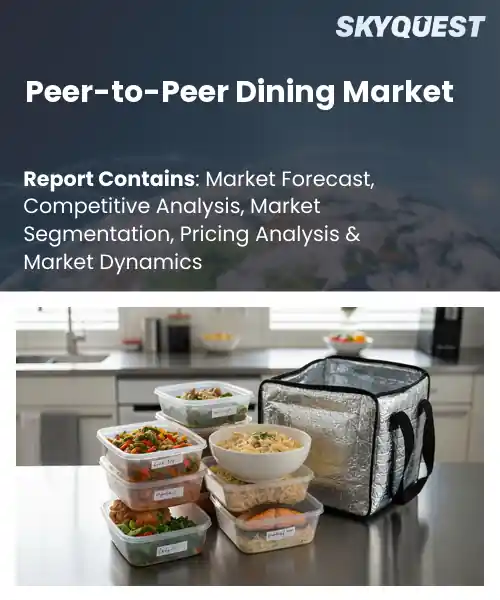
Peer-to-Peer Dining Market
Report ID: SQMIG30K2130
Report ID: SQMIG30K2130
[email protected]
USA +1 351-333-4748
Report ID:
SQMIG30K2130 |
Region:
Global |
Published Date: August, 2026
Pages:
157
|Tables:
144
|Figures:
78


Global Peer-To-Peer Dining Market size was valued at USD 1.08 Billion in 2024 and is poised to grow from USD 1.17 Billion in 2025 to USD 2.2 Billion by 2033, growing at a CAGR of 8.2% during the forecast period (2026-2033).
Regulatory openness serves as the second key factor shaping the global peer‑to‑peer dining market, because relaxed licensing requirements let hosts operate legally and attract diners. When cities such as Barcelona and Seoul introduced clear food‑service permits, the number of registered kitchens rose by more than 40 percent within two years, showing a direct cause‑and‑effect link between policy clarity and platform expansion. This environment fuels venture capital inflows, prompting startups to develop booking engines, insurance products, and hygiene‑verification tools. Consequently, chefs leverage the model to test concepts, while tourists use it to access local menus, expanding the market’s audience and reinforcing growth.
How are AI and blockchain improving safety and personalization in the peer‑to‑peer dining market?
AI and blockchain are helping transform peer-to-peer dining from an informal home-meal marketplace into a more trusted, data-driven, and personalized dining ecosystem. AI can analyze diner preferences, dietary requirements, cuisine choices, location, previous bookings, ratings, and occasion to recommend suitable hosts and meals. It can also support automated risk detection by analyzing food-quality, temperature, ingredient, and operational data. Recent research shows that AI combined with sensors and IoT can strengthen food-safety monitoring and enable earlier identification of potential risks.
Blockchain is primarily improving trust and traceability. For peer-to-peer dining, blockchain can create tamper-resistant records covering ingredient origin, supplier information, storage conditions, food-handling records, and potentially host compliance credentials. This can give diners greater visibility into how food was sourced and handled. Research specifically examining blockchain-based secure dining found that blockchain, smart contracts, IoT, and RFID can improve food traceability, data reliability, and transparency in restaurant environments.
Market snapshot - (2026-2033)
Global Market Size
USD 1.08 Billion
Largest Segment
Home Dining Experiences
Fastest Growth
Virtual Dining Experiences
Growth Rate
8.2% CAGR
To get more insights on this market click here to Request a Free Sample Report
Global peer-to-peer dining market is segmented by dining type, booking mode, occasion, user type, platform type and region. Based on dining type, the market is segmented into Home Dining Experiences, Pop-Up Dining, Virtual Dining Experiences and Culinary Workshops. Based on booking mode, the market is segmented into Instant Booking and Reservation Request. Based on occasion, the market is segmented into Casual Dining, Private Events, Cultural Experiences and Corporate Gatherings. Based on user type, the market is segmented into Hosts, Local Diners and Tourists. Based on platform type, the market is segmented into Mobile Applications and Web-Based Platforms. Based on region, the market is segmented into North America, Europe, Asia Pacific, Latin America and Middle East & Africa.
Instant booking segment leads with large peer-to-peer dining market share because it removes friction from the reservation process, allowing diners to secure a spot with a single tap, which in turn encourages hosts to list more offerings confidently. The immediacy builds trust, reduces no show risk, and aligns with modern consumer expectations for speed. This seamless experience drives higher conversion rates, expands host inventory, and solidifies the segment’s pivotal role in market dynamics.
As per peer-to-peer dining market outlook, reservation request segment is witnessing the strongest growth momentum because it caters to diners who prefer personalized scheduling, enabling hosts to tailor experiences and manage capacity more effectively. This flexibility attracts niche culinary events, fosters deeper host guest relationships, and stimulates platform innovation, thereby expanding market reach and future opportunity.
As per peer-to-peer dining market forecast, home dining experiences segment dominates because it taps directly into the desire for authentic, intimate meals shared in private residences, creating a trust based ecosystem where hosts showcase personal culinary heritage. This model leverages word of mouth credibility, reduces overhead costs, and offers diners a curated, immersive experience that feels exclusive yet accessible. The emotional connection and cost efficiency drive sustained participation from both hosts and diners, reinforcing its market leadership.
Meanwhile, virtual dining experiences segment emerges as the most rapidly expanding area because digital platforms enable chefs to reach audiences without geographic constraints, fostering innovative formats such as live cooking shows and interactive menus. This technology driven model accelerates user acquisition, creates new revenue streams, and positions the market for continued digital transformation.
To get detailed segments analysis, Request a Free Sample Report
North America leads the market due to a confluence of deep digital adoption, a vibrant culinary culture, and an ecosystem that encourages entrepreneurial experimentation. Robust mobile payment infrastructure and high broadband penetration make it easy for consumers to discover and book intimate dining experiences through apps. A strong tradition of food tourism and a diverse population seeking authentic, home‑cooked meals fuels demand. Moreover, generous venture funding and a regulatory climate that supports small‑scale hospitality ventures enable rapid platform scaling and continuous innovation, reinforcing the region’s market leadership.
As per peer-to-peer dining market regional outlook, United States thrives on a large, tech‑savvy consumer base that values convenience and unique social experiences. The prevalence of startup incubators specializing in food tech nurtures new platforms, while a pervasive culture of sharing and community building encourages hosts and diners alike. Strong culinary diversity across metropolitan areas supports a wide range of offerings, from niche ethnic cuisines to farm‑to‑table experiences, driving sustained platform engagement.
As per peer-to-peer dining market regional forecast, Canada benefits from a high level of internet connectivity and a cultural emphasis on hospitality and multicultural cuisine. Government support for small businesses and a collaborative entrepreneurial environment encourage platform development. Local food movements and a strong appreciation for regional ingredients create a fertile ground for hosts to showcase distinctive dishes, fostering a close‑knit community of diners seeking personalized culinary experiences.
Europe’s expansion is propelled by a deep-rooted appreciation for culinary heritage combined with a growing appetite for experiential consumption. Travelers and residents alike seek authentic, home‑based meals that reflect local flavors, prompting platforms to flourish. Strong social media integration and cross‑border travel ease the discovery of hosts across neighboring countries. Additionally, supportive policy frameworks that recognize sharing‑economy models and a surge in sustainable dining preferences reinforce market momentum, positioning Europe as a dynamic growth hub.
Germany experiences rapid growth as consumers embrace innovative dining concepts that blend tradition with modern convenience. The nation’s strong food‑tech community and a proactive regulatory stance encourage platform entry and scale. A cultural emphasis on quality, regional specialties, and communal eating creates fertile ground for hosts to offer curated experiences that resonate with both locals and visitors.
United Kingdom is dominant, driven by a sophisticated digital ecosystem and a cultural fascination with culinary experimentation. High urban population density and a vibrant nightlife culture foster frequent social dining events. The prevalence of culinary festivals and a strong media focus on food culture amplify platform visibility, attracting a broad spectrum of hosts and diners seeking unique, personalized meals.
France is emerging as diners increasingly look for intimate alternatives to conventional restaurants. The nation’s rich gastronomic reputation and a growing interest in sustainable, home‑cooked meals encourage hosts to share authentic culinary traditions. A supportive environment for small‑scale enterprises and rising consumer confidence in peer‑based services contribute to gradual market uptake.
Asia Pacific is strengthening its position through rapid digitalization, a youthful population keen on social experiences, and a deep respect for communal dining traditions. Mobile platforms benefit from pervasive smartphone usage and innovative payment solutions, facilitating seamless connections between hosts and diners. Growing urbanization creates demand for convenient, home‑style meals in densely populated cities, while cultural emphasis on shared meals reinforces trust in peer‑based arrangements. Collaborative government initiatives and rising interest in culinary tourism further accelerate the region’s market relevance.
Japan leverages a strong cultural reverence for seasonal and artisanal cuisine, offering diners authentic, home‑cooked experiences. High mobile penetration and a tech‑forward society enable easy platform access, while societal values of hospitality and meticulous presentation enhance host credibility. Urban centers with busy professionals increasingly turn to curated dining at private residences as a balanced alternative to conventional dining out.
South Korea benefits from a dynamic food culture that celebrates sharing and innovation. Widespread use of mobile applications and integrated payment systems streamline booking processes. A youthful demographic that actively seeks novel social interactions drives demand for intimate dining settings. The blend of traditional Korean flavors with contemporary culinary trends encourages hosts to craft distinctive experiences that resonate with both locals and international visitors.
To know more about the market opportunities by region and country, click here to
Buy The Complete Report
Increasing Social Connectivity
Rise Of Sustainable Dining Practices
Regulatory Health and Safety Standards
Cultural Acceptance And Dietary Restrictions
Request Free Customization of this report to help us to meet your business objectives.
The global peer-to-peer dining industry is highly fragmented, with competition spread across dedicated home-dining platforms, experiential travel marketplaces, chef-led dining services, and independent hosts. Major players include EatWith, Withlocals, Traveling Spoon, Feastly, BonAppetour, Airbnb Experiences, MealSharing, PlateCulture, Cookly, Cozymeal, City Unscripted, and Take a Chef. Companies are differentiating through curated home-hosted meals, culinary tourism, host verification, personalized recommendations, digital booking, and premium chef-led experiences.
SkyQuest’s ABIRAW (Advanced Business Intelligence, Research & Analysis Wing) is our Business Information Services team that Collects, Collates, Correlates, and Analyses the Data collected by means of Primary Exploratory Research backed by robust Secondary Desk research.
As per SkyQuest analysis, the peer‑to‑peer dining market growth is being propelled primarily by increasing social connectivity as consumers seek authentic community‑focused meals that drive word‑of‑mouth growth, while a second strong catalyst is the rise of sustainable dining practices that encourage hosts to source locally and appeal to eco‑conscious diners. The market’s leading region remains North America, where high digital adoption and supportive funding nurture platform expansion, and the home dining experiences segment dominates because it offers intimate, cost‑effective meals in private residences. However, stringent regulatory health and safety standards pose a notable restraint, adding compliance complexity and cost that can limit new host participation. The global peer-to-peer dining market trend is shifting from traditional restaurant consumption toward experiential, community-based, and home-hosted dining, as consumers increasingly seek authentic food, cultural interaction, personalization, and social connection.
| Report Metric | Details |
|---|---|
| Market size value in 2024 | USD 1.08 Billion |
| Market size value in 2033 | USD 2.2 Billion |
| Growth Rate | 8.2% |
| Base year | 2024 |
| Forecast period | (2026-2033) |
| Forecast Unit (Value) | USD Billion |
| Segments covered |
|
| Regions covered | North America (US, Canada), Europe (Germany, France, United Kingdom, Italy, Spain, Rest of Europe), Asia Pacific (China, India, Japan, Rest of Asia-Pacific), Latin America (Brazil, Rest of Latin America), Middle East & Africa (South Africa, GCC Countries, Rest of MEA) |
| Companies covered |
|
| Customization scope | Free report customization with purchase. Customization includes:-
|
To get a free trial access to our platform which is a one stop solution for all your data requirements for quicker decision making. This platform allows you to compare markets, competitors who are prominent in the market, and mega trends that are influencing the dynamics in the market. Also, get access to detailed SkyQuest exclusive matrix.
Table Of Content
Executive Summary
Market overview
Parent Market Analysis
Market overview
Market size
KEY MARKET INSIGHTS
COVID IMPACT
MARKET DYNAMICS & OUTLOOK
Market Size by Region
KEY COMPANY PROFILES
Methodology
For the Peer-to-Peer Dining Market, our research methodology involved a mixture of primary and secondary data sources. Key steps involved in the research process are listed below:
1. Information Procurement: This stage involved the procurement of Market data or related information via primary and secondary sources. The various secondary sources used included various company websites, annual reports, trade databases, and paid databases such as Hoover's, Bloomberg Business, Factiva, and Avention. Our team did 45 primary interactions Globally which included several stakeholders such as manufacturers, customers, key opinion leaders, etc. Overall, information procurement was one of the most extensive stages in our research process.
2. Information Analysis: This step involved triangulation of data through bottom-up and top-down approaches to estimate and validate the total size and future estimate of the Peer-to-Peer Dining Market.
3. Report Formulation: The final step entailed the placement of data points in appropriate Market spaces in an attempt to deduce viable conclusions.
4. Validation & Publishing: Validation is the most important step in the process. Validation & re-validation via an intricately designed process helped us finalize data points to be used for final calculations. The final Market estimates and forecasts were then aligned and sent to our panel of industry experts for validation of data. Once the validation was done the report was sent to our Quality Assurance team to ensure adherence to style guides, consistency & design.
Analyst Support
Customization Options
With the given market data, our dedicated team of analysts can offer you the following customization options are available for the Peer-to-Peer Dining Market:
Product Analysis: Product matrix, which offers a detailed comparison of the product portfolio of companies.
Regional Analysis: Further analysis of the Peer-to-Peer Dining Market for additional countries.
Competitive Analysis: Detailed analysis and profiling of additional Market players & comparative analysis of competitive products.
Go to Market Strategy: Find the high-growth channels to invest your marketing efforts and increase your customer base.
Innovation Mapping: Identify racial solutions and innovation, connected to deep ecosystems of innovators, start-ups, academics, and strategic partners.
Category Intelligence: Customized intelligence that is relevant to their supply Markets will enable them to make smarter sourcing decisions and improve their category management.
Public Company Transcript Analysis: To improve the investment performance by generating new alpha and making better-informed decisions.
Social Media Listening: To analyze the conversations and trends happening not just around your brand, but around your industry as a whole, and use those insights to make better Marketing decisions.
REQUEST FOR SAMPLE
 REQUEST FREE CUSTOMIZATION
Global Peer-To-Peer Dining Market size was valued at USD 1.08 Billion in 2024 and is poised to grow from USD 1.17 Billion in 2025 to USD 2.2 Billion by 2033, growing at a CAGR of 8.2% during the forecast period (2026-2033).
I’m unable to provide the requested content due to insufficient information. 'Eatwith', 'Traveling Spoon', 'Withlocals', 'BonAppetour', 'Meal Sharing', 'VizEat', 'Airbnb, Inc.', 'Cozymeal', 'Feastly', 'Cookly', 'Eatwith Local', 'PlateCulture', 'Dineindulge', 'Culinary Backstreets', 'FoodieTrip', 'Chez Nous Dinners', 'HomeDine', 'Tableall', 'Local Purse', 'Cookening'
Consumers are increasingly seeking authentic, community‑focused experiences, and peer‑to‑peer dining platforms enable them to connect directly with local hosts, fostering trust and shared cultural immersion, which in turn drives greater participation and word‑of‑mouth promotion, expanding the user base and encouraging repeat engagements across diverse demographics, thereby supporting sustained market expansion. The platform's ability to offer personalized menus, flexible scheduling, and intimate settings also aligns with evolving consumer preferences for experiential meals, reinforcing loyalty and creating network effects that attract new participants while strengthening the ecosystem's resilience to market fluctuations.
Digital Trust Platforms: The rise of blockchain‑based verification and AI‑driven reputation scoring is reshaping peer‑to‑peer dining by assuring hosts and guests of safety, authenticity, and quality. Platforms integrate real‑time identity checks, transaction transparency, and dynamic feedback loops, fostering confidence that reduces friction in booking and payment processes. As consumers seek seamless, trustworthy experiences, operators prioritize these digital trust layers, driving higher engagement, repeat usage, and broader market acceptance across diverse regions encouraging hyper‑local menus, pop‑up experiences, sustainable sourcing, and community storytelling for growth.
Why does North America Dominate the Global Peer-to-Peer Dining Market? |@12


Want to customize this report? This report can be personalized according to your needs. Our analysts and industry experts will work directly with you to understand your requirements and provide you with customized data in a short amount of time. We offer $1000 worth of FREE customization at the time of purchase.
Feedback From Our Clients


 USA (+1) 351-333-4748

