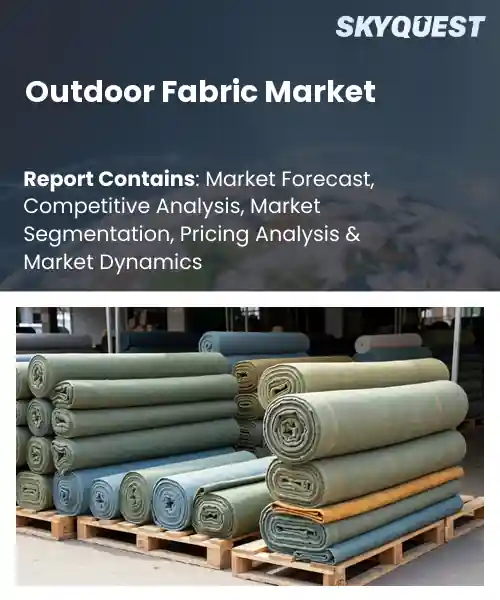
Outdoor Fabric Market
Report ID: SQMIG15E3767
Report ID: SQMIG15E3767
[email protected]
USA +1 351-333-4748
Report ID:
SQMIG15E3767 |
Region:
Global |
Published Date: June, 2026
Pages:
157
|Tables:
180
|Figures:
79


Global Outdoor Fabric Market size was valued at USD 14.5 Billion in 2024 and is poised to grow from USD 15.23 Billion in 2025 to USD 22.49 Billion by 2033, growing at a CAGR of 5.0% during the forecast period (2026-2033).
The primary driver of the outdoor fabric industry is sustained demand for durable, weather resistant textiles that support expanding outdoor lifestyles and uses. This market supplies materials, solution dyed polyester, acrylics and coated textiles for furniture, awnings, marine upholstery and signage, and this market is significant because these fabrics preserve longevity, reduce maintenance costs while adding flexibility. Historically the industry shifted from natural fibers to high performance synthetics as UV resistance and colorfastness became priorities; for example, garden furniture and pools increasingly use solution dyed yarns, while yacht interiors favor marine grade vinyls, showing performance requirements shaped material innovation and market growth.
A pivotal factor shaping outdoor fabric growth is technological innovation tied to sustainability, which creates opportunities and alters supplier economics. When brands adopt recycled polyester, low water solution dyeing and durable water repellent chemistries, water and chemical footprints fall and consumers show willingness to pay a premium. That premium finances further R&D and capacity expansion, allowing fabrics to meet tighter fire, antimicrobial and marine standards so hotels, cafes and yacht builders specify advanced textiles. Examples such as recycled PET cushions, nano coated awnings and solution dyed marine canvases show how sustainability driven performance expands use cases and accelerates overall demand.
How is IoT-enabled smart fabric technology affecting demand in the outdoor fabric market?
IoT powered smart fabric technology combines embedded sensors connectivity and responsive materials to provide sensing adaptive comfort and digital services to outdoor textiles. Durability of environmental monitoring and supply chain traceability are key characteristics shifting product value towards performance and user data driven features. The current status is early commercial adoption with pilots concentrating on washability power and longevity as brands and mills modify manufacturing and testing. This means that the outdoor fabric market will see an increased demand for premium materials that are more durable and have a more transparent provenance. Real world examples include textile biosensing smart clothing and microLED display advancements that are indicative of broad uses.
Wiliot in May 2026, expanded collaboration with AT&T to scale its battery free IoT pixels in supply chains supports outdoor fabric market growth by enabling item level condition monitoring and seamless inventory visibility which improves product reliability speeds time to market and reduces waste.
Market snapshot - (2026-2033)
Global Market Size
USD 14.5 Billion
Largest Segment
Acrylic
Fastest Growth
Olefin (Polypropylene)
Growth Rate
5.0% CAGR
To get more insights on this market click here to Request a Free Sample Report
Global outdoor fabric market is segmented by material, product type, application, finishing type, distribution channel, end-use industry and region. Based on material, the market is segmented into Polyester, Acrylic, Olefin (Polypropylene), Nylon and Others. Based on product type, the market is segmented into Polymer-Coated Fabrics, Fire-Resistant Fabrics, Functional Textiles and Others. Based on application, the market is segmented into Patio Furniture & Upholstery, Awnings & Canopies, Marine, Automotive & Transportation, Protective Clothing & Industrial Use and Others. Based on finishing type, the market is segmented into Water-Resistant, UV-Resistant, Antimicrobial, Flame-Retardant and Others. Based on distribution channel, the market is segmented into Direct Sales, Distributors and Online Retail. Based on end-use industry, the market is segmented into Residential, Commercial, Industrial and Defense & Government. Based on region, the market is segmented into North America, Europe, Asia Pacific, Latin America and Middle East & Africa.
Polyester segment dominates with lrage outdoor fabric market share because its inherent durability, ease of dyeing, and cost efficiency make it the default choice for diverse outdoor applications. Its resistance to stretching and abrasion leads manufacturers to favor it for long lasting products, which reduces replacement cycles and supports wide OEM adoption. The material's compatibility with coatings and finishes enables water and UV protections, driving specification by designers and retailers seeking predictable performance in outdoor environments.
As per outdoor fabric market outlook, olefin leads fastest growth as its low density, excellent mildew resistance, and cost competitive production attract makers focused on lightweight, moisture resilient outdoor furnishings. Increased innovation in UV stabilization and demand for recyclable, low maintenance solutions accelerate adoption across product lines, opening new opportunities in mass market and specialized applications.
As per outdoor fabric market forecast, awnings & canopies segment dominates because their large exposed surface area and high visibility demand robust, weather resistant textiles that balance aesthetics with performance. Architects and commercial operators prioritize fabrics that sustain sun, wind, and moisture while enabling branding and shade functionality, driving consistent procurement. The need for customizable patterns and durable coatings pushes manufacturers to standardize on proven materials and finishes, reinforcing this application as a primary volume driver for outdoor fabrics.
As per outdoor fabric market analysis, marine is the fastest growing application as demand for salt tolerant, UV stable textiles and advanced coatings pushes innovation. Recreational boating and performance expectations require rapid drying, low weight, and mildew resistance, prompting partnerships with finish suppliers and creating pathways for premium, high margin fabric offerings in niche marine markets.
To get detailed segments analysis, Request a Free Sample Report
As per outdoor fabric market regional outlook, Asia Pacific is at the forefront of the market due to converging demands from growing urban lifestyles, strong manufacturing infrastructure, and a solid textile value chain that enables rapid product development. Consumer desires for outdoor living and leisure in the region drive broad adoption of durable and weather resistant materials. Proximity to raw material suppliers and established export routes allows for affordable pricing and flexible supply agreements. The partnership between manufacturers and research institutes supports local innovation in performance finishes and smart textiles, which improves product distinctiveness. The increasing tourist and outdoor recreation culture in many countries create a need for sun and water resistant fabrics that have numerous applications. Regional trade agreements promote access to the market and facilitate cross border partnerships that lead to the growth of distribution.
As per outdoor fabric market regional forecast, Japan is characterized by emphasis on quality, advanced finishing technologies, and designer collaborations that cater to premium outdoor lifestyle segments. Manufacturers concentrate on lightweight performance textiles with refined aesthetics for urban outdoor spaces and leisure applications. The market benefits from strong domestic innovation ecosystems and supply chains that support product availability. Sustainable sourcing and rigorous quality control practices further strengthen market reputation and customer trust.
South Korea is driven by advanced textile engineering, collaboration between manufacturers and lifestyle brands, and a focus on functional aesthetics suited to urban and recreational outdoor applications. Firms emphasize durable, weather resistant materials with innovative coatings and smart fabric treatments. Adoption of performance oriented textiles for active lifestyles combined with eco friendly sourcing and circular production practices enhances appeal among quality conscious consumers and trade partners.
North American performance driven market is witnessing rapid expansion led by robust consumer interest in outdoor living, restoration & experiential leisure which drives demand for Performance Driven Outdoor Textiles. Mature retail network and increasing specialty channels for effective product discovery and distribution. Active involvement of manufacturers in customisation and value added finishes to cater to different climatic and design requirements. The focus on sustainable ingredients and transparent sourcing procedures resonates with the concerns of educated consumers, and it has pushed businesses to incorporate recycled content and eco-friendly treatments. Strategic cooperation between fabric producers, outdoor furniture manufacturers and textile finishers allow faster product innovation cycles and flexible production runs, supporting market momentum and competitive positioning across the area. Investment in domestic technical textiles capacity and focus on performance testing and labelling builds buyer confidence. Service offerings like cut and sew and quick prototyping enable downstream clients with finished solutions that minimize time to market.
United States is characterized by diverse demand across residential and commercial segments with appetite for high performance, weather resistant textiles. Retail innovation to consumer channels drive demand for customizable fabrics and specialized finishes. Manufacturers emphasize material durability, UV stability, and ease of maintenance while focusing on sustainable sourcing and transparent supply chains. Collaboration with furniture and awning makers supports product application development and market reach.
Canada emphasizes durable, climate adaptable textiles suited to regional conditions and varied outdoor lifestyles. Demand favors multifunctional fabrics that balance protection, comfort, and aesthetic appeal. Domestic suppliers prioritize performance finishes, water repellency treatments, and sustainable material blends to meet retailer and consumer expectations. Focus on local manufacturing capabilities and collaborative product development with furniture and outdoor gear companies strengthens market resilience and regional distribution and reach.
Europe strengthens its position through a blend of technological refinement, sustainability leadership, and premium design sensibilities that appeal to discerning consumers. Manufacturers invest in specialized finishing techniques, eco friendly fibre alternatives, and certifications that assure environmental and performance claims. A dense network of designers, textile schools, and industry associations fosters rapid knowledge transfer and collaborative product development, enhancing regional capacity to deliver differentiated offerings. Strong demand from hospitality, public space furnishing, and bespoke residential sectors encourages tailored solutions and value added services. Cross border trade within the region and strategic partnerships with global suppliers support efficient sourcing and market penetration, positioning Europe as a hub for innovation and quality in the outdoor fabric landscape. Emphasis on circular economy principles, traceable supply chains, and stringent testing standards enhances buyer confidence and drives premium adoption among professional specifiers.
Germany is defined by engineering driven product development, rigorous quality assurance, and a focus on technical textiles suited for demanding outdoor applications. Manufacturers prioritize durable performance materials alongside advanced finishing processes that enhance weather resistance and longevity. Environmental compliance and recyclable material strategies are central to supplier positioning. Strong collaboration between research institutes and textile producers supports prototyping and tailored solutions for commercial and residential sectors.
United Kingdom combines design led aesthetics with performance driven innovation to serve residential needs. Suppliers emphasize UV resistant, easy care textiles that align with evolving interior and exterior design trends. Focus on sustainable fibres, transparent supply chains, and eco friendly finishing processes resonates with specification driven buyers. Collaborative networks among designers, manufacturers, and retailers enable product development and tailored offerings meeting quality and style expectations.
France blends couture inspired design with practical performance to produce fabrics that combine elegance and durability. Suppliers focus on refined textures and finishes that withstand outdoor conditions while complementing premium furnishings. Emphasis on sustainable materials and artisanal finishing supports strong brand narratives and attracts discerning buyers. Collaboration among textile mills, designers, and outdoor furniture makers fosters bespoke solutions and strengthens demand for design driven outdoor textiles.
To know more about the market opportunities by region and country, click here to
Buy The Complete Report
Rising Demand For Outdoor Living
Expansion Of Performance Fabric Technologies
Volatile Raw Material Prices
Regulatory And Environmental Constraints
Request Free Customization of this report to help us to meet your business objectives.
Global outdoor fabric competition centers on sustainable high performance materials and material science innovation, forcing incumbents into acquisitions, licensing and product partnerships. For example Heytex acquired TenCate Outdoor Fabrics to broaden technical capability, and Milliken entered the outdoor segment with new collections and trade show launches. Startups advancing water repellent cellulose and thermally active fabrics are prompting licensing and pilot collaborations across supply chains.
SkyQuest’s ABIRAW (Advanced Business Intelligence, Research & Analysis Wing) is our Business Information Services team that Collects, Collates, Correlates, and Analyses the Data collected by means of Primary Exploratory Research backed by robust Secondary Desk research.
As per SkyQuest analysis, the global outdoor fabric market growth is being propelled by a key driver namely rising consumer demand for durable, weather resistant textiles that support outdoor living while a second driver is rapid technological innovation focused on sustainability including recycled fibers and low-water dyeing which expands premium applications. A notable restraint is volatile raw material prices that can squeeze margins and slow investment. Asia Pacific remains the dominating region due to strong manufacturing capability and vibrant demand. Polyester is the dominating segment because of its durability, dyeability and cost efficiency, keeping it the default choice across furniture, awnings and marine uses. The global outdoor fabric market trend driven by increasing demand for durable, weather-resistant, and UV-protective textiles across outdoor furniture, awnings, marine applications, automotive interiors, and recreational products.
| Report Metric | Details |
|---|---|
| Market size value in 2024 | USD 14.5 Billion |
| Market size value in 2033 | USD 22.49 Billion |
| Growth Rate | 5.0% |
| Base year | 2024 |
| Forecast period | (2026-2033) |
| Forecast Unit (Value) | USD Billion |
| Segments covered |
|
| Regions covered | North America (US, Canada), Europe (Germany, France, United Kingdom, Italy, Spain, Rest of Europe), Asia Pacific (China, India, Japan, Rest of Asia-Pacific), Latin America (Brazil, Rest of Latin America), Middle East & Africa (South Africa, GCC Countries, Rest of MEA) |
| Companies covered |
|
| Customization scope | Free report customization with purchase. Customization includes:-
|
To get a free trial access to our platform which is a one stop solution for all your data requirements for quicker decision making. This platform allows you to compare markets, competitors who are prominent in the market, and mega trends that are influencing the dynamics in the market. Also, get access to detailed SkyQuest exclusive matrix.
Table Of Content
Executive Summary
Market overview
Parent Market Analysis
Market overview
Market size
KEY MARKET INSIGHTS
COVID IMPACT
MARKET DYNAMICS & OUTLOOK
Market Size by Region
KEY COMPANY PROFILES
Methodology
For the Outdoor Fabric Market, our research methodology involved a mixture of primary and secondary data sources. Key steps involved in the research process are listed below:
1. Information Procurement: This stage involved the procurement of Market data or related information via primary and secondary sources. The various secondary sources used included various company websites, annual reports, trade databases, and paid databases such as Hoover's, Bloomberg Business, Factiva, and Avention. Our team did 45 primary interactions Globally which included several stakeholders such as manufacturers, customers, key opinion leaders, etc. Overall, information procurement was one of the most extensive stages in our research process.
2. Information Analysis: This step involved triangulation of data through bottom-up and top-down approaches to estimate and validate the total size and future estimate of the Outdoor Fabric Market.
3. Report Formulation: The final step entailed the placement of data points in appropriate Market spaces in an attempt to deduce viable conclusions.
4. Validation & Publishing: Validation is the most important step in the process. Validation & re-validation via an intricately designed process helped us finalize data points to be used for final calculations. The final Market estimates and forecasts were then aligned and sent to our panel of industry experts for validation of data. Once the validation was done the report was sent to our Quality Assurance team to ensure adherence to style guides, consistency & design.
Analyst Support
Customization Options
With the given market data, our dedicated team of analysts can offer you the following customization options are available for the Outdoor Fabric Market:
Product Analysis: Product matrix, which offers a detailed comparison of the product portfolio of companies.
Regional Analysis: Further analysis of the Outdoor Fabric Market for additional countries.
Competitive Analysis: Detailed analysis and profiling of additional Market players & comparative analysis of competitive products.
Go to Market Strategy: Find the high-growth channels to invest your marketing efforts and increase your customer base.
Innovation Mapping: Identify racial solutions and innovation, connected to deep ecosystems of innovators, start-ups, academics, and strategic partners.
Category Intelligence: Customized intelligence that is relevant to their supply Markets will enable them to make smarter sourcing decisions and improve their category management.
Public Company Transcript Analysis: To improve the investment performance by generating new alpha and making better-informed decisions.
Social Media Listening: To analyze the conversations and trends happening not just around your brand, but around your industry as a whole, and use those insights to make better Marketing decisions.
REQUEST FOR SAMPLE
 REQUEST FREE CUSTOMIZATION
Global Outdoor Fabric Market size was valued at USD 14.5 Billion in 2024 and is poised to grow from USD 15.23 Billion in 2025 to USD 22.49 Billion by 2033, growing at a CAGR of 5.0% during the forecast period (2026-2033).
Global outdoor fabric competition centers on sustainable high performance materials and material science innovation, forcing incumbents into acquisitions, licensing and product partnerships. For example Heytex acquired TenCate Outdoor Fabrics to broaden technical capability, and Milliken entered the outdoor segment with new collections and trade show launches. Startups advancing water repellent cellulose and thermally active fabrics are prompting licensing and pilot collaborations across supply chains. 'Glen Raven Inc.', 'Dickson Constant', 'Serge Ferrari Group', 'Twitchell Corporation', 'Sattler AG', 'Tempotest', 'Saint-Gobain', 'BASF SE', '3M Company', 'W. L. Gore & Associates', 'Kolon Industries Inc.', 'Milliken & Company', 'Low & Bonar', 'DuPont de Nemours Inc.', 'TenCate Outdoor Fabrics', 'Schmitz-Werke GmbH', 'Awning Supply Co.', 'Sunbrella Fabrics', 'Heytex Group', 'Herculite Products Inc.'
Consumers increasingly prioritize outdoor living spaces, leading to greater demand for durable, weather resistant fabrics used in furniture, awnings, and outdoor decor. This preference encourages manufacturers and retailers to expand product lines and invest in marketing, as consumers seek textiles that combine comfort, UV protection, and easy maintenance. The resulting rise in product variety and availability stimulates market expansion by making outdoor fabric options more visible and acceptable to a broader range of buyers, reinforcing purchase cycles and encouraging repeated upgrades.
Sustainable Material Innovation: Manufacturers are prioritizing durable, low-impact fibers and coatings that extend product lifecycles while meeting consumer demand for eco-conscious choices. Development focuses on bio-based polymers, recycled content, and waterless finishing methods that reduce resource intensity and waste. Brands collaborate with suppliers to validate traceability and circularity claims, integrating end-of-life recovery programs. This shift drives design-for-repair and modular applications across furniture, awnings, and performance apparel, reshaping procurement strategies and enabling premium positioning through documented sustainability credentials and transparent supply chain practices globally.
Why does Asia Pacific Dominate the Global Outdoor Fabric Market? |@12


Want to customize this report? This report can be personalized according to your needs. Our analysts and industry experts will work directly with you to understand your requirements and provide you with customized data in a short amount of time. We offer $1000 worth of FREE customization at the time of purchase.
Feedback From Our Clients


 USA (+1) 351-333-4748

