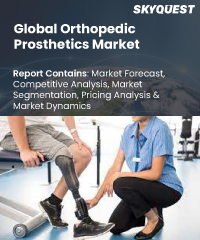
Orthopedic Prosthetics Market
Report ID: SQMIG35A2801
Report ID: SQMIG35A2801
[email protected]
USA +1 351-333-4748
Report ID:
SQMIG35A2801 |
Region:
Global |
Published Date: July, 2025
Pages:
194
|Tables:
93
|Figures:
71


Global Orthopedic Prosthetics Market size was valued at USD 3.5 Billion in 2024 and is poised to grow from USD 3.72 Billion in 2025 to USD 6.02 Billion by 2033, growing at a CAGR of 6.2% during the forecast period (2026–2033).
The increasing global prevalence of chronic conditions such as diabetes, peripheral artery disease, and cancer, along with a surge in traumatic injuries from accidents and warfare, has led to a growing number of limb amputations. For instance, diabetic foot ulcers often result in lower-limb amputations when untreated. This rise in amputation cases directly boosts demand for orthopedic prosthetics, as patients seek solutions to regain mobility, independence, and functionality. As life expectancy increases, more individuals live long enough to develop complications requiring amputation, thus sustaining long-term growth in the orthopedic prosthetics market.
Technological advancements play a key trend driving the global orthopedic prosthetics sector. Modern prosthetics now incorporate microprocessors, AI-based control systems, myoelectric sensors, and lightweight carbon fiber materials, which mimic natural limb movement and improve user experience. For example, microprocessor-controlled knees automatically adjust resistance during walking, reducing the risk of falls and enhancing mobility. These intelligent features significantly improve comfort, functionality, and ease of use, leading to higher user satisfaction and greater adoption rates. Consequently, innovation not only improves patient outcomes but also differentiates products in a competitive market, encouraging healthcare providers to adopt next-generation prosthetic solutions.
What Role does AI Play in Enhancing Motor Control in Prosthetics?
Artificial Intelligence (AI) is directly impacting the global orthopedic prosthetics market by enabling intelligent, adaptive prosthetic devices. AI algorithms process real-time biomechanical and neural data, allowing prosthetics to predict user intentions and adjust movements accordingly. This leads to enhanced motor control, reduced effort, and greater user satisfaction. For instance, Phantom Neuro’s AI-driven muscle interface system can decode hand gestures with high accuracy and low latency, enabling nearly natural movement without invasive brain surgery. As a result, AI-integrated prosthetics are gaining traction, accelerating innovation and adoption across the market, and paving the way for personalized, next-generation neuroprosthetic solutions.
In May 2025, Ukrainian‑American firm Esper Bionics launched the Esper Hand 2, an AI‑powered, waterproof bionic hand. Using machine‑learning algorithms, it adapts grip strength and predicts movements based on user habits—enhancing real‑world usability and durability in diverse environments.
Market snapshot - 2026-2033
Global Market Size
USD 24.5 Billion
Largest Segment
Hospitals
Fastest Growth
Prosthetic Clinics
Growth Rate
15.5% CAGR
To get more insights on this market click here to Request a Free Sample Report
The global orthopedic prosthetics market is segmented based on type, solution, end user, and region. In terms of type, the market is bifurcated into live video streaming and non-linear video streaming. Based on Solution, the market is trifurcated into internet protocol TV, over-the-top (OTT), and pay-TV. Based on end user, the market is bifurcated into enterprise and consumer. Based on region, the market is segmented into North America, Europe, Asia-Pacific, Central & South America and the Middle East & Africa.
Why is Continuous Innovation Crucial in Lower Extremity Prosthetics?
Based on the global orthopedic prosthetics market forecast, lower extremity prosthetics are dominating the industry, with smart materials, AI integration, and microprocessor-controlled knees and ankles improving mobility and stability. These advancements enhance gait efficiency and adapt to varied terrains, boosting user independence. This product segment dominates the global orthopedic prosthetics market due to the high incidence of lower limb amputations from diabetes, trauma, and vascular diseases—driving greater demand and continual technological development in functional, everyday mobility solutions.
Prosthetic liners are poised to be the fastest‑growing segment in the global orthopedic prosthetics market due to rising demand for comfort, customization, and advanced materials. Innovations like silicone thermoplastic elastomers, 3D printing, and smart liners with pressure sensors are enhancing fit and skin health. These improvements, coupled with increasing amputations and clinician awareness, forecast robust growth.
How does Accessibility Contribute to the Popularity of Conventional Prosthetics?
Conventional technology in the global orthopedic prosthetics market remains dominant due to its proven reliability, affordability, and accessibility. Cause: Mechanical, body‑powered prostheses use simple, durable components and cost far less than high-tech alternatives, making them ideal for regions with limited healthcare budgets and reimbursement options. This widespread acceptance perpetuates their market leadership. Innovations—like improved materials, ergonomic sockets, and lightweight carbon composites—gradually enhance performance and comfort, sustaining conventional prosthetics’ relevance even amid rising electric and hybrid alternatives.
Electric powered prosthetic technology is expected to be the fastest growing segment in the global orthopedic prosthetics market due to its ability to deliver enhanced mobility through smart sensors, AI integration, and microprocessor-controlled joints. These innovations allow for more natural movement and adaptability. Rising patient preference for functionality and comfort continues to drive rapid adoption and market expansion.
To get detailed segments analysis, Request a Free Sample Report
How do Reimbursement Policies Affect Prosthetics Access in North America?
As per the global orthopedic prosthetics market analysis, North America holds a dominant position in the industry due to its advanced healthcare infrastructure, high healthcare spending, and strong reimbursement policies. The region experiences a high prevalence of diabetes and trauma-related amputations, boosting prosthetic demand. The U.S. leads with significant market share, while Canada shows rapid growth due to increased government support and integration of advanced prosthetic technologies into rehabilitation and orthopedic care programs.
US Orthopedic Prosthetics Market
The United States significantly contributes to North America’s orthopedic prosthetics market, driven by advanced healthcare infrastructure, high amputation rates from diabetes and trauma, and widespread adoption of cutting-edge prosthetic technologies. Strong reimbursement frameworks and continuous R&D investments by major players further support market dominance. Additionally, the presence of specialized rehabilitation centers and skilled practitioners enhances access and accelerates the adoption of innovative lower and upper limb prosthetic solutions across the country.
Canada Orthopedic Prosthetics Market
Canada plays a growing role in North America’s orthopedic prosthetics market, with increasing demand fueled by rising chronic disease-related amputations and sports injuries. Government-backed healthcare initiatives and improved access to rehabilitation services support prosthetic adoption. Furthermore, growing awareness and adoption of advanced prosthetic technologies, including smart liners and microprocessor-controlled limbs, are boosting market growth. The country’s focus on inclusive healthcare policies continues to attract investment and drive innovation in prosthetic care.
How does the Aging Population Impact Prosthetic Demand in Asia Pacific?
Asia Pacific is emerging as the fastest-growing region in the global orthopedic prosthetics market, driven by a rising geriatric population, increasing diabetes prevalence, and higher rates of road traffic accidents. Countries like China, India, and Japan are witnessing rapid adoption due to expanding healthcare infrastructure and government support for disability care. Growing awareness, improving access to advanced prosthetics, and local manufacturing initiatives further contribute to the region’s accelerating market growth and innovation.
Japan Orthopedic Prosthetics Market
Japan plays a significant role in the Asia Pacific orthopedic prosthetics market due to its rapidly aging population and advanced healthcare infrastructure. The country is a leader in integrating robotics and microprocessor-controlled prosthetics, supported by strong R&D investment and local manufacturing capabilities. High patient expectations and government funding for rehabilitation services further boost adoption. Japan’s focus on innovation and quality care positions it as a major contributor to technological advancement in prosthetic solutions.
South Korea Orthopedic Prosthetics Market
South Korea contributes to the Asia Pacific orthopedic prosthetics market through its tech-driven healthcare system and rising adoption of smart, customized prosthetic solutions. Government subsidies, national insurance coverage, and increasing awareness of limb loss rehabilitation support steady market expansion. The country is investing in 3D printing and patient-specific prosthetic designs, enhancing accessibility and comfort. With growing demand for advanced medical devices, South Korea is emerging as a key regional player in prosthetic innovation and care.
How do Public Healthcare Systems Support Prosthetic Adoption in Europe?
Europe holds a substantial share in the global orthopedic prosthetics market due to its aging population, strong public healthcare systems, and advanced medical technologies. Countries like Germany, France, and the UK lead in adoption, supported by government funding and specialized rehabilitation centers. The region’s emphasis on quality-of-life post-amputation and increasing prevalence of diabetes and vascular diseases are driving demand for both traditional and advanced prosthetic solutions across diverse patient populations.
Germany Orthopedic Prosthetics Market
Germany plays a leading role in Europe’s orthopedic prosthetics market due to its strong medical device industry and advanced healthcare infrastructure. Home to major manufacturers like Ottobock, the country benefits from continuous R&D, technological innovation, and widespread clinical expertise. High rates of lower limb amputations, favorable reimbursement policies, and government support for rehabilitation services contribute to high adoption of both conventional and advanced prosthetic technologies, making Germany a dominant market contributor.
Italy Orthopedic Prosthetics Market
Italy is emerging as one of the fastest-growing contributors to the Europe’s orthopedic prosthetics market in Europe. Rising cases of diabetes-related amputations, expanding rehabilitation services, and increased awareness of advanced prosthetic options are key drivers. Government health initiatives and regional healthcare investments are improving access and affordability. With a focus on modernizing orthopedic care, Italy is rapidly adopting new technologies, making it a rising hub for prosthetic innovation and patient-centric care.
UK Orthopedic Prosthetics Market
The United Kingdom has a growing presence in the Europe’s orthopedic prosthetics market, driven by an aging population, increasing vascular-related amputations, and robust NHS support. Investment in advanced prosthetic technologies—such as microprocessor-controlled limbs and smart liners— accelerating adoption. The UK also benefits from research-focused institutions and rehabilitation centers that support innovation and patient outcomes. These factors contribute to the UK being one of Europe’s fastest-growing markets for prosthetic healthcare solutions.
To know more about the market opportunities by region and country, click here to
Buy The Complete Report
Orthopedic Prosthetics Market Drivers
Increasing Geriatric Population
Improved Access to Rehabilitation Services
Orthopedic Prosthetics Market Restraints
Limited Reimbursement Policies in Developing Regions
Social Stigma and Psychological Barriers
Request Free Customization of this report to help us to meet your business objectives.
The global orthopedic prosthetics market outlook is highly competitive, with key international players like Össur, Ottobock, Blatchford, Fillauer, and Steeper Group driving innovation. Companies focus on strategies such as R&D investment, product customization, and geographic expansion. For instance, Össur emphasizes AI-integrated prosthetics, while Ottobock invests in smart mobility solutions. Blatchford adopts a patient-centric approach with microprocessor-controlled knees, aiming to enhance user comfort and mobility across various clinical and demographic segments.
As per the global orthopedic prosthetics industry analysis, the startup landscape is rapidly expanding, fueled by advances in AI, robotics, and bioelectronics. Startups are disrupting traditional models by offering personalized, affordable, and intuitive prosthetic solutions. Many focus on enhancing user experience through smart sensors and adaptive technologies. This shift from mechanical to intelligent systems is enabling faster rehabilitation, better mobility, and broader accessibility—especially in underserved markets—while fostering global collaborations and R&D breakthroughs in neuroprosthetics and human-machine interfaces.
Top Player’s Company Profiles
Recent Developments in Orthopedic Prosthetics Market
SkyQuest’s ABIRAW (Advanced Business Intelligence, Research & Analysis Wing) is our Business Information Services team that Collects, Collates, Correlates, and Analyses the Data collected by means of Primary Exploratory Research backed by robust Secondary Desk research.
As per SkyQuest analysis, the global orthopedic prosthetics industry is undergoing transformative growth, driven by a rising number of amputations from chronic diseases, trauma, and aging-related complications. The integration of cutting-edge technologies—such as AI, myoelectric sensors, and lightweight materials—is revolutionizing prosthetic design and functionality, enhancing mobility, comfort, and user independence. AI-powered systems now offer intuitive motor control and adaptability, pushing the boundaries of personalized care.
Additionally, increased government support, rehabilitation access, and reimbursement frameworks, especially in North America and Europe, are improving market penetration. Innovations in lower extremity prosthetics and liners address both clinical and lifestyle needs. As emerging regions invest in healthcare infrastructure and awareness, the global orthopedic prosthetics market revenue continues to expand globally, delivering life-changing solutions to a growing and diverse amputee population.
| Report Metric | Details |
|---|---|
| Market size value in 2024 | USD 3.5 Billion |
| Market size value in 2033 | USD 6.02 Billion |
| Growth Rate | 6.2% |
| Base year | 2024 |
| Forecast period | 2026-2033 |
| Forecast Unit (Value) | USD Billion |
| Segments covered |
|
| Regions covered | North America (US, Canada), Europe (Germany, France, United Kingdom, Italy, Spain, Rest of Europe), Asia Pacific (China, India, Japan, Rest of Asia-Pacific), Latin America (Brazil, Rest of Latin America), Middle East & Africa (South Africa, GCC Countries, Rest of MEA) |
| Companies covered |
|
| Customization scope | Free report customization with purchase. Customization includes:-
|
To get a free trial access to our platform which is a one stop solution for all your data requirements for quicker decision making. This platform allows you to compare markets, competitors who are prominent in the market, and mega trends that are influencing the dynamics in the market. Also, get access to detailed SkyQuest exclusive matrix.
Table Of Content
Executive Summary
Market overview
Parent Market Analysis
Market overview
Market size
KEY MARKET INSIGHTS
COVID IMPACT
MARKET DYNAMICS & OUTLOOK
Market Size by Region
KEY COMPANY PROFILES
Methodology
For the Orthopedic Prosthetics Market, our research methodology involved a mixture of primary and secondary data sources. Key steps involved in the research process are listed below:
1. Information Procurement: This stage involved the procurement of Market data or related information via primary and secondary sources. The various secondary sources used included various company websites, annual reports, trade databases, and paid databases such as Hoover's, Bloomberg Business, Factiva, and Avention. Our team did 45 primary interactions Globally which included several stakeholders such as manufacturers, customers, key opinion leaders, etc. Overall, information procurement was one of the most extensive stages in our research process.
2. Information Analysis: This step involved triangulation of data through bottom-up and top-down approaches to estimate and validate the total size and future estimate of the Orthopedic Prosthetics Market.
3. Report Formulation: The final step entailed the placement of data points in appropriate Market spaces in an attempt to deduce viable conclusions.
4. Validation & Publishing: Validation is the most important step in the process. Validation & re-validation via an intricately designed process helped us finalize data points to be used for final calculations. The final Market estimates and forecasts were then aligned and sent to our panel of industry experts for validation of data. Once the validation was done the report was sent to our Quality Assurance team to ensure adherence to style guides, consistency & design.
Analyst Support
Customization Options
With the given market data, our dedicated team of analysts can offer you the following customization options are available for the Orthopedic Prosthetics Market:
Product Analysis: Product matrix, which offers a detailed comparison of the product portfolio of companies.
Regional Analysis: Further analysis of the Orthopedic Prosthetics Market for additional countries.
Competitive Analysis: Detailed analysis and profiling of additional Market players & comparative analysis of competitive products.
Go to Market Strategy: Find the high-growth channels to invest your marketing efforts and increase your customer base.
Innovation Mapping: Identify racial solutions and innovation, connected to deep ecosystems of innovators, start-ups, academics, and strategic partners.
Category Intelligence: Customized intelligence that is relevant to their supply Markets will enable them to make smarter sourcing decisions and improve their category management.
Public Company Transcript Analysis: To improve the investment performance by generating new alpha and making better-informed decisions.
Social Media Listening: To analyze the conversations and trends happening not just around your brand, but around your industry as a whole, and use those insights to make better Marketing decisions.
REQUEST FOR SAMPLE
 REQUEST FREE CUSTOMIZATION


Want to customize this report? This report can be personalized according to your needs. Our analysts and industry experts will work directly with you to understand your requirements and provide you with customized data in a short amount of time. We offer $1000 worth of FREE customization at the time of purchase.
Feedback From Our Clients


 USA (+1) 351-333-4748

