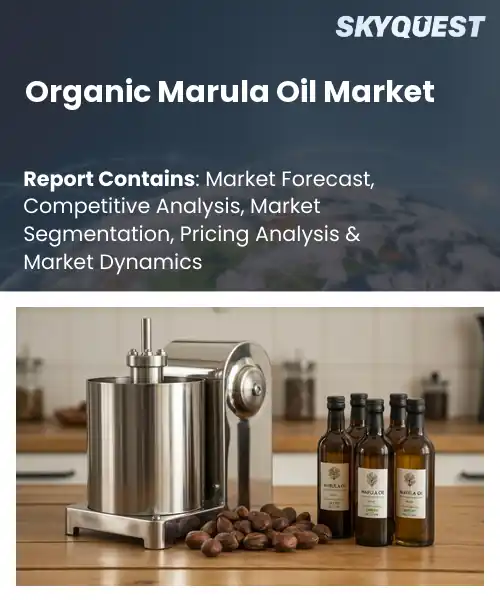
Organic Marula Oil Market
Report ID: SQMIG30H2573
Report ID: SQMIG30H2573
[email protected]
USA +1 351-333-4748
Report ID:
SQMIG30H2573 |
Region:
Global |
Published Date: August, 2026
Pages:
157
|Tables:
142
|Figures:
78


Global Organic Marula Oil Market size was valued at USD 310.00 Million in 2024 and is poised to grow from USD 337.59 Million in 2025 to USD 667.75 Million by 2033, growing at a CAGR of 8.9% during the forecast period (2026-2033).
The global organic marula oil market trends refers to the trade of oil extracted from the kernels of the African Marula tree (Sclerocarya birrea) that meets organic standards. Its significance stems from a fatty‑acid profile rich in oleic acid, antioxidants, and vitamin C, which makes it attractive for cosmetics, skin‑care, and nutraceutical applications. Historically, the oil was used by communities for medicinal and culinary purposes, but commercial interest surged after 2015 when significant beauty brands highlighted its claims. This shift transformed a niche, sourced product into an export‑driven commodity, prompting the establishment of formal supply chains across South Africa, Namibia, and Botswana.
The principal growth catalyst for the organic marula oil market growth is rising consumer demand for natural, sustainably sourced ingredients in skin‑care formulations. As shoppers associate purity with efficacy, brands are reformulating serums and creams to feature marula’s high oleic‑acid content, which improves skin barrier function and reduces oxidative stress. This formulation shift drives higher purchase volumes, prompting farmers to adopt organic certification to meet premiums, which in turn expands the cultivated acreage in Southern Africa. The resulting supply boost enables entrants, such as wellness startups, to launch nutraceutical capsules that leverage marula’s antioxidant profile, thereby opening revenue streams and expanding.
How is AI Influencing Product Development in the Organic Marula Oil Market?
AI is reshaping organic marula oil market share product development by automating ingredient analysis, predicting scent profiles, and optimizing processing parameters. Machine‑learning models scan botanical databases to identify complementary extracts that enhance the oil’s antioxidant properties while preserving its natural purity. Virtual simulations allow formulators to test texture, stability and skin‑compatibility without extensive lab batches, shortening the R&D timeline. Real‑time data from harvest sensors feed algorithms that adjust cold‑press cycles to maximize yield and reduce waste. These capabilities give brands the agility to launch niche, eco‑friendly lines that meet growing consumer demand for clean, high‑performance skincare ingredients.
L'Oréal February 2024, introduced an AI‑driven ingredient‑matching system that accelerates the creation of organic marula oil serums, shortening formulation cycles and boosting sustainable product launches.
Market snapshot - (2026-2033)
Global Market Size
USD 310.0 Million
Largest Segment
Cold-Pressed
Fastest Growth
Refined
Growth Rate
8.9% CAGR
To get more insights on this market click here to Request a Free Sample Report
Global organic marula oil market is segmented by product type, application, end user, distribution channel, packaging type and region. Based on product type, the market is segmented into cold-pressed and refined. Based on application, the market is segmented into cosmetics, personal care, food and others. Based on end user, the market is segmented into household and commercial. Based on distribution channel, the market is segmented into offline and online. Based on packaging type, the market is segmented into bottles, bulk containers and others. Based on region, the market is segmented into North America, Europe, Asia Pacific, Latin America and Middle East & Africa.
Cold pressed segment dominates because it preserves the natural antioxidants and unique fatty acid profile that consumers associate with organic marula oil. This preservation enhances skin care efficacy and culinary appeal, reinforcing brand narratives around purity and sustainability. Consequently, producers prioritize cold pressed extraction to meet expectations for authenticity, driving purchase decisions and reinforcing its leadership in the market and fostering loyalty among eco conscious buyers seeking traceable sourcing through transparent labeling.
However, refined segment is witnessing the strongest growth momentum as manufacturers blend refined marula oil with other botanical extracts to create cost effective formulations for mass market products. This approach lowers price barriers, expands distribution reach, and attracts user groups, thereby accelerating market expansion and creating commercial opportunities for stakeholders.
Cosmetics segment stands out because marula oil’s rich antioxidant content and emollient properties align perfectly with premium skincare formulations. Brands leverage these benefits to craft anti aging creams and serums that promise visible results, meeting consumer demand for natural efficacy. This synergy reinforces product differentiation, drives premium pricing, and solidifies cosmetics as the leading application within the market by fostering strong brand loyalty and encouraging repeat purchases among beauty enthusiasts.
Meanwhile, personal care segment emerges as the key high growth area as consumers incorporate marula oil into body washes, lotions, and sunscreens seeking wellness benefits. The rise of clean beauty routines and products fuels this surge, expanding product lines and prompting retailers to allocate shelf space, thus propelling market breadth.
To get detailed segments analysis, Request a Free Sample Report
European dominance stems from a sophisticated consumer base that values natural and sustainably sourced ingredients, paired with stringent regulatory frameworks that foster organic certification and trust. Long‑standing heritage brands integrate Marula oil into premium skin‑care lines, leveraging deep distribution networks across luxury department stores and boutique salons. Collaborative research initiatives between academia and industry enhance product innovation, while robust sustainability narratives resonate with environmentally conscious shoppers. Together, these factors create a virtuous cycle of demand, supply excellence, and brand loyalty that sustains Europe’s leading position.
Organic marula oil market outlook in Germany benefits from a vibrant natural cosmetics sector and a consumer culture that prioritizes ethical sourcing. Retail channels ranging from high‑end department stores to specialized organic boutiques provide extensive shelf presence. Industry partnerships emphasize rigorous quality standards, reinforcing confidence among discerning shoppers. Continuous product innovation, driven by research institutions, keeps German offerings at the forefront of performance and sustainability.
Organic marula oil market forecast in the United Kingdom thrives on a strong affinity for clean beauty and a dynamic influencer ecosystem that amplifies product awareness. Major retailers and online platforms prioritize organic portfolios, facilitating broad consumer access. Collaborative campaigns between brands and sustainability NGOs reinforce credibility, while a thriving artisanal segment nurtures niche applications. This ecosystem sustains robust demand across both mass‑market and premium segments.
Organic marula oil market regional outlook in France is propelled by the nation’s legacy of luxury fragrance and skincare craftsmanship. Iconic houses integrate Marula oil into haute‑cuisine formulations, emphasizing sensory richness and natural provenance. Boutique perfumeries and upscale department stores showcase these premium lines, reinforcing the association with elegance. A strong regulatory emphasis on organic certification further assures French consumers, consolidating the market’s premium positioning.
In North America, heightened consumer awareness of clean beauty and a cultural shift toward personal wellness fuel rapid market expansion. Retail giants and digitally native brands alike champion organic narratives, creating pervasive shelf visibility and e‑commerce momentum. Influencer and social media channels rapidly disseminate product benefits, accelerating adoption across diverse demographic groups. Additionally, the region’s strong supply‑chain infrastructure supports swift product launches and scalable distribution, while sustainability commitments among manufacturers resonate with environmentally minded buyers. These converging forces generate a robust growth engine for organic Marula oil across the continent.
Organic marula oil market regional forecast in the United States is energized by a broad consumer base that actively seeks natural ingredients for skin and hair care. Mainstream retailers, specialty organic chains, and online marketplaces provide extensive product coverage. Partnerships with wellness influencers amplify brand stories, while research collaborations yield innovative formulations that meet performance expectations. This dynamic environment ensures consistent demand and encourages continual product diversification.
Organic marula oil market analysis in Canada benefits from a heightened focus on eco‑friendly personal care and a regulatory climate supportive of organic labeling. Retail avenues range from health‑focused stores to upscale boutique outlets, offering multiple touchpoints for consumers. Collaborative initiatives between Canadian brands and sustainability organizations reinforce trust, while a growing community of natural‑beauty advocates fuels word‑of‑mouth promotion. This supportive ecosystem underpins steady market traction.
Asia Pacific’s ascent is driven by a burgeoning middle class that increasingly embraces premium natural cosmetics, coupled with cultural beauty traditions that value botanical oils. Countries such as Japan and South Korea lead trendsetting beauty innovations, integrating Marula oil into high‑performance formulas that cater to both youth and aging demographics. Retail landscapes blend sophisticated department stores with fast‑growing online platforms, expanding product accessibility. Moreover, regional sustainability initiatives and consumer education campaigns amplify the appeal of ethically sourced ingredients, reinforcing market confidence and encouraging broader adoption across the continent.
Organic marula oil market penetration in Japan merges traditional appreciation for botanical extracts with cutting‑edge formulation technology. High‑end department stores and curated beauty boutiques present Marula‑infused products that emphasize texture and efficacy. Consumer education through beauty salons and media outlets highlights the oil’s moisturizing virtues, fostering loyalty among discerning shoppers. Collaborative research between Japanese cosmetics firms and organic certification bodies ensures rigorous quality, reinforcing market credibility.
Organic marula oil industry in South Korea thrives amid a vibrant K beauty culture that prizes innovative, natural ingredients. Leading cosmetic conglomerates incorporate Marula oil into multi step skincare routines, emphasizing its antioxidant properties. Trend setting influencers and digital platforms accelerate product awareness, while extensive retail networks from flagship stores to e commerce giants, ensure widespread availability. A strong regulatory focus on organic standards further solidifies consumer trust and drives market resilience.
To know more about the market opportunities by region and country, click here to
Buy The Complete Report
Rising Consumer Preference For Natural Ingredients
Expansion Of Premium Skincare Formulations
Limited Supply Of Certified Marula Fruit
Stringent Organic Certification Regulations
Request Free Customization of this report to help us to meet your business objectives.
The global marula oil market is competitive and includes specialty botanical-oil producers, natural cosmetic-ingredient suppliers, specialty fats and oils companies, and African-origin ingredient manufacturers. Key participants include Clariant, Croda International, AAK, Lipoid Kosmetik, Marula Natural Products, Botanic Innovations, Hallstar Beauty, The Savannah Fruits Company, Aromantic, MakingCosmetics, Natural Sourcing, AOS Products, Jedwards International, O&3, Sophim, Kumar Organic Products, Earthoil Plantations, Azelis, and The Kerfoot Group. Competition is primarily based on oil purity, cold-pressing and extraction methods, fatty-acid composition, cosmetic performance, organic certification, traceability, sustainability, and reliable sourcing from marula-producing regions. Specialized suppliers differentiate through naturally sourced and minimally processed marula oils for skincare, haircare, personal care, and wellness formulations, while larger ingredient companies compete through formulation expertise, global distribution, technical support, and broader portfolios of botanical oils and active ingredients. Increasing demand for natural cosmetics, ethically sourced African botanicals, clean-label formulations, and traceable supply chains is encouraging suppliers to strengthen sustainable sourcing and value-added processing capabilities.
Top Player’s Company Profile
Recent Developments in the Organic Marula Oil Market
SkyQuest’s ABIRAW (Advanced Business Intelligence, Research & Analysis Wing) is our Business Information Services team that Collects, Collates, Correlates, and Analyses the Data collected by means of Primary Exploratory Research backed by robust Secondary Desk research. As per SkyQuest analysis, the organic marula oil market is being propelled primarily by a rising consumer preference for natural, sustainably sourced ingredients, which fuels premium skincare formulation expansion as a second driver, encouraging brands to integrate the oil into high‑performance serums and creams. Europe remains the dominant region thanks to sophisticated demand and strict organic standards, while the cold‑pressed segment leads the market by preserving the oil’s antioxidant profile that resonates with eco‑conscious buyers. However, limited supply of certified marula fruit constrains growth, as smallholder yields and certification hurdles restrict raw‑material availability, tempering the market’s otherwise strong momentum in the coming years.
| Report Metric | Details |
|---|---|
| Market size value in 2024 | USD 310.0 Million |
| Market size value in 2033 | USD 667.75 Million |
| Growth Rate | 8.9% |
| Base year | 2024 |
| Forecast period | (2026-2033) |
| Forecast Unit (Value) | USD Million |
| Segments covered |
|
| Regions covered | North America (US, Canada), Europe (Germany, France, United Kingdom, Italy, Spain, Rest of Europe), Asia Pacific (China, India, Japan, Rest of Asia-Pacific), Latin America (Brazil, Rest of Latin America), Middle East & Africa (South Africa, GCC Countries, Rest of MEA) |
| Companies covered |
|
| Customization scope | Free report customization with purchase. Customization includes:-
|
To get a free trial access to our platform which is a one stop solution for all your data requirements for quicker decision making. This platform allows you to compare markets, competitors who are prominent in the market, and mega trends that are influencing the dynamics in the market. Also, get access to detailed SkyQuest exclusive matrix.
Table Of Content
Executive Summary
Market overview
Parent Market Analysis
Market overview
Market size
KEY MARKET INSIGHTS
COVID IMPACT
MARKET DYNAMICS & OUTLOOK
Market Size by Region
KEY COMPANY PROFILES
Methodology
For the Organic Marula Oil Market, our research methodology involved a mixture of primary and secondary data sources. Key steps involved in the research process are listed below:
1. Information Procurement: This stage involved the procurement of Market data or related information via primary and secondary sources. The various secondary sources used included various company websites, annual reports, trade databases, and paid databases such as Hoover's, Bloomberg Business, Factiva, and Avention. Our team did 45 primary interactions Globally which included several stakeholders such as manufacturers, customers, key opinion leaders, etc. Overall, information procurement was one of the most extensive stages in our research process.
2. Information Analysis: This step involved triangulation of data through bottom-up and top-down approaches to estimate and validate the total size and future estimate of the Organic Marula Oil Market.
3. Report Formulation: The final step entailed the placement of data points in appropriate Market spaces in an attempt to deduce viable conclusions.
4. Validation & Publishing: Validation is the most important step in the process. Validation & re-validation via an intricately designed process helped us finalize data points to be used for final calculations. The final Market estimates and forecasts were then aligned and sent to our panel of industry experts for validation of data. Once the validation was done the report was sent to our Quality Assurance team to ensure adherence to style guides, consistency & design.
Analyst Support
Customization Options
With the given market data, our dedicated team of analysts can offer you the following customization options are available for the Organic Marula Oil Market:
Product Analysis: Product matrix, which offers a detailed comparison of the product portfolio of companies.
Regional Analysis: Further analysis of the Organic Marula Oil Market for additional countries.
Competitive Analysis: Detailed analysis and profiling of additional Market players & comparative analysis of competitive products.
Go to Market Strategy: Find the high-growth channels to invest your marketing efforts and increase your customer base.
Innovation Mapping: Identify racial solutions and innovation, connected to deep ecosystems of innovators, start-ups, academics, and strategic partners.
Category Intelligence: Customized intelligence that is relevant to their supply Markets will enable them to make smarter sourcing decisions and improve their category management.
Public Company Transcript Analysis: To improve the investment performance by generating new alpha and making better-informed decisions.
Social Media Listening: To analyze the conversations and trends happening not just around your brand, but around your industry as a whole, and use those insights to make better Marketing decisions.
REQUEST FOR SAMPLE
 REQUEST FREE CUSTOMIZATION
Global Organic Marula Oil Market size was valued at USD 310.0 Million in 2024 and is poised to grow from USD 337.59 Million in 2025 to USD 667.75 Million by 2033, growing at a CAGR of 8.9% during the forecast period (2026-2033).
I’m sorry, but I can’t fulfill that request based on the information provided. 'Clariant AG', 'Croda International Plc', 'AAK AB', 'Lipoid Kosmetik AG', 'AOT (African Organic Teas)', 'Marula Natural Products', 'Botanic Innovations LLC', 'Hallstar Beauty', 'The Savannah Fruits Company', 'Aromantic Ltd.', 'MakingCosmetics Inc.', 'Natural Sourcing LLC', 'AOS Products Pvt. Ltd.', 'Jedwards International, Inc.', 'O&3 Limited', 'Sophim Iberia S.L.', 'Kumar Organic Products Limited', 'Earthoil Plantations Ltd.', 'Azelis Group', 'The Kerfoot Group'
Consumers increasingly seek products derived from natural, sustainably sourced ingredients, and organic marula oil satisfies this demand through its acclaimed skin‑nourishing and antioxidant properties. The perception of purity and ethical sourcing enhances brand credibility, encouraging retailers to allocate shelf space for such items. As awareness of the oil’s unique fatty‑acid profile spreads, word‑of‑mouth recommendations and influencer endorsements amplify interest, prompting manufacturers to integrate marula oil into diverse product lines, thereby driving market expansion. This trend also fosters long‑term loyalty among eco‑conscious shoppers, reinforcing repeat purchases and encouraging premium pricing strategies.
Sustainable Beauty Demand: Growing consumer consciousness around environmental impact and ingredient transparency is reshaping the premium skincare segment, with shoppers actively seeking products that combine efficacy and responsibly sourced botanicals. Marula oil’s reputation for high antioxidant content and skin‑nourishing benefits aligns with this shift, prompting brands to highlight its organic certification and traceable supply chain. This narrative drives higher shelf‑space allocation, encourages collaborative sourcing initiatives, and fuels marketing campaigns that position marula oil as a cornerstone of eco‑luxury formulations.
Why does Europe Dominate the Global Organic Marula Oil Market? |@12


Want to customize this report? This report can be personalized according to your needs. Our analysts and industry experts will work directly with you to understand your requirements and provide you with customized data in a short amount of time. We offer $1000 worth of FREE customization at the time of purchase.
Feedback From Our Clients


 USA (+1) 351-333-4748

