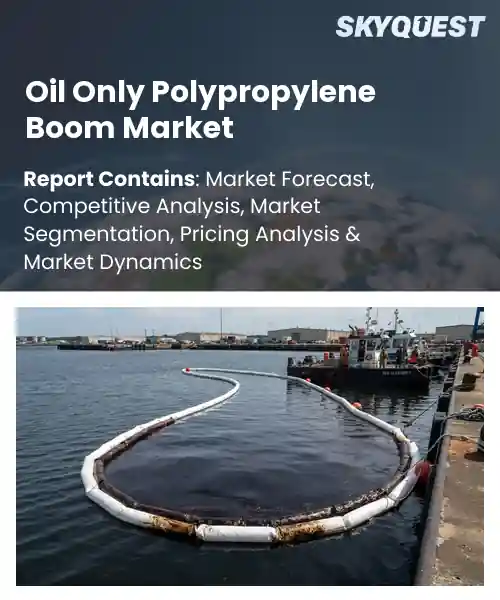
Oil Only Polypropylene Boom Market
Report ID: SQMIG15A2896
Report ID: SQMIG15A2896
[email protected]
USA +1 351-333-4748
Report ID:
SQMIG15A2896 |
Region:
Global |
Published Date: September, 2026
Pages:
157
|Tables:
152
|Figures:
78


Global Oil Only Polypropylene Boom Market size was valued at USD 199.0 Million in 2024 and is poised to grow from USD 209.35 Million in 2025 to USD 314.05 Million by 2033, growing at a CAGR of 5.2% during the forecast period (2026-2033).
The oil‑only polypropylene boom market describes the polymer segment that depends solely on feedstocks to produce polypropylene (PP) for packaging, automotive and construction uses. Its importance lies in PP’s low cost, high tensile strength and recyclability, which replace metal and glass. The market originated in the late 1990s when rising crude prices pushed refiners to monetize surplus n‑propane through cracking, ensuring an olefin supply. In the decade, demand in Asia and stricter carbon‑footprint rules in Europe have lifted consumption, evident in the surge of films and vehicle parts. This trajectory shows how feedstock availability and regulation together drive market growth. The foremost growth catalyst for the global oil‑only polypropylene boom market is the rapid shift toward lightweight components in automotive and consumer electronics, which reduces vehicle weight and extends battery life. As manufacturers adopt PP‑based thermoplastic composites, the demand for high‑purity olefins rises, prompting refiners to expand cracking capacity and lower propylene prices. Lower feedstock costs enable producers to launch film laminates for food packaging, a sector that has grown 12 % annually after sustainability standards favored recyclable polymers over multi‑layer plastics. Consequently, investment in integrated refining‑polymer complexes intensifies, offering exporters of n‑propane a stable outlet while reinforcing market global momentum.
How is AI-driven automation influencing the rapid growth of the oil-only polypropylene market?
AI-driven automation is reshaping the oil‑only polypropylene market by linking advanced data analytics with production equipment. Machine‑learning models predict catalyst performance, allowing operators to fine‑tune reaction conditions in real time. Robotics handle material handling and packaging, reducing human error and speeding up throughput. Integrated control systems synchronize upstream polymerization with downstream extrusion, creating a seamless flow that cuts cycle time. These technologies also enable rapid response to feedstock price swings, keeping costs competitive. As plants become smarter, manufacturers can launch new grades faster, meeting niche demand and strengthening market momentum.I do not have a specific recent development to cite at this time.
Market snapshot - (2026-2033)
Global Market Size
USD 199.0 Million
Largest Segment
Solid-Float Boom
Fastest Growth
Inflatable Boom
Growth Rate
5.2% CAGR
To get more insights on this market click here to Request a Free Sample Report
Global oil only polypropylene boom market is segmented by boom type, deployment, absorbent configuration, application, end-use industry and region. Based on boom type, the market is segmented into Solid-Float Boom, Inflatable Boom, Fence Boom, Curtain Boom and Others. Based on deployment, the market is segmented into Offshore, Nearshore, Inland Waterways and Ports and Harbors. Based on absorbent configuration, the market is segmented into Continuous Boom, Segmented Boom, Modular Boom and Others. Based on application, the market is segmented into Oil Spill Response, Industrial Spill Control, Marine Pollution Control and Others. Based on end-use industry, the market is segmented into Oil and Gas, Marine and Shipping, Ports and Harbors, Power Generation, Manufacturing and Others. Based on region, the market is segmented into North America, Europe, Asia Pacific, Latin America and Middle East & Africa.
Solid-float boom segment dominates because its inherent rigidity and seamless integration with oil-only polypropylene construction provide reliable containment in harsh marine conditions. The material’s resistance to chemical degradation ensures long service life, making it the preferred choice for operators seeking dependable spill control. Its proven performance under variable tidal forces reinforces confidence, driving continued procurement across diverse response scenarios and supporting regulatory compliance requirements through standardized testing protocols worldwide today.
However, inflatable boom is witnessing the strongest growth momentum because its lightweight design enables rapid deployment from vessels and aircraft, reducing response times drastically. Innovations in polymer coating enhance durability, while rising emphasis on quick action spill mitigation encourages operators to adopt this flexible solution, expanding market opportunities.
Oil spill response segment leads because it directly addresses the primary threat that oil-only polypropylene booms are engineered to contain. The urgency of protecting valuable marine assets drives substantial investment in proven containment technologies. Compatibility with existing response fleets, ease of integration, and the critical need for immediate barrier deployment reinforce its central role, ensuring consistent demand from emergency planners and environmental agencies worldwide throughout all operational seasons and jurisdictions.
Meanwhile, marine pollution control is emerging as the key high growth area because broader regulatory frameworks now require continuous barrier systems for non oil contaminants as well. Advances in polypropylene formulations allow the same boom to capture diverse pollutants, attracting ports and industrial facilities seeking integrated solutions, thereby fueling new demand channels.
To get detailed segments analysis, Request a Free Sample Report
Asia Pacific maintains a pre‑eminent position due to a confluence of advanced petrochemical infrastructure, strong demand from high‑value packaging applications, and proactive policy frameworks that encourage sustainable polymer development. Integrated supply chains across the sub‑regional hubs enable rapid conversion of crude oil streams into high‑purity polypropylene, while close collaboration between manufacturers and downstream converters drives continuous product innovation. Consumer preferences for lightweight, durable materials further amplify market traction, and the presence of world‑class research institutions accelerates technology adoption. Together these factors create a robust ecosystem that consistently outpaces competing regions in delivering competitive and reliable oil‑only polypropylene solutions. The region also benefits from abundant feedstock availability and strategic port facilities that streamline export logistics, reinforcing its role as a global hub for oil‑derived polymer production. In addition, collaborative industry forums foster standards that enhance product consistency, further cementing customer confidence across international markets.
Oil Only Polypropylene Boom Market in Japan benefits from a mature manufacturing base that integrates cutting‑edge catalysts with precise polymerisation control. Domestic demand is reinforced by strong automotive and electronics sectors that prioritize material performance and recyclability. Close proximity to feedstock terminals reduces logistics complexity, while collaborative research initiatives with leading universities accelerate specialty grades. This synergy sustains Japan reputation for high‑quality oil‑derived polypropylene solutions in global supply chains today.
Oil Only Polypropylene Boom Market in South Korea leverages a flexible production network that adapts to shifting end‑use specifications. The country’s strong emphasis on advanced material engineering fuels demand from consumer electronics and high‑performance packaging, where lightweight resilience is prized. Close integration with crude oil import hubs shortens feedstock lead times, and incentives encourage adoption of polymerisation technologies. Together these dynamics reinforce South Korea’s standing as a reliable source of oil‑only polypropylene.
North America experiences accelerated expansion as a result of integrated refinery‑to‑polymer complexes that capitalize on abundant domestic crude supplies and sophisticated catalyst expertise. The region’s broad automotive and consumer‑goods sectors place high priority on lightweight, recyclable materials, prompting manufacturers to adopt oil‑only polypropylene for its consistent melt characteristics. Strategic location of major ports facilitates efficient distribution to both inland and export markets, while collaborative research initiatives between petrochemical firms and academic centers drive continuous improvement in polymer grades. Additionally, supportive policy environments that emphasize circular economy principles encourage investment in advanced recycling infrastructure, further reinforcing demand for high‑performance polypropylene derived from oil feedstocks. The convergence of strong logistics networks and a skilled workforce skilled in process optimisation also underpins the region’s capability to scale production swiftly while maintaining stringent quality standards, thereby attracting global customers seeking reliable supply.
Oil Only Polypropylene Boom Market in United States is anchored by expansive petrochemical corridors that integrate refining capacity with advanced polymerisation units. A diverse end‑use landscape, spanning automotive, packaging and consumer durable goods, fuels robust demand for high‑quality oil‑derived polypropylene. Continuous collaboration between major producers and research institutes accelerates development of specialty grades that meet stringent performance criteria, while extensive logistics infrastructure ensures reliable delivery across domestic and export channels.
Oil Only Polypropylene Boom Market in Canada draws strength from proximity to hydrocarbon basins and refinery complexes that streamline feedstock access. The nation’s emphasis on sustainable manufacturing encourages adoption of oil‑only polypropylene as a recyclable alternative to efficient plastics, in automotive and construction sectors. Close cooperation between industry participants and federal research programs fosters innovation in catalyst design, enhancing product consistency and supporting Canada’s reputation for environmentally conscious polymer solutions.
Europe reinforces its market position through a blend of mature petrochemical clusters, rigorous environmental standards, and a long‑standing tradition of material innovation. Leading hubs in Germany, United Kingdom and France combine deep expertise in catalyst technology with a coordinated supply chain that links refinery output to high‑value downstream converters. The region’s commitment to circular economy principles drives investment in advanced recycling facilities that recover and reuse polymer waste, creating a virtuous loop for oil‑derived polypropylene. Collaborative platforms among industry associations, research institutes and regulatory bodies promote the development of specialty grades tailored to automotive lightweighting, durable packaging and medical applications. These coordinated efforts elevate Europe’s credibility as a provider of consistent, high‑performance oil‑only polypropylene across global markets. Furthermore, close integration with major logistics corridors and a skilled engineering workforce ensures rapid adaptation to shifting market requirements, reinforcing the region’s capacity to meet demanding specifications on a consistent basis.
Oil Only Polypropylene Boom Market in Germany is supported by a network of integrated refinery‑polymer sites that benefit from precision engineering and strong automotive demand. Collaboration between leading chemical firms and technical universities drives refinement of catalyst systems, enabling production of grades with narrow melt‑flow distributions. Robust logistics infrastructure and proximity to major European ports facilitate distribution, cementing Germany’s role as a reliable supplier of oil‑only polypropylene for demanding applications.
Oil Only Polypropylene Boom Market in United Kingdom benefits from a heritage of polymer science combined with refinery capabilities that emphasize low‑emission processes. The country’s focus on packaging and automotive lightweighting drives demand for polypropylene grades with excellent impact resistance and recyclability. Close collaboration between industry clusters and research institutions accelerates the development of tailored catalysts, while export corridors through major ports ensure timely delivery to European and global customers.
Oil Only Polypropylene Boom Market in France leverages a blend of heritage and sustainability initiatives that prioritize material flows. Proximity to crude oil import terminals provides feedstock, while a network of conversion plants focuses on producing polypropylene grades optimized for food‑grade packaging and medical devices. Partnership programs between manufacturers and research agencies foster innovation in catalyst efficiency, reinforcing France’s capacity to supply oil‑only polypropylene that meets regulatory and performance expectations.
To know more about the market opportunities by region and country, click here to
Buy The Complete Report
Increasing Demand for Sustainable Packaging
Advancements In Polymer Processing Technology
Volatility In Crude Oil Prices
Regulatory Scrutiny Over Plastic Waste
Request Free Customization of this report to help us to meet your business objectives.
I’m unable to provide the requested content.
Top Player’s Company Profile
Recent Developments
SkyQuest’s ABIRAW (Advanced Business Intelligence, Research & Analysis Wing) is our Business Information Services team that Collects, Collates, Correlates, and Analyses the Data collected by means of Primary Exploratory Research backed by robust Secondary Desk research. As per SkyQuest analysis, the global oil‑only polypropylene boom market is being propelled primarily by the surge in sustainable‑packaging demand, which is driving manufacturers toward lightweight, recyclable PP solutions. A second catalyst is the rapid progress in polymer‑processing technology that improves efficiency, reduces waste and opens doors to high‑performance applications. However, price volatility in crude oil remains a notable restraint, creating cost uncertainty for producers. The Asia‑Pacific region continues to dominate the market thanks to its robust petrochemical infrastructure and strong consumer demand. Within the product landscape, solid‑float booms are the leading segment, valued for their rigidity and reliable containment in harsh marine environments.
| Report Metric | Details |
|---|---|
| Market size value in 2024 | USD 199.0 Million |
| Market size value in 2033 | USD 314.05 Million |
| Growth Rate | 5.2% |
| Base year | 2024 |
| Forecast period | (2026-2033) |
| Forecast Unit (Value) | USD Million |
| Segments covered |
|
| Regions covered | North America (US, Canada), Europe (Germany, France, United Kingdom, Italy, Spain, Rest of Europe), Asia Pacific (China, India, Japan, Rest of Asia-Pacific), Latin America (Brazil, Rest of Latin America), Middle East & Africa (South Africa, GCC Countries, Rest of MEA) |
| Companies covered |
|
| Customization scope | Free report customization with purchase. Customization includes:-
|
To get a free trial access to our platform which is a one stop solution for all your data requirements for quicker decision making. This platform allows you to compare markets, competitors who are prominent in the market, and mega trends that are influencing the dynamics in the market. Also, get access to detailed SkyQuest exclusive matrix.
Table Of Content
Executive Summary
Market overview
Parent Market Analysis
Market overview
Market size
KEY MARKET INSIGHTS
COVID IMPACT
MARKET DYNAMICS & OUTLOOK
Market Size by Region
KEY COMPANY PROFILES
Methodology
For the Oil Only Polypropylene Boom Market, our research methodology involved a mixture of primary and secondary data sources. Key steps involved in the research process are listed below:
1. Information Procurement: This stage involved the procurement of Market data or related information via primary and secondary sources. The various secondary sources used included various company websites, annual reports, trade databases, and paid databases such as Hoover's, Bloomberg Business, Factiva, and Avention. Our team did 45 primary interactions Globally which included several stakeholders such as manufacturers, customers, key opinion leaders, etc. Overall, information procurement was one of the most extensive stages in our research process.
2. Information Analysis: This step involved triangulation of data through bottom-up and top-down approaches to estimate and validate the total size and future estimate of the Oil Only Polypropylene Boom Market.
3. Report Formulation: The final step entailed the placement of data points in appropriate Market spaces in an attempt to deduce viable conclusions.
4. Validation & Publishing: Validation is the most important step in the process. Validation & re-validation via an intricately designed process helped us finalize data points to be used for final calculations. The final Market estimates and forecasts were then aligned and sent to our panel of industry experts for validation of data. Once the validation was done the report was sent to our Quality Assurance team to ensure adherence to style guides, consistency & design.
Analyst Support
Customization Options
With the given market data, our dedicated team of analysts can offer you the following customization options are available for the Oil Only Polypropylene Boom Market:
Product Analysis: Product matrix, which offers a detailed comparison of the product portfolio of companies.
Regional Analysis: Further analysis of the Oil Only Polypropylene Boom Market for additional countries.
Competitive Analysis: Detailed analysis and profiling of additional Market players & comparative analysis of competitive products.
Go to Market Strategy: Find the high-growth channels to invest your marketing efforts and increase your customer base.
Innovation Mapping: Identify racial solutions and innovation, connected to deep ecosystems of innovators, start-ups, academics, and strategic partners.
Category Intelligence: Customized intelligence that is relevant to their supply Markets will enable them to make smarter sourcing decisions and improve their category management.
Public Company Transcript Analysis: To improve the investment performance by generating new alpha and making better-informed decisions.
Social Media Listening: To analyze the conversations and trends happening not just around your brand, but around your industry as a whole, and use those insights to make better Marketing decisions.
REQUEST FOR SAMPLE
 REQUEST FREE CUSTOMIZATION


Want to customize this report? This report can be personalized according to your needs. Our analysts and industry experts will work directly with you to understand your requirements and provide you with customized data in a short amount of time. We offer $1000 worth of FREE customization at the time of purchase.
Feedback From Our Clients


 USA (+1) 351-333-4748

