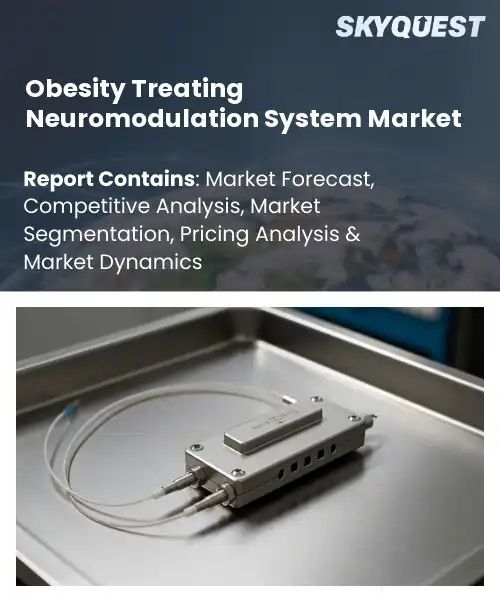
Obesity Treating Neuromodulation System Market
Report ID: SQMIG35A3227
Report ID: SQMIG35A3227
[email protected]
USA +1 351-333-4748
Report ID:
SQMIG35A3227 |
Region:
Global |
Published Date: February, 2026
Pages:
157
|Tables:
90
|Figures:
76


Global Obesity Treating Neuromodulation System Market size was valued at USD 2.50 Billion in 2024 and is poised to grow from USD 2.71 Billion in 2025 to USD 5.21 Billion by 2033, growing at a CAGR of 8.5% during the forecast period (2026-2033).
Growing prevalence of obesity, rising demand for minimally invasive weight management solutions, increasing awareness of metabolic health, advancements in neuromodulation technologies, and expanding clinical research for obesity treatment are driving sales of obesity-treating neuromodulation systems.
Technological improvements in the design of electrodes, minimally invasive procedures for implants, and battery lifespan are improving the effectiveness and ease of use. Additional evidence of moderate weight reduction and improved metabolic health is also supporting the use of technology among healthcare professionals. Expanding regulatory approvals and interest from healthcare investors will continue to support the market opportunity for these systems.
Growing emphasis on weight management through implantable and noninvasive devices that modulate neural circuits controlling appetite, satiety, and metabolic regulation also creates new opportunities for market players. Growing burden of obesity and associated metabolic disorders around the world coupled with the need for alternative treatment options beyond lifestyle interventions and pharmacotherapy are expected to bolster obesity treating neuromodulation system market growth through 2033.
On the contrary, high costs of neuromodulation devices and procedures, limited long-term clinical evidence in certain patient populations, reimbursement challenges in some healthcare systems, and regulatory complexities for implantable medical devices are anticipated to impede obesity-treating neuromodulation system market penetration going forward.
How is AI Enhancing Efficacy of Obesity Treating Neuromodulation Systems?
Artificial intelligence is improving the effectiveness and adoption of obesity neuromodulation systems by enabling adaptive, closed-loop control, personalized targeting, data integration, and remote monitoring. This enables the stimulation settings to dynamically respond in real time. This helps minimize side effects and enhance the patient experience. Additionally, AI-driven analytics help in the selection of patients and the adjustment of therapy from a distance. This helps reduce the burden on the clinics and enhance the patient experience. There are also signs of progress in the regulatory pathway for non-invasive neuromodulation systems.
Market snapshot - 2026-2033
Global Market Size
USD 2.5 Billion
Largest Segment
Implantable Neuromodulation Systems
Fastest Growth
Non-implantable / External Neuromodulation Systems
Growth Rate
8.5% CAGR
To get more insights on this market click here to Request a Free Sample Report
Global obesity treating neuromodulation system market is segmented by product type, application, end-user, and region. Based on product type, the market is segmented into implantable neuromodulation systems and non-implantable / external neuromodulation systems. Based on application, the market is segmented into weight loss management, metabolic disorders treatment, and behavioral health interventions. Based on end-user, the market is segmented into hospitals, ambulatory surgical centers, research institutes, and home care settings. Based on region, the market is segmented into North America, Europe, Asia Pacific, Latin America, and Middle East & Africa.
The implantable neuromodulation systems segment is slated to account for the largest global obesity treating neuromodulation system market share in the future. The ability of these devices to deliver sustained, targeted modulation that aligns with clinicians' needs for durable obesity interventions is helping them hold sway over others. Long term stimulation platforms allow for chronic physiological adaptations, which are necessary for measurable weight and metabolic outcomes. They also allow for the integration of the treatment pathway with the involvement of expert teams. This is because the surgical workflow is already established, and there is clinical evidence, which creates a sense of confidence among clinicians and payers. This leads to the adoption of technology in treatment centers.
However, non-implantable / external neuromodulation systems are witnessing the strongest growth momentum as per this obesity treating neuromodulation system industry analysis. Preference for noninvasive modalities due to their lower procedural risk and broadened patient access helps create new business scope. Wearable stimulators and transcutaneous platforms enable outpatient and home based regimens, attract investment in portable innovation, and accelerate trial enrollment, expanding clinical applications and creating new commercial pathways for obesity neuromodulation therapies.
The weight loss management segment is slated to spearhead the global obesity treating neuromodulation system market revenue generation over the coming years. This being a primary clinical objective driving device development and therapeutic strategy, which cements the dominance of this segment. Outcome measures that are well-defined and related to weight reduction receive significant clinical interest and research attention, as well as financial support. The interest of various stakeholders in quantifying the outcomes of the products directs the research and commercialization of the technology towards the development of products that modulate well.
Meanwhile, metabolic disorders treatment is emerging as the key high growth segment as interest grows in neuromodulation to modulate glycemic and lipid pathways beyond weight alone. Cross disciplinary research linking neural targets to metabolic regulation, rising clinical trials for diabetes focused endpoints, and potential for combination therapies drive adoption, unlocking new indications and expanding market opportunity across therapeutic portfolios.
To get detailed segments analysis, Request a Free Sample Report
Robust clinical expertise, advanced healthcare infrastructure, and a mature medtech industry are helping North America emerge as a leader in adoption of obesity treating neuromodulation systems. Collaborations between universities, specialty hospitals and the medical device companies allow for quick evidence generation and quicker use of new devices. By having less regulatory obstructions and established pathway for commercialization, there are strong incentives for investments into the R&D of novel obesity treating neuromodulation systems. The strong engagement from payers, collaboration between providers and paying for medical devices as well as continued activities from patients all create support for the ongoing leadership position of North America and for continued development of devices in the North American region going forward.
Robust clinical expertise, extensive private and academic research collaborations, and active engagement from leading medtech firms shape obesity treating neuromodulation system adoption in the United States. High awareness among clinical specialists ensures early market adoption in tertiary care settings, whereas existing reimbursement mechanisms and referral systems facilitate wider penetration. Focus on evidence generation and surveillance ensures high clinician confidence and drives product development, reflecting a mature market for device development.
A strong public healthcare infrastructure and coordinated procurement processes, and growing clinician interest in minimally invasive obesity interventions shape market development in Canada. Careful health technology assessment is carried out before promoting the adoption of novel obesity treating neuromodulation systems. Service support and training programs are provided by companies for the use of the system. Reimbursement dialogues and education initiatives are carried out for the use of the system in the treatment of obesity.
Mature regulatory landscape, coordinated health technology assessment frameworks, and growing clinical familiarity with neuromodulation approaches are shaping obesity treating neuromodulation system demand in Europe. A strong industrial base in major markets combined with cooperative research initiatives to create additional evidence and standardize protocols enables the acceleration of product commercialization. Partnerships between governments and device manufacturers are supporting the development of clinical practice guidelines and providing training to clinicians. Further to the need for custom market entry strategies due to the variety of health systems across Europe, there is also a need for differentiated service delivery for these systems. Advocacy and an emphasis on integrated care help drive the demand for minimally invasive treatment alternatives.
Presence of a robust medical device ecosystem and centralized reimbursement negotiation mechanisms are boosting obesity treating neuromodulation system demand in Germany. Hospitals and obesity treatment centers have a well-structured process in place for training clinicians and referring patients, which helps in the adoption of the technology. Focus on evidence-based assessment and integration with care pathways helps in the purchase of the technology.
Dynamic commissioner engagement, strong clinical networks, and emphasis on cost effectiveness and service delivery models are shaping obesity treating neuromodulation system adoption in the country. Launch of new initiatives for clinician training and pilot projects are also creating new opportunities. Increasing clinician training programs and regional pilot initiatives aid in the translation of evidence into practice and facilitate multidisciplinary pathways across disciplines. Manufacturers are concentrating on an integrated service offering and outcomes measurement to address the concerns of payers and facilitate faster adoption in various settings.
Centralized health evaluation frameworks, supportive hospital networks, and growing clinician engagement are boosting obesity treating neuromodulation system demand in France. Specific clinical centers and research collaborations help in developing the protocol. Manufacturers and industry players focus on developing a good support system suitable for public use, with hospital partnerships. Patient advocacy and coordination of care help in gradually integrating the treatment into practice.
Expanding clinical expertise, localized innovation, and strategic industry partnerships are supporting obesity treating neuromodulation system demand across the region. Countries in the region are investing resources into developing specialist centres, training clinicians to use neuromodulation, and developing real-world evidence initiatives that substantiate the use of neuromodulation as an adjunct to current obesity treatment pathways. In addition to increasing the number of qualified clinical professionals, regulatory authorities within Asia Pacific continue to clarify, on an ongoing basis, regulatory requirements and provide timely reviews of medical devices; furthermore, multinationals and domestic manufacturers are collaborating on the adaptation and development of processes to support supply chain resilience.
Advanced medical technology adoption, strong domestic device capabilities, and established clinical research institutions help boost obesity treating neuromodulation system demand in Japan. Hospitals and centers offer an opportunity for training and integration into care pathways. Regulatory and industry relationships facilitate the adoption of international innovations into local clinical practice. Manufacturers focus on service support and clinician support, and payer relationships can facilitate clearer pathways.
Vibrant medical innovation landscape, agile device manufacturers, and proactive clinical institutions are boosting obesity treating neuromodulation system innovation scope in South Korea. There is significant cooperation between industry and academic hospitals that helps refine models and protocols. Efforts in regulatory updates and dialogue on healthcare policies provide improved market entry strategies. Focus on integrated care, clinician training, and supplier-led initiatives enhances operational readiness and clinical acceptance.
To know more about the market opportunities by region and country, click here to
Buy The Complete Report
Rising Prevalence Of Obesity
Advances In Neuromodulation Technology
High Treatment Costs and Reimbursement
Limited Clinical Evidence and Acceptance
Request Free Customization of this report to help us to meet your business objectives.
Competition in the obesity neuromodulation market is intensifying as incumbents and new entrants pursue differentiated implantable, endoscopic and wearable concepts. A major driver is the need to create device plus pharmaceutical pathways alongside GLP-1 therapies. Companies are executing M&A and asset restructurings such as ReShape's recent strategic moves, forming clinical partnerships and pivots exemplified by Fractyl, and advancing product innovation including Pulsetto wearables and Sedivention cryo-catheter development.
SkyQuest’s ABIRAW (Advanced Business Intelligence, Research & Analysis Wing) is our Business Information Services team that Collects, Collates, Correlates, and Analyses the Data collected by means of Primary Exploratory Research backed by robust Secondary Desk research.
As per SkyQuest analysis, rising global prevalence of obesity and increasing demand for minimally invasive weight management solutions are anticipated to drive the demand for obesity-treating neuromodulation systems going forward. However, high costs associated with devices and procedures, a lack of long-term clinical data in some patient groups, and issues related to reimbursements are slated to hinder the use of obesity treatment systems based on neuromodulation in the future. North America is slated to lead the demand for obesity treatment systems based on neuromodulation. This is owing to high research activity and well-developed healthcare infrastructure. Advancements in AI-enabled closed-loop stimulation systems and expansion of noninvasive neuromodulation technologies are anticipated to be key trends driving the obesity-treating neuromodulation system sector across the study period.
| Report Metric | Details |
|---|---|
| Market size value in 2024 | USD 2.50 Billion |
| Market size value in 2033 | USD 5.21 Billion |
| Growth Rate | 8.5% |
| Base year | 2024 |
| Forecast period | 2026-2033 |
| Forecast Unit (Value) | USD Billion |
| Segments covered |
|
| Regions covered | North America (US, Canada), Europe (Germany, France, United Kingdom, Italy, Spain, Rest of Europe), Asia Pacific (China, India, Japan, Rest of Asia-Pacific), Latin America (Brazil, Rest of Latin America), Middle East & Africa (South Africa, GCC Countries, Rest of MEA) |
| Companies covered |
|
| Customization scope | Free report customization with purchase. Customization includes:-
|
To get a free trial access to our platform which is a one stop solution for all your data requirements for quicker decision making. This platform allows you to compare markets, competitors who are prominent in the market, and mega trends that are influencing the dynamics in the market. Also, get access to detailed SkyQuest exclusive matrix.
Table Of Content
Executive Summary
Market overview
Parent Market Analysis
Market overview
Market size
KEY MARKET INSIGHTS
COVID IMPACT
MARKET DYNAMICS & OUTLOOK
Market Size by Region
KEY COMPANY PROFILES
Methodology
For the Obesity Treating Neuromodulation System Market, our research methodology involved a mixture of primary and secondary data sources. Key steps involved in the research process are listed below:
1. Information Procurement: This stage involved the procurement of Market data or related information via primary and secondary sources. The various secondary sources used included various company websites, annual reports, trade databases, and paid databases such as Hoover's, Bloomberg Business, Factiva, and Avention. Our team did 45 primary interactions Globally which included several stakeholders such as manufacturers, customers, key opinion leaders, etc. Overall, information procurement was one of the most extensive stages in our research process.
2. Information Analysis: This step involved triangulation of data through bottom-up and top-down approaches to estimate and validate the total size and future estimate of the Obesity Treating Neuromodulation System Market.
3. Report Formulation: The final step entailed the placement of data points in appropriate Market spaces in an attempt to deduce viable conclusions.
4. Validation & Publishing: Validation is the most important step in the process. Validation & re-validation via an intricately designed process helped us finalize data points to be used for final calculations. The final Market estimates and forecasts were then aligned and sent to our panel of industry experts for validation of data. Once the validation was done the report was sent to our Quality Assurance team to ensure adherence to style guides, consistency & design.
Analyst Support
Customization Options
With the given market data, our dedicated team of analysts can offer you the following customization options are available for the Obesity Treating Neuromodulation System Market:
Product Analysis: Product matrix, which offers a detailed comparison of the product portfolio of companies.
Regional Analysis: Further analysis of the Obesity Treating Neuromodulation System Market for additional countries.
Competitive Analysis: Detailed analysis and profiling of additional Market players & comparative analysis of competitive products.
Go to Market Strategy: Find the high-growth channels to invest your marketing efforts and increase your customer base.
Innovation Mapping: Identify racial solutions and innovation, connected to deep ecosystems of innovators, start-ups, academics, and strategic partners.
Category Intelligence: Customized intelligence that is relevant to their supply Markets will enable them to make smarter sourcing decisions and improve their category management.
Public Company Transcript Analysis: To improve the investment performance by generating new alpha and making better-informed decisions.
Social Media Listening: To analyze the conversations and trends happening not just around your brand, but around your industry as a whole, and use those insights to make better Marketing decisions.
REQUEST FOR SAMPLE
 REQUEST FREE CUSTOMIZATION
Global Obesity Treating Neuromodulation System Market size was valued at USD 2.5 Billion in 2024 and is poised to grow from USD 2.71 Billion in 2025 to USD 5.21 Billion by 2033, growing at a CAGR of 8.5% during the forecast period (2026-2033).
Competition in the obesity neuromodulation market is intensifying as incumbents and new entrants pursue differentiated implantable, endoscopic and wearable concepts. A major driver is the need to create device plus pharmaceutical pathways alongside GLP-1 therapies. Companies are executing M&A and asset restructurings such as ReShape's recent strategic moves, forming clinical partnerships and pivots exemplified by Fractyl, and advancing product innovation including Pulsetto wearables and Sedivention cryo-catheter development. 'EnteroMedics Inc.', 'Intrapace Inc.', 'Medtronic plc', 'Boston Scientific Corporation', 'ReShape Lifesciences Inc.', 'Gelesis Inc.', 'Dune Medical Devices', 'Obesity Surgical Solutions', 'Atheromed LLC', 'Stimwave LLC', 'Nevro Corp.', 'Synchrony Health Services', 'Ethicon Endo-Surgery', 'Apollo Endosurgery Inc.', 'Aspire Bariatrics Inc.', 'ZeaVision', 'VWave LLC', 'Intuitive Surgical Inc.', 'Echosens', 'Minimally Invasive Surgical Technologies'
Rising obesity rates increase clinical demand for effective long term interventions, prompting healthcare providers to seek alternative treatment pathways beyond conservative management. This growing patient pool motivates investment in neuromodulation technologies because clinicians perceive potential for sustainable weight management where behavioral and pharmacologic approaches have limitations. The visibility of severe obesity complications encourages adoption of device based therapies within specialized centers, supporting procedural training and referral patterns. Consequently, manufacturers prioritize development and commercialization to meet clinician and patient needs, which strengthens market momentum and product pipeline expansion.
Personalized Neurostimulation Therapies: Clinical development is increasingly focused on tailoring stimulation parameters and device configurations to individual patient physiology and obesity phenotypes, enabling more precise modulation of appetite and metabolic pathways. Advances in imaging and sensing inform adaptive protocols that respond to patient feedback and behavioral patterns, supporting engagement. Payers and providers are interested in demonstrable improvements and quality of life outcomes, encouraging collaboration between device makers, clinicians, and digital health platforms to deliver customized treatment journeys and follow up.
Robust clinical expertise, advanced healthcare infrastructure, and a mature medtech industry are helping North America emerge as a leader in adoption of obesity treating neuromodulation systems.


Want to customize this report? This report can be personalized according to your needs. Our analysts and industry experts will work directly with you to understand your requirements and provide you with customized data in a short amount of time. We offer $1000 worth of FREE customization at the time of purchase.
Feedback From Our Clients


 USA (+1) 351-333-4748

