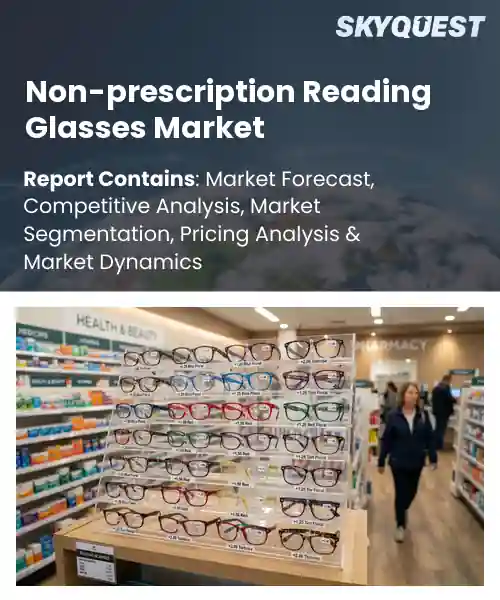
Non-prescription Reading Glasses Market
Report ID: SQMIG35B2550
Report ID: SQMIG35B2550
[email protected]
USA +1 351-333-4748
Report ID:
SQMIG35B2550 |
Region:
Global |
Published Date: August, 2026
Pages:
157
|Tables:
118
|Figures:
77


Global Non-Prescription Reading Glasses Market size was valued at USD 5.84 Billion in 2024 and is poised to grow from USD 6.21 Billion in 2025 to USD 10.21 Billion by 2033, growing at a CAGR of 6.4% during the forecast period (2026-2033).
The global non‑prescription reading glasses market comprises lenses sold in pharmacies, supermarkets, and online platforms, targeting consumers with presbyopia who seek affordable vision correction without a doctor’s prescription. Its significance lies in addressing the aging‑population’s demand for convenient, low‑cost eye care, while also capturing a sizable segment of buyers who treat glasses as accessories. Historically, the market emerged in the 1970s when inexpensive plastic frames replaced heavy metal designs, and it accelerated in the 2000s as retail channels reduced distribution costs. For example, a 2022 report showed online sales of reading glasses grew 27 % year‑over‑year, illustrating how accessibility fuels expansion. The dominant growth factor now stems from the convergence of digital eye‑strain awareness and e‑commerce personalization, which together expand demand for ready reading glasses. As more workers spend prolonged hours on screens, they experience early presbyopia, prompting purchase of convenient lenses rather than scheduling optometrist visits; this shift directly boosts online sales. Companies such as Warby Parker use AI‑driven fitting tools that recommend lens strength from user questionnaires, lowering entry barriers and raising conversion rates. Consequently, retailers capture new demographics, including younger millennials who treat glasses as fashion, opening avenues for high margin premium designer frames and subscription‑based replacement programs.
How is AI-driven personalization influencing the non‑prescription reading glasses market?
AI‑driven personalization is reshaping how non‑prescription reading glasses are marketed and sold. Algorithms analyze facial features, lighting conditions and style preferences to suggest frames that fit each individual’s look and comfort needs. Virtual‑try‑on experiences let shoppers see lenses in real time, reducing uncertainty and return rates. Retail platforms use purchase histories and browsing patterns to curate inventory, ensuring popular designs stay in stock while niche styles reach the right audience. This data‑rich approach creates a more engaging shopping journey, shortens decision time and builds confidence, all of which fuel the expanding demand for reading glasses.
Market snapshot - (2026-2033)
Global Market Size
USD 5.84 Billion
Largest Segment
Full-Frame Reading Glasses
Fastest Growth
Blue Light Reading Glasses
Growth Rate
6.4% CAGR
To get more insights on this market click here to Request a Free Sample Report
Global non-prescription reading glasses market is segmented by product type, frame material, distribution channel, end user and region. Based on product type, the market is segmented into Full-Frame Reading Glasses, Half-Eye Reading Glasses, Folding Reading Glasses and Blue Light Reading Glasses. Based on frame material, the market is segmented into Plastic, Metal and Combination. Based on distribution channel, the market is segmented into Optical Stores, Pharmacies & Drug Stores, Supermarkets & Hypermarkets and Online Retail. Based on end user, the market is segmented into Men and Women. Based on region, the market is segmented into North America, Europe, Asia Pacific, Latin America and Middle East & Africa.
Full Frame Reading Glasses segment dominates because they deliver a classic look that appeals to a broad consumer base, offering complete lens coverage and a stable fit that users link with durability and comfort. The larger visual field lowers the need for frequent adjustments, enhancing perceived value. Retail shelves frequently showcase full frame designs, increasing visibility and prompting purchase decisions through familiar styling cues for daily reading activities and occasional fine work.
However, Blue Light Reading Glasses segment emerges as the most rapidly expanding area as growing screen time drives concern over digital eye strain. Manufacturers integrate protective coatings that filter high energy light, appealing to tech savvy users who seek functionality. This innovation fuels demand and opens channels for market growth.
Plastic frame segment dominates because it offers lightweight construction and flexible styling that attract price conscious consumers seeking comfort without sacrificing aesthetics. The material’s low production cost enables manufacturers to price products competitively while maintaining acceptable quality. Additionally, plastic can be molded into diverse shapes, supporting rapid design cycles that align with fast moving fashion trends, reinforcing its appeal across multiple retail environments in both offline and digital sales platforms.
On the other hand, Metal frame segment is witnessing the strongest growth as consumers increasingly value premium feel and durability for long term use. Advancements in alloy processing allow slimmer profiles and hypoallergenic options, attracting professionals who prefer sophisticated aesthetics. This shift expands market reach and encourages higher margin offerings.
To get detailed segments analysis, Request a Free Sample Report
The North American landscape benefits from a mature retail ecosystem that seamlessly blends offline optical chains with thriving e‑commerce platforms, creating extensive distribution reach. Consumer awareness of eye‑health solutions is high, supported by robust advertising and outreach from both specialty manufacturers and mainstream fashion brands. Innovation cycles are accelerated by strong research and development investment in lightweight materials and stylish designs, attracting a broad demographic that values comfort and fashion synergy. Regulatory frameworks remain predictable, allowing swift product introductions without cumbersome approval delays. The region also enjoys a high disposable income base, reinforcing preference for premium and trend‑forward reading accessories, which together sustain its leadership position in the global arena.
Non-prescription Reading Glasses Market in United States thrives on a culture of self‑care and convenience, with consumers readily adopting online try‑on technologies and subscription services. Retail giants and boutique eyewear stores alike emphasize curated collections that blend functionality with designer appeal. Influencer collaborations and targeted digital campaigns amplify brand visibility, while a strong emphasis on ergonomic design drives repeat purchases among aging populations and younger professionals seeking eye relief during screen use.
Non-prescription Reading Glasses Market in Canada is shaped by a health‑conscious consumer base that values both affordability and aesthetic variety. Provincial optical chains partner with local designers to offer regionally resonant styles, and online platforms provide easy access to adjustable frames. Public health initiatives that promote regular vision screening increase awareness of reading aid benefits, encouraging steady demand across diverse age groups and reinforcing market resilience.
Europe experiences a confluence of fashion‑forward sensibilities and heightened health awareness that fuels expansion of reading eyewear. Strong design heritage, particularly in the dominant market, catalyzes collaborations between luxury houses and functional eyewear makers, delivering products that double as style statements. Cross‑border e‑commerce infrastructure simplifies access to niche brands, while regulatory alignment across the region eases market entry for new players. Consumer preference for sustainable and ethically sourced materials is prompting manufacturers to innovate with recycled frames and bio‑based lenses, resonating with environmentally minded shoppers. These dynamics collectively accelerate growth and reinforce Europe’s position as a vibrant hub for non‑prescription reading solutions.
Non-prescription Reading Glasses Market in Germany integrates precision engineering with contemporary design, reflecting the country’s reputation for quality manufacturing. Consumers appreciate durable frames crafted from high‑grade materials, often paired with bespoke fitting services available through established optical retailers. Collaborative ventures between traditional eyewear houses and avant‑garde designers generate collections that appeal to both professional and casual users, sustaining robust demand across the market.
Non-prescription Reading Glasses Market in United Kingdom is propelled by rapid adoption of digital fitting tools and a strong online retail presence that caters to fashion‑savvy consumers. Influencer endorsements and pop‑culture references elevate the status of reading glasses as lifestyle accessories, while retail pop‑up concepts provide tactile experiences that bridge online convenience with in‑store personalization. This dynamic environment fuels swift market expansion.
Non-prescription Reading Glasses Market in France emerges through an emphasis on chic aesthetics and artisanal craftsmanship. Boutique eyewear studios blend classic French elegance with modern ergonomics, attracting consumers who seek both visual comfort and style refinement. Growing awareness of eye‑strain mitigation, especially among professionals in digital occupations, further stimulates market uptake.
Asia Pacific is leveraging a blend of rapid digital adoption and cultural openness to fashion to enhance its market stance. Advanced e‑commerce platforms enable seamless virtual try‑on experiences, reducing barriers for first‑time buyers. Local manufacturers are embracing innovative materials that prioritize lightweight comfort while aligning with global sustainability trends. The region’s youthful demographic, accustomed to trend cycles driven by social media, fuels demand for interchangeable and customizable frames. Collaborative efforts between technology firms and traditional eyewear producers foster smart lens integrations, positioning the market at the intersection of health functionality and cutting‑edge style, thereby solidifying its growing influence.
Non-prescription Reading Glasses Market in Japan merges minimalist design with precision fit, reflecting a consumer preference for subtle elegance. Retail chains emphasize in‑store fitting consultations, while online portals offer detailed visual guides that cater to tech‑savvy shoppers. The market benefits from a cultural emphasis on meticulous craftsmanship, driving demand for high‑quality frames that combine durability with refined aesthetics.
Non-prescription Reading Glasses Market in South Korea thrives on fast‑moving fashion trends and strong digital ecosystems. Influencer‑driven campaigns and instantly accessible virtual try‑on apps encourage frequent style updates, while local manufacturers adopt cutting‑edge materials that prioritize both comfort and trend relevance. This agile environment sustains steady growth and reinforces the region’s emerging market leadership.
To know more about the market opportunities by region and country, click here to
Buy The Complete Report
Increasing Digital Screen Usage
Aging Population Driving Demand
Price Sensitivity Among Consumers
Regulatory Restrictions on Claims
Request Free Customization of this report to help us to meet your business objectives.
The non‑prescription reading glasses market is shaped by intense rivalry among established eyewear brands and agile newcomers that leverage digital customization, strategic alliances with fashion retailers, and acquisitions of niche lens‑technology firms; recent examples include a major retailer’s partnership with a tech‑enabled frame maker and a leading brand’s acquisition of a specialty lens startup to broaden its affordable reading‑glasses portfolio.
SkyQuest’s ABIRAW (Advanced Business Intelligence, Research & Analysis Wing) is our Business Information Services team that Collects, Collates, Correlates, and Analyses the Data collected by means of Primary Exploratory Research backed by robust Secondary Desk research.
As per SkyQuest analysis, the global non‑prescription reading glasses market is driven first by the surge in digital screen usage that fuels demand for convenient near‑vision correction and second by an aging population that increasingly adopts affordable self‑serve options. Price sensitivity among buyers limits premium spending and can curb faster adoption. North America remains the dominant region thanks to its mature retail mix and high disposable income, while full‑frame glasses lead the segment landscape because they offer full lens coverage, durability and broad style appeal. Together these forces shape a market that balances functional need with fashion trends.
| Report Metric | Details |
|---|---|
| Market size value in 2024 | USD 5.84 Billion |
| Market size value in 2033 | USD 10.21 Billion |
| Growth Rate | 6.4% |
| Base year | 2024 |
| Forecast period | (2026-2033) |
| Forecast Unit (Value) | USD Billion |
| Segments covered |
|
| Regions covered | North America (US, Canada), Europe (Germany, France, United Kingdom, Italy, Spain, Rest of Europe), Asia Pacific (China, India, Japan, Rest of Asia-Pacific), Latin America (Brazil, Rest of Latin America), Middle East & Africa (South Africa, GCC Countries, Rest of MEA) |
| Companies covered |
|
| Customization scope | Free report customization with purchase. Customization includes:-
|
To get a free trial access to our platform which is a one stop solution for all your data requirements for quicker decision making. This platform allows you to compare markets, competitors who are prominent in the market, and mega trends that are influencing the dynamics in the market. Also, get access to detailed SkyQuest exclusive matrix.
Table Of Content
Executive Summary
Market overview
Parent Market Analysis
Market overview
Market size
KEY MARKET INSIGHTS
COVID IMPACT
MARKET DYNAMICS & OUTLOOK
Market Size by Region
KEY COMPANY PROFILES
Methodology
For the Non-prescription Reading Glasses Market, our research methodology involved a mixture of primary and secondary data sources. Key steps involved in the research process are listed below:
1. Information Procurement: This stage involved the procurement of Market data or related information via primary and secondary sources. The various secondary sources used included various company websites, annual reports, trade databases, and paid databases such as Hoover's, Bloomberg Business, Factiva, and Avention. Our team did 45 primary interactions Globally which included several stakeholders such as manufacturers, customers, key opinion leaders, etc. Overall, information procurement was one of the most extensive stages in our research process.
2. Information Analysis: This step involved triangulation of data through bottom-up and top-down approaches to estimate and validate the total size and future estimate of the Non-prescription Reading Glasses Market.
3. Report Formulation: The final step entailed the placement of data points in appropriate Market spaces in an attempt to deduce viable conclusions.
4. Validation & Publishing: Validation is the most important step in the process. Validation & re-validation via an intricately designed process helped us finalize data points to be used for final calculations. The final Market estimates and forecasts were then aligned and sent to our panel of industry experts for validation of data. Once the validation was done the report was sent to our Quality Assurance team to ensure adherence to style guides, consistency & design.
Analyst Support
Customization Options
With the given market data, our dedicated team of analysts can offer you the following customization options are available for the Non-prescription Reading Glasses Market:
Product Analysis: Product matrix, which offers a detailed comparison of the product portfolio of companies.
Regional Analysis: Further analysis of the Non-prescription Reading Glasses Market for additional countries.
Competitive Analysis: Detailed analysis and profiling of additional Market players & comparative analysis of competitive products.
Go to Market Strategy: Find the high-growth channels to invest your marketing efforts and increase your customer base.
Innovation Mapping: Identify racial solutions and innovation, connected to deep ecosystems of innovators, start-ups, academics, and strategic partners.
Category Intelligence: Customized intelligence that is relevant to their supply Markets will enable them to make smarter sourcing decisions and improve their category management.
Public Company Transcript Analysis: To improve the investment performance by generating new alpha and making better-informed decisions.
Social Media Listening: To analyze the conversations and trends happening not just around your brand, but around your industry as a whole, and use those insights to make better Marketing decisions.
REQUEST FOR SAMPLE
 REQUEST FREE CUSTOMIZATION
Global Non-Prescription Reading Glasses Market size was valued at USD 5.84 Billion in 2024 and is poised to grow from USD 6.21 Billion in 2025 to USD 10.21 Billion by 2033, growing at a CAGR of 6.4% during the forecast period (2026-2033).
The non‑prescription reading glasses market is shaped by intense rivalry among established eyewear brands and agile newcomers that leverage digital customization, strategic alliances with fashion retailers, and acquisitions of niche lens‑technology firms; recent examples include a major retailer’s partnership with a tech‑enabled frame maker and a leading brand’s acquisition of a specialty lens startup to broaden its affordable reading‑glasses portfolio. 'EssilorLuxottica SA', 'HOYA Corporation', 'Carl Zeiss AG', 'Bausch + Lomb Corporation', 'Foster Grant Products, Inc.', 'Younger Optics', 'Peepers by PeeperSpecs', 'ICU Eyewear, Inc.', 'Eyekepper', 'ThinOptics, Inc.', 'Reading Glasses Company Ltd.', 'Warby Parker Inc.', 'Zenni Optical, Inc.', 'JINS Holdings Inc.', 'National Vision Holdings, Inc.', 'FGX International Inc.', 'EyeBuyDirect Inc.', 'Mister Spex SE', 'De Rigo Vision S.p.A.', 'Marcolin S.p.A.'
Consumers are spending significantly more time interacting with computers, smartphones, and tablets, which leads to heightened visual fatigue and a progressive need for near‑vision correction. This behavioral shift encourages individuals to seek convenient, non‑prescription reading solutions that can be purchased without professional consultation. Retail channels respond by expanding assortments and promotional activities, further reinforcing consumer awareness. Consequently, the sustained increase in screen exposure directly fuels demand for affordable reading glasses, supporting robust market expansion through immediate availability and low cost also accelerates repeat purchases and brand loyalty among users.
Rising Digital Eye Strain Awareness: The proliferation of screen‑based activities has heightened consumer awareness of digital eye strain, prompting a shift toward reading glasses that incorporate anti‑fatigue technologies and blue‑light filtering. Retailers and manufacturers are positioning these products as essential wellness tools, emphasizing comfort and visual clarity for prolonged device use. Marketing narratives now highlight preventive eye health, and distribution channels are expanding to include e‑commerce platforms that educate shoppers on the benefits of protective lenses for everyday reading tasks and improved productivity through enhanced comfort for consumers.
Why does North America Dominate the Global Non-prescription Reading Glasses Market? |@12


Want to customize this report? This report can be personalized according to your needs. Our analysts and industry experts will work directly with you to understand your requirements and provide you with customized data in a short amount of time. We offer $1000 worth of FREE customization at the time of purchase.
Feedback From Our Clients


 USA (+1) 351-333-4748

