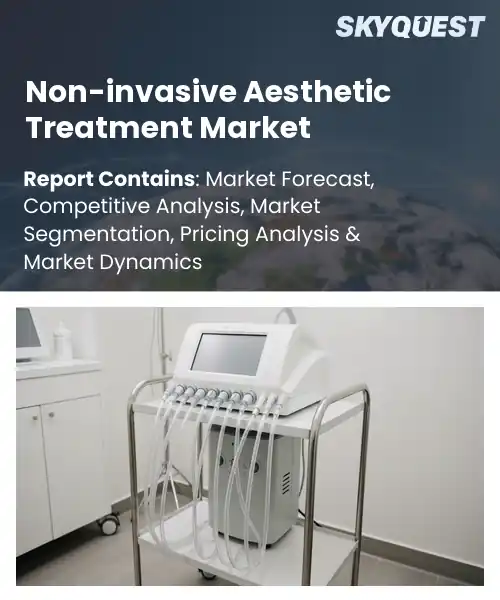
Non-invasive Aesthetic Treatment Market
Report ID: SQMIG35A3689
Report ID: SQMIG35A3689
[email protected]
USA +1 351-333-4748
Report ID:
SQMIG35A3689 |
Region:
Global |
Published Date: June, 2026
Pages:
157
|Tables:
120
|Figures:
77


Global Non-Invasive Aesthetic Treatment Market size was valued at USD 14.52 Billion in 2024 and is poised to grow from USD 15.9 Billion in 2025 to USD 32.85 Billion by 2033, growing at a CAGR of 9.52% during the forecast period (2026-2033).
Technological innovation constitutes the primary driver of the non-invasive aesthetic treatment market, transforming consumer expectations and clinical practice by delivering safer, faster, and more predictable outcomes without surgery. The market comprises procedures such as neuromodulators, dermal fillers, energy-based devices for skin tightening and fat reduction, and device-guided skincare, and it matters because it shifts demand from operating rooms to clinics and medispas, reducing cost and recovery time for a broad demographic. Over the past two decades the sector evolved from early botulinum toxin and laser therapies to cryolipolysis and HIFU, with iterative device improvements and clearer clinical protocols expanding adoption.
Building on those device and protocol improvements, expanding accessibility is the key trend driving the global non‑invasive aesthetic treatment sector because lower unit costs, wider clinician training, and normalized aesthetics increase patient volumes, diversifying demand. When manufacturers reduce equipment prices and regulators clarify practice guidelines, more dermatology clinics and medspas add neuromodulator and energy-based services, which in turn creates visible outcomes that further stimulate word-of-mouth and social media interest. For example, lunchtime Botox services at urban clinics and cryolipolysis offered through franchise chains demonstrate cause-and-effect adoption, while opportunities arise in combination therapies, subscription pricing, and emerging markets where rising incomes convert aesthetic intent into recurring revenue.
How is AI Enhancing Personalization in the Non-invasive Aesthetic Treatment Market?
Artificial Intelligence (AI) is changing the way that we personalize non-invasive aesthetic treatment by using patient histories, imagery of their skin through skin assessments using an image based analysis tool, and predictive modelling to develop patient-specific plans and configurations for their device. The key features of AI include automated diagnostics, simulated results of treatment, and ongoing monitoring of outcomes that help improve the clinician’s decision-making capabilities and the patient’s confidence prior to receiving treatment. Real world examples include AI guided mapping for lasers algorithm informed topical selection and telemonitoring that make treatments safer more consistent and more satisfying for patients.
In July 2025, Sisram Medical introduced Universkin by Alma an AI assisted personalized skincare system that uses facial imaging and clinician guided algorithms to formulate on site products. This innovation streamlines consultations and follow up while aligning topical care with device treatments thereby supporting clinic efficiency and market growth.
Market snapshot - (2026-2033)
Global Market Size
USD 14.52 Billion
Largest Segment
Botulinum Toxin (Botox)
Fastest Growth
Microneedling
Growth Rate
9.52% CAGR
To get more insights on this market click here to Request a Free Sample Report
Global non-invasive aesthetic treatment market is segmented by treatment type, application, end-user, distribution and region. Based on treatment type, the market is segmented into botulinum toxin (botox), dermal fillers, energy-based treatments (Laser, RF, HIFU), chemical peels and microneedling. Based on application, the market is segmented into face rejuvenation, body contouring and skin resurfacing. Based on end-user, the market is segmented into medical spas & aesthetic clinics, dermatology clinics and plastic surgery practices. Based on distribution, the market is segmented into direct to clinics and distributors. Based on region, the market is segmented into North America, Europe, Asia Pacific, Latin America and Middle East & Africa.
Botulinum toxin segment dominates because its well-documented efficacy for dynamic wrinkle reduction creates reliable, repeatable demand that clinics can schedule frequently, establishing predictable revenue streams. Quick procedures with minimal downtime lower barriers for first-time patients, while broad practitioner familiarity and standardized training enhance clinical adoption. Its versatility across multiple facial zones and off-label aesthetic uses enables cross-selling of adjunct therapies, reinforcing clinic-level investment and patient retention.
However, dermal fillers are the most rapidly expanding area as innovations in longer-lasting, biocompatible formulations broaden clinical applications beyond basic volumization. Growing interest in structural facial contouring and natural-looking enhancement, together with influencer-driven demand and expanded provider training, is accelerating uptake across providers and enabling bundled, premium treatment offerings that create new revenue pathways.
Face rejuvenation segment dominates because facial treatments remain the core consumer priority for visible anti-aging and appearance enhancement, driving frequent repeat visits and strong demand across diverse modalities. With a focus on treatment of the face using botulinum toxin, fillers, lasers and chemical peels, a clinic can develop customized care pathways that will maximize the patient's lifetime value. The combination of high levels of awareness regarding cosmetic procedures and measurable outcomes associated with these procedures will support a clinic's efforts to market its products and services effectively and generate revenue through multiple referrals for facial treatment services.
Meanwhile, body contouring is emerging as the fastest-growing area due to rapid device innovation in non-invasive fat reduction and skin tightening technologies. Rising patient acceptance of non-surgical shaping, demand for comprehensive aesthetic transformation, and clinics’ investments in equipment and specialized training are expanding service portfolios. This evolution creates new revenue streams and broadens market opportunity beyond traditional facial-focused offerings.
To get detailed segments analysis, Request a Free Sample Report
As per the global non‑invasive aesthetic treatment market share, North America benefits from a mature healthcare infrastructure and concentrated center of aesthetic innovation that together underpin market dominance. High concentration of specialized clinics, advanced technology providers and deep private investment create an environment where new procedures and devices are rapidly commercialized. Established clinical training pathways and professional associations foster practitioner expertise and safety standards that increase consumer confidence. Cultural acceptance of elective aesthetic enhancement, strong consumer spending capacity and developed distribution channels support wide service availability. Favorable regulatory clarity for device approvals combined with active research and development networks enable rapid adoption of next generation non invasive modalities. Collaboration among clinics, manufacturers and research institutions drives product refinement and market consolidation, reinforcing a leadership position in global non invasive aesthetic services.
Non-invasive aesthetic treatment market in United States is supported by a concentrated network of specialist clinics and device innovators that accelerate introduction of procedures. A prevailing culture of elective aesthetic care and substantial private investment underpin market activity. Strong clinical training and accreditation enhance practitioner capability and patient safety. Distribution & service models of advanced non Invasive offerings in major urban centers help to increase access but product refinement is driven by industry and academic collaboration.
Non-invasive aesthetic treatment market in Canada combines a private cosmetic sector with universal health coverage, shaping consumer access and engagement to elective services. Urban clinics and certified practitioners deliver a spectrum of minimally invasive options with emphasis on safety and professional standards. Cross border influences from neighbouring markets and a cautious regulatory posture guide adoption of new devices. Patient preference for low downtime interventions underpins steady demand and focused clinical specialization.
Based on global non‑invasive aesthetic treatment regional forecast, expansion in the Asia Pacific region is driven by shifting demographics, rising disposable income and a cultural emphasis on appearance that fuels broad consumer acceptance of non invasive options. Global manufacturing companies and inventors' advances in technology have produced new products that offer solutions tailored specifically to meet local preferences in skin care and cosmetics. The development of a highly prolific beauty and wellness culture through numerous social media posts and use by influencers fuels the demand for these new products among purchasers both young and old. Because of the explosive growth of private clinic networks and medical tourism, there are increased opportunities to provide consumers with more competitive services compared with their previously available options. As evolving regulatory systems and educational systems supporting professionals continue to develop, the pace at which new technologies can be safely and reliably adopted by millions of consumers will continue to increase as manufacturers and distributors partner with local entrepreneurs.
Non-invasive aesthetic treatment market in Japan reflects a consumer base that favors subtle rejuvenation and maintenance treatments. The cautious adoption of modalities is based upon high levels of clinical evidence, and standards for user safety. Advances in energy based therapy and lasers have benefited from collaboration between academic and manufacturers such that aesthetics medical and urban dermatology practices can now utilise modalities that are tailored to the local phenotypes of patients within a specific geographical area.
Non-invasive aesthetic treatment market in South Korea is driven by a dynamic beauty culture and strong consumer receptivity to aesthetic innovation. With strong production capabilities within the United States, it is easy to change existing products for various uses. Many clinics also benefit from the availability of clinic-to-clinic training programs for their staff. The use of social media and the widespread popularity of medical tourism have led to strong demand for minimally invasive, no-downtime procedures performed by specialized service providers.
As per global non‑invasive aesthetic treatment regional outlook, Europe is strengthening its position through a combination of regulatory rigor, clinical research capacity and growing consumer demand for evidence based, quality care. Well-established medical device industries and specialty education programs provide skilled professionals who prioritize patient safety and are competent practitioners. Cross-border cooperation through regional professional networks and partnerships with global device manufacturers will promote and facilitate the adoption of medical technology while ensuring compliance with high standards of practice. The rise of premium service models in major metropolitan areas coupled with the increasing number of accredited aesthetics educational institutions will support the maturity of the aesthetics marketplace. Greater focus on clinical outcomes, standardized evidence-based practice guidelines, and integrated care pathways will foster greater professional integrity and enhance the growth of minimally invasive and noninvasive aesthetic practices throughout diverse national markets.
Non-invasive aesthetic treatment market in Germany combines a robust medical device manufacturing base with stringent regulatory standards that prioritize clinical safety. Specialized hospitals, dermatology clinics and aesthetic centers collaborate with research institutions to validate device performance and treatment protocols. Practitioners will use evidence-based, clinically validated, low downtime service models to drive patient outcomes through the use of care pathways. The industrial expertise of practitioners will assist them with product improvement and building partnerships within the industry.
Non-invasive aesthetic treatment market in United Kingdom reflects a mixed healthcare landscape where public provision shapes access while a private aesthetic sector delivers elective care. Regulatory oversight and professional guidelines emphasize safety and responsible practice, guiding clinical adoption. Accredited clinics in urban centers offer non invasive technologies with focus on practitioner accreditation and outcome evaluation. Research collaborations and cross border patient exchanges further support refinement of protocols, service quality and accessibility.
Non-invasive aesthetic treatment market in France is shaped by a cultural emphasis on beauty and a cautious approach to clinical adoption. Facilities located in metropolitan areas deliver an integrated approach to offering a range of non-invasive procedures plus innovative skin care regimens. Regulatory agencies and professional societies also provide regulation of the health care practitioners with standardized training and outcomes monitoring to support a sustainable growth path for the provision of minimally invasive aesthetic services.
To know more about the market opportunities by region and country, click here to
Buy The Complete Report
Growing Demand For Minimally Invasive Treatments
Advances In Energy Based Devices
High Treatment Costs And Reimbursement Issues
Regulatory Complexity And Approval Challenges
Request Free Customization of this report to help us to meet your business objectives.
Competitive landscape in the global noninvasive aesthetic treatment market outlook is driven by consolidation through brand level M&A, strategic clinic and retail partnerships, and rapid device and platform innovation that creates point of differentiation for providers. Concrete examples include large beauty group dealmaking and upgraded device clearances that shift provider purchasing decisions, as exemplified by recent brand acquisition activity and AI enabled fractional resurfacing approvals.
Top Player’s Company Profile
Recent Developments
SkyQuest’s ABIRAW (Advanced Business Intelligence, Research & Analysis Wing) is our Business Information Services team that Collects, Collates, Correlates, and Analyses the Data collected by means of Primary Exploratory Research backed by robust Secondary Desk research.
As per SkyQuest analysis, the global non‑invasive aesthetic treatment industry is propelled primarily by technological innovation that delivers safer, faster, and more predictable outcomes while a second driver expanding accessibility through lower equipment costs, broader clinician training, and normalized aesthetics is increasing patient volumes and service adoption. However, high treatment costs and inconsistent reimbursement act as a significant restraint, limiting access and frequency of care. North America remains the dominating region supported by mature infrastructure, concentrated innovation and established clinical channels, and the botulinum toxin segment continues to dominate the treatment mix due to its proven efficacy, repeatable demand and strong clinic-level revenue generation.
| Report Metric | Details |
|---|---|
| Market size value in 2024 | USD 14.52 Billion |
| Market size value in 2033 | USD 32.85 Billion |
| Growth Rate | 9.52% |
| Base year | 2024 |
| Forecast period | (2026-2033) |
| Forecast Unit (Value) | USD Billion |
| Segments covered |
|
| Regions covered | North America (US, Canada), Europe (Germany, France, United Kingdom, Italy, Spain, Rest of Europe), Asia Pacific (China, India, Japan, Rest of Asia-Pacific), Latin America (Brazil, Rest of Latin America), Middle East & Africa (South Africa, GCC Countries, Rest of MEA) |
| Companies covered |
|
| Customization scope | Free report customization with purchase. Customization includes:-
|
To get a free trial access to our platform which is a one stop solution for all your data requirements for quicker decision making. This platform allows you to compare markets, competitors who are prominent in the market, and mega trends that are influencing the dynamics in the market. Also, get access to detailed SkyQuest exclusive matrix.
Table Of Content
Executive Summary
Market overview
Parent Market Analysis
Market overview
Market size
KEY MARKET INSIGHTS
COVID IMPACT
MARKET DYNAMICS & OUTLOOK
Market Size by Region
KEY COMPANY PROFILES
Methodology
For the Non-invasive Aesthetic Treatment Market, our research methodology involved a mixture of primary and secondary data sources. Key steps involved in the research process are listed below:
1. Information Procurement: This stage involved the procurement of Market data or related information via primary and secondary sources. The various secondary sources used included various company websites, annual reports, trade databases, and paid databases such as Hoover's, Bloomberg Business, Factiva, and Avention. Our team did 45 primary interactions Globally which included several stakeholders such as manufacturers, customers, key opinion leaders, etc. Overall, information procurement was one of the most extensive stages in our research process.
2. Information Analysis: This step involved triangulation of data through bottom-up and top-down approaches to estimate and validate the total size and future estimate of the Non-invasive Aesthetic Treatment Market.
3. Report Formulation: The final step entailed the placement of data points in appropriate Market spaces in an attempt to deduce viable conclusions.
4. Validation & Publishing: Validation is the most important step in the process. Validation & re-validation via an intricately designed process helped us finalize data points to be used for final calculations. The final Market estimates and forecasts were then aligned and sent to our panel of industry experts for validation of data. Once the validation was done the report was sent to our Quality Assurance team to ensure adherence to style guides, consistency & design.
Analyst Support
Customization Options
With the given market data, our dedicated team of analysts can offer you the following customization options are available for the Non-invasive Aesthetic Treatment Market:
Product Analysis: Product matrix, which offers a detailed comparison of the product portfolio of companies.
Regional Analysis: Further analysis of the Non-invasive Aesthetic Treatment Market for additional countries.
Competitive Analysis: Detailed analysis and profiling of additional Market players & comparative analysis of competitive products.
Go to Market Strategy: Find the high-growth channels to invest your marketing efforts and increase your customer base.
Innovation Mapping: Identify racial solutions and innovation, connected to deep ecosystems of innovators, start-ups, academics, and strategic partners.
Category Intelligence: Customized intelligence that is relevant to their supply Markets will enable them to make smarter sourcing decisions and improve their category management.
Public Company Transcript Analysis: To improve the investment performance by generating new alpha and making better-informed decisions.
Social Media Listening: To analyze the conversations and trends happening not just around your brand, but around your industry as a whole, and use those insights to make better Marketing decisions.
REQUEST FOR SAMPLE
 REQUEST FREE CUSTOMIZATION
Global Non-Invasive Aesthetic Treatment Market size was valued at USD 14.52 Billion in 2024 and is poised to grow from USD 15.9 Billion in 2025 to USD 32.85 Billion by 2033, growing at a CAGR of 9.52% during the forecast period (2026-2033).
Competitive landscape in the global noninvasive aesthetic treatment market is driven by consolidation through brand level M&A, strategic clinic and retail partnerships, and rapid device and platform innovation that creates point of differentiation for providers. Concrete examples include large beauty group dealmaking and upgraded device clearances that shift provider purchasing decisions, as exemplified by recent brand acquisition activity and AI enabled fractional resurfacing approvals. 'Allergan (AbbVie) - Botox', 'Galderma SA (Restylane, Dysport)', 'Revance Therapeutics (DAXXIFY)', 'Evolus Inc. (Jeuveau)', 'Solta Medical (Hologic)', 'Syneron-Candela', 'Cynosure (Hologic)', 'InMode Ltd.', 'BTL Industries', 'Venus Concept', 'Cutera Inc.', 'Sciton Inc.', 'Lumenis Ltd.', 'Strata Skin Sciences', 'Alma Lasers', 'Aerolase Corp.', 'Cartessa Aesthetics', 'CoolSculpting (Allergan/AbbVie)', 'Deka (El.En. Group)', 'Lutronic Corporation'
Consumer preference for treatments that reduce recovery time and lower procedural risk is encouraging adoption of non-invasive aesthetic options; patients increasingly prioritize convenience, minimal downtime, and predictable outcomes, prompting providers to expand service portfolios. As clinicians and clinics respond by integrating advanced device-based therapies and targeted energy treatments into offerings, market accessibility improves and perceived value rises. This shift in provider practices and consumer expectations strengthens demand across demographics, supports broader acceptance in mainstream care settings, and motivates investment in innovation by manufacturers and service providers.
Personalization And Ai Guidance: Providers increasingly deploy AI driven imaging and predictive modeling to design individualized treatment plans reflecting patient anatomy, lifestyle and aesthetic aspirations. This approach increases diagnostic precision, optimizes device selection and treatment sequencing, and enhances engagement through simulations and outcome tracking. Custom protocols enable differentiated services, support stronger clinician patient relationships, and allow premium positioning for practices that use data driven customization. As expectations shift toward bespoke results, AI enabled personalization becomes a strategic advantage for patient acquisition and retention.
Why does North America Dominate the Global Non-invasive Aesthetic Treatment Market? |@12


Want to customize this report? This report can be personalized according to your needs. Our analysts and industry experts will work directly with you to understand your requirements and provide you with customized data in a short amount of time. We offer $1000 worth of FREE customization at the time of purchase.
Feedback From Our Clients


 USA (+1) 351-333-4748

