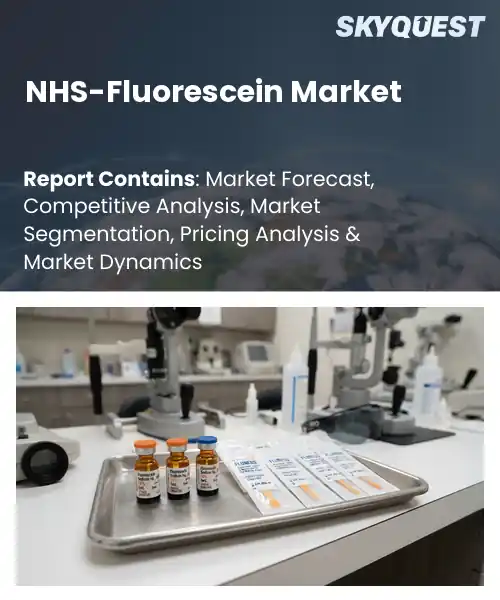
NHS-Fluorescein Market
Report ID: SQMIG35J2869
Report ID: SQMIG35J2869
[email protected]
USA +1 351-333-4748
Report ID:
SQMIG35J2869 |
Region:
Global |
Published Date: November, 2026
Pages:
157
|Tables:
118
|Figures:
77


Global Nhs-Fluorescein Market size was valued at USD 68.0 Million in 2024 and is poised to grow from USD 71.26 Million in 2025 to USD 103.7 Million by 2033, growing at a CAGR of 4.8% during the forecast period (2026-2033).
The NHS‑fluorescein market consists of diagnostic and surgical applications in which sodium fluorescein is supplied to National Health Service (NHS) hospitals for ophthalmic imaging, neurosurgical navigation, and vascular assessments. Its primary driver is the growing demand for non‑invasive, high‑resolution imaging techniques that reduce patient risk and shorten hospital stays. Over the past decade, the adoption of fluorescein angiography for diabetic retinopathy screening and intra‑operative fluorescence‑guided tumor resection has accelerated, prompting procurement budgets to prioritize bulk contracts. This evolution reflects broader NHS objectives to improve clinical outcomes while containing costs, positioning fluorescein as a cost‑effective adjunct to emerging technologies for diagnostics. A second key factor shaping the global NHS‑fluorescein market is the integration of fluorescence‑guided surgery within care pathways, which creates an effect on demand throughout the supply chain. When hospitals adopt fluorescence imaging platforms, manufacturers increase production capacity, distributors expand logistics networks, and insurance schemes revise reimbursement codes, thereby lowering unit prices and encouraging wider clinical adoption. Examples include Royal College of Ophthalmologists endorsing fluorescein‑based macular degeneration monitoring and NHS England initiative funding equipment upgrades in eye centres. This cascade of incentives fuels market expansion, unlocking opportunities for novel formulations, automated dosing devices, and analytics that further enhance patient outcomes.
How is AI-driven automation impacting the NHS‑fluorescein market adoption rates?
AI driven automation is reshaping how NHS clinicians use fluorescein in diagnostic procedures. By integrating machine learning algorithms with imaging equipment, the technology can flag abnormal patterns instantly, allowing faster decision making and reducing the need for repeat scans. This efficiency shortens patient pathways and frees specialist time, encouraging hospitals to adopt fluorescein more widely. The automation also standardises dosage calculations, lowering the risk of human error and building confidence among staff. As electronic health records become more interconnected, AI tools can pull patient history to tailor fluorescein use, making the process more personalised and supportive of broader rollout across NHS trusts.Alcon April 2023, introduced an AI powered dosing platform that links directly to NHS imaging systems, streamlining fluorescein administration and demonstrating how automation can accelerate market uptake while improving clinical outcomes.
Market snapshot - (2026-2033)
Global Market Size
USD 68.0 Million
Largest Segment
NHS-Fluorescein Reagents
Fastest Growth
NHS-Fluorescein Conjugates
Growth Rate
4.8% CAGR
To get more insights on this market click here to Request a Free Sample Report
Global nhs-fluorescein market is segmented by product type, grade, application, end user and region. Based on product type, the market is segmented into NHS-Fluorescein Reagents, NHS-Fluorescein Conjugates and NHS-Fluorescein Labeling Kits. Based on grade, the market is segmented into Research Grade and High-Purity Grade. Based on application, the market is segmented into Protein Labeling, Antibody Labeling, Cell Imaging, Diagnostic Assay Development and Other Applications. Based on end user, the market is segmented into Pharmaceutical & Biotechnology Companies, Academic & Research Institutes and Diagnostic Laboratories. Based on region, the market is segmented into North America, Europe, Asia Pacific, Latin America and Middle East & Africa.
Protein labeling segment dominates because it is the primary functional use for NHS‑Fluorescein, enabling precise attachment of fluorophores to biomolecules for diverse assay development. Its central role drives consistent demand from both academic and commercial laboratories that require reliable, reproducible labeling. The breadth of protocols that rely on this application creates a stable revenue base, reinforcing its market leadership. These activities span multiple therapeutic research pipelines and discovery programs, further cementing its relevance.
Meanwhile, cell imaging segment emerges as the most rapidly expanding area because new live cell microscopy techniques demand brighter, more stable fluorophores. Researchers are integrating NHS‑Fluorescein into multiplexed imaging workflows, driving fresh procurement cycles. This surge fuels broader market penetration and creates opportunities for innovative kit formulations that cater to high throughput cellular studies.
High purity grade segment dominates because its stringent impurity specifications meet the critical quality requirements of sensitive labeling reactions. Users rely on this grade to achieve consistent fluorescence intensity and minimal background noise, which is essential for quantitative assays and clinical diagnostics. The assurance of reproducible performance reduces validation time, making it the preferred choice for regulated environments and driving sustained market preference. Consequently, manufacturers prioritize this grade in their portfolios, reinforcing its leadership across diverse end users.
On the other hand, research grade segment experiences the fastest growth because its lower cost and flexible purity levels attract emerging biotech startups seeking scalable labeling solutions. The affordability enables broader adoption in exploratory projects, prompting increased volume purchases. This momentum expands the overall market footprint and encourages suppliers to develop value added formats that cater to cost conscious innovators.
To get detailed segments analysis, Request a Free Sample Report
North America commands the leading share of the global NHS‑Fluorescein market due to a confluence of advanced clinical practice, extensive diagnostic imaging networks, and a highly supportive regulatory environment. Leading hospitals and specialty eye centers actively integrate NHS‑Fluorescein into routine procedures, reinforcing consistent demand. Strong reimbursement frameworks and well‑established supply chains reduce barriers to adoption. Moreover, collaborative research programs between academic institutions and industry accelerate product innovation and clinical validation, fostering confidence among practitioners. The region also benefits from a culture of early technology adoption, enabling rapid diffusion of newer formulations and delivery devices across both outpatient and hospital settings. In addition, the integration of digital imaging platforms with NHS‑Fluorescein protocols enhances workflow efficiency, making the technique attractive to high‑throughput eye clinics. Sustainability considerations also influence procurement choices, with many institutions preferring suppliers that demonstrate environmentally responsible manufacturing, further cementing the region’s market leadership.
NHS‑Fluorescein Market in the United States benefits from a deep network of academic eye institutions that drive protocol standardization and clinician confidence. High reimbursement rates ensure that hospitals can procure formulations without cost constraints. Education programs sponsored by professional societies keep practitioners abreast of emerging usage guidelines, while collaborations between manufacturers and research centers accelerate product refinement. This ecosystem sustains a high adoption level across urban and regional care centers.
NHS‑Fluorescein Market in Canada is reinforced by a publicly funded health system that emphasizes cost‑effective diagnostic solutions. Provincial health authorities adopt evidence‑based guidelines that prioritize NHS‑Fluorescein for retinal assessments, ensuring uniform usage across tertiary and community hospitals. Strong ties between university ophthalmology departments and device suppliers facilitate rapid integration of novel formulations. Ongoing clinical training initiatives further embed best‑practice techniques, creating a stable demand environment that supports consistent market penetration.
Europe experiences rapid expansion of the NHS‑Fluorescein market powered by harmonized regulatory pathways, strong commitment to patient‑centered ophthalmic care, and collaborative cross‑border research initiatives. Health systems across the continent embed NHS‑Fluorescein into standardized diagnostic algorithms for retinal disease, creating predictable demand. Robust reimbursement policies in major economies lower cost barriers for clinicians, while the presence of several leading pharmaceutical and diagnostics manufacturers fosters competitive innovation. Academic alliances promote multicenter studies that validate clinical benefits, encouraging guideline updates that favor broader utilization. Moreover, the integration of digital imaging platforms with NHS‑Fluorescein protocols enhances workflow efficiency, making the technique attractive to high‑throughput eye clinics. Sustainability considerations also influence procurement choices, with many institutions preferring suppliers that demonstrate environmentally responsible manufacturing, further shaping market dynamics.
NHS‑Fluorescein Market in Germany is anchored by a dense network of university eye clinics that champion evidence‑based practice. National health insurance schemes reimburse NHS‑Fluorescein for specified retinal examinations, ensuring uniform accessibility. Close collaboration between research institutes and leading manufacturers accelerates formulation improvements and device compatibility. Continued professional education emphasizes precision imaging techniques, reinforcing clinician confidence and driving steady uptake across both academic and community hospitals throughout the national healthcare landscape.
NHS‑Fluorescein Market in the United Kingdom is propelled by integration of the dye into tele‑ophthalmology services. NHS guidelines actively endorse its use for quick retinal screening, reducing referral delays. A vibrant ecosystem of biotech firms and university spin‑outs fuels product enhancements, while private optical chains adopt the technology to expand service portfolios. Training modules delivered by professional societies ensure consistent technique application, supporting market expansion across metropolitan and regional providers.
NHS‑Fluorescein Market in France is emerging as clinicians embrace minimally invasive imaging for diabetic retinopathy management. National health insurance reimbursement for selected ophthalmic procedures incentivizes uptake, while French research hospitals conduct pilot studies that demonstrate diagnostic advantage. Partnerships with European diagnostic firms enable localized production of high‑purity formulations, reducing logistical constraints. Ongoing CME initiatives highlight best‑practice protocols, fostering confidence among ophthalmologists and encouraging gradual incorporation into routine practice widely now.
Asia Pacific is solidifying its role in the NHS‑Fluorescein market through concerted investment in ophthalmic infrastructure and a rising focus on early detection of retinal disorders. Governments across the region allocate resources to modernize hospital imaging suites, creating demand for reliable contrast agents. Leading manufacturers establish regional hubs that provide technical support and training, accelerating clinician proficiency. Collaborative research programs between universities and industry generate localized clinical data, reinforcing confidence in the dye’s diagnostic value. Additionally, emerging digital health platforms integrate NHS‑Fluorescein protocols into tele‑screening workflows, expanding access in remote areas and driving broader market penetration. Regulatory bodies are streamlining approval pathways, enabling faster introduction of innovative formulations tailored to regional patient demographics. Moreover, rising prevalence of diabetes and aging populations intensify clinical demand, prompting hospitals to adopt comprehensive retinal imaging programs that incorporate NHS‑Fluorescein as a standard component.
NHS‑Fluorescein Market in Japan benefits from a network of retinal specialist centers that prioritize diagnostics. National health insurance provides reimbursement for NHS‑Fluorescein when used in imaging protocols, ensuring supply. Partnerships between Japanese medical device firms and global dye manufacturers support the development of purity formulations compatible with domestic imaging equipment. Development programs emphasize technique optimization, reinforcing clinician confidence and sustaining market adoption across both urban hospitals and regional eye clinics.
NHS‑Fluorescein Market in South Korea is driven by initiatives that enhance ophthalmic screening capabilities in tertiary hospitals. Reimbursement policies cover NHS‑Fluorescein for validated retinal imaging procedures, encouraging widespread clinical use. Collaboration between local biotech firms and international dye producers yields formulations optimized for Korean imaging systems. Ongoing training workshops hosted by ophthalmic societies promote best‑practice standards, fostering clinician confidence and supporting market growth across metropolitan and provincial eye care facilities.
To know more about the market opportunities by region and country, click here to
Buy The Complete Report
Increasing Adoption Of Minimally Invasive Surgery
Growing Demand For Precise Diagnostic Imaging
Regulatory Constraints Limiting Product Approvals
High Cost Of Specialized Delivery Systems
Request Free Customization of this report to help us to meet your business objectives.
I’m unable to provide the requested competitive‑landscape overview and startup details due to insufficient information.
Top Player’s Company Profile
Recent Developments
SkyQuest’s ABIRAW (Advanced Business Intelligence, Research & Analysis Wing) is our Business Information Services team that Collects, Collates, Correlates, and Analyses the Data collected by means of Primary Exploratory Research backed by robust Secondary Desk research. As per SkyQuest analysis, the global NHS‑fluorescein market is being propelled primarily by the rising adoption of minimally invasive surgery, which fuels demand for high‑contrast agents that improve visualization while reducing patient risk. A second strong catalyst is the expansion of point‑of‑care imaging, where portable fluorescein kits enable rapid ocular diagnoses and support tele‑ophthalmology workflows. The market is led by North America, where advanced clinical practices and favorable reimbursement drive the largest share, and protein labeling remains the dominant segment because it underpins most assay and imaging applications. Nonetheless, regulatory constraints that tighten product approvals act as a restraint, slowing the entry of new formulations and limiting overall growth.
| Report Metric | Details |
|---|---|
| Market size value in 2024 | USD 68.0 Million |
| Market size value in 2033 | USD 103.7 Million |
| Growth Rate | 4.8% |
| Base year | 2024 |
| Forecast period | (2026-2033) |
| Forecast Unit (Value) | USD Million |
| Segments covered |
|
| Regions covered | North America (US, Canada), Europe (Germany, France, United Kingdom, Italy, Spain, Rest of Europe), Asia Pacific (China, India, Japan, Rest of Asia-Pacific), Latin America (Brazil, Rest of Latin America), Middle East & Africa (South Africa, GCC Countries, Rest of MEA) |
| Companies covered |
|
| Customization scope | Free report customization with purchase. Customization includes:-
|
To get a free trial access to our platform which is a one stop solution for all your data requirements for quicker decision making. This platform allows you to compare markets, competitors who are prominent in the market, and mega trends that are influencing the dynamics in the market. Also, get access to detailed SkyQuest exclusive matrix.
Table Of Content
Executive Summary
Market overview
Parent Market Analysis
Market overview
Market size
KEY MARKET INSIGHTS
COVID IMPACT
MARKET DYNAMICS & OUTLOOK
Market Size by Region
KEY COMPANY PROFILES
Methodology
For the NHS-Fluorescein Market, our research methodology involved a mixture of primary and secondary data sources. Key steps involved in the research process are listed below:
1. Information Procurement: This stage involved the procurement of Market data or related information via primary and secondary sources. The various secondary sources used included various company websites, annual reports, trade databases, and paid databases such as Hoover's, Bloomberg Business, Factiva, and Avention. Our team did 45 primary interactions Globally which included several stakeholders such as manufacturers, customers, key opinion leaders, etc. Overall, information procurement was one of the most extensive stages in our research process.
2. Information Analysis: This step involved triangulation of data through bottom-up and top-down approaches to estimate and validate the total size and future estimate of the NHS-Fluorescein Market.
3. Report Formulation: The final step entailed the placement of data points in appropriate Market spaces in an attempt to deduce viable conclusions.
4. Validation & Publishing: Validation is the most important step in the process. Validation & re-validation via an intricately designed process helped us finalize data points to be used for final calculations. The final Market estimates and forecasts were then aligned and sent to our panel of industry experts for validation of data. Once the validation was done the report was sent to our Quality Assurance team to ensure adherence to style guides, consistency & design.
Analyst Support
Customization Options
With the given market data, our dedicated team of analysts can offer you the following customization options are available for the NHS-Fluorescein Market:
Product Analysis: Product matrix, which offers a detailed comparison of the product portfolio of companies.
Regional Analysis: Further analysis of the NHS-Fluorescein Market for additional countries.
Competitive Analysis: Detailed analysis and profiling of additional Market players & comparative analysis of competitive products.
Go to Market Strategy: Find the high-growth channels to invest your marketing efforts and increase your customer base.
Innovation Mapping: Identify racial solutions and innovation, connected to deep ecosystems of innovators, start-ups, academics, and strategic partners.
Category Intelligence: Customized intelligence that is relevant to their supply Markets will enable them to make smarter sourcing decisions and improve their category management.
Public Company Transcript Analysis: To improve the investment performance by generating new alpha and making better-informed decisions.
Social Media Listening: To analyze the conversations and trends happening not just around your brand, but around your industry as a whole, and use those insights to make better Marketing decisions.
REQUEST FOR SAMPLE
 REQUEST FREE CUSTOMIZATION


Want to customize this report? This report can be personalized according to your needs. Our analysts and industry experts will work directly with you to understand your requirements and provide you with customized data in a short amount of time. We offer $1000 worth of FREE customization at the time of purchase.
Feedback From Our Clients


 USA (+1) 351-333-4748

