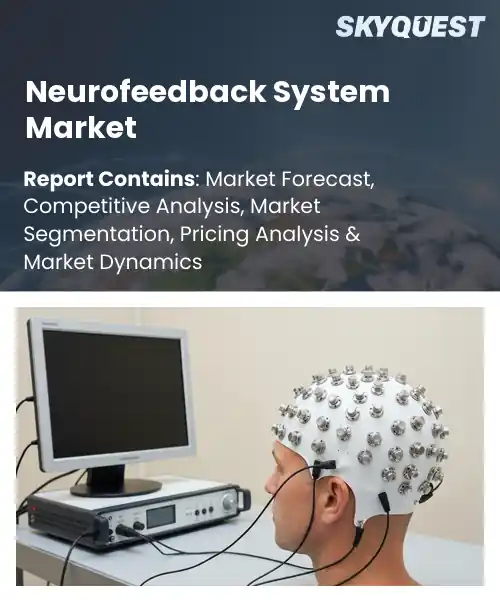
Neurofeedback System Market
Report ID: SQMIG35A4040
Report ID: SQMIG35A4040
[email protected]
USA +1 351-333-4748
Report ID:
SQMIG35A4040 |
Region:
Global |
Published Date: June, 2026
Pages:
157
|Tables:
173
|Figures:
79


Global Neurofeedback System Market size was valued at USD 487.3 Million in 2024 and is poised to grow from USD 559.42 Million in 2025 to USD 1687.62 Million by 2033, growing at a CAGR of 14.8% during the forecast period (2026-2033).
Rise in prevalence of neurological and mental health disorders, increasing awareness regarding non-invasive brain therapies, rising adoption of digital healthcare technologies, advancements in neurofeedback systems, and expanding applications in cognitive training are driving sales of neurofeedback systems.
Increasing utilization of neurofeedback systems for attention deficit hyperactivity disorder (ADHD), anxiety, depression, epilepsy, chronic pain, and cognitive rehabilitation is aiding market growth. Broader regulatory approvals, reimbursement coverage by insurance providers for certain neurological disorders, rising investments in neuroscience research, and surging integration of neurofeedback with telehealth services are further accelerating the market expansion. Constant evolution of AI-based neurofeedback software, portable EEG appliances and personalized therapy regimens are bringing feasible treatment solutions for same. Increasing strategic alliances with hospitals, rehab centers, colleges and universities along with corporate wellness programs are expected to create fresh market development opportunities worldwide. High demand for non-invasive therapies for neurological and psychological conditions, coupled with increasing adoption of personalized brain training solutions, is expected to primarily drive neurofeedback system market growth.
In contrast, high equipment costs, limited reimbursement across several regions, shortage of trained neurofeedback professionals, and lack of standardized treatment protocols are anticipated to slow down neurofeedback system market penetration over the coming years.
How are AI and IoT Reshaping Neurofeedback System Demand?
Increasing utilization of neurofeedback systems for attention deficit hyperactivity disorder (ADHD), anxiety, depression, epilepsy, chronic pain, and cognitive rehabilitation is aiding market growth. Broader regulatory approvals, reimbursement coverage by insurance providers for certain neurological disorders, rising investments in neuroscience research, and surging integration of neurofeedback with telehealth services are further accelerating the market expansion. Ongoing developments of AI-based neurofeedback software, portable EEG devices, and customized therapy protocols are allowing for more effective treatments. Moreover, growing strategic collaborations with hospitals, rehabilitation centers, colleges and universities, and corporate wellness programs are anticipated to open new growth avenues for the market across the globe.
Market snapshot - (2026-2033)
Global Market Size
USD 487.3 Million
Largest Segment
Fastest Growth
Growth Rate
14.8% CAGR
To get more insights on this market click here to Request a Free Sample Report
Global neurofeedback system market is segmented by product type, application, end user, system configuration, age group, sales channel, and region Based on product type, the market is segmented into EEG neurofeedback systems, HEG neurofeedback systems, multimodal neurofeedback systems, and others. Based on application, the market is segmented into ADHD management, anxiety & stress management, cognitive performance enhancement, and others. Based on end user, the market is segmented into hospitals, mental health clinics, research institutes, and others. Based on age group, the market is segmented into pediatric users, adult users, and geriatric users. Based on sales channel, the market is segmented into direct sales, distributors, and others. Based on system configuration, the market is segmented into fixed system and portable systems. Based on region, the market is segmented into North America, Europe, Asia Pacific, Latin America, and Middle East & Africa.
The standalone device segment is forecasted to bolster global neurofeedback system market share in the future. It provides a standalone product requiring little infrastructure which can be quickly deployed in a clinical or laboratory environment. One-box hardware reduces training time and installation complexity and keeps overall costs low for early adopters of this technology. Its simplicity ensures widespread adoption, while the established effectiveness of an isolated EEG collection increases practitioner confidence and secures its market leadership.
However, virtual reality integrated is slated to emerge as the fastest-expanding segment as per this neurofeedback system industry analysis, since immersive environments enhance engagement and facilitate therapeutic protocols. The integration of VR with time-brain training enables clinicians to adopt and use it in cognitive rehabilitation and thus will accelerate market expansion and create revenue streams.
The ADHD management segment is anticipated to lead the global neurofeedback system market revenue generation across the study period. Neurofeedback offers a drug-free alternative for resolving attentional dysregulation which resonates with many parents and clinicians looking for long term results. The irrefutable clinical evidence of symptom alleviation facilitates trust, while reimbursements are expanding more reimbursements for behavioral treatments allowing extra reach. Its synergy with school-based programs and home use kits continue to stronghold its primary use fueling market feedback in various settings bolstering the credibility for providers.
On the other hand, esports performance training emerges as the fastest-expanding application, since gaming is highly demanding in terms of focus, stress resistance and fast decision-making integrating neurofeedback into training programs can bring noticeable performance improvements. Such improvements are sure to bring the training program sponsors and team.
To get detailed segments analysis, Request a Free Sample Report
Advanced research ecosystems, extensive clinical adoption, and robust reimbursement frameworks are helping North America to maintain its dominance through 2033. North America also has an established healthcare infrastructure, a high density of specialized neuroscience research institutions, and there are strong partnerships between academic institutions and technology vendors. Additionally, the continued investment attraction to this sector in North America can be attributed to a fast-paced culture of innovation, which allows both startup and established companies access to venture funding and well-established regulatory pathways. The combination of scientific expertise, market readiness, and policy support will create a self-reinforcing cycle resulting in sustained dominance of North America in the neurofeedback sector.
Neurofeedback system market in the United States is propelled by a deep network of research hospitals and an entrepreneurial climate that accelerates product development. Clinical practitioners increasingly incorporate neurofeedback as a non‑pharmacological option for mental health and cognitive enhancement, supported by insurance models that facilitate patient access. Academic collaborations drive continuous validation of protocols, while technology hubs provide a pipeline of innovative hardware and software solutions. The regulatory environment offers clear pathways for device approval, fostering confidence among manufacturers and clinicians alike.
Neurofeedback system demand in Canada reflects strong governmental commitment to mental health innovation and a public‑health system that openly pilots emerging therapeutic tools. Provincial health agencies frequently compare accelerometry to research-grade brain wave analysis in their own facilities to build a comfortable evidence base for vendors' commercial aspirations. The mentality of adjacent clinicians, insurance carriers and technology companies working together fosters the development of tailored neurofeedback strategies attractive for paying–or non-pay-patients. Further, the focus on integrated care teams will promote neurofeedback in multidisciplinary treatment contexts.
Coordinated policy initiatives that prioritize mental well-being and cognitive health, coupled with a tradition of rigorous clinical research across member states, are helping support steady neurofeedback system demand in the region. In addition, collaborating on validation of neurofeedback protocols via cross-border exchanges among research institutions oversaw an accelerated movement of neurofeedback products into the market, supported by common regulatory requirements. Support from large scale public and private funding programs is inspiring innovation in neurofeedback, as they assist new businesses and expand existing businesses through the growth of technology transfer from research entities to commercial entities. Neurofeedback is also being evidenced by increasingly favorable coverage decisions by health insurers, providing both patient access to neurofeedback services and the means for greater numbers of patients to receive this service. The confluence of supportive laws and regulations, scientific reliability, and financial feasibility have positioned Europe as a compelling site for business to take advantage of growing demand for neurofeedback solutions.
Neurofeedback system demand in Germany is anchored by a dense cluster of neuroscience research centers that drive high‑quality clinical evidence. In Germany, the health system incorporates neurofeedback services and protocols in inpatient and outpatient services with evidence-based practice. Engineering expertise allows for very sophisticated design of devices and clear regulatory pathways to guarantee quick development and entry into the market. Due to the fact that hospitals, insurers and technology companies work together, innovative tools can efficiently reach the patients and support the emerging European identity in using neurofeedback techniques.
Neurofeedback system demand in the United Kingdom is experiencing accelerated uptake due to proactive NHS initiatives that explore non‑pharmacological interventions for mental health. Academic establishments conduct largescale trials to substantiate efficacy, resulting in clinical guideline changes. Investment is booming in British start-ups for digital health, which leads to fast product discovery stages and easy and fast market entry. Moreover, evidence-based health technology assessment agencies are more willing to develop reimbursement paths for affordable neurofeedback programs. As such, the biomedical innovation ecosystem is promoting the United Kingdom to become the fastest growing market within Europe.
Neurofeedback system market in France is emerging through strategic public health policies that emphasize preventive mental health care. French research hospitals are testing out pilot programs whose idea is to include neurofeedback in a program of multidisciplinary care. French health agencies support the development of new therapies through subsidies and are appealing to both French and foreign companies. The development of networks between clinicians, insurers and technology vendors makes it possible to implement the results of research and is allowing France to bolster its position within the European neurofeedback market.
Rapid technological adoption, burgeoning interest in cognitive enhancement, and government agendas that prioritize digital health transformation are expected to boost sales of neurofeedback systems in the region. Major economies in the Asia Pacific region are committing significant resources to neuroscience research and producing innovative neurofeedback solutions that serve locally relevant needs. Wellness centers, schools, and corporations are now incorporating neurofeedback into their programs, increasing the availability of neurofeedback in non-traditional clinical environments. Partnerships between global device manufacturers and local distributors are enhancing the ability to transfer knowledge and tailor products to meet regional demands. The combination of these two strategies is helping to make the region more relevant to users around the globe who are discussing neurofeedback experiences.
Neurofeedback system sales in Japan benefit from a strong tradition of precision engineering and a health system that integrates cutting‑edge therapies. Efficacy studies under academic supervision foster clinical acceptance. Government healthcare programs stimulate the adoption of technologically advanced interventions for stress and cognitive training, encouraging more clinical and corporate health usage. Partnerships between Japanese companies and overseas companies further supports product diversity and cement Japan as an increasingly prominent player in the region.
Neurofeedback system market in South Korea is propelled by a tech‑savvy population and a national emphasis on advanced healthcare solutions. Korea's research institutes are leading the way to an AI-integrated neurofeedback platform, boosting private investment as well as government enthusiasm. School-based use of neurofeedback and corporate health curriculum indicates a welcoming popular culture receptive to using digital health projects. A lighter regulatory touch, combined with robust manufacturing capacity, will ensure that locally developed devices can quickly be scaled up to dominate the emerging neurofeedback system market of the Asia Pacific.
To know more about the market opportunities by region and country, click here to
Buy The Complete Report
Increasing Clinical Validation Studies
Advancements In Real-Time Signal Processing
High Initial Equipment Investment
Limited Reimbursement Frameworks
Request Free Customization of this report to help us to meet your business objectives.
The neurofeedback system market is highly competitive, with over 270 firms racing to capture clinical and consumer segments; intense funding activity and strategic collaborations are key differentiators. Companies are leveraging partnerships such as Brainhero’s recent SeedBlink financing to accelerate product rollout, while others invest in AI‑driven signal processing to enhance therapeutic efficacy, intensifying pressure on incumbents to innovate or acquire niche players.
SkyQuest’s ABIRAW (Advanced Business Intelligence, Research & Analysis Wing) is our Business Information Services team that Collects, Collates, Correlates, and Analyses the Data collected by means of Primary Exploratory Research backed by robust Secondary Desk research.
As per SkyQuest analysis, increasing awareness regarding non-invasive brain therapies, and rising adoption of digital healthcare technologies are anticipated to drive the demand for neurofeedback systems going forward. However, high equipment costs and limited reimbursement across several regions are slated to slow down the adoption of neurofeedback systems in the future. North America is slated to spearhead the demand for neurofeedback systems owing to advanced healthcare infrastructure, high awareness of mental health treatments, increasing adoption of digital therapeutics, and the presence of leading neurotechnology companies. AI-powered neurofeedback platforms and integration of wearable EEG devices with telehealth solutions are anticipated to be key trends driving the neurofeedback system sector across the study period.
| Report Metric | Details |
|---|---|
| Market size value in 2024 | USD 487.3 Million |
| Market size value in 2033 | USD 1687.62 Million |
| Growth Rate | 14.8% |
| Base year | 2024 |
| Forecast period | (2026-2033) |
| Forecast Unit (Value) | USD Million |
| Segments covered |
|
| Regions covered | North America (US, Canada), Europe (Germany, France, United Kingdom, Italy, Spain, Rest of Europe), Asia Pacific (China, India, Japan, Rest of Asia-Pacific), Latin America (Brazil, Rest of Latin America), Middle East & Africa (South Africa, GCC Countries, Rest of MEA) |
| Companies covered |
|
| Customization scope | Free report customization with purchase. Customization includes:-
|
To get a free trial access to our platform which is a one stop solution for all your data requirements for quicker decision making. This platform allows you to compare markets, competitors who are prominent in the market, and mega trends that are influencing the dynamics in the market. Also, get access to detailed SkyQuest exclusive matrix.
Table Of Content
Executive Summary
Market overview
Parent Market Analysis
Market overview
Market size
KEY MARKET INSIGHTS
COVID IMPACT
MARKET DYNAMICS & OUTLOOK
Market Size by Region
KEY COMPANY PROFILES
Methodology
For the Neurofeedback System Market, our research methodology involved a mixture of primary and secondary data sources. Key steps involved in the research process are listed below:
1. Information Procurement: This stage involved the procurement of Market data or related information via primary and secondary sources. The various secondary sources used included various company websites, annual reports, trade databases, and paid databases such as Hoover's, Bloomberg Business, Factiva, and Avention. Our team did 45 primary interactions Globally which included several stakeholders such as manufacturers, customers, key opinion leaders, etc. Overall, information procurement was one of the most extensive stages in our research process.
2. Information Analysis: This step involved triangulation of data through bottom-up and top-down approaches to estimate and validate the total size and future estimate of the Neurofeedback System Market.
3. Report Formulation: The final step entailed the placement of data points in appropriate Market spaces in an attempt to deduce viable conclusions.
4. Validation & Publishing: Validation is the most important step in the process. Validation & re-validation via an intricately designed process helped us finalize data points to be used for final calculations. The final Market estimates and forecasts were then aligned and sent to our panel of industry experts for validation of data. Once the validation was done the report was sent to our Quality Assurance team to ensure adherence to style guides, consistency & design.
Analyst Support
Customization Options
With the given market data, our dedicated team of analysts can offer you the following customization options are available for the Neurofeedback System Market:
Product Analysis: Product matrix, which offers a detailed comparison of the product portfolio of companies.
Regional Analysis: Further analysis of the Neurofeedback System Market for additional countries.
Competitive Analysis: Detailed analysis and profiling of additional Market players & comparative analysis of competitive products.
Go to Market Strategy: Find the high-growth channels to invest your marketing efforts and increase your customer base.
Innovation Mapping: Identify racial solutions and innovation, connected to deep ecosystems of innovators, start-ups, academics, and strategic partners.
Category Intelligence: Customized intelligence that is relevant to their supply Markets will enable them to make smarter sourcing decisions and improve their category management.
Public Company Transcript Analysis: To improve the investment performance by generating new alpha and making better-informed decisions.
Social Media Listening: To analyze the conversations and trends happening not just around your brand, but around your industry as a whole, and use those insights to make better Marketing decisions.
REQUEST FOR SAMPLE
 REQUEST FREE CUSTOMIZATION
Global Neurofeedback System Market size was valued at USD 487.3 Million in 2024 and is poised to grow from USD 559.42 Million in 2025 to USD 1687.62 Million by 2033, growing at a CAGR of 14.8% during the forecast period (2026-2033).
The neurofeedback system market is highly competitive, with over 270 firms racing to capture clinical and consumer segments; intense funding activity and strategic collaborations are key differentiators. Companies are leveraging partnerships such as Brainhero’s recent SeedBlink financing to accelerate product rollout, while others invest in AI‑driven signal processing to enhance therapeutic efficacy, intensifying pressure on incumbents to innovate or acquire niche players. 'BrainMaster Technologies, Inc.', 'Thought Technology Ltd.', 'Mind Media B.V.', 'NeuroCare Group AG', 'Brainquiry B.V.', 'Wearable Sensing LLC', 'NeurOptimal Inc.', 'BrainCo, Inc.', 'EMOTIV Inc.', 'Neurosity, Inc.', 'Neuroelectrics Barcelona S.L.U.', 'Muse (InteraXon Inc.)', 'ANT Neuro B.V.', 'Natus Medical Incorporated', 'Mitsar Co. Ltd.', 'Bee Medic GmbH', 'Thought Technology Corporation', 'Qneuro, Inc.', 'Peak Brain Institute', 'Neurobit Systems'
The growing body of peer‑reviewed evidence demonstrating measurable improvements in attention, anxiety, and cognitive performance encourages clinicians to incorporate neurofeedback into therapeutic protocols, thereby expanding patient adoption and fostering wider acceptance across medical specialties. Such validation also motivates academic institutions to integrate neurofeedback training into curricula, which cultivates a skilled workforce capable of delivering personalized interventions, while insurers begin to view the modality as a preventive health tool, ultimately contributing to sustained market expansion and supporting long‑term operational viability for providers.
Personalized Protocol Integration: Clinicians are increasingly tailoring neurofeedback protocols to individual neurophysiological profiles, leveraging advanced signal analytics and AI-driven pattern recognition. This shift moves the market away from one-size-fits-all programs toward customized therapy plans that adapt in real time based on patient feedback. As practitioners report higher engagement and therapeutic outcomes, demand for flexible software platforms and modular hardware capable of supporting bespoke configurations is accelerating, prompting vendors to invest in interoperable ecosystems and clinician‑focused training resources for sustained clinical adoption and worldwide.
Why does North America Dominate the Global Neurofeedback System Market? |@12


Want to customize this report? This report can be personalized according to your needs. Our analysts and industry experts will work directly with you to understand your requirements and provide you with customized data in a short amount of time. We offer $1000 worth of FREE customization at the time of purchase.
Feedback From Our Clients


 USA (+1) 351-333-4748

