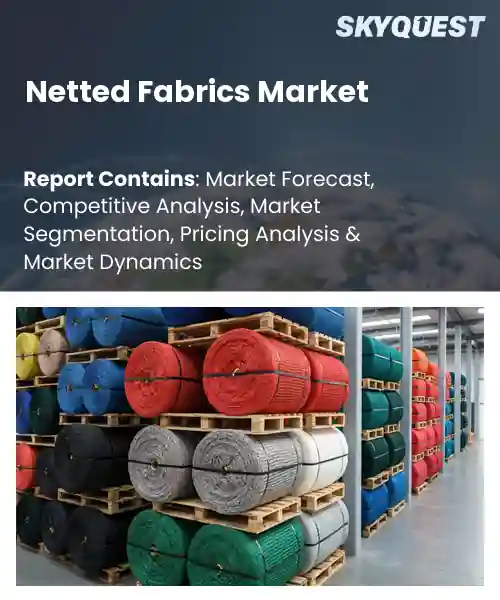
Netted Fabrics Market
Report ID: SQMIG25M2104
Report ID: SQMIG25M2104
[email protected]
USA +1 351-333-4748
Report ID:
SQMIG25M2104 |
Region:
Global |
Published Date: May, 2026
Pages:
157
|Tables:
121
|Figures:
72


Global Netted Fabrics Market size was valued at USD 2.82 Billion in 2024 and is poised to grow from USD 2.97 Billion in 2025 to USD 4.52 Billion by 2033, growing at a CAGR of 5.41% during the forecast period (2026-2033).
Progress in knitting technology, growing preference for lightweight and breathable fabrics, growing applications of technical textiles, growth in the sportswear segment, and increasing usage of mesh materials in industries and agriculture are contributing to high sales of net fabrics.
The widespread use of netted fabrics in various products like apparel, sportswear, lingerie, medical textiles, agricultural nets, and industrial filtration will also contribute to the growth of the market. In addition, increased investment in sustainable sources of raw materials, setting up of textile manufacturing facilities locally, and collaborations with apparel makers and medical device makers will bring about opportunities for the commercialization of netted fabrics. Expansion of applications of netted fabrics to medical, technical, and agriculture domains will also play a role in driving the demand for netted fabrics. The growing development of netted fabrics for various special performance requirements such as apparel and medical surgical meshes is being seen. High preference for lightweight, breathable, and high-performance textile materials around the world coupled with rising technological advancements in knitting and warp knitting machinery are expected to primarily drive netted fabrics market growth.
On the contrary, fluctuations in raw material prices, environmental concerns regarding synthetic fiber waste, intense pricing competition from low-cost textile manufacturers, and stringent quality and certification requirements for medical and industrial applications are anticipated to slow down netted fabrics market penetration going forward.
How is AI Improving Quality Control in Netted Fabric Production?
Quality control in the production line of netted fabrics focuses on maintaining not only its aesthetic appearance but also its strength. The use of AI has helped to solve quality control problems by identifying the patterns unique to the textiles, categorizing the defects into different types and reducing variations in results from one inspector to another. Automation systems in vision can identify minor deformations in the fabric, help perform local repairs, and provide data about the process that has just been carried out to help manufacturers produce more efficiently.
Market snapshot - (2026-2033)
Global Market Size
USD 2.82 Billion
Largest Segment
Polyester Net
Fastest Growth
Polyester Net
Growth Rate
5.41% CAGR
To get more insights on this market click here to Request a Free Sample Report
Global netted fabrics market is segmented by material, mesh size, application, distribution channel and region. Based on material, the market is segmented into polyester net, nylon net, cotton net, and polypropylene net. Based on mesh size, the market is segmented into fine mesh, medium mesh, and coarse mesh. Based on application, the market is segmented into agriculture (shade net, bird net), sports & recreation, apparel & fashion, and industrial (safety net, cargo net). Based on distribution channel, the market is segmented into B2B manufacturers, online, and agricultural dealers. Based on region, the market is segmented into North America, Europe, Asia Pacific, Latin America, and Middle East & Africa.
The polyester net segment is anticipated to lead the global netted fabrics market revenue generation over the coming years. The natural resilience, UV-resistance, and dimensional stability of polyester result in its longer lifespan and reliable use in various net fabrics. The characteristics of polyester materials ensure that their maintenance and renewal expenses are minimized, which results in wider use by manufacturers as well as their uniform coating and finishing. As a consequence, the material is popular for use in agriculture, safety equipment, and clothing reinforcement purposes.
However, nylon net is witnessing the strongest growth momentum as per this netted fabrics industry analysis. Superior tensile strength, flexibility, and abrasion resistance make it an ideal choice to meet the growing demands in safety netting, cargo netting, and sporting goods netting requirements. Advancements in materials and processing make nylon a lucrative choice for technical applications that involve lightweight and durability.
The shade net segment is predicted to account for the highest global netted fabrics market share going forward. Its capacity to regulate light, temperature, and airflow directly impacts agricultural yield security and quality, which is of foremost importance for buyers, shade net technology is highly adaptable to varying architectural types and material specifications. Since it creates controlled climates that minimizes stress on the plants and cut down their need for irrigation, manufacturers are forced to cater to their clients’ demands through tailored production and assistance facilities.
In contrast, the bird net is emerging as the fastest-growing segment, fueled by the rising demand for non-lethal animal control and precise exclusions in farmed as well as urban farms. The advancements in construction using lightweight materials with UV stability, and simple installation systems are driving the increased use of netted fabrics by small-scale and large-scale farmers.
To get detailed segments analysis, Request a Free Sample Report
Concentrated textile manufacturing capacity, integrated supply chains, and strong demand from apparel and technical textile sectors are helping this region hold sway over others. Existing dyeing and finishing clusters, access to skilled workers, and closeness to suppliers of raw materials make it possible for production to be cost-effective and fast. The innovation centers located in developed nations facilitate progress in the development of materials and products for use in the medical, filtration, and industrial sectors. The buyer can enjoy good export arrangements along with many consumers in their own country. The joint effort between manufacturers and researchers enables the introduction of improved nets coated with useful substances and using renewable resources.
Advanced manufacturing techniques and input in material science are helping boost netted fabrics sales in Japan. An advanced supply chain enables customized and small-scale manufacturing, while sustainable practices motivate recycling and less damaging processing of nets. Producers place importance on high-performance parameters, precise weaving and coating techniques for medical and industrial uses. A mature customer base requires constant product quality with functional innovation, prompting cooperation between producers and research institutions.
Sales of netted fabrics in South Korea are backed by rapid technology adoption and strong integration between textile manufacturers and diverse supply chains. Industrial relationships with technology providers as well as exporting strategy contribute towards competitiveness, while industrial initiatives ensure greater use of environmentally friendly fibers and resource preservation. Manufacturers focus on technical nets that possess functional coatings, and their potential markets range from filtration, automotive, to textile industries. Innovative production process along with precision manufacturing enable prompt design revisions.
Technical demand, regulatory emphasis on sustainability, and a well-established design and manufacturing ecosystem are helping govern adoption of netted fabrics in the region. Strong group demand from the luxury apparel sector, technical textiles sector and construction sector have led to increased supplier efforts to create higher value products using netting techniques with distinct finishes. Coalition efforts are in place through regulatory and certifying bodies to promote recycled material usage as well as reducing chemical footprints, which in turn affects material choices and processing methodologies. Investment in advanced manufacturing, digital tools for design and development, and partnerships between textile mills and brand owners allow for fast turnaround times on product development. Well established distribution networks and trade relationships across Europe provide access for niche applications and regional centers of excellence provide testing/verification capabilities to speed the commercialization of new products developed through netting technology.
Demand for netted fabrics in Germany is defined by precision engineering and links between textile manufacturers and industrial users. Strong quality standards and certification encourage production of high-performance nets for filtration, construction, and technical sectors. Producers employ advanced machinery and tight process control to meet exacting specifications. Concentrated supplier network and emphasis on sustainable production drive use of recycled inputs and controlled finishing, reinforcing Germany as a dominant regional supplier.
Strong design capability and brand demand for innovative materials are helping boost the adoption of netted fabrics in the United Kingdom. Adoption of flexible manufacturing systems and focus on traceability systems to foster market orientation. Both retail and luxury brands aim for differentiated nets that feature distinctive texture and sustainability aspects. This promotes innovation from suppliers, while close coordination between designers and the testing laboratory makes development more efficient.
Close links to haute couture and innovative textile ateliers are helping boost netted fabrics demand in France. Sustainable sources drive experimentation with reclaimed materials and environmentally friendly methods, adding to the brand’s developing presence in the market. Designers favor artisanal finishes and innovative material combinations that result in high-end netted fabrics for fashion and interior applications. Craftsmanship and design development in studios allow for creating unique textures and special editions.
Investments in advanced manufacturing, emphasis on high quality standards and growing integration between technical textile innovators and end user industries help govern netted fabrics demand. Cooperation between material scientists and fabricators will expedite the development of value-added netted textiles with unique coatings and composite integrations. Organizations adopting strategies such as strategic sourcing and reshoring will be able to establish strong ties with their suppliers. Organizations have greater access to testing and certification services that will facilitate their entrance into foreign markets using innovative products. The manufacturers are expected to concentrate on delivering good functionality, durability, and environmental compliance in their products. This trend will be experienced by manufacturers in the medical, automotive, and industrial filtration industries.
Requirements for high performance and regulatory compliance in various applications ranging from medicine to industries drive the purchase of netting fabrics in the United States. Coordination among the chain participants helps produce greater quantities of products, while certification adds value to the reliability of the materials. Manufacturers are concentrating on developing nets made of engineered material and incorporating coatings for specific applications. The ability of textile institutions to conduct research has allowed the quick incorporation of innovations into their products.
Proximity to research centers and strong focus on sustainable sourcing and resource efficient manufacturing shapes sales of netted fabrics in Canada. Research partnerships with universities and small-scale producers help advance materials and production processes. Producers focus on designing custom nets that will be used in outdoor, filtration, and protective clothing applications. Transparency of the production process and sustainability of fibers contribute to the reliability of Canadian suppliers for export demands.
To know more about the market opportunities by region and country, click here to
Buy The Complete Report
Rising Demand From Apparel
Advances In Netting Technology
Raw Material Price Volatility
Stringent Environmental Regulations
Request Free Customization of this report to help us to meet your business objectives.
Netted fabrics manufacturers focus on advanced warp knitting technologies, sustainable raw materials, lightweight engineered meshes, and automation to help expand their business scope. Strategic collaborations with apparel brands, medical device manufacturers, and industrial filtration companies are also expected to create a new business scope as per this netted fabrics market analysis.
Top Player’s Company Profile
SkyQuest’s ABIRAW (Advanced Business Intelligence, Research & Analysis Wing) is our Business Information Services team that Collects, Collates, Correlates, and Analyses the Data collected by means of Primary Exploratory Research backed by robust Secondary Desk research.
As per SkyQuest analysis, high demand for lightweight and breathable textile materials and increasing adoption of technical textiles are anticipated to drive the demand for netted fabrics going forward. However, fluctuations in raw material prices and environmental concerns regarding synthetic fiber waste are slated to slow down the adoption of netted fabrics in the future. Asia Pacific is slated to spearhead the demand for netted fabrics owing to strong textile manufacturing infrastructure and rising demand from apparel, industrial, and agricultural sectors. Development of AI-enabled textile inspection systems and increasing adoption of engineered mesh materials for medical and technical applications are anticipated to be key trends driving the netted fabrics sector across the study period.
| Report Metric | Details |
|---|---|
| Market size value in 2024 | USD 2.82 Billion |
| Market size value in 2033 | USD 4.52 Billion |
| Growth Rate | 5.41% |
| Base year | 2024 |
| Forecast period | (2026-2033) |
| Forecast Unit (Value) | USD Billion |
| Segments covered |
|
| Regions covered | North America (US, Canada), Europe (Germany, France, United Kingdom, Italy, Spain, Rest of Europe), Asia Pacific (China, India, Japan, Rest of Asia-Pacific), Latin America (Brazil, Rest of Latin America), Middle East & Africa (South Africa, GCC Countries, Rest of MEA) |
| Companies covered |
|
| Customization scope | Free report customization with purchase. Customization includes:-
|
To get a free trial access to our platform which is a one stop solution for all your data requirements for quicker decision making. This platform allows you to compare markets, competitors who are prominent in the market, and mega trends that are influencing the dynamics in the market. Also, get access to detailed SkyQuest exclusive matrix.
Table Of Content
Executive Summary
Market overview
Parent Market Analysis
Market overview
Market size
KEY MARKET INSIGHTS
COVID IMPACT
MARKET DYNAMICS & OUTLOOK
Market Size by Region
KEY COMPANY PROFILES
Methodology
For the Netted Fabrics Market, our research methodology involved a mixture of primary and secondary data sources. Key steps involved in the research process are listed below:
1. Information Procurement: This stage involved the procurement of Market data or related information via primary and secondary sources. The various secondary sources used included various company websites, annual reports, trade databases, and paid databases such as Hoover's, Bloomberg Business, Factiva, and Avention. Our team did 45 primary interactions Globally which included several stakeholders such as manufacturers, customers, key opinion leaders, etc. Overall, information procurement was one of the most extensive stages in our research process.
2. Information Analysis: This step involved triangulation of data through bottom-up and top-down approaches to estimate and validate the total size and future estimate of the Netted Fabrics Market.
3. Report Formulation: The final step entailed the placement of data points in appropriate Market spaces in an attempt to deduce viable conclusions.
4. Validation & Publishing: Validation is the most important step in the process. Validation & re-validation via an intricately designed process helped us finalize data points to be used for final calculations. The final Market estimates and forecasts were then aligned and sent to our panel of industry experts for validation of data. Once the validation was done the report was sent to our Quality Assurance team to ensure adherence to style guides, consistency & design.
Analyst Support
Customization Options
With the given market data, our dedicated team of analysts can offer you the following customization options are available for the Netted Fabrics Market:
Product Analysis: Product matrix, which offers a detailed comparison of the product portfolio of companies.
Regional Analysis: Further analysis of the Netted Fabrics Market for additional countries.
Competitive Analysis: Detailed analysis and profiling of additional Market players & comparative analysis of competitive products.
Go to Market Strategy: Find the high-growth channels to invest your marketing efforts and increase your customer base.
Innovation Mapping: Identify racial solutions and innovation, connected to deep ecosystems of innovators, start-ups, academics, and strategic partners.
Category Intelligence: Customized intelligence that is relevant to their supply Markets will enable them to make smarter sourcing decisions and improve their category management.
Public Company Transcript Analysis: To improve the investment performance by generating new alpha and making better-informed decisions.
Social Media Listening: To analyze the conversations and trends happening not just around your brand, but around your industry as a whole, and use those insights to make better Marketing decisions.
REQUEST FOR SAMPLE
 REQUEST FREE CUSTOMIZATION
Global Netted Fabrics Market size was valued at USD 2.82 Billion in 2024 and is poised to grow from USD 2.97 Billion in 2025 to USD 4.52 Billion by 2033, growing at a CAGR of 5.41% during the forecast period (2026-2033).
I searched current sources but could not verify two genuine startups founded in 2019 or later that specifically and publicly position themselves as producers or innovators of netted fabrics. Do you want me to proceed with one of these options 1. use two verified 2019+ textile or material startups that work with open‑mesh, spacer or mesh-like constructions even if their primary brand descriptions emphasize technical textiles rather than the phrase netted fabrics 2. include early-stage companies focused on recycled fishing nets and mesh feedstock that were founded before 2019 3. continue and expand the competitive landscape overview without naming startups Tell me which option you prefer and I will produce the Competitive Landscape section using the latest verified information. 'Jason Mills', 'Karatzis SA', 'Netzband & Flechtwerk', 'Tama Group', 'BerryAlloc (Berry Plastics)', 'Ludvig Svensson', 'RKW Group', 'Agru Kunststofftechnik', 'Rite-Hite', 'Starlinger & Co.', 'Alpha Fishing Products', 'Garware Technical Fibres', 'Venus Industries', 'MINET (Minet S.A.)', 'Shakespeare Fishing'
Rising consumer preference for breathable and lightweight textiles has encouraged apparel manufacturers to incorporate netted fabrics into a wider range of garments, from activewear to intimate apparel. Designers value the balance of aesthetics and function that netted constructions offer, prompting product line expansion and diversified applications. As more brands adopt netted materials to meet comfort and style expectations, demand for varied netting types and finishes grows, stimulating supplier investment, production capacity, and innovation across the value chain. This dynamic supports upstream growth and collaboration.
Sustainable Product Differentiation: Brands and converters are prioritizing eco-conscious netted fabrics to meet consumers seeking sustainable apparel and technical applications. Manufacturers are adopting recycled feedstocks, biodegradable finishes and low-impact process techniques to create differentiated offerings that support circularity claims. Supply chain transparency, third-party certifications and traceability partnerships enable premium positioning and customer trust. Innovation focuses on reducing waste, enabling recyclability, and integrating end-of-life strategies that broaden market appeal across sportswear, protective textiles and consumer goods while reinforcing long-term brand sustainability narratives and resilience.
Why does Asia Pacific Dominate the Global Netted Fabrics Market? |@12


Want to customize this report? This report can be personalized according to your needs. Our analysts and industry experts will work directly with you to understand your requirements and provide you with customized data in a short amount of time. We offer $1000 worth of FREE customization at the time of purchase.
Feedback From Our Clients


 USA (+1) 351-333-4748

