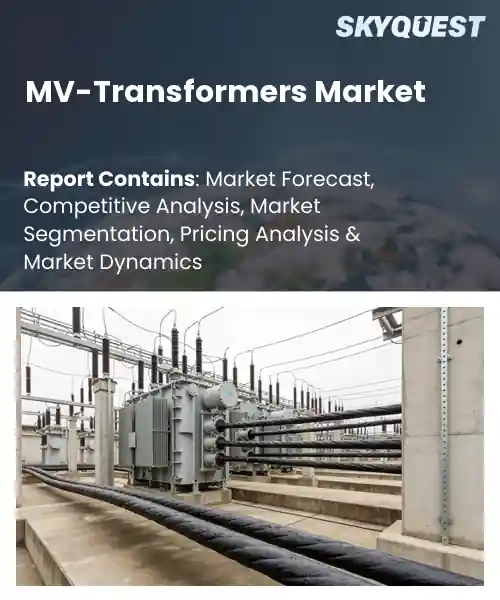
MV-Transformers Market
Report ID: SQMIG20E2240
Report ID: SQMIG20E2240
[email protected]
USA +1 351-333-4748
Report ID:
SQMIG20E2240 |
Region:
Global |
Published Date: July, 2026
Pages:
157
|Tables:
151
|Figures:
78


Global Mv-Transformers Market size was valued at USD 87.4 Billion in 2024 and is poised to grow from USD 94.74 Billion in 2025 to USD 180.63 Billion by 2033, growing at a CAGR of 8.4% during the forecast period (2026-2033).
The medium‑voltage (MV) transformer market underpins modern power distribution by stepping down generation voltage to serve industrial and residential loads. Its importance grew as countries intensified grid electrification to satisfy soaring electricity demand, particularly in fast‑developing regions where new substations emerge daily. Historically, a handful of OEMs supplied oil‑filled units, yet the last decade introduced dry‑type and solid‑state designs because safety rules tightened and operators sought lower maintenance costs. China’s rapid urban growth, for instance, compelled utilities to replace aging oil‑filled transformers with compact low‑loss models, demonstrating how regulation and infrastructure expansion drive market transformation, globally and regionally alike, significantly.
The key trend driving the global MV-transformers sector is the shift toward renewable energy integration, which forces distribution networks to handle variable power flows and rely on MV transformers with tap‑changing and monitoring capabilities to maintain voltage stability. As wind farms and solar parks connect to grids, utilities install such units to balance loads across offshore sites, reducing curtailment losses. This technical need creates opportunities for manufacturers to offer digital products, illustrated by a European project where smart MV units enabled balancing across multiple wind farms. Consequently, demand for efficient, remotely controllable transformers escalates, attracting R&D investment and expanding market share for suppliers.
How are AI and IoT Driving Innovation in the MV‑Transformers Market?
AI and IoT are reshaping the medium‑voltage transformer landscape by enabling smarter asset management and predictive maintenance. Sensors embedded in windings and cores collect real‑time data on temperature, load and vibration, while AI algorithms analyze patterns to anticipate failures before they occur. This reduces downtime and extends equipment life, making the technology attractive to utilities facing aging infrastructure. IoT connectivity also allows remote configuration and firmware updates, streamlining field operations and lowering labor costs. Together these capabilities create a more resilient grid and drive demand for advanced MV transformers. The integration of cloud platforms further centralizes analytics, enabling operators to benchmark performance across multiple sites.
In March 2026, Hitachi Energy launched HMAX Energy, an AI-powered suite for critical energy infrastructure that uses predictive analytics and AI-driven asset monitoring to optimize transformer performance. The platform detects early equipment degradation, reduces transformer failures, and extends asset life, enhancing the reliability and operational efficiency of medium-voltage (MV) transformer networks.
Market snapshot - (2026-2033)
Global Market Size
USD 87.4 Billion
Largest Segment
Oil-Immersed Transformers
Fastest Growth
Cast Resin Transformers
Growth Rate
8.4% CAGR
To get more insights on this market click here to Request a Free Sample Report
Global mv-transformers market is segmented by transformer type, power rating, application, installation, cooling type and region. Based on transformer type, the market is segmented into dry-type transformers, oil-immersed transformers, cast resin transformers and others. Based on power rating, the market is segmented into up to 5 MVA, 5-20 MVA, above 20 MVA and others. Based on application, the market is segmented into utilities, industrial, commercial buildings, renewable energy and others. Based on installation, the market is segmented into indoor, outdoor, pole mounted, pad mounted and others. Based on cooling type, the market is segmented into air cooled, oil natural air natural (ONAN), oil natural air forced (ONAF) and others. Based on region, the market is segmented into North America, Europe, Asia Pacific, Latin America and Middle East & Africa.
Based on the global MV-transformers markt growth, dry‑type transformers segment dominates because they meet stringent safety standards while offering low maintenance, making them preferred for urban and indoor installations. Their solid insulation eliminates fire hazards, aligning with modern building codes, and their compact design fits space‑constrained environments. Moreover, advances in resin technology enhance reliability, encouraging utilities and commercial users to adopt them widely, thereby cementing their leadership in the MV‑Transformers market across multiple sectors through continuous innovation efforts.
Meanwhile, oil‑immersed transformers experience the fastest growth as demand rises for high‑capacity power distribution in expanding grid networks. Their proven thermal performance and cost efficiency attract utilities upgrading legacy infrastructure, while newer oil‑based cooling techniques improve reliability. This momentum fuels broader market expansion and creates opportunities for equipment manufacturers.
Renewable energy segment dominates because increasing integration of solar and wind farms requires robust medium‑voltage transformers to step down generation outputs efficiently. Environmental policies prioritize clean power, driving utilities to invest in renewable‑linked infrastructure. The need for grid stability, coupled with advancements in transformer design that handle variable outputs, fuels adoption. Consequently, renewable energy projects become primary drivers of transformer demand, solidifying this segment’s preeminence across global energy markets today.
Conversely, industrial applications are the fastest expanding area as manufacturers modernize production lines and adopt automation, requiring reliable medium‑voltage power for heavy machinery. Emerging smart factory concepts increase demand for transformers with enhanced monitoring capabilities, and tighter reliability standards push firms toward newer equipment, accelerating market growth in the sector.
To get detailed segments analysis, Request a Free Sample Report
As per the global MV-transformers market share, Asia Pacific benefits from a confluence of robust industrial activity, extensive grid modernization initiatives, and a strong tradition of engineering excellence. The region’s manufacturers leverage advanced manufacturing capabilities and deep supply chain integration to deliver high‑performance MV‑Transformers tailored to diverse applications. Strategic investments in renewable energy integration and urban infrastructure further amplify demand, while supportive policy frameworks encourage adoption of efficient power distribution solutions. Collaborative ecosystems between original equipment manufacturers, utilities, and research institutions foster continuous innovation, reinforcing the region’s leadership in product quality, cost competitiveness, and rapid time‑to‑market.
MV-transformers market in Japan is propelled by sophisticated manufacturing standards and a long‑standing focus on reliability for densely populated urban grids. The country’s emphasis on energy efficiency and resilience drives continuous enhancement of transformer designs, while strong domestic demand from industrial sectors sustains a vibrant supplier base. Close collaboration between utilities and technology firms accelerates the introduction of smart monitoring features, positioning Japan as a benchmark for precision engineering in the MV‑Transformer segment.
MV-transformers market in South Korea thrives on a dynamic blend of high‑tech manufacturing and aggressive grid upgrade programs. The nation’s commitment to digitalization of power networks encourages integration of advanced diagnostics and automation within transformer technology. A proactive approach to renewable energy integration creates opportunities for innovative transformer solutions that balance performance with environmental considerations. Close ties between research institutions and industry players ensure rapid adoption of next‑generation materials and design methodologies, reinforcing South Korea’s competitive edge.
Based on global MV-transformers regional forecast, Europe expands rapidly due to strong regulatory emphasis on grid resilience, decarbonization, and cross‑border electricity exchange. The region’s mature utilities invest heavily in upgrading aging infrastructure, favoring high‑efficiency and low‑loss transformer technologies. Collaborative standards across member states promote interoperability, while a vibrant ecosystem of specialized manufacturers and engineering firms drives continuous product refinement. Growing penetration of offshore wind and distributed generation demands flexible, robust transformer solutions, and significant public‑private partnerships accelerate deployment of smart grid components, collectively enhancing Europe’s position as a hub for advanced MV‑Transformer innovation.
MV-transformers market in Germany benefits from a strong industrial base and a strategic focus on energy transition. German manufacturers emphasize precision engineering and compliance with stringent efficiency standards, catering to utilities seeking reliable solutions for extensive transmission networks. Integration of digital monitoring and predictive maintenance technologies is widespread, driven by a culture of continuous improvement. Collaborative research initiatives with academic institutions support the development of next‑generation materials, reinforcing Germany’s role as a dominant player in the European MV‑Transformer landscape.
MV-transformers market in United Kingdom is experiencing swift expansion as utilities modernize networks to accommodate renewable generation and electric mobility. The market is characterized by a high adoption rate of smart transformer technologies that enable real‑time performance analytics. Policy incentives encouraging low‑carbon infrastructure stimulate investments in high‑efficiency equipment, while a competitive supplier environment fosters innovation. Strong emphasis on grid flexibility and interconnection with neighboring markets positions United Kingdom as a leading growth engine within Europe.
MV-transformers market in France is emerging as a focal point for sustainable grid development. French utilities prioritize the deployment of eco‑friendly transformer solutions that align with national energy reduction goals. Ongoing renovation of regional distribution networks creates demand for compact, low‑loss designs. Partnerships between local manufacturers and research laboratories accelerate the introduction of advanced insulation and cooling technologies. This collaborative approach strengthens France’s trajectory toward becoming a notable contributor to the European MV‑Transformer market.
As per global MV-transformers regional outlook, North America enhances its industry position through a concerted focus on grid reliability, technological integration, and expansive infrastructure projects. Utilities across the region prioritize the deployment of resilient transformer assets capable of withstanding extreme weather events, prompting adoption of robust design standards. The convergence of digital analytics, condition‑based monitoring, and modular construction techniques drives efficiency gains and reduces downtime. Strategic collaborations between equipment manufacturers and utility operators foster the rapid rollout of smart transformer solutions, while a supportive regulatory environment encourages investments in modernizing legacy systems, collectively reinforcing North America’s competitive stature.
MV-transformers market in United States is shaped by extensive grid expansion and a strong emphasis on resilience against diverse climatic challenges. Leading manufacturers focus on incorporating advanced sensor networks and remote diagnostics to enhance asset management. Utilities adopt modular transformer configurations to accelerate deployment and reduce installation constraints. Ongoing collaborations with technology firms promote integration of artificial intelligence for predictive maintenance, reinforcing the United States’ leadership in delivering high‑performance, adaptable MV‑Transformer solutions.
MV-transformers market in Canada reflects a commitment to reliable power delivery across vast and remote territories. Emphasis on cold‑climate performance drives the development of transformer designs that maintain efficiency under extreme temperatures. Utilities adopt advanced monitoring systems to optimize maintenance schedules and minimize outage impacts. Partnerships with research institutions focus on sustainable materials and energy‑saving technologies, supporting Canada’s aim to modernize its distribution network while preserving environmental stewardship.
To know more about the market opportunities by region and country, click here to
Buy The Complete Report
Rising Adoption Of Smart Grids
Growth In Renewable Energy Projects
High Initial Capital Expenditure
Complex Regulatory Compliance Requirements
Request Free Customization of this report to help us to meet your business objectives.
The competitive landscape in the global MV‑transformers market outlook is shaped by incumbents accelerating solid‑state transformer development and new entrants securing large funding rounds, intensifying pressure on pricing and technology differentiation; Heron Power’s $140 million Series B exemplifies aggressive capital deployment, while established manufacturers are pursuing strategic acquisitions of niche solid‑state firms to broaden product portfolios and meet utility grid modernization demands.
Top Player’s Company Profile
Recent Developments
SkyQuest’s ABIRAW (Advanced Business Intelligence, Research & Analysis Wing) is our Business Information Services team that Collects, Collates, Correlates, and Analyses the Data collected by means of Primary Exploratory Research backed by robust Secondary Desk research.
As per SkyQuest analysis, the global MV‑transformers industry is propelled primarily by the rising adoption of smart grids, which fuels demand for efficient, digitally‑enabled units, while the rapid growth of renewable‑energy projects serves as a second catalyst by requiring adaptable, low‑loss transformers for wind and solar integration. The market is led by Asia Pacific, where extensive grid modernization and industrial expansion drive the strongest growth, and the dry‑type transformer segment dominates thanks to its safety, low‑maintenance profile and suitability for indoor and urban installations. However, high initial capital expenditure remains a notable restraint, tempering adoption especially among smaller utilities and limiting the pace of upgrades.
| Report Metric | Details |
|---|---|
| Market size value in 2024 | USD 87.4 Billion |
| Market size value in 2033 | USD 180.63 Billion |
| Growth Rate | 8.4% |
| Base year | 2024 |
| Forecast period | (2026-2033) |
| Forecast Unit (Value) | USD Billion |
| Segments covered |
|
| Regions covered | North America (US, Canada), Europe (Germany, France, United Kingdom, Italy, Spain, Rest of Europe), Asia Pacific (China, India, Japan, Rest of Asia-Pacific), Latin America (Brazil, Rest of Latin America), Middle East & Africa (South Africa, GCC Countries, Rest of MEA) |
| Companies covered |
|
| Customization scope | Free report customization with purchase. Customization includes:-
|
To get a free trial access to our platform which is a one stop solution for all your data requirements for quicker decision making. This platform allows you to compare markets, competitors who are prominent in the market, and mega trends that are influencing the dynamics in the market. Also, get access to detailed SkyQuest exclusive matrix.
Table Of Content
Executive Summary
Market overview
Parent Market Analysis
Market overview
Market size
KEY MARKET INSIGHTS
COVID IMPACT
MARKET DYNAMICS & OUTLOOK
Market Size by Region
KEY COMPANY PROFILES
Methodology
For the MV-Transformers Market, our research methodology involved a mixture of primary and secondary data sources. Key steps involved in the research process are listed below:
1. Information Procurement: This stage involved the procurement of Market data or related information via primary and secondary sources. The various secondary sources used included various company websites, annual reports, trade databases, and paid databases such as Hoover's, Bloomberg Business, Factiva, and Avention. Our team did 45 primary interactions Globally which included several stakeholders such as manufacturers, customers, key opinion leaders, etc. Overall, information procurement was one of the most extensive stages in our research process.
2. Information Analysis: This step involved triangulation of data through bottom-up and top-down approaches to estimate and validate the total size and future estimate of the MV-Transformers Market.
3. Report Formulation: The final step entailed the placement of data points in appropriate Market spaces in an attempt to deduce viable conclusions.
4. Validation & Publishing: Validation is the most important step in the process. Validation & re-validation via an intricately designed process helped us finalize data points to be used for final calculations. The final Market estimates and forecasts were then aligned and sent to our panel of industry experts for validation of data. Once the validation was done the report was sent to our Quality Assurance team to ensure adherence to style guides, consistency & design.
Analyst Support
Customization Options
With the given market data, our dedicated team of analysts can offer you the following customization options are available for the MV-Transformers Market:
Product Analysis: Product matrix, which offers a detailed comparison of the product portfolio of companies.
Regional Analysis: Further analysis of the MV-Transformers Market for additional countries.
Competitive Analysis: Detailed analysis and profiling of additional Market players & comparative analysis of competitive products.
Go to Market Strategy: Find the high-growth channels to invest your marketing efforts and increase your customer base.
Innovation Mapping: Identify racial solutions and innovation, connected to deep ecosystems of innovators, start-ups, academics, and strategic partners.
Category Intelligence: Customized intelligence that is relevant to their supply Markets will enable them to make smarter sourcing decisions and improve their category management.
Public Company Transcript Analysis: To improve the investment performance by generating new alpha and making better-informed decisions.
Social Media Listening: To analyze the conversations and trends happening not just around your brand, but around your industry as a whole, and use those insights to make better Marketing decisions.
REQUEST FOR SAMPLE
 REQUEST FREE CUSTOMIZATION
Global Mv-Transformers Market size was valued at USD 87.4 Billion in 2024 and is poised to grow from USD 94.74 Billion in 2025 to USD 180.63 Billion by 2033, growing at a CAGR of 8.4% during the forecast period (2026-2033).
The competitive landscape is shaped by incumbents accelerating solid‑state transformer development and new entrants securing large funding rounds, intensifying pressure on pricing and technology differentiation; Heron Power’s $140 million Series B exemplifies aggressive capital deployment, while established manufacturers are pursuing strategic acquisitions of niche solid‑state firms to broaden product portfolios and meet utility grid modernization demands. 'Hitachi Energy Ltd.', 'Siemens Energy AG', 'Schneider Electric SE', 'GE Vernova Inc.', 'ABB Ltd.', 'CG Power and Industrial Solutions Limited', 'Toshiba Energy Systems & Solutions Corporation', 'Hyosung Heavy Industries Corporation', 'HD Hyundai Electric Co., Ltd.', 'WEG S.A.', 'Mitsubishi Electric Corporation', 'Fuji Electric Co., Ltd.', 'Efacec Power Solutions SGPS S.A.', 'TBEA Co., Ltd.', 'China XD Electric Co., Ltd.', 'SGB-SMIT Group', 'Ormazabal Velatia', 'Virginia Transformer Corp.', 'Wilson Transformer Company', 'ELSCO Transformers'
Rising demand for efficient power conversion in modern infrastructure drives increased procurement of MV transformers, as utilities and industrial facilities seek reliable solutions to manage voltage regulation and reduce losses. This shift supports market expansion by encouraging manufacturers to innovate product designs, enhance material quality, and improve performance characteristics, thereby attracting a broader customer base seeking durability and operational efficiency across diverse applications. Additionally, the increasing integration of digital monitoring systems creates further incentives for adopting advanced MV transformer technologies that offer real-time diagnostics and predictive maintenance capabilities.
Grid Decarbonization Drives Demand: Utilities worldwide are accelerating the transition to low‑carbon electricity, prompting extensive upgrades of medium‑voltage distribution networks. The shift toward renewable generation, such as wind and solar, creates variable power flows that require more resilient and adaptable transformer solutions. Manufacturers are responding with designs that offer higher efficiency, improved thermal management, and enhanced fault tolerance, enabling grids to integrate cleaner energy while maintaining reliability. This strategic focus on sustainability is reshaping procurement criteria and fostering collaboration across the value chain ecosystem.
Why does Asia Pacific Dominate the Global MV-Transformers Market? |@12


Want to customize this report? This report can be personalized according to your needs. Our analysts and industry experts will work directly with you to understand your requirements and provide you with customized data in a short amount of time. We offer $1000 worth of FREE customization at the time of purchase.
Feedback From Our Clients


 USA (+1) 351-333-4748

