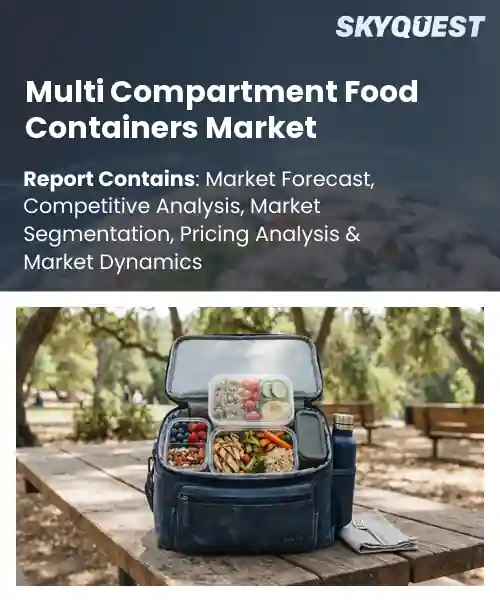
Multi Compartment Food Containers Market
Report ID: SQMIG15H2296
Report ID: SQMIG15H2296
[email protected]
USA +1 351-333-4748
Report ID:
SQMIG15H2296 |
Region:
Global |
Published Date: August, 2026
Pages:
157
|Tables:
120
|Figures:
77


Global Multi Compartment Food Containers Market size was valued at USD 5.81 Billion in 2024 and is poised to grow from USD 6.26 Billion in 2025 to USD 11.43 Billion by 2033, growing at a CAGR of 7.8% during the forecast period (2026-2033).
The global multi‑compartment food‑container market revolves around portable containers divided into separate sections, allowing users to pack distinct food items without mixing flavors or nutrients. Its importance stems from rising health awareness, time‑pressed lifestyles, and the desire to control portion sizes, which together drive demand for convenient, reusable solutions. Historically, the market emerged in the early 2000s when urban professionals sought lunch alternatives to fast‑food, and manufacturers responded with silicone and BPA‑free plastics. Over the past decade, sales have accelerated as schools adopted nutrition programs and retailers introduced budget‑friendly kits, illustrating how consumer habits and regulatory pressure have shaped growth. The most decisive factor propelling the market forward is the convergence of sustainability mandates and consumer demand for eco‑friendly packaging, which translates into a surge for reusable, recyclable compartments. As governments tighten single‑use plastic bans, businesses invest in biodegradable materials, prompting manufacturers to launch plant‑based containers that retain durability while reducing carbon footprints. This shift creates opportunities for niche brands to partner with meal‑prep services, exemplified by a startup that supplies compostable trays to corporate cafeterias, thereby lowering waste disposal costs. Consequently, retailers experience heightened sales velocity, while consumers benefit from healthier portion control and diminished environmental impact globally today.
How is IoT integration enhancing the Multi compartment food containers market?
IoT integration is turning multi‑compartment food containers into connected kitchen assistants. Sensors embedded in each compartment monitor temperature and humidity, sending real‑time alerts to smartphones when conditions drift from optimal ranges. Data analytics help users plan meals, reduce waste and keep ingredients fresh longer. Smart lids can lock automatically after a set time, while companion apps suggest portion sizes based on past usage. These features align with the broader shift toward intelligent packaging, making everyday storage more convenient and sustainable while giving manufacturers new avenues for brand engagement.Veritiv March 2026 introduced an IoT‑enabled multi‑compartment container that syncs with a mobile app, streamlining inventory tracking and extending product freshness, thereby reinforcing market momentum.
Market snapshot - (2026-2033)
Global Market Size
USD 5.81 Billion
Largest Segment
Plastic
Fastest Growth
Bagasse & Molded Fiber
Growth Rate
7.8% CAGR
To get more insights on this market click here to Request a Free Sample Report
Global multi compartment food containers market is segmented by material, compartment type, application, end user and region. Based on material, the market is segmented into Plastic, Paper & Paperboard, Aluminum, Bagasse & Molded Fiber and Others. Based on compartment type, the market is segmented into Two Compartments, Three Compartments and Four or More Compartments. Based on application, the market is segmented into Ready-to-Eat Meals, Takeaway & Delivery, Institutional Catering and Meal Preparation. Based on end user, the market is segmented into Foodservice Providers, Food Manufacturers and Retail Consumers. Based on region, the market is segmented into North America, Europe, Asia Pacific, Latin America and Middle East & Africa.
Plastic segment dominates because it offers unmatched versatility, low cost, and compatibility with high speed molding processes that meet mass production demands. Manufacturers favor it for its ability to be engineered for microwave safety, clarity, and customizable branding, which aligns with retailer and consumer expectations for convenience. The material’s established supply chain and recyclability perception further reinforce its prevalence, making it the default choice for most multi compartment food containers.
Meanwhile, Bagasse & Molded Fiber segment is witnessing rapid growth as brands pursue compostable alternatives. Innovations in fiber processing deliver improved strength and moisture resistance, unlocking new applications in ready to eat meals. This sustainability drive expands market opportunities and positions the material as a focused solution for multi compartment food containers.
Three Compartments segment leads because it directly addresses the growing desire for portion control, balanced nutrition, and on the go convenience. By separating proteins, carbohydrates, and vegetables, the design simplifies meal assembly and reduces cross contamination risk, appealing to health aware consumers and busy professionals. Retailers and foodservice operators favor this configuration for its ability to showcase diverse offerings while maintaining a compact footprint, reinforcing its market leadership.
On the other hand, Four or More Compartments segment is emerging as the key high growth area as families and meal prep enthusiasts seek greater separation. Molding techniques enable sleek stackable designs that hold snacks, sauces, and side dishes without sacrificing portability. This added functionality drives demand and creates new product opportunities in the multi compartment food containers market.
To get detailed segments analysis, Request a Free Sample Report
Asia Pacific benefits from a convergence of cultural, economic, and technological factors that reinforce its market leadership. A deep-rooted tradition of meal sharing and portion control creates a natural affinity for compartmentalized containers. Rapid urbanization fuels demand for portable, space‑saving solutions, while rising health consciousness drives preference for tools that support balanced nutrition. Regional manufacturers excel in innovative design and material science, delivering products that combine durability with aesthetic appeal. Robust e‑commerce platforms and extensive distribution networks further amplify market reach, enabling swift adoption across diverse consumer segments. Together, these strengths forge a resilient ecosystem that consistently outpaces competing regions in capturing consumer interest and loyalty.
Multi Compartment Food Containers Market in Japan emphasizes meticulous craftsmanship and sleek, minimalist aesthetics that align with local preferences for organization and hygiene. Consumer demand centers on compact designs that fit tight living spaces and integrate seamlessly with mobile lifestyles. Manufacturers prioritize advanced materials that ensure food safety and environmental sustainability, reflecting heightened regulatory standards. Retail channels blend traditional department stores with online marketplaces, facilitating broad accessibility and fostering a culture of continuous innovation in compartmentalized food storage solutions.
Multi Compartment Food Containers Market in South Korea is shaped by a tech‑savvy consumer base that values convenience and design elegance. High adoption of smart home ecosystems encourages integration of containers with temperature control and freshness monitoring features. Local brands focus on vibrant, portion‑oriented designs that complement the Korean habit of balanced, multi‑dish meals. Strong retailer collaborations and a dynamic online ecosystem accelerate product diffusion, while sustainability initiatives drive the use of recyclable materials, reinforcing market momentum.
North America experiences vigorous growth propelled by an increasingly health‑focused populace that seeks practical tools for portion management and balanced eating. Fast‑paced lifestyles demand portable, easy‑to‑clean containers that support meal prepping and on‑the‑go consumption. A surge in environmental awareness pushes manufacturers toward recyclable and biodegradable materials, resonating with eco‑conscious buyers. Retail environments, both brick‑and‑mortar and digital, provide extensive shelf space and targeted marketing that highlight product benefits. Innovation thrives as brands introduce modular designs, insulated options, and smart features that cater to diverse consumer preferences, collectively accelerating market expansion across the region.
Multi Compartment Food Containers Market in the United States reflects a strong inclination toward convenience, wellness, and sustainability. Consumers gravitate toward versatile designs that accommodate varied dietary habits and support active, on‑the‑move routines. Brands emphasize BPA‑free plastics, silicone alternatives, and reusable options that align with growing environmental concerns. Distribution channels blend large‑scale retailers, specialty stores, and vibrant e‑commerce platforms, ensuring widespread product visibility. Marketing narratives often link compartmentalized containers to portion control, weight management, and meal‑prep efficiency, reinforcing their relevance in everyday life.
Multi Compartment Food Containers Market in Canada is driven by a cultural emphasis on balanced nutrition and outdoor recreation that requires reliable, portable food storage. Consumer preferences lean toward insulated and leak‑proof designs that suit varying climates and active lifestyles. Environmental stewardship influences demand for recyclable and compostable materials, prompting manufacturers to adopt greener production methods. A mix of national retailers and online outlets facilitates product access across urban and rural areas, while health‑oriented messaging underscores the role of compartmentalized containers in supporting mindful eating practices.
Europe reinforces its market standing through a concerted focus on sustainability, design excellence, and regulatory support that encourages waste reduction. Stringent environmental policies motivate manufacturers to adopt recyclable and biodegradable materials, positioning products as responsible alternatives to single‑use packaging. Design innovation thrives as European firms blend functionality with aesthetic refinement, appealing to consumers who value both practicality and style. Robust retail networks, coupled with sophisticated online platforms, ensure broad distribution and heightened consumer awareness. Collaborative initiatives between industry players and research institutions foster continuous improvement, while cultural appreciation for balanced, portioned meals sustains demand for high‑quality compartmentalized containers.
Multi Compartment Food Containers Market in Germany is characterized by rigorous quality standards and a strong preference for environmentally responsible solutions. Consumers favor containers made from certified recyclable plastics and sustainably sourced materials, reflecting a national commitment to circular economies. Design priorities include modularity and precise portion sizing that complement German culinary traditions of structured meals. Retail channels integrate specialized kitchenware stores with comprehensive e‑commerce platforms, facilitating accessibility and encouraging ongoing product innovation within a highly regulated market environment.
Multi Compartment Food Containers Market in the United Kingdom aligns with a growing appetite for health‑conscious, portion‑controlled eating. Contemporary designs emphasize sleek aesthetics and functional versatility, catering to diverse dietary habits and busy urban routines. Sustainability drives demand for reusable, recyclable options, prompting brands to adopt greener material choices. Distribution is reinforced by a blend of high‑street retailers, department stores, and robust online marketplaces, ensuring widespread consumer reach. Educational campaigns highlighting portion control and waste reduction further embed compartmentalized containers into everyday food management practices.
Multi Compartment Food Containers Market in France merges culinary tradition with modern convenience, supporting the French penchant for balanced, multi‑course meals. Consumers gravitate toward elegant, space‑efficient designs that preserve food quality and presentation. Environmental considerations encourage the use of biodegradable and recyclable materials, reflecting national policies on waste minimization. A vibrant retail landscape, encompassing boutique kitchen shops and extensive digital platforms, facilitates product discovery and adoption. Marketing narratives often celebrate the harmony of portion control and gastronomic enjoyment, reinforcing the cultural relevance of compartmentalized food storage solutions.
To know more about the market opportunities by region and country, click here to
Buy The Complete Report
Convenient Meal Prep Trend
Environmental Sustainability Initiatives
Higher Production Costs
Consumer Acceptance Barriers
Request Free Customization of this report to help us to meet your business objectives.
The competitive landscape is shaped by incumbents expanding product lines through strategic acquisitions of niche sustainable‑packaging firms and forming partnerships with major food brands to integrate multi‑compartment designs into ready‑to‑eat offerings. Recent moves include a leading container manufacturer acquiring a biodegradable‑packaging startup to enhance eco‑friendly options, while another key player launched a smart‑seal technology in collaboration with a kitchen appliance company, driving differentiation in a crowded market.
Top Player’s Company Profile
Recent Developments
SkyQuest’s ABIRAW (Advanced Business Intelligence, Research & Analysis Wing) is our Business Information Services team that Collects, Collates, Correlates, and Analyses the Data collected by means of Primary Exploratory Research backed by robust Secondary Desk research. As per SkyQuest analysis, the global multi compartment food containers market is being propelled primarily by the convenient meal‑prep trend, which fuels demand for portable, portion‑controlled solutions, while a second driver of environmental sustainability initiatives pushes manufacturers toward recyclable and biodegradable designs. The market is led by the plastic material segment, reflecting its cost‑effectiveness and versatility, and Asia Pacific dominates regionally thanks to cultural preferences for shared meals, rapid urbanisation and strong manufacturing capabilities. However, higher production costs for premium BPA‑free and eco‑friendly materials act as a restraint, limiting price‑sensitive adoption in some markets. Companies are also exploring IoT‑enabled features to further differentiate their offerings.
| Report Metric | Details |
|---|---|
| Market size value in 2024 | USD 5.81 Billion |
| Market size value in 2033 | USD 11.43 Billion |
| Growth Rate | 7.8% |
| Base year | 2024 |
| Forecast period | (2026-2033) |
| Forecast Unit (Value) | USD Billion |
| Segments covered |
|
| Regions covered | North America (US, Canada), Europe (Germany, France, United Kingdom, Italy, Spain, Rest of Europe), Asia Pacific (China, India, Japan, Rest of Asia-Pacific), Latin America (Brazil, Rest of Latin America), Middle East & Africa (South Africa, GCC Countries, Rest of MEA) |
| Companies covered |
|
| Customization scope | Free report customization with purchase. Customization includes:-
|
To get a free trial access to our platform which is a one stop solution for all your data requirements for quicker decision making. This platform allows you to compare markets, competitors who are prominent in the market, and mega trends that are influencing the dynamics in the market. Also, get access to detailed SkyQuest exclusive matrix.
Table Of Content
Executive Summary
Market overview
Parent Market Analysis
Market overview
Market size
KEY MARKET INSIGHTS
COVID IMPACT
MARKET DYNAMICS & OUTLOOK
Market Size by Region
KEY COMPANY PROFILES
Methodology
For the Multi Compartment Food Containers Market, our research methodology involved a mixture of primary and secondary data sources. Key steps involved in the research process are listed below:
1. Information Procurement: This stage involved the procurement of Market data or related information via primary and secondary sources. The various secondary sources used included various company websites, annual reports, trade databases, and paid databases such as Hoover's, Bloomberg Business, Factiva, and Avention. Our team did 45 primary interactions Globally which included several stakeholders such as manufacturers, customers, key opinion leaders, etc. Overall, information procurement was one of the most extensive stages in our research process.
2. Information Analysis: This step involved triangulation of data through bottom-up and top-down approaches to estimate and validate the total size and future estimate of the Multi Compartment Food Containers Market.
3. Report Formulation: The final step entailed the placement of data points in appropriate Market spaces in an attempt to deduce viable conclusions.
4. Validation & Publishing: Validation is the most important step in the process. Validation & re-validation via an intricately designed process helped us finalize data points to be used for final calculations. The final Market estimates and forecasts were then aligned and sent to our panel of industry experts for validation of data. Once the validation was done the report was sent to our Quality Assurance team to ensure adherence to style guides, consistency & design.
Analyst Support
Customization Options
With the given market data, our dedicated team of analysts can offer you the following customization options are available for the Multi Compartment Food Containers Market:
Product Analysis: Product matrix, which offers a detailed comparison of the product portfolio of companies.
Regional Analysis: Further analysis of the Multi Compartment Food Containers Market for additional countries.
Competitive Analysis: Detailed analysis and profiling of additional Market players & comparative analysis of competitive products.
Go to Market Strategy: Find the high-growth channels to invest your marketing efforts and increase your customer base.
Innovation Mapping: Identify racial solutions and innovation, connected to deep ecosystems of innovators, start-ups, academics, and strategic partners.
Category Intelligence: Customized intelligence that is relevant to their supply Markets will enable them to make smarter sourcing decisions and improve their category management.
Public Company Transcript Analysis: To improve the investment performance by generating new alpha and making better-informed decisions.
Social Media Listening: To analyze the conversations and trends happening not just around your brand, but around your industry as a whole, and use those insights to make better Marketing decisions.
REQUEST FOR SAMPLE
 REQUEST FREE CUSTOMIZATION


Want to customize this report? This report can be personalized according to your needs. Our analysts and industry experts will work directly with you to understand your requirements and provide you with customized data in a short amount of time. We offer $1000 worth of FREE customization at the time of purchase.
Feedback From Our Clients


 USA (+1) 351-333-4748

