

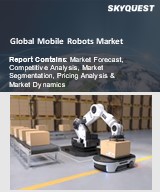
Mobile Robots Market
Report ID: SQMIG20F2019
Skyquest Technology's expert advisors have carried out comprehensive research and identified these companies as industry leaders in the Mobile Robots Market. This Analysis is based on comprehensive primary and secondary research on the corporate strategies, financial and operational performance, product portfolio, market share and brand analysis of all the leading Mobile Robots industry players.


E-commerce growth and automated warehouse requirements and ongoing logistics optimization efforts are the main factors driving the global mobile robots market. Autonomous mobile robots (AMRs) replace human workers in warehouses and distribution centers through their automated systems which handle picking and sorting and item movement tasks. Manufacturing companies and shipping businesses and retail stores and e-commerce platforms have all started to implement automation because they understand its crucial role in business growth. The research will start by assessing market expansion opportunities and then study the advancement of mobile robot systems in developed and developing countries and finally analyze the operational strategies used by major players in the market.
According to SkyQuest Technology “Mobile Robots Market By Product (Automated Guided Vehicle (AGV) and Autonomous Mobile Robot (AMR)) By Form Factor (Forklifts, Tow/Tractor/Tug, Unit Load, and Assembly Line), By Navigation Sensor, Environment of Operation, By Region - Industry Forecast 2026-2033,” the market will experience its highest growth through automated guided vehicles (AGVs) which have proven their effectiveness in manufacturing and warehousing operations that require repeated material transportation.
|
Company |
Est. Year |
Headquarters |
Revenue |
Key Services |
|
Boston Dynamics |
1992 |
Waltham, Massachusetts, USA |
USD 2.1 Billion (2024) |
Boston Dynamics is a pioneering advanced robotics company known for highly dynamic and mobile robots like Spot, Stretch, and Atlas. It provides autonomous solutions for warehouse operations, inspection, and material handling, helping logistics and fulfillment centers increase efficiency. Its robots are used by partners like DHL and Hyundai for real‑world automation tasks. |
|
Omron Corporation |
1933 |
Kyoto, Japan |
USD 1.51 Billion (2025) |
Omron is a global automation leader with a strong presence in autonomous mobile robots (AMRs) and industrial automation systems. Its AMRs, such as the LD Series, support smart factories and logistics by integrating sensors, AI navigation, and fleet management tools. |
|
Clearpath Robotics |
2009 |
Ontario, Canada |
NA |
Clearpath Robotics specializes in rugged autonomous platforms and research‑oriented mobile robots like Husky and OTTO series. Its solutions are used in research, defense, and industrial environments requiring robust navigation and autonomy. Clearpath supports ROS (Robot Operating System) development and offers platforms for custom automation projects, contributing strong expertise in mobile robotics. |
|
Mobile Industrial Robots (MiR) |
2013 |
Odense, Denmark (part of Teradyne) |
NA |
MiR develops flexible autonomous mobile robots designed for material handling and logistics automation. Its AMRs improve warehouse and manufacturing workflows with safe, scalable navigation, flexible payload options, and easy fleet management interfaces. |
|
Fetch Robotics (Zebra Technologies) |
2014 |
San Jose, California, USA |
USD 4.7 Billion (2025) |
Fetch Robotics, now part of Zebra Technologies, delivers autonomous mobile robot solutions focused on warehouse automation, material transport, and picking support. Its robots like Freight 500 and RollerTop Guide help improve throughput and space utilization while integrating AI and fleet orchestration for scalable automation. |
|
ABB Ltd. |
1988 (as merged entity) |
Zurich, Switzerland |
NA |
ABB is a global leader in industrial automation and robotics and expanding its robotics and AMR portfolio. Its mobile robots and automation solutions support factories and logistics centers with integrated systems and AI‑enabled tools for material handling. |
|
KUKA AG |
1898 |
Augsburg, Germany |
NA |
KUKA is a major industrial robotics company offering both traditional industrial robot arms and mobile platforms like KMP series for automated logistics. Its robots aid manufacturing and warehousing automation by combining mobility with payload capacity and precision control. |
|
Teradyne Inc. |
1960 |
North Reading, Massachusetts, USA |
USD 2.86 Billion (2025) |
Teradyne is a leading provider of test and automation equipment that owns Mobile Industrial Robots (MiR) and AutoGuide lines. Its AMRs are used in factory automation and logistics, supporting fleet coordination, IoT integration, and smart navigation. |
|
Amazon Robotics |
- |
North Reading, Massachusetts, USA |
NA |
Amazon Robotics designs and deploys warehouse robots (e.g., Proteus, Pegasus, Robin) initially for Amazon fulfillment and now as third‑party solutions. It leads in mobile automation with Robotics‑as‑a‑Service models and European demo hubs, leveraging massive fulfillment data to optimize navigation and throughput. |
|
Locus Robotics |
2014 |
Wilmington, Massachusetts, USA |
NA |
Locus Robotics provides collaborative autonomous mobile robots for warehouse fulfillment with a Robotics‑as‑a‑Service (RaaS) model. Its Locus Origin and Vector robots enhance picking productivity, integrate with warehouse systems, and scale fleets easily, helping clients like DHL and GEODIS boost throughput and accuracy. |
The advanced autonomous systems developed by Boston Dynamics which include Spot and Stretch enable industrial markets to achieve superior mobility and perception capabilities through their AI-based navigation systems. The company's robots support warehouse automation and logistics operations and inspection tasks which help businesses achieve higher productivity and safer work environments. Boston Dynamics establishes itself as an industry leader in robotic intelligence by developing systems that enable autonomous robots to navigate space and function within real-world environments for implementation in fulfillment centres and industrial facilities.
Omron achieved significant market presence through its LD and MD Series AMRs which provide automated logistics solutions for smart factories. The company provides robotic systems that work alongside sensors and control systems and industrial IoT platforms to create seamless factory automation solutions. Omron supports large-scale AMR operations through its extensive manufacturing and electronics production capabilities. Its human-machine partnership focus together with its safety-certified navigation system increases productivity and material handling reliability for businesses worldwide.
The industry leader Clearpath Robotics develops autonomous flexible platforms through its development of OTTO Motors and Jackal and Husky systems. They serve both industrial and scientific purposes. The team builds customized solutions through their Robot Operating System (ROS) skills which provide advanced navigation systems. The company offers mobile robots which help Clearpath to advance research and defense operations and warehouse automation. It is intended that businesses based upon the same technology will promote the development and real-world deployment of autonomous systems in both research and commercialization.
MiR has established itself as a leading organization in the AMR market through its development of scalable robots which handle material transportation and internal logistics operations. The equipment from their company functions effectively across different industries because it can handle both heavy pallet loads and tiny item weights. The company provides automated solutions for both manufacturing and warehousing facilities through its quick implementation process and its safety compliance standards and its simple fleet management system. The flexible automation solution enables enterprises to boost productivity while decreasing their need for manual labor.
Zebra Technologies company Fetch Robotics leads the mobile robot market through its AI-driven AMRs. The robots use a design that enables them to efficiently handle all the processes needed for warehouse operations which include picking and sorting and item movement. When Zebra's supply chain technology and data capture solutions are combined with Fetch's solutions they deliver superior operational insights and visibility. The company uses its cloud-based fleet orchestration system to enhance process collaboration and scalability across its operations. Fetch uses robotics with real-time analytics to help merchants and logistics providers handle their peak fulfillment needs which grow because of e-commerce growth.
ABB uses its business activities to integrate digital platforms and automation systems with industrial robots and autonomous mobile robots into the mobile robot sector. The company offers products which deliver complete automation solutions for smart manufacturing and logistics hubs. ABB applies mobile robotics technology to the automotive and electronics and manufacturing fields through its worldwide operational network and engineering capabilities. ABB uses continuous AI and robot investments to enhance industrial operations through improved operational agility and quality control and productivity enhancements.
KUKA AG controls a large portion of the mobile robotics industry through its development of KMP mobile platforms and mobile manipulators which combine mobility systems with robotic arm technology. The company created these systems to handle automated processes in warehouses and assembly lines and material transportation. KUKA's leadership in industrial manufacturing and automotive production provides support for advanced intralogistics operations. KUKA develops smart factory systems through its implementation of mobile robots which work together with production lines and digital twins to build automated manufacturing systems.
Teradyne expands its mobile robotics capabilities through its ownership of AutoGuide and MiR which strengthens its AMR portfolio. The company builds solutions that use intelligent fleet coordination systems to manage heavy-load movement and manufacturing automation tasks. Teradyne develops cost-effective systems through robot-based solutions which combine its testing expertise with automation knowledge. The company expands mobile robot usage in manufacturing and logistics through its development of advanced software capabilities and artificial intelligence systems and its commitment to creating compatible systems.
Amazon Robotics drives market growth through its implementation of autonomous systems at all its global fulfillment centers. The company uses its robots to pick and sort and move inventory which results in faster delivery times and lower operational costs. The two systems Proteus and Pegasus both use advanced safety systems and navigation capabilities. The continuous product development by Amazon creates operational standards which warehouse automation systems must meet while establishing industry norms that encourage businesses to use robotics in logistics and e-commerce operations.
Locus Robotics controls the market through its Robotics-as-a-Service (RaaS) system which uses AMRs that help with order fulfillment. The robots help human workers to increase productivity while decreasing mistakes during the picking process. The company uses its technology to enable fleet management through digital modes of operation that lead to quick scaling and worldwide operations. Locus reduces entry barriers and accelerates AMR adoption across retailers and third-party logistics companies by offering flexible subscription choices and proven efficacy.
The mobile robots market is growing quickly because online shopping has increased and there is a labor shortage and companies need more automated factories and warehouses. Major companies such as Omron and KUKA and ABB and Amazon Robotics are increasing their operations at their large facilities. At the same time Locus Robotics and Fetch Robotics and MiR are increasing their flexible fulfillment service operations. Boston Dynamics and Clearpath as innovative companies are advancing the boundaries of both intelligent systems and mobile technologies. Companies will need to establish strategic partnerships and develop new technologies because they plan to invest extensively in fleet management systems and artificial intelligence systems and flexible platform systems to maintain their competitive edge and achieve sustained business growth.
REQUEST FOR SAMPLE
 REQUEST FREE CUSTOMIZATION
Global Mobile Robots Market size was valued at USD 27.13 Billion in 2024 and is poised to grow from USD 33.15 Billion in 2025 to USD 164.84 Billion by 2033, growing at a CAGR of 22.2% in the forecast period (2026–2033).
Major rivals in the fiercely competitive mobile robots sector are concentrating on AI integration, strategic alliances, and modular platforms. Robots are becoming more autonomous and mobile thanks to companies like Boston Dynamics and Omron. Both Mobile Industrial Robots (MiR) and Clearpath Robotics are expanding their prod0uct lines with new logistics-focused items. Organizations frequently make strategic acquisitions and develop new multi-robot orchestration systems in an effort to meet the growing demand in the retail, healthcare, and industrial sectors. 'Boston Dynamics', 'Omron Corporation', 'Clearpath Robotics', 'Mobile Industrial Robots (MiR)', 'Fetch Robotics (Zebra Technologies)', 'ABB Ltd.', 'KUKA AG', 'Teradyne Inc.', 'Amazon Robotics', 'Locus Robotics', 'Geek+', 'Seer Robotics', 'iRobot Corporation', 'Vecna Robotics', 'Epson Robotics'
As more and more people seek to automate healthcare, logistics, and production, the demand for mobile robots is growing. These robots increase efficiency, reduce reliance on human labor, and improve accuracy. Autonomous mobile robots (AMRs) and automated guided vehicles (AGVs) are being used by industries to expedite tedious tasks and reduce labor shortages. This need is particularly evident in e-commerce and warehousing, where quick order fulfillment is necessary to meet rising customer expectations.
Using IoT and 5G to Improve Connectivity: One of the key trends driving the growth of the mobile robots market. Highly developed communication between centrally controlled systems and mobile robots are now easier than ever utilizing 5G and Internet of Things (IoT) technology. This advancement in technology increases the richness of information and better decision making, shortening the time to respond, and creating a more feasible way to manage large fleets effectively. 5G mobile robots in smart manufacturing and logistics are connecting humans and machines - leveraging 5G capabilities to speed up processes, while improving real-time interaction.
Why Does North America Dominate the Global Mobile Robots Market?
Want to customize this report? This report can be personalized according to your needs. Our analysts and industry experts will work directly with you to understand your requirements and provide you with customized data in a short amount of time. We offer $1000 worth of FREE customization at the time of purchase.
Feedback From Our Clients
Report ID: SQMIG20F2019
[email protected]
USA +1 351-333-4748
 USA (+1) 351-333-4748

