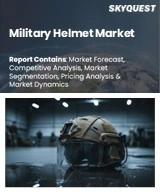
Military Helmet Market
Report ID: SQMIG20A2524
Report ID: SQMIG20A2524
[email protected]
USA +1 351-333-4748
Report ID:
SQMIG20A2524 |
Region:
Global |
Published Date: December, 2025
Pages:
176
|Tables:
113
|Figures:
71


Global Military Helmet Market size was valued at USD 2.8 billion in 2024 and is poised to grow from USD 2.99 billion in 2025 to USD 5.1 billion by 2033, growing at a CAGR of 6.9% during the forecast period (2026-2033).
Increased defense budgets and geopolitical tensions, modernization of soldier equipment and safety, and technological advancements drive the growth of the military helmet market.
Growing defense budgets globally and heightened geopolitical tensions have increased the demand for the latest protective equipment needed to safely support troops in combat. Governments around the globe are investing in modernizing military gear where helmets are a key component--improving trooper protection while increasing capabilities. Advances in technology- such as lighter composite materials, integrated communication devices, and night vision have altered product designs to support next-generation combat specifications. Advancements have improved comfort, reliability, and durability while increasing the adoption rate, all of which have led to significant growth in the military helmet industry.
On the contrary, high cost of production, difficulty in maintaining comfort and protection balance, intellectual property issues, and restrictions on export are slated to impede military helmet market penetration across the study period and beyond.
How is AI Transforming the Military Helmet Industry?
Incorporating intelligent features through AI integration helps enhance soldiers’ situational awareness and performance in action. New helmets are equipped with artificial intelligence-driven sensors, in-the-moment data processing, and predictive analysis to facilitate faster decision-making in combat. Soldiers will have the capability to use augmented reality overlays, track vital signs, and facilitate the identification of potential threats in combat environments. By combining thoughtfully designed materials and smart technologies, artificial intelligence is designing helmets with innovative features that better soldier safety, function, and utility.
Market snapshot - 2026-2033
Global Market Size
USD 2.19 Billion
Largest Segment
Lightweight Helmet
Fastest Growth
Enhanced Combat Helmet
Growth Rate
6.7% CAGR
To get more insights on this market click here to Request a Free Sample Report
Global Military Helmet Market is segmented by Type, Weight, Material, Application and region. Based on Type, the market is segmented into Lightweight Helmet, Enhanced Combat Helmet and Modular Integrated Communications Helmet. Based on Weight, the market is segmented into Over 3 Lbs. and Up To 3 Lbs.. Based on Material, the market is segmented into UHMWPE Fiber, Advanced Aramid Fiber and Original Aramid Fiber Kevlar. Based on Application, the market is segmented into Law Enforcement and Military & Defense. Based on region, the market is segmented into North America, Europe, Asia Pacific, Latin America and Middle East & Africa.
Which Type of Helmets are Most Commonly Used in the Military?
Combat helmets are slated to account for a massive chunk of the global military helmet market share going forward. Their dominance can be attributed to their superior ballistic protection and adaptability in modern warfare. These helmets are widely preferred as they balance durability with operational flexibility, offering better resistance against advanced threats. Their compatibility with communication systems and night-vision devices makes them highly effective in diverse combat scenarios.
The military use of lightweight helmets is growing faster than all other helmet types, as military forces increasingly want to gear to provide more mobility, while still meeting safety standards. They are growing because helmets can be more comfortable and adaptable, and the stable and future adoption will be helmets that weigh less while still providing excellent protection and support the advances of new technologies and changes in battlefield strategies.
Which Weight Category is Most Commonly Used for Military Helmet?
The up to 3 lbs segment is slated to spearhead the global military helmet market revenue generation potential in the long run. High preference for helmets in this weight ranges from multiple military forces around the world to allow this segment to hold sway over others. Increased demand for lighter helmets indicates a favorable change in the military helmet outlook, indicating a preference for helmets that provide Increased demand for lighter helmets indicates a favorable change in the military helmet outlook, indicating a preference for helmets that provide a degree of safety but also facilitate enhanced comfort and operational effectiveness in modern warfare.
Helmets weighing up to three pounds are slated to provide lucrative opportunities for military helmet companies in the future. High preference for lightweight protection, rather than protection that sacrifices characteristics like performance, is creating a new business scope for this segment.
To get detailed segments analysis, Request a Free Sample Report
What Makes Asia Pacific a Leader in the Military Helmet Market?
Significant growth in defense budgets, modernization of armed forces, and increased spending on combat gear have allowed Asia Pacific to continue to be a leader in the military helmet market. Countries in this geographical region prioritize keeping soldiers safe and are seeking to develop helmets that include modern communication and surveillance technologies. The regional superiority is bolstered by strong manufacturing capabilities and government initiatives with military helmet market revenue from Asia Pacific being a major boost for growth and technological advancement in the global market.
Military Helmet Market in Japan
Japan's military helmet market strategies is developing steadily, and this is attributed to the government's focus on advancing defense capabilities and enhancing self-defense forces. The government is investing in modern helmets made from lightweight materials that will provide the ability to communicate with other soldiers and the ability to equip soldiers with night-vision technology. Continued innovation in technology and government defense modernization programs will ensure military helmet market penetration continues to grow in Japan, which exemplifies the government's commitment to using advanced protective equipment into national defense strategies.
Military Helmet Market in South Korea
Modernization of defense platforms and the focus on expanding the capabilities of its armed forces are primarily shaping military helmet sales, in the country. More specifically, the country is developing helmets that are lightweight and durable, featuring modern communications and surveillance technology to address a variety of combat capabilities. The emphasis by South Korea for its soldiers to be outfitted with helmets that offer military-level safety continues to sustain growth in the long term.
Should Military Helmet Vendors Invest in the North American Market?
North America is a key area for military helmet suppliers as a result of investment into defense budgets, research and development, and improvements in combat equipment technology. North America has prominent manufacturers of lightweight and high-performing helmets that possess communications capabilities and augmented reality. These elements support innovations and broad-based adoption and have shaped military helmet market data to provide a benchmark for global modernization in defense, as well as protective equipment.
Military Helmet Market in the United States
The United States plays a prominent role in the military helmet market statistics, backed by advanced defense systems, the highest military budgets in the world, and unprecedented sustainment initiatives in protective technologies. The U.S. is positioned as the leader in implementing commercially available helmets that outfitted with communications, augmented reality, or improvements in ballistic protection. Collaboration between U.S. defense agencies and manufacturers will continue to drive development and innovations, securing their stance as the world leader in setting military helmet standards in safety, modernization, and advancing technologies.
Military Helmet Market in Canada
Sales of military helmets in Canada are slated to rise at a steady pace in the future. A key focus is placed on the procurement of lightweight helmets that will improve operational comfort and efficiency with an emphasis on communication capabilities. Current modernization efforts and partnerships with manufacturers from around the world continue to increase military helmet market share in Canada, which further solidifies the countries commitment to providing good protective technology to all levels of military personnel.
How Is the Military Helmet Market Evolving in Europe?
The military helmet market regional outlook, in Europe is changing quickly as countries are making investments in modernizing their military while improving the protection of their soldiers. The market is growing based on the demand to utilize lightweight materials, enhanced ballistic protection, and communication capabilities, improving the overall effectiveness and safety of soldiers in combat. Because of collaborative research and development projects taking place across Europe, the outlook of the military helmet market in this region is nearing a stage that will focus on technology-based, adaptive helmets that can meet the security challenges of today.
Military Helmet Market in Germany
Like the rest of Europe, the military helmet market regional forecast in Germany is evolving due to the country's investments in upgrading national defense and its desire to equip soldiers with protective gear that works at the highest levels. The focus is on helmets that prioritize lightweight design and ballistic protection while allowing for future integration with communications and surveillance technologies, which is all designed to help with the overall efficiency and safety of troops in the field.
Military Helmet Market in France
Military helmets in France are in demand due to modernization of armed forces and an emphasis on safety of soldiers with next generation protective equipment. Military helmets are designed with increased ballistic protection, lightweight shell design, and tactical system and communications compatibility, which will improve operational readiness and efficiency in combat. The trajectory of military helmet market analysis in France reflects the countries commitment to military modernization and modernization of technology.
Military Helmet Market in the United Kingdom
The United Kingdom military helmet market revenue is developing as the defense forces modernize their equipment for soldier safety and greater effectiveness. The focus is on lightweight, durable military helmets that are combined with advanced communications and surveillance technologies to defend modern combat needs. Military helmet market share in the United Kingdom is being strengthened by innovations in development and procurement policies, demonstrating the U.K.’s focus on developing innovative and reliable protection for its forces.
To know more about the market opportunities by region and country, click here to
Buy The Complete Report
Military Helmet Market Drivers
Modernization of Soldier Equipment and Safety
Increased Defense Budgets and Geopolitical Tensions
Military Helmet Market Restraints
High Cost of Production
Safety and Comfort Challenges
Request Free Customization of this report to help us to meet your business objectives.
The competition in the military helmets market revenue is increasing as brands focus on addressing the changing needs of soldiers and combating demands. Military helmet companies that prioritize innovations in lightweight designs, communication technology, and protective technology are best suited to address operational requirements. By delivering innovative solutions and embarking on strategic modernization, military helmet companies enhance their customer base and influence in an ever-changing and competitive defense equipment market.
Emerging companies in the military helmet sector are driving innovation, introducing advanced protective technologies and modern designs to meet evolving defense needs. Key startups are listed below.
SkyQuest’s ABIRAW (Advanced Business Intelligence, Research & Analysis Wing) is our Business Information Services team that Collects, Collates, Correlates, and Analyses the Data collected by means of Primary Exploratory Research backed by robust Secondary Desk research.
As per SkyQuest analysis, the military helmet industry is expanding steadily as defense forces worldwide prioritize soldier protection, modernization of equipment, and adoption of advanced technologies. Innovations in lightweight materials, integrated communication technologies, and augmented reality features are improving the versatility of headwear and enhanced performance. However, high costs of production and challenges in balancing comfort with safety are impeding the sales of military helmets. The Asia Pacific region, particularly large defense expenditure countries, is the dominant market, where a significant amount of research and development funding is being driven by the region. The widespread interest in lightweight, economical, and technologically advanced helmets is anticipated to drive astonishing growth in the area of military protective gear on the global stage.
| Report Metric | Details |
|---|---|
| Market size value in 2024 | USD 2.8 billion |
| Market size value in 2033 | USD 5.1 billion |
| Growth Rate | 6.9% |
| Base year | 2024 |
| Forecast period | 2026-2033 |
| Forecast Unit (Value) | USD Billion |
| Segments covered |
|
| Regions covered | North America (US, Canada), Europe (Germany, France, United Kingdom, Italy, Spain, Rest of Europe), Asia Pacific (China, India, Japan, Rest of Asia-Pacific), Latin America (Brazil, Rest of Latin America), Middle East & Africa (South Africa, GCC Countries, Rest of MEA) |
| Companies covered |
|
| Customization scope | Free report customization with purchase. Customization includes:-
|
To get a free trial access to our platform which is a one stop solution for all your data requirements for quicker decision making. This platform allows you to compare markets, competitors who are prominent in the market, and mega trends that are influencing the dynamics in the market. Also, get access to detailed SkyQuest exclusive matrix.
Table Of Content
Executive Summary
Market overview
Parent Market Analysis
Market overview
Market size
KEY MARKET INSIGHTS
COVID IMPACT
MARKET DYNAMICS & OUTLOOK
Market Size by Region
KEY COMPANY PROFILES
Methodology
For the Military Helmet Market, our research methodology involved a mixture of primary and secondary data sources. Key steps involved in the research process are listed below:
1. Information Procurement: This stage involved the procurement of Market data or related information via primary and secondary sources. The various secondary sources used included various company websites, annual reports, trade databases, and paid databases such as Hoover's, Bloomberg Business, Factiva, and Avention. Our team did 45 primary interactions Globally which included several stakeholders such as manufacturers, customers, key opinion leaders, etc. Overall, information procurement was one of the most extensive stages in our research process.
2. Information Analysis: This step involved triangulation of data through bottom-up and top-down approaches to estimate and validate the total size and future estimate of the Military Helmet Market.
3. Report Formulation: The final step entailed the placement of data points in appropriate Market spaces in an attempt to deduce viable conclusions.
4. Validation & Publishing: Validation is the most important step in the process. Validation & re-validation via an intricately designed process helped us finalize data points to be used for final calculations. The final Market estimates and forecasts were then aligned and sent to our panel of industry experts for validation of data. Once the validation was done the report was sent to our Quality Assurance team to ensure adherence to style guides, consistency & design.
Analyst Support
Customization Options
With the given market data, our dedicated team of analysts can offer you the following customization options are available for the Military Helmet Market:
Product Analysis: Product matrix, which offers a detailed comparison of the product portfolio of companies.
Regional Analysis: Further analysis of the Military Helmet Market for additional countries.
Competitive Analysis: Detailed analysis and profiling of additional Market players & comparative analysis of competitive products.
Go to Market Strategy: Find the high-growth channels to invest your marketing efforts and increase your customer base.
Innovation Mapping: Identify racial solutions and innovation, connected to deep ecosystems of innovators, start-ups, academics, and strategic partners.
Category Intelligence: Customized intelligence that is relevant to their supply Markets will enable them to make smarter sourcing decisions and improve their category management.
Public Company Transcript Analysis: To improve the investment performance by generating new alpha and making better-informed decisions.
Social Media Listening: To analyze the conversations and trends happening not just around your brand, but around your industry as a whole, and use those insights to make better Marketing decisions.
REQUEST FOR SAMPLE
 REQUEST FREE CUSTOMIZATION
Global Military Helmet Market size was valued at USD 2.19 Billion in 2023 and is poised to grow from USD 2.35 Billion in 2024 to USD 3.95 Billion by 2032, growing at a CAGR of 6.7% during the market forecast period (2025-2032).
The competition in the military helmets market revenue is increasing as brands focus on addressing the changing needs of soldiers and combating demands. Military helmet companies that prioritize innovations in lightweight designs, communication technology, and protective technology are best suited to address operational requirements. By delivering innovative solutions and embarking on strategic modernization, military helmet companies enhance their customer base and influence in an ever-changing and competitive defense equipment market. '3M Company', 'ArmorSource LLC', 'DuPont de Nemours Inc.', 'Honeywell International Inc.', 'Revision Military Inc.', 'Morgan Advanced Materials', 'Point Blank Enterprises, Inc', 'RTX Corporation', 'BAE Systems plc', 'THALES', 'Eagle Industries', 'MKU Limited', 'ArmorSource', 'Safariland Group'
The modernization of soldier equipment and focus on safety are leading to the introduction of modern military helmets combining protection, comfort and integration of technology. Militaries are directing increased investment towards helmets with communication systems, improvements to ballistic resistance and lightweight construction to improve effectiveness and operational success. These developments have contributed to steady growth in military helmet market outlook, demonstrating continued investments in innovation and preparation of defence efforts.
Enhanced Night-Vision and AR Capabilities: Military helmet companies are focusing on improving their AR and night vision capabilities to stand out from the competition. These advancements help in improving tactical decision-making capability for soldiers operating in low-light environments. By increasing overall effective missions and improving safety, this military helmet market trend becomes indispensable for companies looking to boost their sales.
What Makes Asia Pacific a Leader in the Military Helmet Market?


Want to customize this report? This report can be personalized according to your needs. Our analysts and industry experts will work directly with you to understand your requirements and provide you with customized data in a short amount of time. We offer $1000 worth of FREE customization at the time of purchase.
Feedback From Our Clients


 USA (+1) 351-333-4748

