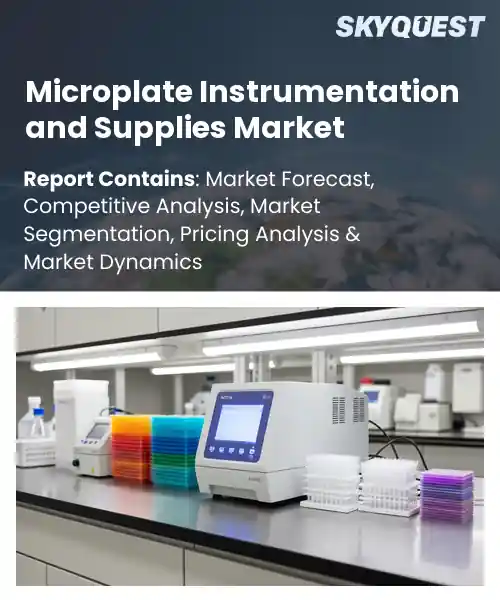
Microplate Instrumentation and Supplies Market
Report ID: SQMIG35A3918
Report ID: SQMIG35A3918
[email protected]
USA +1 351-333-4748
Report ID:
SQMIG35A3918 |
Region:
Global |
Published Date: June, 2026
Pages:
157
|Tables:
180
|Figures:
79


Global Microplate Instrumentation And Supplies Market size was valued at USD 4.4 Billion in 2024 and is poised to grow from USD 4.58 Billion in 2025 to USD 6.32 Billion by 2033, growing at a CAGR of 4.1% during the forecast period (2026-2033).
Microplate instrumentation and supplies comprise readers, washers, incubators and consumables (plates, reagents, tip racks) that support high-throughput screening in drug discovery and clinical diagnostics. The microplate market is important because it allows researchers to process thousands of samples at once while maintaining data integrity, reducing time-to-market and cost-effectiveness. Rapidly growing demand for multiplexed, rapid assays in biomanufacturing and personalized medicine has been the primary driver behind this trend; post-COVID-19, it has created a larger need than ever before for scalable test platforms. Adoption of microplate systems has expanded from academic laboratories into contract research organizations over the past decade; this is evidenced by the increasing number of plate handling robotic devices in the pharmaceutical pipeline.
Regulatory pressure for reproducible assay data has also emerged as a second catalyst for microplate instrumentation and supplies market growth, along with the continued shift towards decentralized clinical trials. As laboratory agencies require valid data through approved assays, laboratories have been investing heavily in microplate systems that combine imaging, luminescent detection and analytical capabilities in one integrated piece of equipment. In turn, this demand from laboratories drives suppliers to create modular platforms that can be used at both academic bench tops and in larger biomanufacturing applications, including portable readers for use in rural hospitals during point-of-care antigen testing during the COVID-19 pandemic. Consequently, manufacturers capture revenue streams through service contracts, software subscriptions and consumable kits tailored to therapeutic‑area workflows such as immuno‑oncology and cell‑therapy potency assays.
How is AI-driven Automation Reshaping The Microplate Instrumentation And Supplies Market?
Assay automation using AI technology creates an efficient microplate environment by streamlining assay preparation (setup), data acquisition (capture), and data analysis. By utilizing intelligent liquid handling robotics, liquid dispensing volumes are optimized and adjusted in real-time, leading to a reduction in errors and an increase in the speed of high-throughput screening. Integrated software is being developed that connects plate readers to laboratory information management systems (LIMS), allowing for a flow of data between different devices and predictive maintenance of those instruments. As more laboratories adopt products that are connected to each other, the demand for smart consumables and compatible hardware is increasing, thus fueling the market's overall growth in the coming years.
An excellent example of this trend occurred when a leading manufacturer of microplates announced in May 2025 that they would release an AI-based enhanced plate reader that will automatically adjust the optimal detection settings on the plate reader to ensure optimum throughput while simultaneously reducing the amount of time a technician actually spends on the instrument. This demonstrates how the efficiency gained through the use of automation will help to drive the continued expansion of the entire market.
Market snapshot - (2026-2033)
Global Market Size
USD 4.4 Billion
Largest Segment
Microplates & Consumables
Fastest Growth
Microplate Dispensers
Growth Rate
4.1% CAGR
To get more insights on this market click here to Request a Free Sample Report
Global microplate instrumentation and supplies market is segmented by product type, technology, application, end user, plate format, mode of operation and region. Based on product type, the market is segmented into Microplate Readers, Microplate Washers, Microplate Dispensers, Microplate Incubators, Microplates & Consumables and Others. Based on technology, the market is segmented into Absorbance Detection, Fluorescence Detection, Luminescence Detection and Multimode Detection. Based on application, the market is segmented into Drug Discovery, Clinical Diagnostics, Genomics & Proteomics Research, ELISA Testing and Others. Based on end user, the market is segmented into Pharmaceutical & Biotechnology Companies, Academic & Research Institutes, Clinical Diagnostic Laboratories, Contract Research Organizations (CROs) and Others. Based on plate format, the market is segmented into 6-Well Plates, 24-Well Plates, 96-Well Plates, 384-Well Plates and Others. Based on mode of operation, the market is segmented into Automated Systems and Semi-Automated Systems. Based on region, the market is segmented into North America, Europe, Asia Pacific, Latin America and Middle East & Africa.
Fluorescence detection is likely to be the leading candidate for segmentation, due to its very high degree of sensitivity and ability to multiplex. The ability to detect low-level analytes and to do multiple assays simultaneously allows researchers to adapt their processes to the increasing complexity of drug discovery workflows and proteomics research. This adaptation will force laboratories to prioritize instruments that can support fluorescence. Consequently, manufacturers are focusing considerable resources toward developing, testing and introducing products with a broader range of wavelengths, as well as better optical detectors to fulfill this need.
As per microplate instrumentation and supplies market forecast, Luminescence detection is emerging as the fastest-growing segment, due to its ultra-low background noise (sensitivity) and very high dynamic range, making it ideal for conducting high-throughput screening and cell-based assays. The recent increase in demand for luminescent readouts from the validation of immunotherapy treatments and the increasing use of CRISPR has created an increased need for manufacturers to develop new photon-counting modules and provide cloud-based analysis tools as part of their product lines.
The 96-well plates are the most widely used in laboratories today due to their best combination of throughput to volume for the assay being run. Most common protocols used in all biology and chemistry labs can be run in a 96-well format. Due to compatibility with current automation and many available validated assays, method development time has greatly decreased, and as a result, laboratories have adopted this format across the pharmaceutical, academic, and clinical marketplaces. The strong position of the 96-well format provides for ongoing steady demand for plates as well as associated readout equipment.
As per microplate instrumentation and supplies market analysis, the 384-well format is seeing the greatest growth potential as laboratories focus on extreme throughput to speed up the evaluation of compound libraries. The push for decreased size leads to decreased usage of reagents and lower costs per data point (also resulting in decreased cost per data point). Because instrument vendors must change optics and liquid handling capabilities for smaller devices, there is a potential for many new efficiencies to be realized in this segment as well.
To get detailed segments analysis, Request a Free Sample Report
North America leads the way as a result of highly interlinked research infrastructure that combines top-level educational facilities with top rated biotech & pharmaceutical companies. There is a large investment in life science innovation which creates rapid access to new technology such as microplate readers, automated platforms and specialty consumables. With a well-structured regulatory environment there is a significant requirement for high reliability and reproducibility hence end-users are looking to adopt advanced high-throughput solutions. The collaborative ecosystem encourages ongoing product improvements and extensive technical support/training gives end-users' confidence, making it a desirable market for worldwide manufacturers hoping for strategic presence.
Within the U.S. Microplate Instrumentation and Supply Industry is dependent on the increase of number of research universities, leading biotech clusters and a developed pharmaceutical industry. This creates a culture that encourages early adoption of high-throughput platforms, strong collaboration with instrument manufacturers helps in the ongoing improvement of assay design and having an abundance of training programs for specialized areas creates a culture of innovation which accelerates the growth of this market.
The Microplate Instrumentation and Supplies Market in Canada indicates a collaborative research environment that connects high-quality academia with government health programs. This provides a large demand for dependable assay products because of the existence of well-known life-science hubs, particularly in Ontario and Quebec. The focus on precision medicine and new biotech startups increases interest in scalable microplate solutions, and supported regulatory frameworks and readily available technical service enhance the potential of achieving sustainable growth within these markets.
Europe has experienced significant growth due to unwavering dedication to scientific excellence, a multitude of international research organizations, and increasing levels of funding for personalized medicine. The aligned regulatory requirements of the European Union enable development of a harmonized marketplace, encouraging manufacturers to develop sophisticated instrumentation platforms for the research community using microplates. Opportunities to collaborate through research collaborations and cross-border consortia promote sharing of knowledge while allowing high-throughput screening to become widely adopted at both the academic and industrial levels. In addition, the increased focus on sustainable laboratory practices will encourage development of more environmentally friendly consumables adding attractiveness to the overall market. With significant funding mechanisms in place designed to aid ongoing advances in technology, Europe is an energised region for the expansion of microplate technology.
Microplate Instrumentation and Supplies Market in Germany is anchored by a powerful combination of world‑class research universities and a thriving pharmaceutical manufacturing base. The nation’s focus on precision diagnostics and advanced drug discovery drives continuous demand for high‑performance microplate readers and automation. Strong engineering expertise supports local development of customized consumables, and collaborative industry‑academia projects foster rapid integration of emerging assay formats.
Microplate Instrumentation and Supplies Market in the United Kingdom is experiencing accelerated growth due to an expanding biotech ecosystem and heightened emphasis on translational research. Government initiatives that promote innovation clusters encourage early adoption of high‑throughput technologies in both public and private laboratories. The presence of leading contract research organizations amplifies demand for flexible assay platforms, while strong ties to European research networks facilitate rapid diffusion of novel consumables.
Microplate Instrumentation and Supplies Market in France is emerging as a notable segment driven by increasing investment in life‑science start‑ups and a revitalized national research agenda. Collaborative platforms linking universities with health agencies stimulate interest in scalable microplate solutions for diagnostic and therapeutic screening. Growing awareness of sustainable lab practices also prompts adoption of recyclable consumables, positioning the French market as a fertile ground for innovative microplate technologies.
Asia Pacific strengthens its position through rapid expansion of biotechnology hubs, rising emphasis on genomics and proteomics, and strong governmental support for research infrastructure. Nations such as Japan and South Korea invest heavily in high‑throughput screening capabilities to accelerate drug development and precision medicine initiatives. The region’s culture of technological adoption encourages swift integration of automated microplate workstations, while collaborations between semiconductor expertise and life‑science applications foster novel sensor‑based plate designs. Growing domestic demand from contract research organizations and a focus on exporting cutting‑edge assay consumables further enhance the region’s competitive edge, establishing Asia Pacific as a dynamic frontier for microplate instrumentation advancement.
Microplate Instrumentation and Supplies Market in Japan benefits from a sophisticated research ecosystem that blends deep academic heritage with advanced manufacturing capabilities. National emphasis on precision health and regenerative medicine fuels demand for highly reliable microplate readers and customized assay kits. Strong partnerships between electronic component firms and life‑science companies drive innovative plate designs, while extensive training networks ensure skilled adoption across university and industrial laboratories.
Microplate Instrumentation and Supplies Market in South Korea is propelled by a vibrant biotech sector and aggressive government policies that prioritize research commercialization. The country’s focus on high‑throughput drug screening and personalized therapeutic development stimulates need for integrated microplate automation solutions. Close collaboration between major electronics manufacturers and life‑science startups results in cutting‑edge detection technologies, while a growing network of contract research facilities amplifies market demand for versatile consumables.
To know more about the market opportunities by region and country, click here to
Buy The Complete Report
Advancements In Automation Technology
Growth In High‑Throughput Screening Applications
High Capital Investment Requirements
Regulatory Compliance Complexities
Request Free Customization of this report to help us to meet your business objectives.
The competitive landscape is shaped by intense rivalry among established instrument manufacturers and emerging niche players, driving accelerated product innovation and strategic collaborations. Companies are pursuing mergers to broaden portfolio breadth, forging partnerships with assay developers to integrate advanced detection capabilities, and investing in automation technologies to meet rising demand for high‑throughput screening. These tactics are intensifying market dynamics and influencing pricing, service models, and geographic expansion.
SkyQuest’s ABIRAW (Advanced Business Intelligence, Research & Analysis Wing) is our Business Information Services team that Collects, Collates, Correlates, and Analyses the Data collected by means of Primary Exploratory Research backed by robust Secondary Desk research.
As per SkyQuest analysis, the market’s momentum is chiefly driven by rapid advancements in automation technology that couple robotic liquid handling with smart plate readers, cutting assay time and boosting reproducibility, while the parallel surge in high‑throughput screening applications fuels demand for versatile microplate formats and consumables. The principal restraint remains the high capital investment required for state‑of‑the‑art instruments, which can deter smaller labs. North America continues to dominate the landscape thanks to its robust research ecosystem and strong funding streams. Within the market, fluorescence detection leads the technology segment, delivering the sensitivity that modern drug‑discovery workflows demand throughout the industry.
| Report Metric | Details |
|---|---|
| Market size value in 2024 | USD 4.4 Billion |
| Market size value in 2033 | USD 6.32 Billion |
| Growth Rate | 4.1% |
| Base year | 2024 |
| Forecast period | (2026-2033) |
| Forecast Unit (Value) | USD Billion |
| Segments covered |
|
| Regions covered | North America (US, Canada), Europe (Germany, France, United Kingdom, Italy, Spain, Rest of Europe), Asia Pacific (China, India, Japan, Rest of Asia-Pacific), Latin America (Brazil, Rest of Latin America), Middle East & Africa (South Africa, GCC Countries, Rest of MEA) |
| Companies covered |
|
| Customization scope | Free report customization with purchase. Customization includes:-
|
To get a free trial access to our platform which is a one stop solution for all your data requirements for quicker decision making. This platform allows you to compare markets, competitors who are prominent in the market, and mega trends that are influencing the dynamics in the market. Also, get access to detailed SkyQuest exclusive matrix.
Table Of Content
Executive Summary
Market overview
Parent Market Analysis
Market overview
Market size
KEY MARKET INSIGHTS
COVID IMPACT
MARKET DYNAMICS & OUTLOOK
Market Size by Region
KEY COMPANY PROFILES
Methodology
For the Microplate Instrumentation and Supplies Market, our research methodology involved a mixture of primary and secondary data sources. Key steps involved in the research process are listed below:
1. Information Procurement: This stage involved the procurement of Market data or related information via primary and secondary sources. The various secondary sources used included various company websites, annual reports, trade databases, and paid databases such as Hoover's, Bloomberg Business, Factiva, and Avention. Our team did 45 primary interactions Globally which included several stakeholders such as manufacturers, customers, key opinion leaders, etc. Overall, information procurement was one of the most extensive stages in our research process.
2. Information Analysis: This step involved triangulation of data through bottom-up and top-down approaches to estimate and validate the total size and future estimate of the Microplate Instrumentation and Supplies Market.
3. Report Formulation: The final step entailed the placement of data points in appropriate Market spaces in an attempt to deduce viable conclusions.
4. Validation & Publishing: Validation is the most important step in the process. Validation & re-validation via an intricately designed process helped us finalize data points to be used for final calculations. The final Market estimates and forecasts were then aligned and sent to our panel of industry experts for validation of data. Once the validation was done the report was sent to our Quality Assurance team to ensure adherence to style guides, consistency & design.
Analyst Support
Customization Options
With the given market data, our dedicated team of analysts can offer you the following customization options are available for the Microplate Instrumentation and Supplies Market:
Product Analysis: Product matrix, which offers a detailed comparison of the product portfolio of companies.
Regional Analysis: Further analysis of the Microplate Instrumentation and Supplies Market for additional countries.
Competitive Analysis: Detailed analysis and profiling of additional Market players & comparative analysis of competitive products.
Go to Market Strategy: Find the high-growth channels to invest your marketing efforts and increase your customer base.
Innovation Mapping: Identify racial solutions and innovation, connected to deep ecosystems of innovators, start-ups, academics, and strategic partners.
Category Intelligence: Customized intelligence that is relevant to their supply Markets will enable them to make smarter sourcing decisions and improve their category management.
Public Company Transcript Analysis: To improve the investment performance by generating new alpha and making better-informed decisions.
Social Media Listening: To analyze the conversations and trends happening not just around your brand, but around your industry as a whole, and use those insights to make better Marketing decisions.
REQUEST FOR SAMPLE
 REQUEST FREE CUSTOMIZATION
Global Microplate Instrumentation And Supplies Market size was valued at USD 4.4 Billion in 2024 and is poised to grow from USD 4.58 Billion in 2025 to USD 6.32 Billion by 2033, growing at a CAGR of 4.1% during the forecast period (2026-2033).
The competitive landscape is shaped by intense rivalry among established instrument manufacturers and emerging niche players, driving accelerated product innovation and strategic collaborations. Companies are pursuing mergers to broaden portfolio breadth, forging partnerships with assay developers to integrate advanced detection capabilities, and investing in automation technologies to meet rising demand for high‑throughput screening. These tactics are intensifying market dynamics and influencing pricing, service models, and geographic expansion. 'Thermo Fisher Scientific Inc.', 'Agilent Technologies, Inc.', 'Revvity, Inc.', 'Bio-Rad Laboratories, Inc.', 'Beckman Coulter Life Sciences', 'BMG LABTECH GmbH', 'Tecan Group Ltd.', 'Promega Corporation', 'Corning Incorporated', 'Greiner Bio-One International GmbH', 'Eppendorf SE', 'Hamilton Company', 'Berthold Technologies GmbH & Co. KG', 'Hudson Robotics, Inc.', 'Rayto Life and Analytical Sciences Co., Ltd.', 'Shenzhen Mindray Bio-Medical Electronics Co., Ltd.', 'Enzo Biochem, Inc.', 'Sartorius AG', 'Aurora Biomed Inc.', 'Biochrom Ltd.'
Automated Workflow Integration: Laboratories are rapidly adopting fully automated workflow solutions that connect microplate readers, liquid handlers, and data management platforms into seamless processes. This integration reduces manual handling errors, accelerates throughput, and frees skilled personnel for higher‑value tasks. Vendors are bundling hardware with cloud‑based orchestration software, enabling remote monitoring and real‑time protocol adjustments. The resulting operational efficiency appeals to both academic cores and industrial R&D sites, driving broader investment in comprehensive automation ecosystems rather than isolated instruments across global research environments today.
Why does North America Dominate the Global Microplate Instrumentation and Supplies Market? |@12


Want to customize this report? This report can be personalized according to your needs. Our analysts and industry experts will work directly with you to understand your requirements and provide you with customized data in a short amount of time. We offer $1000 worth of FREE customization at the time of purchase.
Feedback From Our Clients


 USA (+1) 351-333-4748

