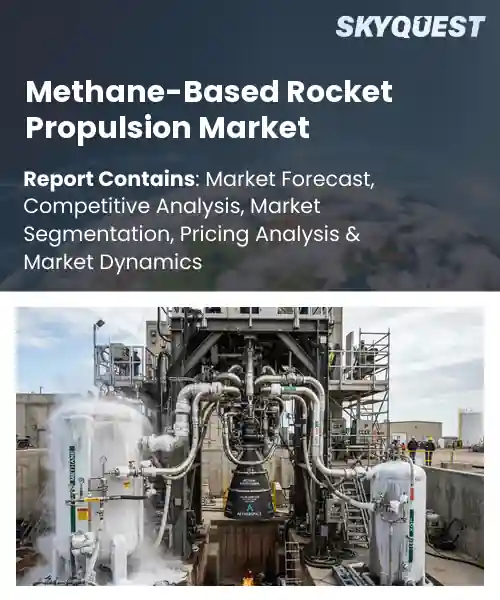
Methane-Based Rocket Propulsion Market
Report ID: SQMIG20A2914
Report ID: SQMIG20A2914
[email protected]
USA +1 351-333-4748
Report ID:
SQMIG20A2914 |
Region:
Global |
Published Date: August, 2026
Pages:
157
|Tables:
118
|Figures:
77


Global Methane-Based Rocket Propulsion Market size was valued at USD 2.67 Billion in 2024 and is poised to grow from USD 2.97 Billion in 2025 to USD 6.95 Billion by 2033, growing at a CAGR of 11.2% during the forecast period (2026-2033).
The methane‑based rocket propulsion market comprises companies and agencies developing engines that burn liquid methane and oxygen, a combination prized for higher impulse and cleaner exhaust than kerosene. Its importance stems from the shift toward reusable launch systems, where reduced soot prolongs engine life and lowers turnaround costs. Historically the sector lingered in research labs, but the 2010s saw a surge after SpaceX announced its Raptor engine and Blue Origin revealed the BE‑4, demonstrating viable performance and prompting programs such as NASA’s SLS methane stage. This evolution from concept to flight hardware has established methane as an alternative to propellants.
The credibility earned by early demonstrators now drives a surge of investment, the market’s growth catalyst, as launch firms chase methane’s performance and greener profile. Because methane can be sourced from natural gas or produced via renewable electricity, operators secure long‑term fuel contracts and qualify for subsidies, channeling private capital into development. United Launch Alliance’s methane‑derived Centaur for Atlas V and Russia’s Soyuz‑5 methane main engine exemplify how agencies exploit the propellant to lift heavier payloads and shorten refurbishment, boosting launch cadence. These successes expand the addressable market, lure entrants, and spur build‑out of cryogenic storage and liquefaction facilities, reinforcing demand.
How is AI enhancing efficiency in methane-based rocket propulsion systems?
Artificial intelligence is reshaping methane rocket propulsion by automating design loops, refining combustion models, and forecasting component health. Engineers feed vast simulation data into machine learning tools that reveal optimal injector patterns and reduce test iterations. Today several firms, including Rocket Lab with its Neutron engine and SpaceX with Raptor, rely on AI to shorten development cycles and lift performance. The broader market sees rising investment as AI cuts cost and risk, making methane engines more attractive for future launch services.
Rocket Lab in May 2025, featured in a market overview for its AI driven design of the Neutron methane engine, shows how data centric modeling speeds development and trims testing, supporting market growth. This approach lowers cycle time and improves reliability, encouraging operators to adopt methane propulsion for new missions.
Market snapshot - (2026-2033)
Global Market Size
USD 2.67 Billion
Largest Segment
Rocket Engines
Fastest Growth
Supporting Components
Growth Rate
11.2% CAGR
To get more insights on this market click here to Request a Free Sample Report
Global methane-based rocket propulsion market is segmented by component, application, thrust class, end user and region. Based on component, the market is segmented into Rocket Engines, Fuel Storage Systems, Feed & Control Systems and Supporting Components. Based on application, the market is segmented into Launch Vehicles, Spacecraft Propulsion and Lunar & Planetary Missions. Based on thrust class, the market is segmented into Low Thrust, Medium Thrust and High Thrust. Based on end user, the market is segmented into Government Space Agencies, Commercial Space Companies and Defense Organizations. Based on region, the market is segmented into North America, Europe, Asia Pacific, Latin America and Middle East & Africa.
Rocket engines segment dominates because they are the core power producers that directly convert methane and liquid oxygen into thrust, making them indispensable for any launch system. Their technological maturity, demonstrated reliability, and ongoing investments in additive manufacturing create a compelling value proposition that attracts both governmental and commercial programs. Consequently, engine development drives supplier ecosystems, stimulates downstream component innovation, and anchors the overall global strategic growth market direction.
However, fuel storage systems segment experiences the fastest growth as the demand for higher energy density and cryogenic handling capabilities intensifies. Innovations in lightweight insulation and modular tank designs enable rapid integration with reusable launch architectures, unlocking new mission profiles and attracting investment that propels market expansion and future opportunity creation.
Lunar & planetary missions segment stands out because the quest for sustainable surface operations drives the need for in situ propellant production, and methane offers a viable, locally sourced fuel. This aligns with long term exploration strategies, prompting agencies to prioritize methane engine development for descent, ascent, and surface mobility. The resulting focus channels R&D funding, partnership formations, and technology validation toward mission critical hardware, cementing its leadership within the market.
Meanwhile, spacecraft propulsion segment is emerging as the key high growth area as commercial satellite constellations seek efficient orbit raising and station keeping solutions. Methane’s higher specific impulse and cleaner combustion enable longer engine life and reduced maintenance, attracting manufacturers to integrate methane thrusters into platforms, thereby accelerating market adoption and expanding the customer base.
To get detailed segments analysis, Request a Free Sample Report
North America leads through a combination of advanced aerospace infrastructure, deep research ecosystems, and strong collaboration between government agencies and private innovators. The United States hosts a concentration of launch service providers that have embraced sustainable propulsion concepts, while Canada contributes cutting‑edge cryogenic technology and a supportive regulatory environment. Robust funding mechanisms, a skilled engineering talent pool, and a history of pioneering propulsion experiments create a fertile ground for rapid development and commercialization of methane‑based engines. The region’s emphasis on reducing carbon footprints aligns with broader environmental goals, further reinforcing its leadership position in the emerging market.
Methane-Based Rocket Propulsion Market in United States benefits from a legacy of high‑performance launch operations and a vibrant venture capital landscape that fuels start‑up activity. Integration of methane technology into existing launch facilities leverages extensive testing grounds and a skilled workforce. Collaboration between NASA, the Department of Defense, and commercial entities accelerates technology validation, while academic research centers provide continuous innovation pipelines. These dynamics collectively reinforce the United States as a hub for next‑generation propulsion solutions.
Methane-Based Rocket Propulsion Market in Canada draws strength from its expertise in cryogenic engineering and a collaborative approach between federal research agencies and private aerospace firms. The country’s commitment to clean energy transitions encourages investment in low‑emission propulsion concepts. Access to specialized testing sites and a supportive regulatory framework enable smoother technology trials. Partnerships with North American launch operators further integrate Canadian capabilities into larger supply chains, positioning Canada as a critical contributor to the methane propulsion ecosystem.
Asia Pacific’s momentum stems from aggressive aerospace modernization programs, strategic focus on sustainability, and a surge in regional launch capacity. Nations such as Japan and South Korea are channeling significant research investment into methane engine development to reduce reliance on traditional fuels and enhance mission flexibility. The region’s growing commercial satellite demand, coupled with government incentives for greener technologies, creates a fertile market for innovative propulsion solutions. Collaborative research networks across universities and defense establishments also accelerate knowledge transfer, while emerging private launch companies seek cost‑effective, high‑performance alternatives, reinforcing the rapid expansion of methane‑based propulsion across Asia Pacific.
Methane-Based Rocket Propulsion Market in Japan is propelled by a strong tradition of precision engineering and a national commitment to carbon‑reduction in space activities. Government space agencies are actively sponsoring demonstrator projects that integrate methane engines into existing launch platforms. Japanese manufacturers leverage advanced materials science to improve engine efficiency, while partnerships with international partners facilitate technology exchange. This focused effort aligns with broader industrial strategies to position Japan at the forefront of sustainable aerospace innovation.
Methane-Based Rocket Propulsion Market in South Korea is energized by a proactive policy environment that encourages eco‑friendly launch solutions. The country’s leading aerospace firms are investing in research facilities dedicated to methane combustion research, aiming to replace conventional propellants. Collaborative programs with research institutes foster rapid prototyping and testing, while public‑private alliances support the scaling of new engine designs. These initiatives reflect South Korea’s ambition to become a key player in the next generation of launch technology.
Europe is advancing its role through coordinated research initiatives, a strong emphasis on environmental stewardship, and a diversified industrial base that encourages cross‑border collaboration. The European Space Agency, together with national programs, is driving joint demonstrator missions that validate methane technology on multiple launch vehicles. A robust network of specialized suppliers, advanced testing facilities, and regulatory frameworks that prioritize low‑emission propulsion fosters a conducive ecosystem. Strategic investments in workforce development and open‑innovation platforms further enhance Europe’s capacity to deliver competitive methane‑based propulsion solutions across the continent.
Methane-Based Rocket Propulsion Market in Germany benefits from a deep engineering heritage and a collaborative industrial consortium that unites aerospace manufacturers, universities, and research institutes. German firms focus on modular engine designs that can be integrated with existing launch systems, while state‑supported research programs explore advanced combustion cycles. The emphasis on precision manufacturing and rigorous testing ensures high reliability, reinforcing Germany’s reputation as a leader in sustainable propulsion technology.
Methane-Based Rocket Propulsion Market in United Kingdom is shaped by a vibrant start‑up ecosystem and strong governmental backing for green aerospace initiatives. UK research centers concentrate on innovative thrust‑optimization techniques and low‑temperature fuel handling, complementing the expertise of established aerospace contractors. Collaborative efforts with European partners enable shared testing infrastructure, while policy incentives promote rapid commercialization of methane engine concepts, positioning the United Kingdom as a dynamic hub for propulsion innovation.
Methane-Based Rocket Propulsion Market in France leverages a legacy of aerospace excellence and a coordinated national strategy that aligns defense, civil, and commercial interests. French agencies support integrated test campaigns that assess methane engine performance within broader launch vehicle architectures. Industry clusters dedicated to propulsion components contribute specialized knowledge, while academic research emphasizes combustion efficiency and emissions reduction. This cohesive approach strengthens France’s influence in shaping the future of sustainable rocket propulsion.
To know more about the market opportunities by region and country, click here to
Buy The Complete Report
Increasing Demand for Green Launches
Advancements in Cryogenic Fuel Management
High Development Cost and Complexity
Regulatory Uncertainties in Methane Usage
Request Free Customization of this report to help us to meet your business objectives.
The methane‑based rocket propulsion market is shaped by intense competition among a few key players that are accelerating technology development, securing strategic partnerships and pursuing acquisitions to dominate methalox engine capabilities; for example, a leading aerospace firm recently partnered with a fuel‑technology company to co‑develop a reusable methane engine, while another announced the acquisition of a small propulsion‑system supplier to broaden its product portfolio. These moves intensify rivalry and drive rapid innovation across the sector.
Top Player’s Company Profile
SkyQuest’s ABIRAW (Advanced Business Intelligence, Research & Analysis Wing) is our Business Information Services team that Collects, Collates, Correlates, and Analyses the Data collected by means of Primary Exploratory Research backed by robust Secondary Desk research.
As per SkyQuest analysis, the global methane‑based rocket propulsion market is driven primarily by the rising demand for green launches that favor lower‑emission fuels, while advancements in cryogenic fuel management and AI‑enabled design tools form a second catalyst accelerating development cycles and performance. The rocket‑engine segment remains the market’s core, supplying the thrust needed for launch vehicles and space missions. North America dominates the landscape due to its mature aerospace ecosystem, strong government‑industry collaboration and abundant venture capital. However, the high development cost and technical complexity of methane engines act as a significant restraint, tempering broader adoption.
| Report Metric | Details |
|---|---|
| Market size value in 2024 | USD 2.67 Billion |
| Market size value in 2033 | USD 6.95 Billion |
| Growth Rate | 11.2% |
| Base year | 2024 |
| Forecast period | (2026-2033) |
| Forecast Unit (Value) | USD Billion |
| Segments covered |
|
| Regions covered | North America (US, Canada), Europe (Germany, France, United Kingdom, Italy, Spain, Rest of Europe), Asia Pacific (China, India, Japan, Rest of Asia-Pacific), Latin America (Brazil, Rest of Latin America), Middle East & Africa (South Africa, GCC Countries, Rest of MEA) |
| Companies covered |
|
| Customization scope | Free report customization with purchase. Customization includes:-
|
To get a free trial access to our platform which is a one stop solution for all your data requirements for quicker decision making. This platform allows you to compare markets, competitors who are prominent in the market, and mega trends that are influencing the dynamics in the market. Also, get access to detailed SkyQuest exclusive matrix.
Table Of Content
Executive Summary
Market overview
Parent Market Analysis
Market overview
Market size
KEY MARKET INSIGHTS
COVID IMPACT
MARKET DYNAMICS & OUTLOOK
Market Size by Region
KEY COMPANY PROFILES
Methodology
For the Methane-Based Rocket Propulsion Market, our research methodology involved a mixture of primary and secondary data sources. Key steps involved in the research process are listed below:
1. Information Procurement: This stage involved the procurement of Market data or related information via primary and secondary sources. The various secondary sources used included various company websites, annual reports, trade databases, and paid databases such as Hoover's, Bloomberg Business, Factiva, and Avention. Our team did 45 primary interactions Globally which included several stakeholders such as manufacturers, customers, key opinion leaders, etc. Overall, information procurement was one of the most extensive stages in our research process.
2. Information Analysis: This step involved triangulation of data through bottom-up and top-down approaches to estimate and validate the total size and future estimate of the Methane-Based Rocket Propulsion Market.
3. Report Formulation: The final step entailed the placement of data points in appropriate Market spaces in an attempt to deduce viable conclusions.
4. Validation & Publishing: Validation is the most important step in the process. Validation & re-validation via an intricately designed process helped us finalize data points to be used for final calculations. The final Market estimates and forecasts were then aligned and sent to our panel of industry experts for validation of data. Once the validation was done the report was sent to our Quality Assurance team to ensure adherence to style guides, consistency & design.
Analyst Support
Customization Options
With the given market data, our dedicated team of analysts can offer you the following customization options are available for the Methane-Based Rocket Propulsion Market:
Product Analysis: Product matrix, which offers a detailed comparison of the product portfolio of companies.
Regional Analysis: Further analysis of the Methane-Based Rocket Propulsion Market for additional countries.
Competitive Analysis: Detailed analysis and profiling of additional Market players & comparative analysis of competitive products.
Go to Market Strategy: Find the high-growth channels to invest your marketing efforts and increase your customer base.
Innovation Mapping: Identify racial solutions and innovation, connected to deep ecosystems of innovators, start-ups, academics, and strategic partners.
Category Intelligence: Customized intelligence that is relevant to their supply Markets will enable them to make smarter sourcing decisions and improve their category management.
Public Company Transcript Analysis: To improve the investment performance by generating new alpha and making better-informed decisions.
Social Media Listening: To analyze the conversations and trends happening not just around your brand, but around your industry as a whole, and use those insights to make better Marketing decisions.
REQUEST FOR SAMPLE
 REQUEST FREE CUSTOMIZATION
Global Methane-Based Rocket Propulsion Market size was valued at USD 2.67 Billion in 2024 and is poised to grow from USD 2.97 Billion in 2025 to USD 6.95 Billion by 2033, growing at a CAGR of 11.2% during the forecast period (2026-2033).
The methane‑based rocket propulsion market is shaped by intense competition among a few key players that are accelerating technology development, securing strategic partnerships and pursuing acquisitions to dominate methalox engine capabilities; for example, a leading aerospace firm recently partnered with a fuel‑technology company to co‑develop a reusable methane engine, while another announced the acquisition of a small propulsion‑system supplier to broaden its product portfolio. These moves intensify rivalry and drive rapid innovation across the sector. 'Space Exploration Technologies Corp.', 'Blue Origin, LLC', 'United Launch Alliance, LLC', 'Rocket Lab Corporation', 'LandSpace Technology Corporation Ltd.', 'iSpace (Beijing Interstellar Glory Space Technology Co., Ltd.)', 'Relativity Space, Inc.', 'Arianespace SA', 'ArianeGroup GmbH', 'China Aerospace Science and Technology Corporation', 'Mitsubishi Heavy Industries, Ltd.', 'JSC Kuznetsov', 'KBKhA', 'Avio S.p.A.', 'Northrop Grumman Corporation', 'Ursa Major Technologies Inc.', 'Firefly Aerospace, Inc.', 'Impulse Space Inc.', 'PLD Space', 'HyImpulse Technologies GmbH'
The aerospace sector is experiencing heightened emphasis on reducing carbon emissions, and methane‑based propulsion is positioned as a cleaner alternative to conventional hydrocarbons, offering lower greenhouse gas outputs per mission, thereby aligning with emerging regulatory frameworks and corporate sustainability goals. Industry perception that methane reduces soot and improves efficiency reinforces its suitability for next‑generation launch vehicles, fostering broader acceptance.
Carbon‑Neutral Launch Services: Space agencies and commercial launch providers are increasingly prioritizing carbon‑neutral missions, positioning methane‑based propulsion as a strategic alternative to traditional kerosene. The fuel’s lower carbon intensity and potential for renewable synthesis align with emerging sustainability mandates and investor expectations. Partnerships between aerospace firms and renewable methane producers are accelerating technology validation, while customers demand greener launch options to meet ESG goals. This shift is reshaping procurement criteria, encouraging adoption and fostering a market ecosystem that values environmental performance alongside reliability.
Why does North America Dominate the Global Methane-Based Rocket Propulsion Market? |@12


Want to customize this report? This report can be personalized according to your needs. Our analysts and industry experts will work directly with you to understand your requirements and provide you with customized data in a short amount of time. We offer $1000 worth of FREE customization at the time of purchase.
Feedback From Our Clients


 USA (+1) 351-333-4748

