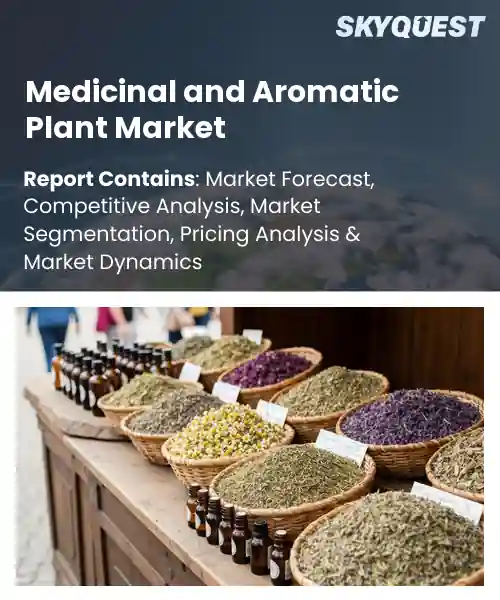
Medicinal and Aromatic Plant Market
Report ID: SQMIG35J2231
Report ID: SQMIG35J2231
[email protected]
USA +1 351-333-4748
Report ID:
SQMIG35J2231 |
Region:
Global |
Published Date: March, 2026
Pages:
157
|Tables:
117
|Figures:
77


Global Medicinal And Aromatic Plant Market size was valued at USD 444.0 Billion in 2024 and is poised to grow from USD 483.07 Billion in 2025 to USD 948.51 Billion by 2033, growing at a CAGR of 8.8% during the forecast period (2026-2033).
The primary driver of the medicinal and aromatic plant market is rising global demand for natural and plant derived products, propelled by consumer health consciousness and regulatory acceptance for botanical ingredients. This market comprises cultivated and wild harvested species used in pharmaceuticals, nutraceuticals, cosmetics and aromatherapy, and it matters because it links health outcomes to agricultural livelihoods and biodiversity conservation. Over decades the sector evolved from informal local collection toward organized cultivation, value addition, international trade, illustrated by turmeric and lavender becoming standardized export crops, while ginseng and neem inspired pharmaceutical research and supply chain certification of quality and traceability.A central factor shaping global expansion is commercialization through standardized cultivation and downstream processing, because when producers adopt Good Agricultural Practices and quality control buyers gain confidence and pay premiums. As certification and traceability reduce risk for pharmaceutical and cosmetic formulators, investment flows into processing facilities and branded extracts, yielding higher margins for farmers and enabling rural development as seen in contract farmed turmeric curcumin supply chains in India. Furthermore, regulatory harmonization and e commerce access cause exporters to diversify species and product formats, creating opportunities for sustainable wild management schemes, value added goods, and collaborative research into active compounds.
How is AI enhancing yield prediction and quality assessment in the medicinal and aromatic plant market?
AI is improving yield prediction and quality assessment in the medicinal and aromatic plant market by combining remote sensing, digital phenotyping and machine learning to interpret plant images, spectral signatures and sensor data. These tools spot stress early, forecast optimal harvest windows and predict biochemical quality traits, which helps growers plan cultivation and post harvest handling with greater confidence. In a market driven by authenticity and consistent active compound profiles, AI supports targeted irrigation, pest management and selective harvesting to protect therapeutic value. Practical deployments include image based phenotyping platforms and controlled environment analytics that link growth conditions to compound concentration, making supply chains more reliable.Himalaya Wellness January 2026, participated in a national seminar promoting AI enabled farm gate quality and traceability and highlighted portable diagnostics for authenticating raw herbs. This push for AI driven farm gate testing and digital traceability helps standardize suppliers and improves market access by reducing variability and increasing buyer confidence in ingredient quality.
Market snapshot - (2026-2033)
Global Market Size
USD 444.0 Billion
Largest Segment
Medicinal Plants
Fastest Growth
Aromatic Plants
Growth Rate
8.8% CAGR
To get more insights on this market click here to Request a Free Sample Report
Global medicinal and aromatic plant market is segmented by plant category, product type, application vertical, nature of cultivation and region. Based on plant category, the market is segmented into Medicinal Plants and Aromatic Plants. Based on product type, the market is segmented into Fresh/Whole Plants, Dried Leaves/Roots/Flowers and Plant Extracts & Essential Oils. Based on application vertical, the market is segmented into Pharmaceuticals & Herbal Medicine, Personal Care & Cosmetics, Food & Beverages and Aromatherapy & Wellness. Based on nature of cultivation, the market is segmented into Wild Harvested, Organic Cultivation and Conventional Farming. Based on region, the market is segmented into North America, Europe, Asia Pacific, Latin America and Middle East & Africa.
Plant Extracts & Essential Oils segment dominates because concentrated active constituents enable standardized, high-value formulations that integrate smoothly into pharmaceuticals, cosmetics, and aromatherapy. Their compatibility with modern processing and formulation technologies reduces variability and simplifies supply chain logistics, fostering strong partnerships with manufacturers. Regulatory acceptance of standardized extracts further elevates their commercial appeal, driving investment in extraction infrastructure and R&D that reinforces market leadership and enabling premiumization across end use categories.
However, Dried Leaves/Roots/Flowers are emerging as the fastest growing area due to renewed consumer interest in whole-plant preparations and clean-label products, fueling demand for teas, decoctions, and artisanal extracts. Improvements in drying technology and traceability enable consistent quality and longer shelf life, unlocking new retail and direct-to-consumer channels and opportunities for value-added processing.
Organic Cultivation segment dominates because certified practices reduce chemical residues and align with stringent quality expectations of pharmaceutical and premium personal care makers, commanding trust and price premiums. Sustainable soil management and biodiversity-supporting practices improve phytochemical profiles and long-term crop resilience, lowering supply risk. This alignment with consumer demand for clean, traceable ingredients encourages brand partnerships and investment in organic supply chains and certification infrastructure, entrenching organic as the preferred cultivation model.
Meanwhile, Wild Harvested is the most rapidly expanding area as formulators and consumers seek authentic chemotypes and unique phytochemical profiles sourced from natural habitats, enhancing product differentiation. Growing emphasis on ethical sourcing, improved traceability technology, and community-based harvesting programs is unlocking niche premium markets and supporting biodiversity-conscious branding, creating new value for suppliers and niche manufacturers.
To get detailed segments analysis, Request a Free Sample Report
Asia Pacific dominates the global medicinal and aromatic plant market owing to a convergence of traditional knowledge, diverse agroecological zones, and well-established cultivation and processing capabilities. Deep cultural acceptance of botanical therapies and long-standing integration of plant materials into mainstream healthcare and cosmetics create persistent domestic demand. Strong supplier networks, specialized seed varieties, and experienced smallholder and commercial growers support reliable raw material supply. Growing investment in value chain infrastructure, contract farming models, and quality assurance frameworks enhances traceability and premium positioning. Export orientation combined with strategic regional trade linkages enables scale and market access. Regulatory engagement promoting standardization and support for research and development further consolidates the region's competitive advantage in both conventional herbal products and high-value aromatic extracts.
Medicinal and Aromatic Plant Market in Japan benefits from advanced extraction technologies, stringent quality control standards, and strong linkages between academic research and industry. A mature domestic demand for botanical ingredients within pharmaceuticals, cosmetics, and specialty foods supports higher-value processing and niche product innovation. Concentration of specialized manufacturers and certification frameworks enables premium positioning. Collaboration across research institutions and contract manufacturers accelerates product development and ensures compliance with market requirements.
Medicinal and Aromatic Plant Market in South Korea leverages strong biotechnology capabilities, integrated manufacturing clusters, and close cooperation between ingredient suppliers and cosmetic and nutraceutical brands. Emphasis on quality certification and traceability supports premium sourcing narratives. Agile contract manufacturing and focus on functional botanicals drive product differentiation. Active industry associations and public research collaborations enable rapid adoption of innovative extraction methods and formulation techniques, strengthening export readiness and domestic sophistication.
Rapid expansion of the medicinal and aromatic plant market in Europe is driven by a combination of evolving consumer preferences for natural and traceable ingredients, robust regulatory frameworks that encourage quality and safety, and strong industrial capabilities across key markets. Well-established cultivation practices and high standards for certification support premium positioning and access to sophisticated end markets. Innovation hubs, particularly in extraction and formulation, enable differentiation while sustainability and organic cultivation practices align with consumer expectations. Distribution modernisation, including digital channels and specialist supply chains, accelerates market reach. Cross-border collaboration among research institutions, growers, and manufacturers fosters product development and standardisation. The region's emphasis on provenance, quality assurance, and technical expertise strengthens competitiveness in both domestic and international segments and niche luxury markets.
Medicinal and Aromatic Plant Market in Germany benefits from extensive cultivation infrastructure, a strong pharmaceutical and cosmetics manufacturing base, and rigorous quality and certification regimes. Industrial clusters support efficient sourcing and advanced extraction capabilities. Linkages between research institutions and manufacturers promote innovation and product development. High standards for traceability and compliance enable access to strong markets and mature supplier ecosystem underpins reliable raw material supply for domestic and export brands.
Medicinal and Aromatic Plant Market in United Kingdom is characterised by rapid innovation, dynamic brand development, and strong adoption of digital channels expanding consumer reach. A vibrant start-up ecosystem and active investment in botanical research and formulation support novel product launches. Emphasis on sustainable sourcing, certification, and unique botanical blends creates differentiation. Flexible manufacturing partners and specialist suppliers enable swift time to market while association-led initiatives promote quality and credibility.
Medicinal and Aromatic Plant Market in France is anchored by a heritage of botanical science, cultivation, and perfumery and cosmetics sector that values provenance and quality. Specialist growers and distillers maintain terroir-driven profiles supporting premium essential oils and extracts. Close links between research institutes and luxury brands drive refined formulations. Rigorous quality standards and certification pathways underpin market trust and support domestic channels and international demand for quality botanical ingredients.
North America is strengthening its position in the medicinal and aromatic plant market through a combination of advanced agricultural practices, investment in extraction and formulation technologies, and closer integration between research institutions and commercial developers. Emphasis on standardised quality systems, certification, and supply chain transparency raises buyer confidence for both domestic manufacturers and international buyers. Private-label and contract manufacturing capabilities enable rapid scaling of botanical ingredients into finished goods. Sustainability initiatives and diversified sourcing strategies support long-term raw material resiliency. Collaborative research, clinical validation efforts, and targeted product development for functional ingredients increase the region's appeal. Cross-border trade links and industry consortia further facilitate knowledge sharing and market access, reinforcing the region's evolving competitiveness. Clean label positioning and improved logistics further protect ingredient integrity while ethical sourcing initiatives add provenance value.
Medicinal and Aromatic Plant Market in United States is driven by robust research capabilities, advanced extraction and formulation technologies, and strong private-label and contract manufacturing that bridge ingredients to branded products. Focus on clinical validation and functional ingredients supports applications in nutraceuticals and speciality cosmetics. Emphasis on transparent supply chains and quality certification attracts investment. Industry consortia and academic partnerships accelerate innovation and standardise best practices across the value chain.
Medicinal and Aromatic Plant Market in Canada emphasises sustainable cultivation, organic certification, and specialty crops adapted to regional climates. Research centres and processing hubs support value addition through refined extraction and handling that preserve ingredient integrity. Collaboration among growers, brands, and indigenous communities fosters provenance and ethical sourcing. Clear regulatory pathways and network of quality-focused suppliers enable Canadian botanical ingredients to meet demanding buyer requirements across domestic and international markets.
To know more about the market opportunities by region and country, click here to
Buy The Complete Report
Rising Demand For Herbal Remedies
Expansion Of Natural Personal Care
Supply Chain Vulnerabilities And Quality
Regulatory Complexity And Compliance
Request Free Customization of this report to help us to meet your business objectives.
Competitive dynamics in the global medicinal and aromatic plant market are shaped by consolidation among ingredient houses, portfolio acquisitions and ingredient partnerships that secure supply and novel actives. Major deals such as Givaudan’s 2018 acquisition of Naturex and IFF’s acquisition of Frutarom, plus the DSM Firmenich combination, have accelerated vertical integration. Leading firms now pursue partnerships and fermentation or formulation tech collaborations with biotech startups to capture differentiated botanical ingredients.
Top Player’s Company Profile
Recent Developments
SkyQuest’s ABIRAW (Advanced Business Intelligence, Research & Analysis Wing) is our Business Information Services team that Collects, Collates, Correlates, and Analyses the Data collected by means of Primary Exploratory Research backed by robust Secondary Desk research. As per SkyQuest analysis, a key driver is rising consumer demand for natural, plant-derived products that fuels pharmaceuticals, nutraceuticals and wellness formulations, and a second driver is the rapid expansion of natural personal care and fragrance applications which increases demand for essential oils and extracts. A restraint is fragmented supply chains that cause seasonal quality variability, traceability gaps and adulteration risks, hindering large-scale buyers. Asia Pacific currently dominates the market due to deep traditional knowledge, diverse agroecological zones and strong processing capabilities. Within product types, plant extracts and essential oils are the dominating segment given their standardized active profiles, compatibility with modern formulations and higher value realization for growers and processors.
| Report Metric | Details |
|---|---|
| Market size value in 2024 | USD 444.0 Billion |
| Market size value in 2033 | USD 948.51 Billion |
| Growth Rate | 8.8% |
| Base year | 2024 |
| Forecast period | (2026-2033) |
| Forecast Unit (Value) | USD Billion |
| Segments covered |
|
| Regions covered | North America (US, Canada), Europe (Germany, France, United Kingdom, Italy, Spain, Rest of Europe), Asia Pacific (China, India, Japan, Rest of Asia-Pacific), Latin America (Brazil, Rest of Latin America), Middle East & Africa (South Africa, GCC Countries, Rest of MEA) |
| Companies covered |
|
| Customization scope | Free report customization with purchase. Customization includes:-
|
To get a free trial access to our platform which is a one stop solution for all your data requirements for quicker decision making. This platform allows you to compare markets, competitors who are prominent in the market, and mega trends that are influencing the dynamics in the market. Also, get access to detailed SkyQuest exclusive matrix.
Table Of Content
Executive Summary
Market overview
Parent Market Analysis
Market overview
Market size
KEY MARKET INSIGHTS
COVID IMPACT
MARKET DYNAMICS & OUTLOOK
Market Size by Region
KEY COMPANY PROFILES
Methodology
For the Medicinal and Aromatic Plant Market, our research methodology involved a mixture of primary and secondary data sources. Key steps involved in the research process are listed below:
1. Information Procurement: This stage involved the procurement of Market data or related information via primary and secondary sources. The various secondary sources used included various company websites, annual reports, trade databases, and paid databases such as Hoover's, Bloomberg Business, Factiva, and Avention. Our team did 45 primary interactions Globally which included several stakeholders such as manufacturers, customers, key opinion leaders, etc. Overall, information procurement was one of the most extensive stages in our research process.
2. Information Analysis: This step involved triangulation of data through bottom-up and top-down approaches to estimate and validate the total size and future estimate of the Medicinal and Aromatic Plant Market.
3. Report Formulation: The final step entailed the placement of data points in appropriate Market spaces in an attempt to deduce viable conclusions.
4. Validation & Publishing: Validation is the most important step in the process. Validation & re-validation via an intricately designed process helped us finalize data points to be used for final calculations. The final Market estimates and forecasts were then aligned and sent to our panel of industry experts for validation of data. Once the validation was done the report was sent to our Quality Assurance team to ensure adherence to style guides, consistency & design.
Analyst Support
Customization Options
With the given market data, our dedicated team of analysts can offer you the following customization options are available for the Medicinal and Aromatic Plant Market:
Product Analysis: Product matrix, which offers a detailed comparison of the product portfolio of companies.
Regional Analysis: Further analysis of the Medicinal and Aromatic Plant Market for additional countries.
Competitive Analysis: Detailed analysis and profiling of additional Market players & comparative analysis of competitive products.
Go to Market Strategy: Find the high-growth channels to invest your marketing efforts and increase your customer base.
Innovation Mapping: Identify racial solutions and innovation, connected to deep ecosystems of innovators, start-ups, academics, and strategic partners.
Category Intelligence: Customized intelligence that is relevant to their supply Markets will enable them to make smarter sourcing decisions and improve their category management.
Public Company Transcript Analysis: To improve the investment performance by generating new alpha and making better-informed decisions.
Social Media Listening: To analyze the conversations and trends happening not just around your brand, but around your industry as a whole, and use those insights to make better Marketing decisions.
REQUEST FOR SAMPLE
 REQUEST FREE CUSTOMIZATION


Want to customize this report? This report can be personalized according to your needs. Our analysts and industry experts will work directly with you to understand your requirements and provide you with customized data in a short amount of time. We offer $1000 worth of FREE customization at the time of purchase.
Feedback From Our Clients


 USA (+1) 351-333-4748

