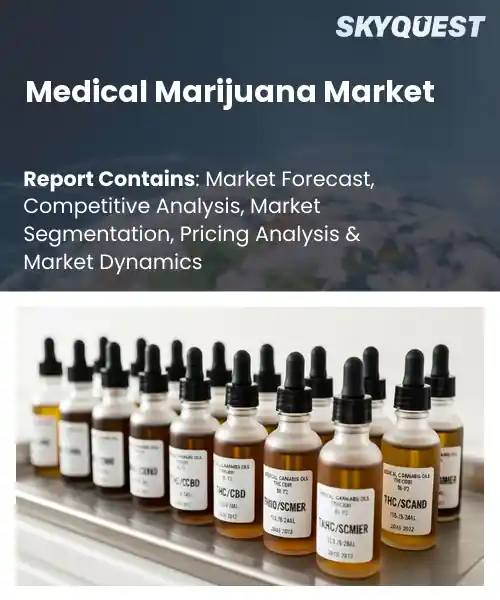
Medical Marijuana Market
Report ID: SQMIG35I2508
Report ID: SQMIG35I2508
[email protected]
USA +1 351-333-4748
Report ID:
SQMIG35I2508 |
Region:
Global |
Published Date: February, 2026
Pages:
157
|Tables:
146
|Figures:
78


Global Medical Marijuana Market size was valued at USD 20.47 Billion in 2024 and is poised to grow from USD 24.94 Billion in 2025 to USD 120.78 Billion by 2033, growing at a CAGR of 21.8% during the forecast period (2026-2033).
The global medical marijuana market growth is driven because people now understand how the drug can be used to treat pain and increase appetite and decrease eye pressure. Medical marijuana exists in two main types which are Cannabis Sativa and Cannabis Indica. The plants grow in two different regions, which include central and south Asia and the western hemisphere.
The first reason why cannabis use has become more common is that countries around the world now allow its use for medicinal purposes. The medical marijuana field has grown because governmental regulations have changed. The best method for medical marijuana cultivation exists in countries that currently permit its legal production. The country will benefit from increased tax revenue, which will happen because of decreased import needs. Moreover, the demand for medical marijuana will rise in the next years because more states will legalize medical marijuana and people will use cannabis for medical purposes and recreational activities. The research development field will create higher demand through its increasing activities.
How is AI Improving Patient Outcomes in the Medical Marijuana Market?
Medical marijuana treatment has benefited from AI technology because it enables doctors to provide better individual care to their patients. The system uses three core elements which include algorithmic strain matching based on symptoms and history and AI guided dosing suggestions and remote symptom tracking with automated intake triage. The current state of the clinic industry sees clinics and dispensaries implementing recommendation systems and chat functions which help patients find solutions through precise guidance while decreasing their need for exploratory testing. The issue exists because inconsistent labeling together with variable effects has diminished the reliability of therapeutic treatments. AI budtender applications use analytics to create product recommendations which match customer symptoms while they safeguard product quality throughout the entire supply chain.
Market snapshot - 2026-2033
Global Market Size
USD 19.3 Billion
Largest Segment
Oils
Fastest Growth
Edibles
Growth Rate
17.3% CAGR
To get more insights on this market click here to Request a Free Sample Report
The global medical marijuana market is segmented by formulation, cannabinoid composition, application, distribution channel, end use, and region. By formulation, the market includes oils, tinctures, edibles, and topicals. By cannabinoid composition, it is categorized into THC-dominant, CBD-dominant, and balanced THC formulations. By application, medical marijuana is used for chronic pain, mental health disorders, neurological disorders, and cancer-related conditions. By distribution channel, the market comprises pharmacies, online stores, and dispensaries. By end use, it serves medical institutions, homecare settings, and research institutions. Geographically, the market is segmented into North America, Europe, Asia Pacific, Latin America, and the Middle East & Africa.
According to the global medical marijuana market analysis, the oils segment became the most popular marijuana product because they offer easy usage and extended storage time and precise dosage capabilities. The medical community uses oils as a prescription option for patients with epilepsy and chronic pain because they deliver gradual dosage changes. Patients who use prescription cannabis oil to control their seizures prefer metered drops instead of smoking. Hospital-affiliated dispensaries and authorized medical programs use oils as their primary cannabis oil type because it serves as the most popular cannabis oil format.
However, patients who prefer to consume edibles without smoking will drive the fastest growth for these products. Older adults and other long-term therapy patients who want simple-to-use medications that work for extended periods now prefer gummy and infused food options. The legalization of cannabis and the establishment of better dosage guidelines have created a higher demand for outpatient treatment facilities.
As per the global medical marijuana market forecast, the largest market share of CBD-dominant formulations exists because their health benefits enable regulatory and medical personnel to consider them safe for consumption. The medical field utilizes them to treat three main conditions, including inflammatory diseases and anxiety disorders, and epilepsy seizures. The medical community accepts CBD-rich products because they consider these products safe for juvenile epilepsy treatment programs which supports their use in medical cannabis prescription systems.
However, the balanced-THC formulations segment is expected to have the highest medical marijuana market share as physicians start using combined cannabis therapy to treat neurological diseases and chronic pain conditions. The combination of THC and CBD provides superior symptom relief according to scientific evidence. Patients who require medical treatment now prefer combination formulations with controlled dosing because they have shifted away from single-compound therapy since medical guidelines began changing.
To get detailed segments analysis, Request a Free Sample Report
As per the medical marijuana market regional forecast, the regulatory system of North America enables medical programs and supports clinical research facilities and established supply networks which enable the region to achieve market dominance. The United States base its market leadership on both large private investments and state-based initiatives which exist alongside its federally regulated system which enables industrywide standardized cannabis operations. The market base grows stronger through established patient access networks and pharmaceutical partnerships plus clinician education facilities.
United States Medical Marijuana Market
The United States medical marijuana sector operates under multiple state regulations which have led to product innovation and private sector funding and an advanced commercial market. The private sector has funded the creation of various products which can be obtained through multiple distribution methods. Therapeutic adoption gets supported through clinical research centers which work together with doctors. The various regulatory standards across different regions create different methods for product access and standardization which forces the industry to focus on quality control processes and compliance procedures and supply chain operations that match clinical requirements.
Canada Medical Marijuana Market
The Canadian medical marijuana industry operates through a centralized regulatory system which prioritizes product quality assessment and licensing transparency and patient access management. The federal government establishes cultivation standards which lead to consistent production methods and quality control procedures. Healthcare providers work with commercial operators to develop clinical pathways while research partnerships obtain therapeutic evidence to validate their work. The cultivation and product development process gains support from policy transparency and the licensing system which establishes Canada as a standard for cannabis market operations.
The medical marijuana market in Europe expands through three main factors which include regulatory changes and growing acceptance from healthcare workers and increased interest from pharmaceutical and biotech companies who want to explore new therapeutic platforms. National programs operate at different levels of liberalization, which enables medical education and clinical research to develop better patient access and product marketability. The healthcare system creates market growth through its strong evidence production system which enables manufacturers to create products that can be sold and shipped internationally. Commercial players are working toward two main objectives which involve establishing standards for medical grade products and obtaining clinical trial results and developing connections with payers to obtain formulary access. The market access pathways develop policy discussions about reimbursement methods and physician training requirements and pharmacovigilance processes which enable agricultural companies to advance product development.
Germany Medical Marijuana Market
The German medical marijuana market operates through its existing healthcare system which enforces a regulatory system that demands therapeutic evidence and restricts patient access. The combination of strong physician participation and accessible reimbursement procedures establishes Germany as the main site for clinical research. Domestic cultivation and quality-oriented manufacturing practices enable the production of medical-grade products and pharmaceutical companies to work with growers to improve product distribution. The safety policies and pharmacovigilance procedures create a foundation of trust which medical professionals need to use all healthcare services.
United Kingdom Medical Marijuana Market
The UK medical marijuana market faces two forces which include shifting regulatory interpretations and increasing acceptance of clinical practices which together drive market growth. The expansion of clinician education programs has led to increased awareness among prescribers, which enables specialist clinics and private providers to deliver patient care. Manufacturing companies and research organizations from around the world are working together to create new products and develop scientific evidence. Commercial strategies for the market to advance into wider healthcare practices base their operations on the process of policy discussions about reimbursement methods and standard prescribing procedures.
France Medical Marijuana Market
The French medical marijuana market is developing within a medical system that has traditionally been cautious but is now beginning to accept therapeutic practices. Controlled pilot programs and clinical studies are informing policy and clinician guidance, while government led initiatives seek to balance safety and access. Industry participants focus on high quality production, physician education, and building evidence to support therapeutic indications. The increasing impact of patient advocacy groups results in direct influence over market development, which shapes existing market pathways.
Asia Pacific enhances its market growth by conducting regulatory studies and performing focused clinical trials and making strategic investments in their production and growing operations. Multinational companies and local businesses establish supply chain operations and clinical partnerships because markets transition from restrictive policies to controlled medical frameworks. Clinician confidence improves through the combination of high production quality standards and testing methodologies and physician training programs. Academic research partnerships with pharmaceutical companies make it possible to create new therapeutic evidence. The regional capacity for cross-border trade and private sector advancement of new formulations and delivery systems develops because governments work to establish market policies which balance public health needs with their need to control therapeutic accessibility.
Japan Medical Marijuana Market
The medical marijuana market in Japan operates with caution while it develops insurance-based treatment programs which require evidence to support their medical application and maintain strict product quality control. The regulatory framework favors a conservative stance which enables researchers to study clinical trials and develop new medicines while delaying public access to treatment options. Stakeholders dedicate resources to produce research partnerships with reliable production systems which meet safety and performance standards. The physician education program exists to establish clinical trust while the medical community discusses customized treatment approaches.
South Korea Medical Marijuana Market
The medical marijuana market in South Korea involves research operations that focus on clinical trial testing and pharmaceutical development within a system of strict regulation. The government studies have increased clinician awareness of medical conditions which has led to cautious changes in policy development. The domestic pharmaceutical companies seek to build partnerships for medical-grade formulation development while they maintain their commitment to regulatory compliance and drugs monitoring system. The two parties achieve their goal of expanding therapeutic indications through clinical evidence ofwork and physician training while their business operations focus on quality control and service delivery to healthcare facilities.
To know more about the market opportunities by region and country, click here to
Buy The Complete Report
Regulatory Reforms Enhancing Acceptance
Increasing Patient Access and Education
Supply Chain Complexity and Costs
Stigma and Variable Clinical Guidance
Request Free Customization of this report to help us to meet your business objectives.
The medical marijuana market operates through two opposing forces which include major licensed manufacturers and specialized companies who provide competition through their supply chain management and their ability to meet regulatory standards and their clinical testing procedures. The Tilray Aphria merger and the pharmaceutical companies who developed clinical grade active pharmaceutical ingredients demonstrate how companies consolidate their operations while they spend money to establish advanced breeding techniques and GMP-certified production facilities. The current operational methods of the organization include supply chain agreements and the partnership between Glass Pharms and Releaf and the shipment of clinical materials from MediPharm to researchers based in the United States.
Diversification and Product Innovation
Mainstream Acceptance and Regulatory Support
SkyQuest’s ABIRAW (Advanced Business Intelligence, Research & Analysis Wing) is our Business Information Services team that Collects, Collates, Correlates, and Analyses the Data collected by means ofPrimary Exploratory Research backed by robust Secondary Desk research.
As per SkyQuest analysis, the global medical marijuana market outlook is changing because new laws are passed, and doctors start to accept its medicinal properties for more medical conditions. The medical community now uses cannabis more frequently because its effectiveness to treat pain and neurological disorders and mental health conditions has been proven. The current market prefers oils and CBD-dominant products because people consider these formulations to provide safe and precise dosage results. The use of balanced cannabinoid therapy and edibles is becoming more common among consumers. The healthcare field still experiences challenges because doctors need standardized prescribing rules and payment systems, and regulatory authorities create unpredictable conditions. The demand for pharmaceutical-grade medicines keeps increasing because researchers develop new treatments and patients prefer alternative medicine. The market for cannabinoid-based treatments will keep expanding as more healthcare systems employ these therapies in their patient care.
| Report Metric | Details |
|---|---|
| Market size value in 2024 | USD 20.47 Billion |
| Market size value in 2033 | USD 120.78 Billion |
| Growth Rate | 21.8% |
| Base year | 2024 |
| Forecast period | 2026-2033 |
| Forecast Unit (Value) | USD Billion |
| Segments covered |
|
| Regions covered | North America (US, Canada), Europe (Germany, France, United Kingdom, Italy, Spain, Rest of Europe), Asia Pacific (China, India, Japan, Rest of Asia-Pacific), Latin America (Brazil, Rest of Latin America), Middle East & Africa (South Africa, GCC Countries, Rest of MEA) |
| Companies covered |
|
| Customization scope | Free report customization with purchase. Customization includes:-
|
To get a free trial access to our platform which is a one stop solution for all your data requirements for quicker decision making. This platform allows you to compare markets, competitors who are prominent in the market, and mega trends that are influencing the dynamics in the market. Also, get access to detailed SkyQuest exclusive matrix.
Table Of Content
Executive Summary
Market overview
Parent Market Analysis
Market overview
Market size
KEY MARKET INSIGHTS
COVID IMPACT
MARKET DYNAMICS & OUTLOOK
Market Size by Region
KEY COMPANY PROFILES
Methodology
For the Medical Marijuana Market, our research methodology involved a mixture of primary and secondary data sources. Key steps involved in the research process are listed below:
1. Information Procurement: This stage involved the procurement of Market data or related information via primary and secondary sources. The various secondary sources used included various company websites, annual reports, trade databases, and paid databases such as Hoover's, Bloomberg Business, Factiva, and Avention. Our team did 45 primary interactions Globally which included several stakeholders such as manufacturers, customers, key opinion leaders, etc. Overall, information procurement was one of the most extensive stages in our research process.
2. Information Analysis: This step involved triangulation of data through bottom-up and top-down approaches to estimate and validate the total size and future estimate of the Medical Marijuana Market.
3. Report Formulation: The final step entailed the placement of data points in appropriate Market spaces in an attempt to deduce viable conclusions.
4. Validation & Publishing: Validation is the most important step in the process. Validation & re-validation via an intricately designed process helped us finalize data points to be used for final calculations. The final Market estimates and forecasts were then aligned and sent to our panel of industry experts for validation of data. Once the validation was done the report was sent to our Quality Assurance team to ensure adherence to style guides, consistency & design.
Analyst Support
Customization Options
With the given market data, our dedicated team of analysts can offer you the following customization options are available for the Medical Marijuana Market:
Product Analysis: Product matrix, which offers a detailed comparison of the product portfolio of companies.
Regional Analysis: Further analysis of the Medical Marijuana Market for additional countries.
Competitive Analysis: Detailed analysis and profiling of additional Market players & comparative analysis of competitive products.
Go to Market Strategy: Find the high-growth channels to invest your marketing efforts and increase your customer base.
Innovation Mapping: Identify racial solutions and innovation, connected to deep ecosystems of innovators, start-ups, academics, and strategic partners.
Category Intelligence: Customized intelligence that is relevant to their supply Markets will enable them to make smarter sourcing decisions and improve their category management.
Public Company Transcript Analysis: To improve the investment performance by generating new alpha and making better-informed decisions.
Social Media Listening: To analyze the conversations and trends happening not just around your brand, but around your industry as a whole, and use those insights to make better Marketing decisions.
REQUEST FOR SAMPLE
 REQUEST FREE CUSTOMIZATION
Global Medical Marijuana Market size was valued at USD 19.3 Billion in 2024 and is poised to grow from USD 22.64 Billion in 2025 to USD 81.14 Billion by 2033, growing at a CAGR of 17.3% during the forecast period (2026-2033).
Tilray, Aurora Cannabis, Canopy Growth Corporation, Aphria, Inc., Curaleaf, Trulieve, Green Thumb Industries, Cresco Labs, Verano Holdings, MedMen, Organigram Holdings, Hexo Corp., PharmaCann Inc., TerrAscend Corp., GW Pharmaceuticals, Jazz Pharmaceuticals, Medical Marijuana, Inc., Cronos Group, Acreage Holdings, Maricann Group, Inc.
The key driver of the Medical Marijuana Market is the growing global acceptance and legalization of medical cannabis for therapeutic use. Rising prevalence of chronic diseases, increasing patient awareness, and advancements in cannabis-based pharmaceuticals are fueling demand worldwide.
Key trends in the Medical Marijuana Market include the rise of cannabis-based pharmaceuticals, growth in CBD and THC therapeutic products, increasing legalization and regulatory approvals, expansion of medical cannabis research, and the adoption of advanced cultivation and extraction technologies.
North America held the largest share in the Medical Marijuana Market, driven by early legalization, advanced healthcare infrastructure, high patient awareness, and widespread adoption of cannabis-based therapies. Strong research, regulatory support, and growing demand for medical cannabis products further strengthen the region’s market dominance.


Want to customize this report? This report can be personalized according to your needs. Our analysts and industry experts will work directly with you to understand your requirements and provide you with customized data in a short amount of time. We offer $1000 worth of FREE customization at the time of purchase.
Feedback From Our Clients


 USA (+1) 351-333-4748

