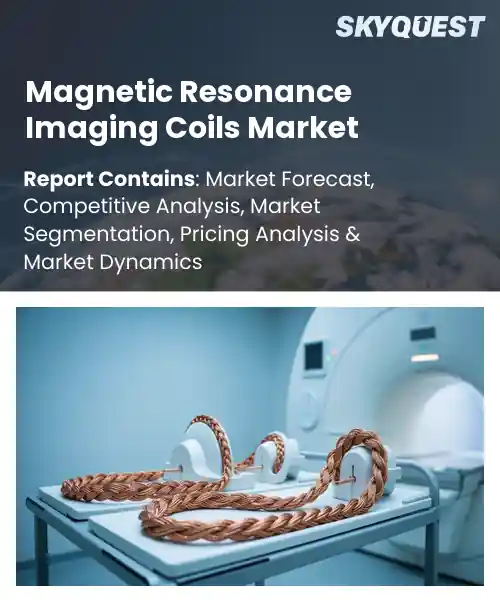
Magnetic Resonance Imaging Coils Market
Report ID: SQMIG35A3916
Report ID: SQMIG35A3916
[email protected]
USA +1 351-333-4748
Report ID:
SQMIG35A3916 |
Region:
Global |
Published Date: June, 2026
Pages:
157
|Tables:
150
|Figures:
78


Global Magnetic Resonance Imaging Coils Market size was valued at USD 8.2 Billion in 2024 and is poised to grow from USD 8.54 Billion in 2025 to USD 11.87 Billion by 2033, growing at a CAGR of 4.2% during the forecast period (2026-2033).
The global magnetic resonance imaging (MRI) coils market includes design, manufacture, and supply of radio‑frequency (RF) and gradient coils that transform electromagnetic signals into diagnostic images. Its importance lies in the coil’s role as the interface between scanner and patient, influencing signal‑to‑noise ratio, spatial resolution and exam speed. Over the past two decades the market progressed from simple body coils to phased‑array and multichannel arrays, driven by clinical demand for higher‑resolution neuro and cardiac studies. For example, the 32‑channel head coil introduced in 2015 cut scan times by up to 40 %, allowing faster patient throughput and significant overall lower costs.
A powerful catalyst for market expansion is the rising adoption of ultra‑high‑field MRI systems, which demand coils capable of handling frequencies above 300 MHz while preserving patient safety. As hospitals upgrade to 7‑tesla scanners, manufacturers invest in cryogenic and dielectric coil technologies that boost signal uniformity, enabling clinicians to visualize microvascular lesions in early‑stage oncology and detailed brain connectivity in neuroscience research. There is an iterative effect due to ongoing technological innovation, such that as coil performance increases, the medical community gains greater confidence in ordering high-field systems, resulting in additional orders for high-field systems from the medical community.
How is AI Driving Innovation in the Magnetic Resonance Imaging Coils Market?
Artificial Intelligence is changing the face of the magnetic resonance imaging coil industry; accelerating design cycles and improving coil performance. Machine learning applied to electromagnetic simulations allows manufacturers to quickly determine which 3D geometries with lower noise produce the maximum signal strength resulting in the development of lighter and more flexible coils. Additionally, manufacturers can now utilize AI to perform predictive maintenance by monitoring usage patterns on their scanners to schedule predictable maintenance prior to failure. This will both decrease the downtime for the units as well as increase the overall availability of the scanners. Furthermore, AI can instantly correct coil raw data for data artifacts to enhance image quality in the clinical workflow domain without extending the scan time.
In May 2025, GE HealthCare unveiled the SIGNA™ Sprint MRI system, integrating AI-driven imaging enhancements with advanced AIR™ coil technology. The platform uses built-in AI solutions and deep-learning reconstruction to improve image clarity, accelerate scan times, and optimize workflow efficiency. This development highlights the growing convergence of artificial intelligence and MRI coil innovation to deliver higher-quality diagnostic imaging and improved patient outcomes.
Market snapshot - (2026-2033)
Global Market Size
USD 8.2 Billion
Largest Segment
Radiofrequency (RF) Coils
Fastest Growth
Gradient Coils
Growth Rate
4.2% CAGR
To get more insights on this market click here to Request a Free Sample Report
Global magnetic resonance imaging coils market is segmented by product type, RF coil type, application, MRI system field strength, end user and region. Based on product type, the market is segmented into radiofrequency (RF) coils and gradient coils. Based on RF coil type, the market is segmented into volume coils, surface coils, phased array coils and specialty coils. Based on application, the market is segmented into neurology, musculoskeletal imaging, cardiovascular imaging, breast imaging, abdominal imaging, pelvic imaging, oncology imaging and other applications. Based on MRI system field strength, the market is segmented into low-field MRI systems, mid-field MRI systems and high-field MRI systems. Based on end user, the market is segmented into hospitals, diagnostic imaging centers, ambulatory surgical centers (ASCs) and research & academic institutes. Based on region, the market is segmented into North America, Europe, Asia Pacific, Latin America and Middle East & Africa.
Volume coils segment dominates because they provide uniform excitation across the entire imaging volume, essential for high quality diagnostic scans. The simplicity of the volume coils decreases both the complexity of the system and the amount of calibration effort required to use them consistently during normal clinical procedures. Additionally, manufacturers are developing volume coils as a way to provide the necessary patient throughput they require to remain competitive in the market, and hospitals find the volume coils provide a consistent level of signal-to-noise performance, reinforcing their dominance and support within the market and establishing a strong presence in the supply chain through anatomical research.
However, phased array coils are witnessing the strongest growth momentum as they deliver superior signal to noise ratio and enable imaging techniques that shorten scan times. Their adaptability to high field systems and expanding use in precision diagnostics drive accelerated adoption, creating opportunities for manufacturers to innovate and capture clinical demand.
Neurology segment dominates because brain imaging requirements prioritize high spatial resolution and consistent coil performance, making dedicated neuro coils indispensable for accurate diagnosis. The coils are designed to help improve the reception of signals taken from deeper parts of the brain in function/diffusion studies. As Clinical practices increasingly depend upon the early identification of patients having a neurological disorder, there is a growing need for continuous purchase of these products. Manufacturers’ R&D efforts are focused on creating more ergonomic devices, which will further strengthen the existing market share and make sure that healthcare providers across the world will continue to invest in these products for a long time.
Meanwhile, oncology imaging is emerging as the high growth area as targeted coil solutions enable precise tumor localization and monitoring during therapy. Integration with molecular imaging and growing emphasis on personalized treatment protocols accelerate demand, prompting vendors to develop specialized designs that enhance lesion detectability and support multidisciplinary oncologic workflows efficiently.
To get detailed segments analysis, Request a Free Sample Report
North America leads the market due to a convergence of mature healthcare systems, sustained investment in advanced imaging research, and a robust ecosystem of technology providers. Due to the large number of clinical networks in this area that support the use of high-resolution imaging which promotes innovation in coil design there is encouragement for those early in adopting a new coil technology. The academic institutions, producers and regulatory agencies within this region work together to provide an environment conducive to new product development and fast approval processes. Additionally, the presence of major research hospitals drives continuous demand for specialized coils that support cutting‑edge diagnostic techniques, reinforcing the region’s leadership position.
Magnetic resonance imaging coils market in United States thrives on a dense concentration of world‑class research hospitals and a highly competitive commercial landscape that accelerates technology turnover. Leading manufacturers locate research and development centers close to premier clinical users, fostering iterative design improvements that meet exacting performance standards. As imaging advances happen, reimbursement processes that support the use of new technologies will provide enhanced stability for purchasing cycles. At the same time, the continuing desire for all new imaging equipment creates an ongoing need for high-strength and versatile coils used in multiple specialties.
Magnetic resonance imaging coils market in Canada is supported by a publicly funded healthcare framework that emphasizes equitable access to state‑of‑the‑art diagnostic tools. The partnership between national research organizations and manufacturers of medical imaging machinery assists with the customization of coil technologies for specific applications in clinical practice. A strong emphasis on training and education provides Radiology staff with the ability to use the latest developments in coil technology and supports a consistent upgrade path across provincial hospital systems while enhancing Canada’s ability to be a stable market participant.
Europe’s expansion is propelled by a strategic focus on precision healthcare, extensive collaborative research programs, and harmonized regulatory pathways that facilitate cross‑border technology diffusion. Hospitals are being incentivized to use coils that improve the quality of their imaging signals and comfort to patients through this region’s support of incorporating the latest advancements in imaging into everyday practice. The development of advanced technologies occurs partly as a result of collaborative relationships between academic institutions and industry. A strong culture of clinical trials further accelerates acceptance of high‑performance coil solutions across diverse medical specialties.
Magnetic resonance imaging coils market in Germany benefits from a formidable industrial base and a network of university hospitals that prioritize cutting‑edge imaging research. The country’s engineering expertise translates into close collaboration with coil manufacturers, resulting in highly specialized products tailored to demanding clinical protocols. Diagnostic accuracy-based reimbursement policies prompt continued upgrades for patients. Germany’s position as a centre for clinical trials in Europe increases the need for multifunctional coil technologies to serve patients in both a clinical trial and a normal care situation.
Magnetic resonance imaging coils market in United Kingdom experiences rapid growth driven by an aggressive adoption strategy within its national health service and private sector facilities. The emphasis placed by early detection programs and consortiums conducting collaborative research fosters perpetual purchase of new, advanced coils. The presence of strong academic departments conducting radiology will support an expedited process for validating new coil designs. In addition, policy frameworks supporting innovative diagnostic technology create an environment conducive to rapid adoption in the marketplace among the entire continuum of healthcare providers.
Magnetic resonance imaging coils market in France is emerging as a dynamic segment supported by strong governmental initiatives that promote modern imaging infrastructure. National research laboratories are working with suppliers of medical imaging technologies in forming partnerships to produce coils that will enhance and extend the use of coils for new clinical applications. There has been an increased focus on providing patient‑centred healthcare, which has resulted in more interest in creating flexible and comfortable coil designs. As hospitals begin to incorporate imaging data into national healthcare systems, they will start to modernize their imaging systems.
Asia Pacific advances its market position through a combination of rising diagnostic demand, strategic government investments, and an expanding manufacturing footprint that blends cost efficiency with technical sophistication. Countries within this geographic area are making swift advances to enhance their imaging facilities due to the increased demand for high-quality clinical service, thus driving the introduction of advanced performance coils which can be used with both high-and low-field MRI systems. Close ties between domestic manufacturers and global technology leaders facilitate technology transfer, while regional research collaborations accelerate the customization of coil solutions for diverse patient populations, reinforcing Asia Pacific’s emerging prominence.
Magnetic resonance imaging coils market in Japan is characterized by a strong emphasis on precision diagnostics and a well‑established network of university hospitals that lead clinical innovation. Collaboration between domestic coil producers and research institutions yields highly engineered products that cater to advanced imaging protocols. Steady market growth will continue to be supported in part by Government initiatives that encourage technology refresh cycles, while a focus on thorough clinical testing will help ensure that new coil designs are quickly adopted into routine practice in both academic and private healthcare environments.
Magnetic resonance imaging coils market in South Korea benefits from a vibrant technology ecosystem and aggressive healthcare modernization efforts. Close cooperation between leading electronics manufacturers and medical imaging firms drives the development of compact, high‑sensitivity coil solutions suitable for a variety of clinical environments. National healthcare programs focus on finding diseases as soon as possible. Increased demand for newer MRI capabilities at hospitals due to these national programs; hospitals will then purchase next generation coil technology at their facilities to improve results and increase productivity.
To know more about the market opportunities by region and country, click here to
Buy The Complete Report
Increasing Demand for Advanced Imaging
Adoption of Parallel Imaging Techniques
High Cost of Specialized Coils
Regulatory Approval Complexities
Request Free Customization of this report to help us to meet your business objectives.
Intense competition among major MRI coil manufacturers is driving rapid product differentiation, with firms accelerating M&A, forming strategic alliances, and investing in high‑field coil technology to capture expanding hospital and research demand. The push for higher signal‑to‑noise ratios and cost‑effective designs is intensifying rivalry, prompting accelerated innovation pipelines and collaborative development efforts across the sector.
Top Player’s Company Profile
Recent Developments
SkyQuest’s ABIRAW (Advanced Business Intelligence, Research & Analysis Wing) is our Business Information Services team that Collects, Collates, Correlates, and Analyses the Data collected by means of Primary Exploratory Research backed by robust Secondary Desk research.
As per SkyQuest analysis the global MRI coils market is projected to driven primarily by rising demand for advanced high‑resolution imaging that shortens scan time and improves patient throughput. A second strong driver is the growing adoption of parallel imaging techniques which rely on multi‑channel arrays to boost spatial resolution while reducing examination duration. Volume coils remain the dominant segment because they deliver uniform excitation for routine protocols, and North America leads the market thanks to mature healthcare systems and strong research investment. However, the high cost of specialized coils limits uptake in budget‑constrained facilities, acting as a notable restraint.
| Report Metric | Details |
|---|---|
| Market size value in 2024 | USD 8.2 Billion |
| Market size value in 2033 | USD 11.87 Billion |
| Growth Rate | 4.2% |
| Base year | 2024 |
| Forecast period | (2026-2033) |
| Forecast Unit (Value) | USD Billion |
| Segments covered |
|
| Regions covered | North America (US, Canada), Europe (Germany, France, United Kingdom, Italy, Spain, Rest of Europe), Asia Pacific (China, India, Japan, Rest of Asia-Pacific), Latin America (Brazil, Rest of Latin America), Middle East & Africa (South Africa, GCC Countries, Rest of MEA) |
| Companies covered |
|
| Customization scope | Free report customization with purchase. Customization includes:-
|
To get a free trial access to our platform which is a one stop solution for all your data requirements for quicker decision making. This platform allows you to compare markets, competitors who are prominent in the market, and mega trends that are influencing the dynamics in the market. Also, get access to detailed SkyQuest exclusive matrix.
Table Of Content
Executive Summary
Market overview
Parent Market Analysis
Market overview
Market size
KEY MARKET INSIGHTS
COVID IMPACT
MARKET DYNAMICS & OUTLOOK
Market Size by Region
KEY COMPANY PROFILES
Methodology
For the Magnetic Resonance Imaging Coils Market, our research methodology involved a mixture of primary and secondary data sources. Key steps involved in the research process are listed below:
1. Information Procurement: This stage involved the procurement of Market data or related information via primary and secondary sources. The various secondary sources used included various company websites, annual reports, trade databases, and paid databases such as Hoover's, Bloomberg Business, Factiva, and Avention. Our team did 45 primary interactions Globally which included several stakeholders such as manufacturers, customers, key opinion leaders, etc. Overall, information procurement was one of the most extensive stages in our research process.
2. Information Analysis: This step involved triangulation of data through bottom-up and top-down approaches to estimate and validate the total size and future estimate of the Magnetic Resonance Imaging Coils Market.
3. Report Formulation: The final step entailed the placement of data points in appropriate Market spaces in an attempt to deduce viable conclusions.
4. Validation & Publishing: Validation is the most important step in the process. Validation & re-validation via an intricately designed process helped us finalize data points to be used for final calculations. The final Market estimates and forecasts were then aligned and sent to our panel of industry experts for validation of data. Once the validation was done the report was sent to our Quality Assurance team to ensure adherence to style guides, consistency & design.
Analyst Support
Customization Options
With the given market data, our dedicated team of analysts can offer you the following customization options are available for the Magnetic Resonance Imaging Coils Market:
Product Analysis: Product matrix, which offers a detailed comparison of the product portfolio of companies.
Regional Analysis: Further analysis of the Magnetic Resonance Imaging Coils Market for additional countries.
Competitive Analysis: Detailed analysis and profiling of additional Market players & comparative analysis of competitive products.
Go to Market Strategy: Find the high-growth channels to invest your marketing efforts and increase your customer base.
Innovation Mapping: Identify racial solutions and innovation, connected to deep ecosystems of innovators, start-ups, academics, and strategic partners.
Category Intelligence: Customized intelligence that is relevant to their supply Markets will enable them to make smarter sourcing decisions and improve their category management.
Public Company Transcript Analysis: To improve the investment performance by generating new alpha and making better-informed decisions.
Social Media Listening: To analyze the conversations and trends happening not just around your brand, but around your industry as a whole, and use those insights to make better Marketing decisions.
REQUEST FOR SAMPLE
 REQUEST FREE CUSTOMIZATION
Global Magnetic Resonance Imaging Coils Market size was valued at USD 8.2 Billion in 2024 and is poised to grow from USD 8.54 Billion in 2025 to USD 11.87 Billion by 2033, growing at a CAGR of 4.2% during the forecast period (2026-2033).
Intense competition among major MRI coil manufacturers is driving rapid product differentiation, with firms accelerating M&A, forming strategic alliances, and investing in high‑field coil technology to capture expanding hospital and research demand. The push for higher signal‑to‑noise ratios and cost‑effective designs is intensifying rivalry, prompting accelerated innovation pipelines and collaborative development efforts across the sector. 'Siemens Healthineers', 'GE HealthCare', 'Philips Healthcare', 'Canon Medical Systems', 'Fujifilm Healthcare', 'MR Instruments, Inc.', 'ScanMed LLC', 'Rapid Biomedical GmbH', 'NORAS MRI products GmbH', 'Quality Electrodynamics (QED)', 'Clinical MR Solutions, Inc.', 'Tesla Engineering Ltd.', 'RAPID MR International, LLC', 'Stark Contrast MRI Coils Research Inc.', 'Machnet Medical Robotics BV', 'Time Medical Systems', 'Neusoft Medical Systems', 'United Imaging Healthcare', 'Aspect Imaging', 'Shanghai Chenguang Medical Technologies'
The expanding need for high‑resolution diagnostic imaging across hospitals and research institutions fuels demand for specialized MRI coils, as clinicians seek clearer anatomical detail and functional information. Advanced coil designs enable faster scan times and improved signal‑to‑noise ratios, directly supporting clinical workflow efficiency and patient throughput. This functional benefit encourages healthcare providers to upgrade existing MRI systems with newer coil technologies, thereby stimulating continuous market expansion and reinforcing investment cycles in research and development for next‑generation coil solutions globally sustainably.
Ai-Driven Coil Design: The integration of artificial intelligence into coil development accelerates prototype cycles, enabling rapid simulation of electromagnetic fields and material behavior. Machine‑learning algorithms predict performance variations across patient anatomies, reducing trial‑and‑error in physical testing. This capability shortens time‑to‑market for advanced phased‑array and ultra‑high‑field coils, while improving image uniformity and signal‑to‑noise ratios. Vendors adopting AI platforms gain a competitive edge by offering customizable solutions that adapt to emerging clinical protocols and research demands through collaborative partnerships with leading academic institutions worldwide globally.
Why does North America Dominate the Global Magnetic Resonance Imaging Coils Market? |@12


Want to customize this report? This report can be personalized according to your needs. Our analysts and industry experts will work directly with you to understand your requirements and provide you with customized data in a short amount of time. We offer $1000 worth of FREE customization at the time of purchase.
Feedback From Our Clients


 USA (+1) 351-333-4748

