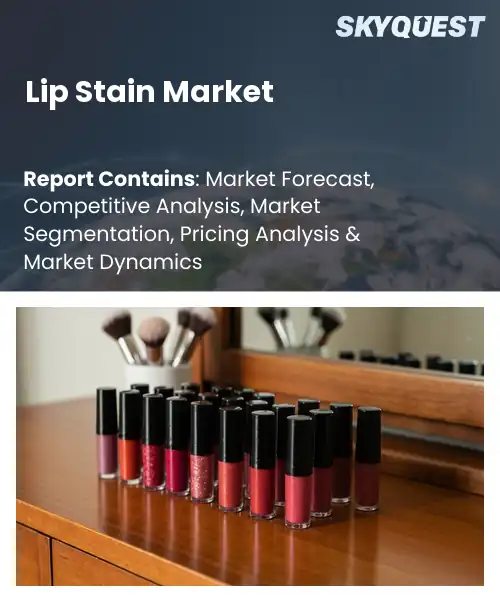
Lip Stain Market
Report ID: SQMIG30L2437
Report ID: SQMIG30L2437
[email protected]
USA +1 351-333-4748
Report ID:
SQMIG30L2437 |
Region:
Global |
Published Date: July, 2026
Pages:
157
|Tables:
148
|Figures:
77


Global Lip Stain Market size was valued at USD 7.59 Billion in 2024 and is poised to grow from USD 8.02 Billion in 2025 to USD 12.39 Billion by 2033, growing at a CAGR of 5.6% during the forecast period (2026-2033).
The global lip stain market growth is made up of cosmetic compositions that offer long-lasting color with a lightweight, glossy finish. It’s relevant because consumers are looking for products that will last but also have a natural-looking sheen, and that trend has been accelerated by social media influence and the rise of minimal makeup looks. The segment grew slowly in the early 2000s, when traditional matte lipsticks were in vogue, but took off after 2015 as brands introduced water-based pigments and sweat-resistant technologies. For example, a major European brand came out with a vegan stain that lasted twelve hours, pushing competitor brands to accelerate research and increase their distribution in key markets.
The next big growth driver is the convergence of innovative ingredients with the rising demand for sustainable multitasking products. Eco-conscious shoppers are drawn to products with a reduced environmental impact, so manufacturers use bio-derived pigments and silicone-free bases to extend stain life and justify premium pricing. A clear example is from Asia where a Korean start-up launched a dual-action stain that provides both lip colour and UV protection. Sales increased 45 % in six months, prompting retailers to increase shelf space. Better formulations then spark consumer enthusiasm that drives greater retail adoption and more R&D investment through global distribution channels everywhere and beyond.
How is AI-driven Personalization Influencing Consumer Preferences in the Lip Stain Market?
AI-powered personalization is changing how consumers find and choose lip stain market trends. Brands use machine learning to analyze facial features, skin undertones and social media signals, and then recommend shades that suit each user. This provides a bespoke rather than a generic shopping experience. Shoppers are given virtual try-on simulations, which change in real time, so they can experiment without having to use physical testers. The immediate feedback builds confidence and shortens the decision cycle. At the same time, manufacturers can adjust formulations based on aggregated preference data, reducing overproduction and aligning inventory with true demand. This has led to a more responsive, consumer-centric market.
In March 2026, NYX Professional Makeup launched an AI-powered virtual try-on that matches users with personalized lip stain shades based on their skin tone and style cues, boosting purchase confidence and smoothing stock planning via accurate demand insights.
Market snapshot - (2026-2033)
Global Market Size
USD 7.59 Billion
Largest Segment
Liquid Lip Stains
Fastest Growth
Marker/Pen Lip Stains
Growth Rate
5.6% CAGR
To get more insights on this market click here to Request a Free Sample Report
Global lip stain market is segmented by product type, finish, ingredient type, price range, distribution channel and region. Based on product type, the market is segmented into liquid lip stains, gel lip stains, marker/pen lip stains and others. Based on finish, the market is segmented into matte, glossy, satin and shimmer. Based on ingredient type, the market is segmented into organic/natural, vegan & cruelty-free and conventional. Based on price range, the market is segmented into mass market, mid-range and premium. Based on distribution channel, the market is segmented into department stores, specialty beauty stores, online retail, supermarkets/hypermarkets and others. Based on region, the market is segmented into North America, Europe, Asia Pacific, Latin America and Middle East & Africa.
The gel lip stains segment is the dominant one, owing to its water based formula that provides intense color payoff and a lightweight feel that appeals to modern consumers looking for long lasting wear without heavy product build-up. Brand loyalty is driven by the ease of quick application and the smooth glide that locks in pigment. Furthermore, the versatility between casual and evening wear establishes its status as the go to choice for day to day wear.
Liquid lip stains, however, are the fastest growing category, with their fluidity offering seamless blendability and buildable intensity that appeals to trend-focused users. Innovations in quick dry technology and bright shade palettes are attracting first time adopters, accelerating market expansion and creating new product line opportunities.
The organic/natural ingredient type segment is leading the way, led by the clean beauty-conscious consumers who are looking for formulas that do not contain synthetic additives but still have vivid pigmentation. Brands sourcing botanical extracts and using eco friendly processing gain trust translating into repeat purchases. This also adds to the appeal of longevity - one that is safe and does not compromise skin health. All this puts it on top of the list for consumers.
The vegan & cruelty free ingredient type meanwhile is witnessing the most positive growth momentum, as increasing ethical awareness steers shoppers towards products that promise no animal derivatives or testing. Innovation in plant based pigments along with transparent certification processes builds confidence, widens the user base and creates new avenues for brand differentiation in the lip stain market.
To get detailed segments analysis, Request a Free Sample Report
The area has a long history of cultural emphasis on meticulous personal grooming, and a constant desire for new color cosmetics. Brands are continually innovating with new textures, long-wear formulas and shade ranges to meet consumer expectations for products that speak to local aesthetic preferences. A strong heritage in skin-care and make-up research drives product differentiation while a prolific presence of influential beauty influencers enhances adoption across social platforms. Extensive retail networks from high-end department stores to nimble e-commerce channels ensure rapid market penetration. The manufacturing ecosystem also churns out quality products at competitive cost structures, which are conducive to domestic consumption and export growth. The Asia Pacific region is the leading engine for global demand for Lip Stain due to such synergistic factors.
Lip stain market share in Japan thrives on a tradition of precision formulation and consumer desire for subtle yet lasting color. Brands emphasize refined textures that marry comfort with performance, aligning with a preference for sophisticated palettes. Retail environments blend high‑touch boutique experiences with online convenience, allowing rapid diffusion of trend‑setting releases. Cultural appreciation for seasonal hues and limited‑edition launches further energizes market activity, sustaining a vibrant ecosystem of both domestic innovators and international entrants.
Lip stain market forecast in South Korea is propelled by a dynamic K‑beauty culture that celebrates expressive makeup and cutting‑edge innovation. Consumers favor ultra‑light, pigment‑rich formulas that deliver intense color without compromising comfort, prompting companies to invest heavily in research and hybrid textures. Social media trends and celebrity endorsements accelerate product cycles, while a robust digital retail infrastructure ensures swift market entry. The convergence of youthful enthusiasm, trend‑driven consumption, and a reputation for pioneering beauty solutions reinforces South Korea’s pivotal role in the regional landscape.
The momentum in the marketplace is fueled by a broad consumer shift to long-lasting, low-maintenance lip solutions that align with their active lifestyles. There’s a growing awareness of makeup as a form of self-expression, so there’s a demand for more shades and customizable finishes. Retail strategies combine experiential store concepts with frictionless online shopping to drive trial and rapid adoption. Influencer collaborations and culturally resonant branding reach a multicultural audience, while premium positioning is aligned with a willingness to invest in high-performance products. These forces combined accelerate market growth and enhance the competitiveness of North America.
Lip stain market outlook in the United States reflects a blend of mainstream and niche consumer preferences, emphasizing versatility and durability. Brands prioritize inclusive shade offerings that cater to a wide spectrum of tones, reinforcing the appeal of long‑wear formulas for everyday and event use. Retail channels range from mass‑market chains to boutique specialty stores, supported by a sophisticated e‑commerce ecosystem that accelerates product discovery. Influencer culture and media visibility further amplify demand, reinforcing a dynamic market environment.
Lip stain market regional forecast in Canada benefits from a discerning consumer base that values both performance and ethical product attributes. Shifts toward cruelty‑free and sustainably sourced ingredients influence brand positioning, while cold‑weather considerations drive interest in moisturizing, long‑wear formulas. Retail distribution combines department store presence with strong online platforms, facilitating access to emerging trends. Cultural diversity encourages a broad palette of shades, fostering inclusive marketing approaches that sustain market vitality.
The European growth story is underpinned by a sophisticated consumer base that prizes quality, heritage and innovation. A tradition of beauty craftsmanship fuels desire for premium formulations that deliver elegant color and comfort. Regulatory standards promote transparency and safety, leading to greater consumer trust and the ability to command premium prices. Retail networks across borders and a vibrant digital commerce ecosystem facilitate the easy flow of products across markets. Collaborations between established houses and emerging indie brands inspire creative shade development and texture experimentation. Together, these forces consolidate Europe’s growing role in the global Lip Stain ecosystem.
Lip stain market analysis in Germany emphasizes precision engineering and rigorous product testing, aligning with consumer expectations for reliability and refined aesthetics. Brands focus on subtle, natural tones alongside bold options, catering to diverse personal styles. Retail channels integrate high‑end department stores with efficient online marketplaces, ensuring broad accessibility. Sustainability considerations influence formulation choices, reinforcing a market narrative that blends performance with environmental consciousness.
Lip stain market penetration in the United Kingdom blends classic elegance with avant‑garde experimentation, reflecting a culturally rich beauty scene. Consumers appreciate long‑lasting pigments that transition seamlessly from day to night, prompting brands to prioritize comfort and intensity. Influencer‑driven trends and a vibrant street‑style culture drive rapid adoption of novel shades. Distribution channels span flagship boutiques, mass retailers, and robust e‑commerce platforms, supporting a dynamic market rhythm.
Lip stain industry in France draws on a legacy of haute‑cuisine cosmetics, emphasizing artistry and luxurious sensory experiences. French consumers favor richly pigmented, velvety textures that complement sophisticated makeup routines. Premium retail environments showcase meticulous craftsmanship, while digital channels extend reach to emerging audiences. The interplay of timeless elegance and contemporary trends sustains a market that values both heritage and innovation.
To know more about the market opportunities by region and country, click here to
Buy The Complete Report
Growing Demand For Long‑lasting Color
Adoption Of Natural Ingredient Formulations
Regulatory Scrutiny Over Cosmetic Safety
High Cost Of Premium Lip Stains
Request Free Customization of this report to help us to meet your business objectives.
The competitive landscape of the lip stain market is characterized by intense competition among global beauty manufacturers and digitally native cosmetic brands that are continuously expanding their long-wear lip color portfolios through product innovation, influencer-led marketing, and omnichannel retail strategies. Companies are investing heavily in advanced transfer-resistant formulations, vegan and clean beauty ingredients, and AI-enabled virtual try-on technologies to enhance customer engagement and brand differentiation. Strategic collaborations with social media creators, expansion into e-commerce platforms, and continuous launches of multifunctional lip products combining color with skincare benefits are further intensifying competition and accelerating innovation across both premium and mass-market beauty segments.
Top Player’s Company Profile
Recent Developments in the Lip Stain Market
SkyQuest’s ABIRAW (Advanced Business Intelligence, Research & Analysis Wing) is our Business Information Services team that Collects, Collates, Correlates, and Analyses the Data collected by means of Primary Exploratory Research backed by robust Secondary Desk research. As per SkyQuest analysis the global lip-stain market is primarily driven by the increasing demand for long-lasting color, with the shift to natural ingredient formulations serving as a secondary driver, attracting eco-conscious consumers. A significant barrier is the regulatory burden on cosmetic safety that delays product development and increases costs. Asia Pacific leads the market on account of its strong beauty culture, innovative manufacturers and extensive retail networks. Gel lip stains, despite the rise of other formats, are still the leading segment within product types, as their water-based formula offers both intense pigment and a lightweight feel that appeals to today’s consumers. These forces combine to create a market forecast.
| Report Metric | Details |
|---|---|
| Market size value in 2024 | USD 7.59 Billion |
| Market size value in 2033 | USD 12.39 Billion |
| Growth Rate | 5.6% |
| Base year | 2024 |
| Forecast period | (2026-2033) |
| Forecast Unit (Value) | USD Billion |
| Segments covered |
|
| Regions covered | North America (US, Canada), Europe (Germany, France, United Kingdom, Italy, Spain, Rest of Europe), Asia Pacific (China, India, Japan, Rest of Asia-Pacific), Latin America (Brazil, Rest of Latin America), Middle East & Africa (South Africa, GCC Countries, Rest of MEA) |
| Companies covered |
|
| Customization scope | Free report customization with purchase. Customization includes:-
|
To get a free trial access to our platform which is a one stop solution for all your data requirements for quicker decision making. This platform allows you to compare markets, competitors who are prominent in the market, and mega trends that are influencing the dynamics in the market. Also, get access to detailed SkyQuest exclusive matrix.
Table Of Content
Executive Summary
Market overview
Parent Market Analysis
Market overview
Market size
KEY MARKET INSIGHTS
COVID IMPACT
MARKET DYNAMICS & OUTLOOK
Market Size by Region
KEY COMPANY PROFILES
Methodology
For the Lip Stain Market, our research methodology involved a mixture of primary and secondary data sources. Key steps involved in the research process are listed below:
1. Information Procurement: This stage involved the procurement of Market data or related information via primary and secondary sources. The various secondary sources used included various company websites, annual reports, trade databases, and paid databases such as Hoover's, Bloomberg Business, Factiva, and Avention. Our team did 45 primary interactions Globally which included several stakeholders such as manufacturers, customers, key opinion leaders, etc. Overall, information procurement was one of the most extensive stages in our research process.
2. Information Analysis: This step involved triangulation of data through bottom-up and top-down approaches to estimate and validate the total size and future estimate of the Lip Stain Market.
3. Report Formulation: The final step entailed the placement of data points in appropriate Market spaces in an attempt to deduce viable conclusions.
4. Validation & Publishing: Validation is the most important step in the process. Validation & re-validation via an intricately designed process helped us finalize data points to be used for final calculations. The final Market estimates and forecasts were then aligned and sent to our panel of industry experts for validation of data. Once the validation was done the report was sent to our Quality Assurance team to ensure adherence to style guides, consistency & design.
Analyst Support
Customization Options
With the given market data, our dedicated team of analysts can offer you the following customization options are available for the Lip Stain Market:
Product Analysis: Product matrix, which offers a detailed comparison of the product portfolio of companies.
Regional Analysis: Further analysis of the Lip Stain Market for additional countries.
Competitive Analysis: Detailed analysis and profiling of additional Market players & comparative analysis of competitive products.
Go to Market Strategy: Find the high-growth channels to invest your marketing efforts and increase your customer base.
Innovation Mapping: Identify racial solutions and innovation, connected to deep ecosystems of innovators, start-ups, academics, and strategic partners.
Category Intelligence: Customized intelligence that is relevant to their supply Markets will enable them to make smarter sourcing decisions and improve their category management.
Public Company Transcript Analysis: To improve the investment performance by generating new alpha and making better-informed decisions.
Social Media Listening: To analyze the conversations and trends happening not just around your brand, but around your industry as a whole, and use those insights to make better Marketing decisions.
REQUEST FOR SAMPLE
 REQUEST FREE CUSTOMIZATION
Global Lip Stain Market size was valued at USD 7.59 Billion in 2024 and is poised to grow from USD 8.02 Billion in 2025 to USD 12.39 Billion by 2033, growing at a CAGR of 5.6% during the forecast period (2026-2033).
The competitive landscape is shaped by established brands expanding their tinted lip balm lines and agile newcomers leveraging tech‑enabled formulation platforms; rivalry accelerates product differentiation and rapid rollout of long‑wear, transfer‑proof stains. Recent M&A activity, such as larger cosmetics groups acquiring niche lip‑stain innovators, and strategic partnerships with influencer agencies, are driving market share gains, while AI‑guided color matching tools are enhancing consumer engagement. 'L'Oréal S.A.', 'Revlon Inc.', 'Coty Inc.', 'Estée Lauder Companies Inc.', 'Shiseido Company Ltd.', 'Maybelline (L'Oréal)', 'NYX Professional Makeup', 'MAC Cosmetics (Estée Lauder)', 'Fenty Beauty Rihanna', 'Charlotte Tilbury Beauty Ltd.', 'Kylie Cosmetics', 'Benefit Cosmetics LLC', 'Bobbi Brown Cosmetics', 'Romand', 'Peripera', 'Inkbox Inc.', 'Tarte Cosmetics', 'Wet n Wild Beauty', 'Bite Beauty Inc.'
The increasing consumer preference for products that maintain vibrant lip color throughout the day drives market expansion. Brands that formulate lip stains with enhanced pigmentation and smudge‑resistant properties meet this desire, encouraging repeat purchases and brand loyalty. As social media platforms amplify visual aesthetics, users seek long‑lasting color that reduces the need for frequent reapplication, reinforcing demand. Consequently, manufacturers invest in research to improve staying power, which further stimulates market growth by attracting a broader audience seeking convenience and enduring visual appeal.
Clean Beauty Momentum: Consumers increasingly prioritize products formulated without harsh chemicals, synthetic dyes, or animal-derived ingredients, prompting manufacturers to adopt natural pigments, organic carriers, and cruelty‑free certification. Brands that openly communicate transparent sourcing and sustainable production processes gain loyalty, while retailers expand dedicated clean‑beauty sections that elevate lip stains alongside other eco‑conscious cosmetics. This shift encourages R&D investment in plant‑based colorants and reinforces collaborations with ethical suppliers, reshaping product development cycles and positioning clean lip stains as a mainstream preference for modern buyers.
Why does Asia Pacific dominate the global Lip Stain Market? |@12


Want to customize this report? This report can be personalized according to your needs. Our analysts and industry experts will work directly with you to understand your requirements and provide you with customized data in a short amount of time. We offer $1000 worth of FREE customization at the time of purchase.
Feedback From Our Clients


 USA (+1) 351-333-4748

