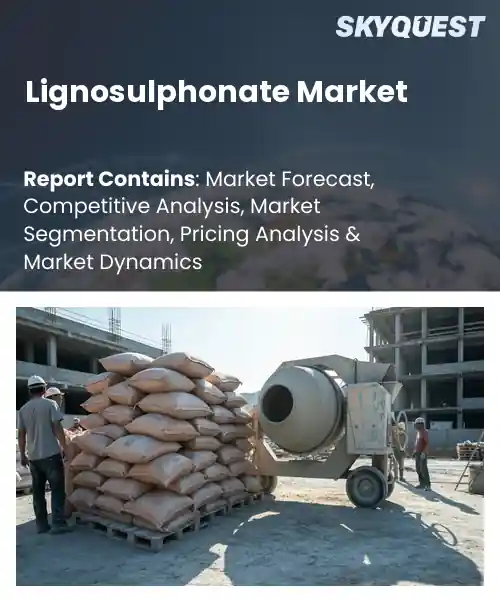
Lignosulphonate Market
Report ID: SQMIG15E3424
Report ID: SQMIG15E3424
[email protected]
USA +1 351-333-4748
Report ID:
SQMIG15E3424 |
Region:
Global |
Published Date: March, 2026
Pages:
157
|Tables:
119
|Figures:
77


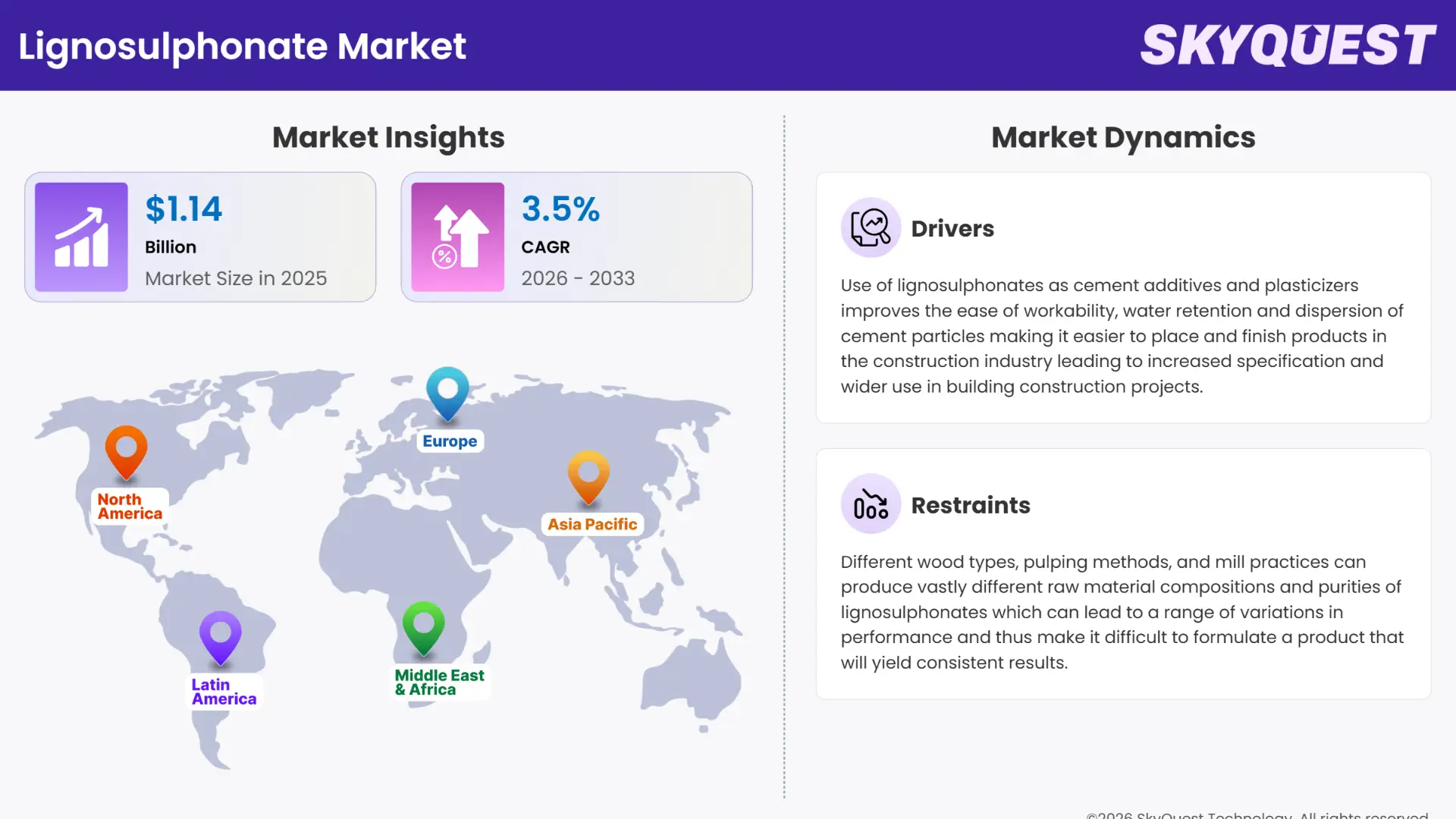
Global Lignosulphonate Market size was valued at USD 1.1 Billion in 2024 and is poised to grow from USD 1.14 Billion in 2025 to USD 1.5 Billion by 2033, growing at a CAGR of 3.5% during the forecast period (2026-2033).
Key Takeaways: Market Trends & Insights
Lignosulphonate is an industrial binder/dispersant derived from the production of sulphite pulping; and therefore, occupies a unique niche that bridges forestry and distribution supply chains. The market transforms low value spent sulphite liquor into value-added products (i.e. additives) for use in construction, animal nutrition, drilling (oilfields) and mineral processing. The evolution of the market has migrated from predominantly localized uses within pulp mills, to large scale global trade.
For instance, many of the cement producers in China started using Lignosulphonate as a plasticizer to improve concrete workability, while pulp mill producers optimized their extraction procedures; resulting in increased scale and reduced costs. A key driver of growth within the global lignosulphonate market is raw material availability/cost (as a result of price fluctuations in sulphite pulp output); and therefore if there is an upgrade or increase in production capabilities within a pulp mill (i.e. producing more spent sulphite liquor), then it lowers the cost per ton of raw materials.
How is AI Optimizing Demand Forecasting in the Lignosulphonate Market?
The AI used in demand forecasting has the potential to impact the lignosulphonate market by using a firm's own sales and production data combined with other data points (external signals) to predict demand. This new way to forecast will include construction activity, oilfield and agricultural activity and will also include many other outside influences on demand sporadic and unpredictable in nature. The machine learning models are able to absorb many of the demand patterns for specialty binders and dispersants, and not only will they provide demands based on various scenarios, but they will also provide guidance in how to most efficiently align production with demand through the planning of necessary orders and reducing stagnant inventory. As a result, we will have a smoother alignment with the cyclical nature of the capacity and end user markets and move towards developing more sustainable bio-based product offerings.
In February 2026 Borregaard announced their efforts to develop digital tools and bio-based product launches that will help produce clearer patterns of demand for the AI models to use in creating more accurate forecasts. As a result helping align production efforts with downstream needs and reducing waste while at the same time being able to respond more effectively to changes in the market.
To get more insights on this market click here to Request a Free Sample Report
Global lignosulphonate market is segmented into chemical salt type, functional application, purity & grade, physical form and region. Based on chemical salt type, the market is segmented into sodium lignosulphonate, calcium lignosulphonate, magnesium lignosulphonate and ammonium lignosulphonate. Based on functional application, the market is segmented into concrete admixtures (plasticizers/retarders), animal feed binders/pelleting agents, oil well drilling mud additives, dust suppressants & road stabilizers and dispersants (pesticides/dyes). Based on purity & grade, the market is segmented into industrial grade (crude), purified/pharma grade and low-sugar content variants. Based on physical form, the market is segmented into spray-dried powder and concentrated liquid solution. Based on region, the market is segmented into North America, Europe, Asia Pacific, Latin America and Middle East & Africa.
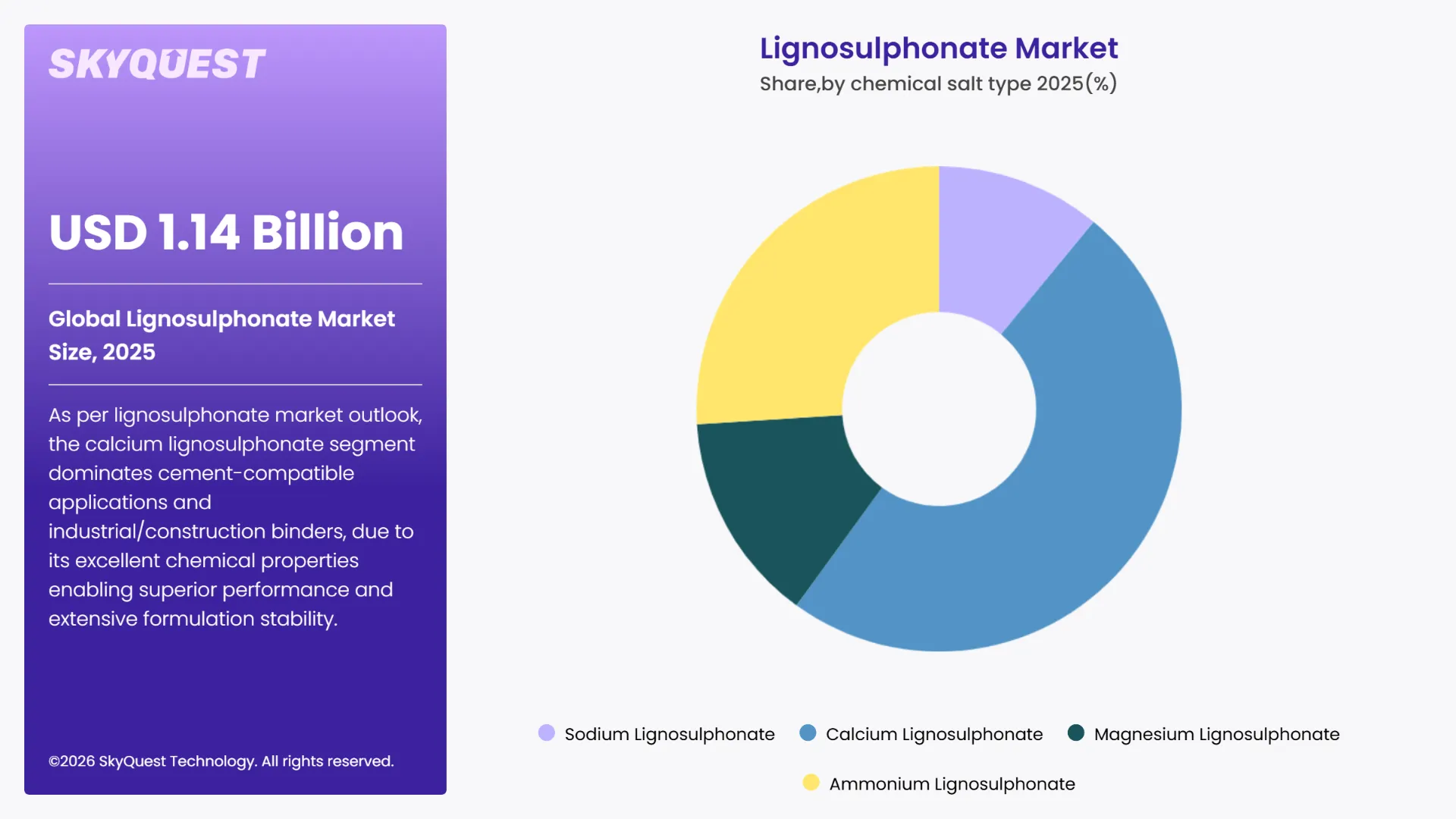
As per lignosulphonate market outlook, the calcium lignosulphonate segment dominates cement-compatible applications and industrial/construction binders, due to its excellent chemical properties enabling superior performance and extensive formulation stability. It also exhibits a significant affinity toward multivalent cations (metal ions with multiple valences) and efficient water control. As a result, it helps improve rheology and strength development. The popularity of calcium lignosulphonate continues to be enhanced by the availability of established sources of pulp for this product, coupled with existing global supply chains.
As per lignosulphonate market analysis, sodium lignosulphonate has experienced the fastest growth rate out of the two sub-segments, specifically due to formulators seeking a low-cost, naturally occurring, water-soluble, multifunctional dispersant/additive for use in drilling fluids and agrochemical suspensions. The compatibility of sodium lignosulphonate with aqueous systems, ease of formulation, and the continuous innovation of low-sugar and concentrated liquid grades is rapidly accelerating sodium lignosulphonate’s expansion into other applications across various industry segments.
As per lignosulphonate market forecast, the concrete admixtures (plasticizers/retarders) are the leaders of this market because lignosulphonate-based additives produce workability and set-time improvements that meet the requirements of construction and are therefore widely used in cement formulations. These additives are specified in cement formulations because they reduce the amount of water required for flowability as well as due to savings on clinker usage through lower costs. The adoption of innovative products, such as those that improve compatibility and durability, further solidifies the position of lignosulphonate-based additives as the centrepiece of all construction grade demand.
Dispersants (pesticides/dyes) are also gaining growth momentum as formulators begin to place a higher priority on developing effective biodegradable dispersants for use in both agrochemical and pigment systems. The increasing number of companies seeking to develop cleaner formulations, combined with the importance of continuing innovation in developing low-sugar and specialty spray-dried powders are expanding the opportunities of using lignosulphonate chemistry.
To get detailed segments analysis, Request a Free Sample Report
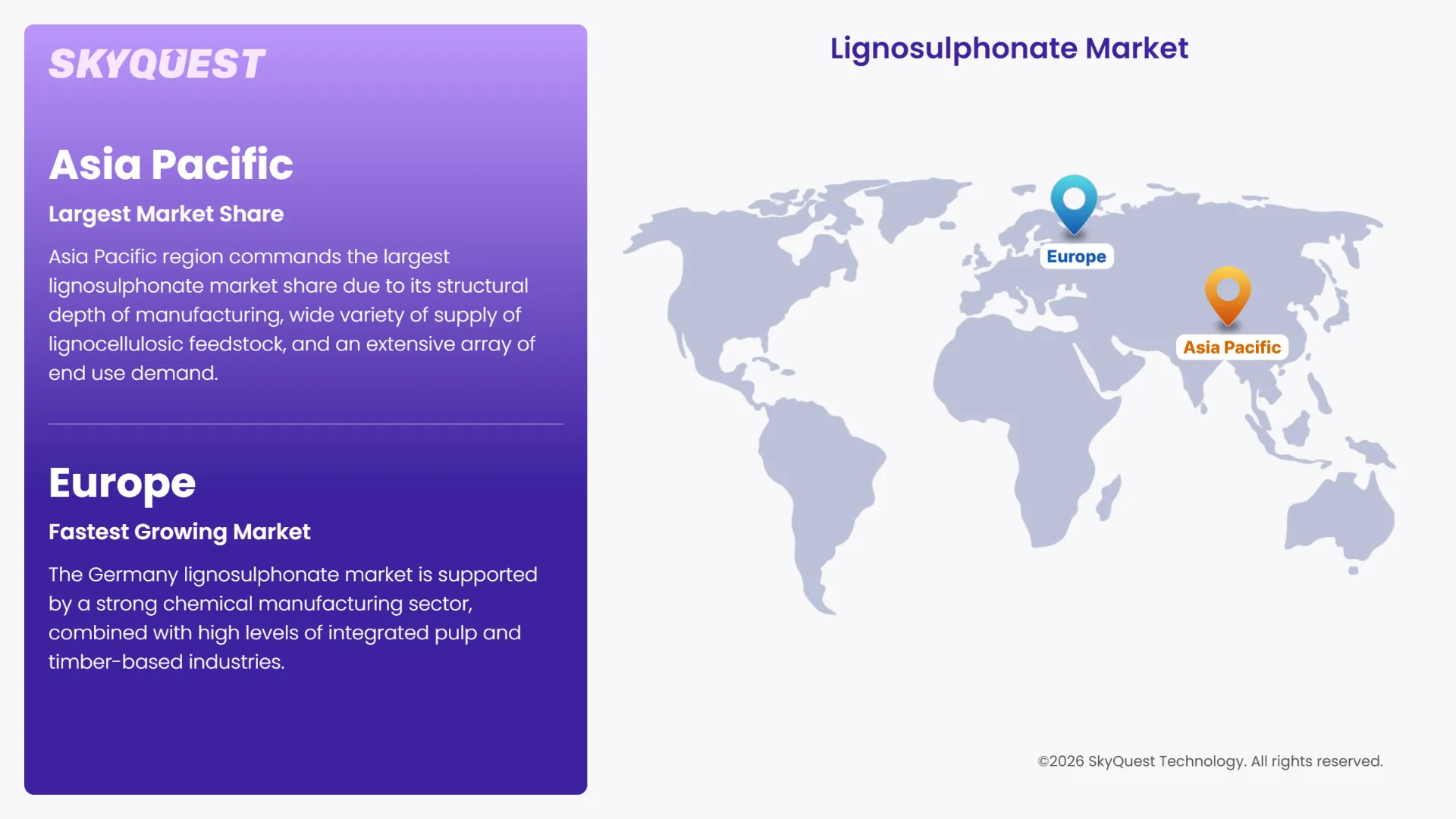
Asia Pacific region commands the largest lignosulphonate market share due to its structural depth of manufacturing, wide variety of supply of lignocellulosic feedstock, and an extensive array of end use demand. In addition, the concentrated level of construction activity within this region leads to significant demand for concrete admixtures to enable the construction of concrete structures. Moreover, in the region, either pulp and paper operations have been established for many years that provide a steady supply of raw materials and co-products. Producers in the Asia Pacific Region benefit from having integrated supply chains with their manufacturers, competitive cost of making their products, and continue to improve how they process their lignosulphonate products through ongoing innovation in their processes which improves performance and application specific criteria.
As per lignosulphonate industry analysis, Japan market is supported by its advanced chemical processing capabilities and being closely integrated with the pulp and paper industry in Japan, where the specialty construction and industrial sectors are experiencing high levels of demand for their products. Therefore, manufacturers in Japan manufacture high-quality formulations for consistent performance in demanding applications such as concrete admixtures and specialty binders. The partnership between the research and industry sectors in Japan has led to continuous improvement and custom-developed solutions to meet stringent quality and environmental regulations while enhancing efficiency in export supply chains.
The South Korean lignosulphonate market benefits from a technologically advanced chemical industry and excellent access to local manufacturer supply chains. The producers in South Korea are producing custom formulations of lignosulphonates for construction, mining and feed applications while focusing on achieving high performance and adhering to environmental standards. In addition, the proximity to timber processing facilities and the efficient logistics of this region facilitate easy access to feedstocks.
There has been a recent significant growth in the usage of lignosulphonates in Europe as a result of regulatory push towards sustainable materials, low carbon construction, and due to advancements in chemical technologies. Demand for lignosulphonates used by concrete admixture suppliers, and in many other industrial uses, is motivating manufacturers to create higher performance and specialty formulations. The integrated value chains within Europe permit efficient sourcing of lignosulphonates from pulp operations and facilitate collaboration among chemical manufacturers and engineering contractors. Also, the institution of preferences for bio-based and recyclable additives in public procurement is increasing the willingness of the market to accept lignosulphonates, and investments into application specific research and development and cross-border partnerships are enabling quicker commercialization and adaptations to environmental and quality standards.
The Germany lignosulphonate market is supported by a strong chemical manufacturing sector, combined with high levels of integrated pulp and timber-based industries. Increased domestic demand from both the construction and industrial sectors is leading to the proliferation of high-quality, application-specific grades of lignosulphonates. Manufacturers are committed to achieving production efficiency and adhering to very high standards of quality. In addition, a high degree of collaborative research between manufacturers and technical colleges is producing advanced formulations. Well-developed logistics and export infrastructure have enabled companies within Europe to achieve leadership positions in regional supply as well as a high level of responsiveness to customer needs.
The UK lignosulphonate sector exhibits dynamic growth spurred by continued infrastructure updates, the move toward more sustainable procurement practices, and active development efforts related to practical applications. Manufacturers and service agents are working closely together with their customers in construction and manufacturing to provide custom formulations to meet their specific needs. Additionally, a constantly evolving and innovative ecosystem involving academic partnerships and pilot programs feeds the marketing process of developing higher value products. Flexible and responsive logistics systems allow for quick entry into niche markets.
The French lignosulphonate sector is being driven by the emphasis on the circular economy and increasing interest in bio-based additives within both the public and private sectors. Within this market, members are concentrating their energy on developing sustainable grades of products for use in construction, agriculture, and manufacturing, mainly through collaborative pilot projects. The scaling up of this opportunity will take time, while regulatory requirements concerning the circularity of materials will further stimulate the uptake of lignin-based products.
Strategic investments in integrated manufacturing, development of new applications and a strong supply chain ensure North America becomes an important player within the lignosulphonate market. Increased processing flexibility allows producers to utilize lignosulphonate across a wide variety of applications, from concrete admixtures and drilling fluids to animal feed and agricultural binders. Formulations are developed that comply with the technical performance requirements while meeting environmental expectations. Increasingly, pulp suppliers and chemical companies are collaborating more closely to ensure continued feedstock supplies and identify opportunities for coproduct processing.
As per lignosulphonate market regional outlook, United States continues to grow largely due to an existing strong industrial demand from construction, oilfield, mining and agriculture, where suppliers have a history of delivering high levels of technical performance and reliable supply. Producers invest in providing processing capability that is flexible and technically supported to meet the many different application requirements their customers have. Close collaboration with pulp suppliers and research institutions support producers in better determining the specific grades which will perform best under expected operating conditions. Efficient logistics and established frameworks facilitate the distribution of lignosulphonate products and permit manufacturers to respond quickly to customer requests for specification changes.
As per lignosulphonate market regional forecast, Canada is benefitting from proximity to a large facility (forestry and pulp operation) providing continuous lignin feedstock for production. Manufacturers in Canada are focused on ensuring a sustainable source of lignin and producing flexible formulations that will meet customer needs for construction, animal feed and industrial dispersants. Strong logistics for access to coastal and inland (transportation hubs) provide efficient domestic distribution and export to neighbouring markets.
To know more about the market opportunities by region and country, click here to
Buy The Complete Report
Construction and Cement Additives
Use of lignosulphonates as cement additives and plasticizers improves the ease of workability, water retention and dispersion of cement particles making it easier to place and finish products in the construction industry leading to increased specification and wider use in building construction projects. Their compatibility with various cement formulations improves the performance of cement and provides advantages in terms of achieving the desired characteristics (or rheological characteristics) improved the likelihood that the user (the formulator/contractor) will choose lignosulphonates as an additive. This consistent and reliable contribution to concrete/mortar systems has resulted in a steady demand for lignosulphonates from the construction industry and has also driven additional cement-related lignosulphonate market growth in terms of upstream specification decisions.
Animal Feed and Pellet Binding
In the manufacture of animal feeds, lignosulphonates are used as effective binders for forming durable self-contained pellets that will minimize loss in fines during processing and handling and maintain homogenous nutrient concentrations in the feed formulations. Ultimately resulting in improved feed conversion efficiencies and consistent animal performance which encourages feed manufacturers to utilize lignosulphonates in their feed formulations. Additionally, the contribution that lignosulphonates make to improved processing capabilities during the pelleting process and production of stable, transportable feed pellets enhances feed mill operational efficiency and overall supply chain logistics. By effectively addressing common processing and quality issues associated with feed production, the role of lignosulphonates in feed production is continuing to demonstrate steady growth and contribute positively toward industry growth.
Feedstock Variability and Quality
Different wood types, pulping methods, and mill practices can produce vastly different raw material compositions and purities of lignosulphonates which can lead to a range of variations in performance and thus make it difficult to formulate a product that will yield consistent results. The nature of these raw materials can force many manufacturers to add processing or mixing steps to achieve a refined product from each of the raw materials they are working with. This can be viewed as increasing the perceived risk to both buyer and seller and adding to the general complexity of the supply chain as well as creating a more difficult environment for new products to enter the market therefore requiring significantly longer times for qualifications of suppliers.
Regulatory and Environmental Concerns
Changes in environmental regulations and expectations around chemical residues, handling of discharges/effectiveness of effluent management systems, and sustainable sourcing of raw materials will create compliance challenges for suppliers and customers. Increased expectations of compliance with discharge and waste-handling requirements may increase levels of capital needed for effluent management and encourage companies to seek out suppliers who are able to provide similar products with less capital required. As the regulatory climate continues to develop, there is an increasing interest from stakeholders in the impacts of lignosulphonates throughout their lifecycle and this will impact purchasing decisions especially in markets that are considered more sensitive than others.
Request Free Customization of this report to help us to meet your business objectives.
The competitive environment of lignin value added products is heavily influenced by traditional product companies increasing their production capacity and establishing joint ventures and procurement agreements while newer companies develop commercial applications for lignin. Many competitive market dynamics are driven by competitive dynamics such as integrating feedstocks into production, developing innovative products for nice segments of the previous paper industry, and creating products that are differentiated from other manufacturers. Examples of these efforts can be seen in the strategic partnerships formed between Borregaard and Rayonier, the product line expansion by Nippon Paper and the patents and business scalability being developed by Earthodic and Lignopure, who are startup companies.
SkyQuest’s ABIRAW (Advanced Business Intelligence, Research & Analysis Wing) is our Business Information Services team that Collects, Collates, Correlates, and Analyses the Data collected by means of Primary Exploratory Research backed by robust Secondary Desk research.
As per SkyQuest analysis, the lignosulphonate industry is supported by rising use in concrete admixtures that improve workability and reduce water demand while a second driver is growing demand for biodegradable dispersants in agriculture and coatings as companies seek sustainable alternatives. A key driver remains construction demand and cement additive adoption that secures steady volumes and specifications. A key restraint is feedstock variability and inconsistent quality from different pulping processes which complicates formulation and raises processing costs. Asia Pacific remains the dominant region due to deep pulp and construction sectors and integrated supply chains, and calcium lignosulphonate is the dominant segment due to its cement compatibility and wide availability. The lignosulphonate market trend line shows a steady, gradual upward slope over time, reflecting consistent but moderate growth across industries.
| Report Metric | Details |
|---|---|
| Market size value in 2024 | USD 1.1 Billion |
| Market size value in 2033 | USD 1.5 Billion |
| Growth Rate | 3.5% |
| Base year | 2024 |
| Forecast period | 2026-2033 |
| Forecast Unit (Value) | USD Billion |
| Segments covered |
|
| Regions covered | North America (US, Canada), Europe (Germany, France, United Kingdom, Italy, Spain, Rest of Europe), Asia Pacific (China, India, Japan, Rest of Asia-Pacific), Latin America (Brazil, Rest of Latin America), Middle East & Africa (South Africa, GCC Countries, Rest of MEA) |
| Companies covered |
|
| Customization scope | Free report customization with purchase. Customization includes:-
|
To get a free trial access to our platform which is a one stop solution for all your data requirements for quicker decision making. This platform allows you to compare markets, competitors who are prominent in the market, and mega trends that are influencing the dynamics in the market. Also, get access to detailed SkyQuest exclusive matrix.
Table Of Content
Executive Summary
Market overview
Parent Market Analysis
Market overview
Market size
KEY MARKET INSIGHTS
COVID IMPACT
MARKET DYNAMICS & OUTLOOK
Market Size by Region
KEY COMPANY PROFILES
Methodology
For the Lignosulphonate Market, our research methodology involved a mixture of primary and secondary data sources. Key steps involved in the research process are listed below:
1. Information Procurement: This stage involved the procurement of Market data or related information via primary and secondary sources. The various secondary sources used included various company websites, annual reports, trade databases, and paid databases such as Hoover's, Bloomberg Business, Factiva, and Avention. Our team did 45 primary interactions Globally which included several stakeholders such as manufacturers, customers, key opinion leaders, etc. Overall, information procurement was one of the most extensive stages in our research process.
2. Information Analysis: This step involved triangulation of data through bottom-up and top-down approaches to estimate and validate the total size and future estimate of the Lignosulphonate Market.
3. Report Formulation: The final step entailed the placement of data points in appropriate Market spaces in an attempt to deduce viable conclusions.
4. Validation & Publishing: Validation is the most important step in the process. Validation & re-validation via an intricately designed process helped us finalize data points to be used for final calculations. The final Market estimates and forecasts were then aligned and sent to our panel of industry experts for validation of data. Once the validation was done the report was sent to our Quality Assurance team to ensure adherence to style guides, consistency & design.
Analyst Support
Customization Options
With the given market data, our dedicated team of analysts can offer you the following customization options are available for the Lignosulphonate Market:
Product Analysis: Product matrix, which offers a detailed comparison of the product portfolio of companies.
Regional Analysis: Further analysis of the Lignosulphonate Market for additional countries.
Competitive Analysis: Detailed analysis and profiling of additional Market players & comparative analysis of competitive products.
Go to Market Strategy: Find the high-growth channels to invest your marketing efforts and increase your customer base.
Innovation Mapping: Identify racial solutions and innovation, connected to deep ecosystems of innovators, start-ups, academics, and strategic partners.
Category Intelligence: Customized intelligence that is relevant to their supply Markets will enable them to make smarter sourcing decisions and improve their category management.
Public Company Transcript Analysis: To improve the investment performance by generating new alpha and making better-informed decisions.
Social Media Listening: To analyze the conversations and trends happening not just around your brand, but around your industry as a whole, and use those insights to make better Marketing decisions.
REQUEST FOR SAMPLE
 REQUEST FREE CUSTOMIZATION
Global Lignosulphonate Market size was valued at USD 1.1 Billion in 2024 and is poised to grow from USD 1.14 Billion in 2025 to USD 1.5 Billion by 2033, growing at a CAGR of 3.5% during the forecast period (2026-2033).
Competitive landscape is shaped by legacy producers expanding capacity and forming joint ventures and supply partnerships while startups commercialize value added lignin derivatives. Market drivers tied to competitive pressure include feedstock integration, application specific innovation, and downstream formulation differentiation. Concrete strategies observed include Borregaard and Rayonier joint supply arrangements, Nippon Paper product diversification, and startup scale up and patenting by Earthodic and Lignopure. 'Borregaard LignoTech', 'Sappi (Tembec)', 'Nippon Paper Industries', 'Burgo Group', 'Domsjö Fabriker', 'Qingdao New World', 'Shenyang Xingzhenghe', 'Wuhan East China Chemical', 'Tianjin Wood-Based', 'Cargill (Bio-polymers)', 'ADM (Specialty)', 'BASF', 'Sika AG', 'Fosroc', 'GCP Applied Technologies', 'Mapei SpA', 'Saint-Gobain (Chryso)', 'LignoStar', 'Green Agrochem', 'Jebsen & Jessen'
The incorporation of lignosulphonates as cement additives and plasticizers enhances workability, water retention, and dispersion of cement particles, enabling easier placement and finishing in construction applications, which encourages specification and broader adoption across building projects. Their compatibility with diverse formulations and ability to improve material performance while helping achieve desired rheological characteristics leads formulators and contractors to prefer these additives. This reliable functional contribution to concrete and mortar systems drives steady demand from the construction sector and supports market growth through upstream specification choices.
End-Use Diversification: Manufacturers and suppliers are broadening lignosulphonate formulations to address varied industrial needs, moving beyond traditional admixtures and dust suppression into adhesives, animal feed binders, and specialty coatings. This trend is driven by demand for tailored functional properties, easier formulation compatibility, and opportunities to substitute petrochemical-based additives with a renewable binder. Greater application breadth encourages partnerships with downstream formulators, accelerates product innovation cycles, and creates differentiated value propositions that support premium positioning and uptake.
Asia Pacific Dominate the Global Lignosulphonate Market?
Lignosulphonate is a bio-based binder and dispersant derived from the sulphite pulping process in the paper and forestry industry. It is extensively used in construction, animal feed, oilfield drilling, mineral processing, and agricultural applications due to its ability to improve material performance, enhance workability, and serve as a sustainable alternative to petrochemical-based additives.
Key trends include the diversification of lignosulphonate applications into adhesives, specialty coatings, and animal feed binders, along with increasing integration of circular economy practices. Companies are focusing on utilizing pulp and paper by-products more efficiently while promoting sustainable sourcing and recyclable product development.


Want to customize this report? This report can be personalized according to your needs. Our analysts and industry experts will work directly with you to understand your requirements and provide you with customized data in a short amount of time. We offer $1000 worth of FREE customization at the time of purchase.
Feedback From Our Clients


 USA (+1) 351-333-4748

