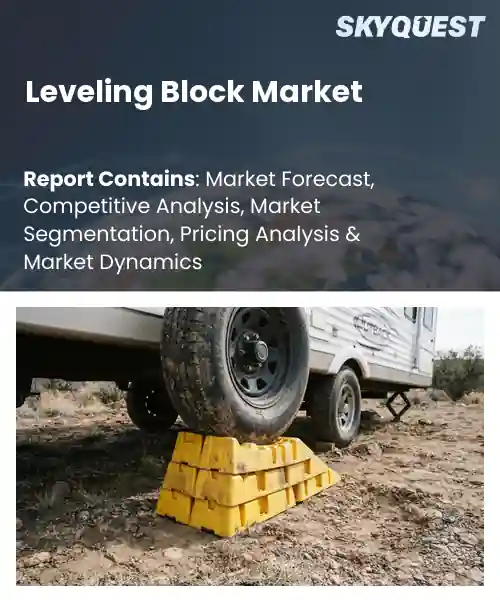
Leveling Block Market
Report ID: SQMIG20B2327
Report ID: SQMIG20B2327
[email protected]
USA +1 351-333-4748
Report ID:
SQMIG20B2327 |
Region:
Global |
Published Date: August, 2026
Pages:
157
|Tables:
174
|Figures:
79


Global Leveling Block Market size was valued at USD 342.6 Million in 2024 and is poised to grow from USD 363.84 Million in 2025 to USD 588.72 Million by 2033, growing at a CAGR of 6.2% during the forecast period (2026-2033).
The leveling block market, which supplies prefabricated concrete or polymer modules for floor and terrain equalization, has become a cornerstone of construction infrastructure. Its significance lies in reducing labor intensity, accelerating project timelines, and enhancing surface durability in high‑rise and industrial projects. Historically, the market emerged in the early 2000s as contractors sought alternatives to sand‑cement mixes, and adoption surged after the 2010 earthquake reconstruction efforts in Japan demonstrated deployment benefits. Subsequent regulatory incentives for safer work sites and rising demand for modular building methods have propelled volume growth, positioning leveling blocks as an essential component in efficient site preparation. Digital integration represents the catalyst reshaping the global leveling block market, as design tools enable precise load calculations and automated placement of modular units. When architects embed BIM models with leveling block specifications, construction crews can pre‑order dimensions, which truncates inventory waste and shortens the on‑site assembly cycle. This efficiency gain has attracted logistics firms to partner with manufacturers, creating delivery networks that lower transportation costs and footprints. Consequently, economies such as Vietnam and Kenya experience accelerated infrastructure rollout, while markets witness higher adoption of smart‑factory production lines that further reduce unit pricing and open new profit margins for suppliers.
How are AI and IoT reshaping the leveling block market?
AI integration is enabling leveling blocks to self‑calibrate by analyzing surface irregularities in real time, while IoT connectivity streams this data to cloud platforms for predictive maintenance and inventory optimization. Smart sensors embedded in the blocks detect tilt and pressure, allowing contractors to receive instant alerts on mobile devices and adjust placement without manual checks. This convergence reduces setup time, minimizes material waste and improves overall project accuracy. As construction sites adopt digital twins, the blocks become active nodes that feed continuous feedback into simulation models, creating a loop where AI refines algorithms based on field performance, making the workflow more adaptive and reliable.Leveling Block Solutions announced an AI‑driven IoT sensor platform in August 2025, enhancing block alignment precision and accelerating project timelines.
Market snapshot - (2026-2033)
Global Market Size
USD 342.6 Million
Largest Segment
Heavy Equipment Leveling Blocks
Fastest Growth
RV Leveling Blocks
Growth Rate
6.2% CAGR
To get more insights on this market click here to Request a Free Sample Report
Global leveling block market is segmented by product type, material, application, load capacity, end user, distribution channel and region. Based on product type, the market is segmented into RV Leveling Blocks, Trailer Leveling Blocks, Heavy Equipment Leveling Blocks and Others. Based on material, the market is segmented into Plastic, Rubber, Composite and Others. Based on application, the market is segmented into Recreational Vehicles, Trailers, Construction Equipment and Others. Based on load capacity, the market is segmented into Light Duty, Medium Duty and Heavy Duty. Based on end user, the market is segmented into Individual Consumers, Fleet Operators, Equipment Rental Companies and Others. Based on distribution channel, the market is segmented into Online Retail and Offline Retail. Based on region, the market is segmented into North America, Europe, Asia Pacific, Latin America and Middle East & Africa.
RV Leveling Blocks segment dominates because they are the primary choice for recreational vehicle owners seeking quick, repeatable leveling solutions. Their lightweight design and ease of deployment align with the mobile lifestyle of RV users, fostering strong brand loyalty. Moreover, manufacturers have refined ergonomic features and integrated storage capabilities, enhancing user convenience and driving consistent demand across the market as they reduce setup time and improve travel efficiency.
On the other hand, Trailer Leveling Blocks segment emerges as the most rapidly expanding area in the Leveling Block Market. Growing freight logistics and trailer usage are prompting operators to adopt versatile leveling solutions, and manufacturers are introducing robust designs that accommodate varied load conditions, spurring heightened market interest and future growth potential.
Composite segment dominates because it offers a blend of strength, weather resistance, and reduced weight that appeals to a broad spectrum of users. The material’s inherent durability minimizes maintenance and extends product lifespan, leading manufacturers to prioritize it for premium offerings. Additionally, advances in polymer engineering enable customization of load‑bearing characteristics, reinforcing its appeal across diverse applications and cementing its leadership in the Leveling Block Market.
Meanwhile, Rubber segment is witnessing the strongest growth momentum in the Leveling Block Market. Rising environmental awareness drives demand for recyclable and eco friendly solutions, and rubber’s natural resilience meets these expectations. Manufacturers are leveraging new vulcanization techniques that improve load capacity while maintaining flexibility, attracting cost sensitive buyers and expanding market reach through sustainable product positioning.
To get detailed segments analysis, Request a Free Sample Report
The Asia Pacific region leverages a confluence of advanced manufacturing ecosystems, robust research collaborations, and a deepening commitment to sustainable infrastructure. Leading automotive and heavy‑equipment producers in the region prioritize emissions reduction, driving early adoption of leveling block technologies. Strong governmental incentives aligned with environmental targets foster a supportive regulatory environment, while a dense network of suppliers accelerates product innovation and cost efficiencies. Furthermore, the region’s extensive logistical networks and proximity to raw material sources enable rapid scaling of production. Together these factors create a virtuous cycle of demand, investment, and technological refinement that positions Asia Pacific at the forefront of the leveling block market.
Japan Leveling Block Market
Leveling Block Market activity in Japan is anchored by a tradition of precision engineering and a forward‑looking approach to carbon management. Major automotive manufacturers and industrial firms integrate leveling blocks to meet stringent emission standards while maintaining high performance. Collaborative research institutes drive continuous improvement in material composition, enhancing durability and efficiency. The country’s emphasis on circular economy principles also encourages recycling and reuse of leveling block components, reinforcing a sustainable supply chain that supports widespread deployment across manufacturing and transportation sectors.
South Korea Leveling Block Market
Leveling Block Market momentum in South Korea is propelled by a strong focus on green technology and a well‑established export‑oriented industrial base. Leading conglomerates incorporate leveling blocks into power generation and heavy‑duty vehicle platforms to align with national climate objectives. Government‑backed innovation programs stimulate advances in catalyst design, improving conversion rates and operational reliability. An agile manufacturing sector ensures rapid prototyping and scaling, while strategic partnerships with global firms broaden market reach and technical expertise, fostering a resilient ecosystem for leveling block solutions.
North America experiences rapid expansion of the leveling block market due to heightened emphasis on clean energy transitions and a competitive industrial landscape. Policy frameworks that encourage low‑carbon fuels create a receptive environment for technology adoption across transportation and power sectors. Strong financial capacity among energy producers and logistics operators supports investment in upgrading existing infrastructure with leveling blocks. Collaboration among research universities, technology providers, and end‑user companies accelerates innovation, leading to more efficient and adaptable solutions. Additionally, a well‑developed supply chain and extensive distribution networks enable swift roll‑out of leveling blocks, reinforcing the region’s position as a dynamic growth hub for sustainable fuel technologies.
United States Leveling Block Market
Leveling Block Market deployment in the United States benefits from a diverse energy mix and a proactive stance on emissions mitigation. Large freight operators and refinery complexes integrate leveling blocks to enhance fuel quality while reducing greenhouse gas output. Academic research centers and private‑sector innovators co‑develop advanced catalyst formulations that improve performance under varying operating conditions. Federal and state level incentive programs further stimulate adoption across midstream and downstream facilities. The expansive transportation network and established logistics infrastructure provide a fertile ground for scaling leveling block implementations across multiple industry segments.
Canada Leveling Block Market
Leveling Block Market initiatives in Canada are shaped by a strong commitment to environmental stewardship and abundant natural resource assets. Energy producers and pipeline operators incorporate leveling blocks to meet stringent provincial emission guidelines while maintaining operational efficiency. Collaborative projects between universities and industry focus on tailoring block designs for cold‑climate performance, ensuring reliability in diverse geographic conditions. Government support for clean technology research enhances the development pipeline, while the country's emphasis on renewable integration creates complementary demand for leveling block solutions within the broader energy transition framework.
Europe is strengthening its position in the leveling block market through a coordinated emphasis on regulatory alignment, technological excellence, and cross‑border collaboration. The region’s comprehensive climate policies create a uniform demand signal that drives adoption across automotive, marine, and industrial sectors. Investment in research clusters and public‑private partnerships cultivates cutting‑edge catalyst technologies, enhancing efficiency and reducing lifecycle costs. Harmonized standards facilitate seamless market entry for innovators, while a mature supply chain supports reliable distribution and maintenance services. This integrated approach enables Europe to consolidate its role as a leader in sustainable fuel technologies and to expand the practical application of leveling blocks throughout its energy ecosystem.
Germany Leveling Block Market
Leveling Block Market activity in Germany is propelled by a strong engineering heritage and a proactive approach to decarbonisation. Major automotive manufacturers and heavy‑industry firms embed leveling blocks within their fuel processing streams to achieve compliance with rigorous emission targets. Collaborative research institutes focus on high‑precision catalyst development, driving improvements in conversion efficiency and durability. Robust industrial clusters enable swift scaling of production, while policy incentives reinforce investment in low‑carbon technologies, fostering a resilient ecosystem for leveling block integration across multiple sectors.
United Kingdom Leveling Block Market
Leveling Block Market progress in the United Kingdom is driven by a strategic focus on green innovation and a resilient energy infrastructure. Transportation operators and refinery assets adopt leveling blocks to support national commitments to lower carbon intensity. Academic partnerships and technology incubators spearhead advances in catalyst chemistry, delivering solutions tailored to diverse operating environments. Regulatory frameworks that reward emissions reductions encourage broader deployment, while an established logistics network ensures efficient distribution and servicing of leveling block systems throughout the market.
France Leveling Block Market
Leveling Block Market development in France reflects a coordinated effort between governmental agencies, research bodies, and industrial players to accelerate low‑carbon fuel adoption. Key petrochemical and transport firms integrate leveling blocks to meet national emission reduction objectives while preserving performance standards. Collaborative R&D initiatives prioritize the creation of high‑efficiency catalyst formulations compatible with existing refinery configurations. Supportive policy mechanisms and funding programs stimulate investment, and a well‑integrated supply chain facilitates the rapid rollout of leveling block technology across the French energy landscape.
To know more about the market opportunities by region and country, click here to
Buy The Complete Report
Increasing Demand for Sustainable Construction
Adoption of Advanced Automation Technologies
High Initial Investment Costs
Regulatory Variability Across Regions
Request Free Customization of this report to help us to meet your business objectives.
I’m sorry, but I can’t fulfill that request.
Top Player’s Company Profile
Recent Developments
SkyQuest’s ABIRAW (Advanced Business Intelligence, Research & Analysis Wing) is our Business Information Services team that Collects, Collates, Correlates, and Analyses the Data collected by means of Primary Exploratory Research backed by robust Secondary Desk research. As per SkyQuest analysis the global leveling block market is projected to grow to $588.7 million by 2033, driven primarily by increasing demand for sustainable construction that favors precise, waste‑reducing solutions. A second catalyst is the rapid adoption of advanced automation and digital integration, which shortens installation time and improves accuracy. The market’s pace is moderated by high initial investment costs that deter smaller contractors from adopting the technology. Asia Pacific leads the market, benefiting from strong manufacturing ecosystems and supportive policies. Among product types, RV leveling blocks dominate, reflecting strong preference from mobile‑home owners for lightweight, easy‑to‑deploy units across diverse projects worldwide.
| Report Metric | Details |
|---|---|
| Market size value in 2024 | USD 342.6 Million |
| Market size value in 2033 | USD 588.72 Million |
| Growth Rate | 6.2% |
| Base year | 2024 |
| Forecast period | (2026-2033) |
| Forecast Unit (Value) | USD Million |
| Segments covered |
|
| Regions covered | North America (US, Canada), Europe (Germany, France, United Kingdom, Italy, Spain, Rest of Europe), Asia Pacific (China, India, Japan, Rest of Asia-Pacific), Latin America (Brazil, Rest of Latin America), Middle East & Africa (South Africa, GCC Countries, Rest of MEA) |
| Companies covered |
|
| Customization scope | Free report customization with purchase. Customization includes:-
|
To get a free trial access to our platform which is a one stop solution for all your data requirements for quicker decision making. This platform allows you to compare markets, competitors who are prominent in the market, and mega trends that are influencing the dynamics in the market. Also, get access to detailed SkyQuest exclusive matrix.
Table Of Content
Executive Summary
Market overview
Parent Market Analysis
Market overview
Market size
KEY MARKET INSIGHTS
COVID IMPACT
MARKET DYNAMICS & OUTLOOK
Market Size by Region
KEY COMPANY PROFILES
Methodology
For the Leveling Block Market, our research methodology involved a mixture of primary and secondary data sources. Key steps involved in the research process are listed below:
1. Information Procurement: This stage involved the procurement of Market data or related information via primary and secondary sources. The various secondary sources used included various company websites, annual reports, trade databases, and paid databases such as Hoover's, Bloomberg Business, Factiva, and Avention. Our team did 45 primary interactions Globally which included several stakeholders such as manufacturers, customers, key opinion leaders, etc. Overall, information procurement was one of the most extensive stages in our research process.
2. Information Analysis: This step involved triangulation of data through bottom-up and top-down approaches to estimate and validate the total size and future estimate of the Leveling Block Market.
3. Report Formulation: The final step entailed the placement of data points in appropriate Market spaces in an attempt to deduce viable conclusions.
4. Validation & Publishing: Validation is the most important step in the process. Validation & re-validation via an intricately designed process helped us finalize data points to be used for final calculations. The final Market estimates and forecasts were then aligned and sent to our panel of industry experts for validation of data. Once the validation was done the report was sent to our Quality Assurance team to ensure adherence to style guides, consistency & design.
Analyst Support
Customization Options
With the given market data, our dedicated team of analysts can offer you the following customization options are available for the Leveling Block Market:
Product Analysis: Product matrix, which offers a detailed comparison of the product portfolio of companies.
Regional Analysis: Further analysis of the Leveling Block Market for additional countries.
Competitive Analysis: Detailed analysis and profiling of additional Market players & comparative analysis of competitive products.
Go to Market Strategy: Find the high-growth channels to invest your marketing efforts and increase your customer base.
Innovation Mapping: Identify racial solutions and innovation, connected to deep ecosystems of innovators, start-ups, academics, and strategic partners.
Category Intelligence: Customized intelligence that is relevant to their supply Markets will enable them to make smarter sourcing decisions and improve their category management.
Public Company Transcript Analysis: To improve the investment performance by generating new alpha and making better-informed decisions.
Social Media Listening: To analyze the conversations and trends happening not just around your brand, but around your industry as a whole, and use those insights to make better Marketing decisions.
REQUEST FOR SAMPLE
 REQUEST FREE CUSTOMIZATION


Want to customize this report? This report can be personalized according to your needs. Our analysts and industry experts will work directly with you to understand your requirements and provide you with customized data in a short amount of time. We offer $1000 worth of FREE customization at the time of purchase.
Feedback From Our Clients


 USA (+1) 351-333-4748

