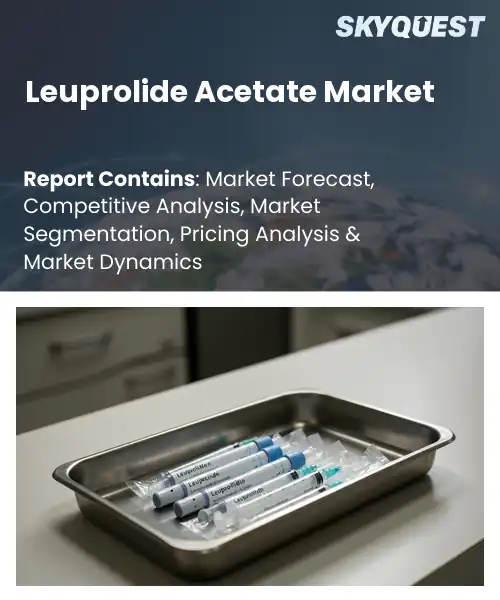
Leuprolide Acetate Market
Report ID: SQMIG35I3156
Report ID: SQMIG35I3156
[email protected]
USA +1 351-333-4748
Report ID:
SQMIG35I3156 |
Region:
Global |
Published Date: July, 2026
Pages:
157
|Tables:
92
|Figures:
76


Global Leuprolide Acetate Market size was valued at USD 2.3 Billion in 2024 and is poised to grow from USD 2.46 Billion in 2025 to USD 5.41 Billion by 2033, growing at a CAGR of 6.8% during the forecast period (2026-2033).
The global leuprolide acetate industry revolves around a synthetic GnRH agonist used to suppress hormone‑dependent conditions such as prostate cancer, endometriosis, and precocious puberty. Its significance drives from the drug’s ability to provide long‑acting hormonal control, reducing surgical interventions and improving patient quality of life.
One pivotal factor driving market expansion is the rising adoption of personalized oncology regimens that pair leuprolide acetate with newer androgen‑deprivation drugs. When clinicians show that synchronized hormone suppression boosts the efficacy of agents such as enzalutamide, patient outcomes improve, leading hospitals to revise formularies and insurers to reimburse combination therapies. This therapeutic synergy creates a feedback loop: higher prescription volumes encourage manufacturers to develop advanced delivery systems like subcutaneous auto‑injectors, which simplify administration and cut clinic visits. As a result, emerging markets pursuing affordable cancer care and mature regions focused on precision medicine both present sizable growth opportunities globally.
How is AI-driven patient monitoring influencing the Leuprolide acetate market?
AI‑driven patient monitoring is reshaping how clinicians manage leuprolide acetate therapies. Wearable sensors and cloud platforms collect hormone levels, symptom scores and injection timing, allowing real‑time alerts when dosing deviates from schedule. This continuous feedback reduces missed doses, improves symptom control and shortens clinic visits, making depot formulations more attractive to providers. As providers adopt these tools, demand for reliable long‑acting products such as the 3.75 mg and 11.25 mg depot injections grows. The technology also supports research by supplying granular adherence data that can refine dosing intervals and expand indications, reinforcing market momentum across clinical settings for patients and providers alike.
Lupron in January 2026, reported Phase 3 results for its six‑month intramuscular depot, delivering robust safety data that AI‑driven monitoring platforms can now integrate to personalize dosing and enhance adherence, further supporting market expansion and therapeutic efficiency by enabling clinicians to track patient response remotely and adjust treatment intervals without additional visits, thereby reducing overall care burden.
Market snapshot - (2026-2033)
Global Market Size
USD 2.3 Billion
Largest Segment
Prostate Cancer
Fastest Growth
Infertility Treatment
Growth Rate
6.8% CAGR
To get more insights on this market click here to Request a Free Sample Report
Global leuprolide acetate market is segmented by application, dosage form, distribution channel and region. Based on application, the market is segmented into Prostate Cancer, Endometriosis, Uterine Fibroids, Central Precocious Puberty and Infertility Treatment. Based on dosage form, the market is segmented into Prefilled Syringes, Depot Injection and Implants. Based on distribution channel, the market is segmented into Hospital Pharmacies, Retail Pharmacies and Specialty Pharmacies. Based on region, the market is segmented into North America, Europe, Asia Pacific, Latin America and Middle East & Africa.
Prostate cancer application segment dominates with large global leuprolide acetate market share because leuprolide acetate has long been integral to hormonal therapy protocols for advanced disease. Its ability to achieve sustained testosterone suppression aligns with clinical guidelines, making it the preferred option for oncologists. Established efficacy, robust safety profile, and reimbursement familiarity drive consistent prescribing, reinforcing its market leadership. The entrenched therapeutic role ensures steady demand and entrenches leuprolide as a cornerstone of prostate cancer treatment management.
As per global leuprolide acetate market outlook, endometriosis application emerges as the most rapidly expanding area for leuprolide acetate. Growing awareness of hormone-driven pelvic pain and the push for minimally invasive options encourage clinicians to adopt GnRH agonist therapy. Ongoing clinical trials and patient advocacy accelerate acceptance, positioning this indication to drive future market momentum.
Prefilled syringes dosage form dominates because they provide clinicians with ready-to-use, sterile delivery that minimizes preparation steps and needle‑stick risk. The convenience of standardized dosing enhances workflow efficiency in oncology and reproductive clinics, fostering higher adoption. Compatibility with existing injection devices and improved patient comfort further reinforce preference, making prefilled syringes the default choice for leuprolide acetate administration across therapeutic settings and supports consistent pharmacokinetic profiles, reducing variability in treatment outcomes.
As per global leuprolide acetate market forecast, depot injection form is witnessing the strongest growth momentum for leuprolide acetate. Extended‑release technology offers multi‑month dosing, decreasing clinic visits and enhancing patient adherence. Emerging home‑administration devices and payer incentives for long‑acting therapies amplify demand, positioning depot injections as a pivotal driver of future market expansion.
To get detailed segments analysis, Request a Free Sample Report
North America leads the global leuprolide acetate market due to a combination of mature healthcare systems, extensive reimbursement frameworks, and a concentration of leading pharmaceutical manufacturers. The region benefits from a deep network of specialized clinics and oncology centers that drive consistent prescribing patterns. Strong regulatory support accelerates product approvals and encourages innovative delivery technologies. Additionally, robust clinical research activities generate continuous evidence that reinforces physician confidence. The United States contributes a sizeable share through integrated payer models and early adoption of biosimilar alternatives, while Canada public programmes ensure broad patient access. Collaborative partnerships between academic institutions and industry further enhance therapeutic optimization and patient outcomes. This convergence of infrastructure, policy, and innovation underpins North America dominant position within the global landscape.
As per global leuprolide acetate market regional outlook, United States is shaped by a sophisticated payer environment and a strong network of specialty care providers. High clinician familiarity with hormone‑based therapies accelerates adoption, while ongoing clinical trials reinforce therapeutic confidence. The presence of multiple branded and biosimilar options stimulates competitive pricing, facilitating broader patient access. Collaborative initiatives between research institutions and manufacturers continue to drive product innovation and therapeutic refinements throughout the healthcare system.
As per global leuprolide acetate market regional forecast, Canada benefits from universal health coverage that promotes equitable drug availability across provinces. Provincial formularies typically prioritize cost‑effective therapies, encouraging the integration of biosimilar alternatives alongside established products. Specialist oncology and reproductive centres play pivotal roles in guideline‑driven prescribing, while national health agencies provide ongoing therapeutic assessments that shape reimbursement decisions. These coordinated mechanisms support steady market growth and reliable patient access within the national framework.
Europe experiences rapid expansion of the leuprolide acetate market due to a harmonized regulatory landscape that streamlines product introductions across member states. Robust public and private reimbursement schemes ensure wide patient access, while established clinical guidelines promote consistent prescribing practices. The region’s strong emphasis on personalized medicine drives the adoption of advanced delivery devices and combination regimens. Collaborative research networks across key markets generate continuous clinical evidence, reinforcing physician confidence. Germany’s mature healthcare infrastructure anchors market volume, whereas the United Kingdom’s proactive health technology assessments accelerate adoption of newer formulations. France’s evolving therapeutic pathways and growing specialist network signal an emerging foothold. Together, these drivers create a fertile environment for sustained market expansion throughout Europe.
As per global leuprolide acetate industry analysis, Germany is supported by a comprehensive insurance system that facilitates broad reimbursement for hormone therapies. Strong clinical consensus and guideline endorsement encourage early integration into treatment protocols for oncology and reproductive disorders. The presence of leading pharmaceutical firms and research hospitals fosters continuous product optimization and innovative delivery options. National health agencies regularly evaluate therapeutic value, ensuring that market participants align with evidence‑based standards and maintain high patient care quality.
United Kingdom benefits from a centralized National Health Service that emphasizes cost‑effectiveness and clinical benefit. Health technology assessment bodies routinely appraise new formulations, enabling swift incorporation of innovative delivery systems when evidence demonstrates added value. Specialist clinics and university hospitals drive guideline‑based prescribing, while collaborative funding schemes support ongoing clinical research. This structure fosters rapid uptake of emerging products and sustains market momentum across the British healthcare landscape.
France is gradually strengthening as therapeutic guidelines expand to include hormone‑based interventions for a broader range of indications. Public health insurance ensures baseline coverage, while regional health agencies promote the evaluation of new delivery technologies through pilot programs. Academic centers and oncology networks contribute to clinical evidence generation, influencing prescribing habits. This emerging foundation anticipates increased market penetration as awareness and provider confidence continue to rise.
Asia Pacific is strengthening its position in the leuprolide acetate market through accelerating healthcare investment and expanding patient access across diverse economies. Growing awareness of hormone‑targeted therapies in oncology and reproductive health drives incremental adoption, while national pricing reforms encourage the utilization of cost‑effective biosimilar options. Regional regulatory harmonization facilitates smoother product entry, and local manufacturers are increasingly participating in joint development projects that enhance formulation stability and delivery convenience. Japan’s advanced clinical infrastructure and South Korea’s rapid adoption of novel therapeutic platforms further exemplify the region’s capacity to integrate cutting‑edge solutions. These combined dynamics are consolidating Asia Pacific as a pivotal growth frontier for Leuprolide Acetate.
Japan is driven by an established clinical research ecosystem and a high prevalence of hormone‑responsive cancers. Strong governmental support for innovative drug development accelerates the introduction of next‑generation delivery systems. Reimbursement policies prioritize proven efficacy, fostering confidence among oncologists and fertility specialists. Collaboration between academic hospitals and pharmaceutical companies yields continuous refinement of therapeutic protocols, ensuring sustained market relevance within the Japanese healthcare environment.
South Korea benefits from rapid adoption of advanced therapeutic modalities supported by proactive government health initiatives. Comprehensive national insurance schemes provide broad coverage for hormone therapies, encouraging early integration into oncology and reproductive treatment pathways. Local biotech firms actively engage in formulation research, often partnering with multinational partners to introduce innovative delivery technologies. This collaborative environment, coupled with strong physician awareness, propels market expansion and reinforces South Korea’s emerging influence within the regional landscape.
To know more about the market opportunities by region and country, click here to
Buy The Complete Report
Rising Demand for Hormone Therapy
Expanding Indications for Fertility Preservation
High Cost of Injectable Formulations
Regulatory Complexity Across Regions
Request Free Customization of this report to help us to meet your business objectives.
The leuprolide acetate industry is dominated by Tolmar Pharmaceuticals, Varian Pharmed, Avenit, Takeda Pharmaceutical and Sun Pharma, each leveraging formulation differentiation, supply‑chain optimization and strategic collaborations to outpace rivals; Takeda recently partnered with Varian Pharmed to co‑develop an extended‑release injection, while Tolmar pursued an acquisition of a niche injectable line to broaden its product portfolio and accelerate market penetration.
SkyQuest’s ABIRAW (Advanced Business Intelligence, Research & Analysis Wing) is our Business Information Services team that Collects, Collates, Correlates, and Analyses the Data collected by means of Primary Exploratory Research backed by robust Secondary Desk research.
As per SkyQuest analysis the global leuprolide acetate market growth is propelled primarily by rising demand for hormone therapy, especially in prostate cancer where the drug remains the preferred option and drives the dominant application segment; a second driver comes from expanding indications for fertility preservation that open new patient pools in reproductive clinics. The global leuprolide acetate market’s growth is tempered by the high cost of long‑acting injectable formulations, which can limit formulary inclusion in price‑sensitive systems. North America continues to dominate due to its mature reimbursement frameworks, extensive specialist networks and ongoing product innovation, reinforcing its lead over other regions and solidifying its position as the largest market worldwide. The global leuprolide acetate market trend driven by the increasing prevalence of hormone-dependent conditions such as prostate cancer, endometriosis, uterine fibroids, and central precocious puberty.
| Report Metric | Details |
|---|---|
| Market size value in 2024 | USD 2.3 Billion |
| Market size value in 2033 | USD 5.41 Billion |
| Growth Rate | 6.8% |
| Base year | 2024 |
| Forecast period | (2026-2033) |
| Forecast Unit (Value) | USD Billion |
| Segments covered |
|
| Regions covered | North America (US, Canada), Europe (Germany, France, United Kingdom, Italy, Spain, Rest of Europe), Asia Pacific (China, India, Japan, Rest of Asia-Pacific), Latin America (Brazil, Rest of Latin America), Middle East & Africa (South Africa, GCC Countries, Rest of MEA) |
| Companies covered |
|
| Customization scope | Free report customization with purchase. Customization includes:-
|
To get a free trial access to our platform which is a one stop solution for all your data requirements for quicker decision making. This platform allows you to compare markets, competitors who are prominent in the market, and mega trends that are influencing the dynamics in the market. Also, get access to detailed SkyQuest exclusive matrix.
Table Of Content
Executive Summary
Market overview
Parent Market Analysis
Market overview
Market size
KEY MARKET INSIGHTS
COVID IMPACT
MARKET DYNAMICS & OUTLOOK
Market Size by Region
KEY COMPANY PROFILES
Methodology
For the Leuprolide Acetate Market, our research methodology involved a mixture of primary and secondary data sources. Key steps involved in the research process are listed below:
1. Information Procurement: This stage involved the procurement of Market data or related information via primary and secondary sources. The various secondary sources used included various company websites, annual reports, trade databases, and paid databases such as Hoover's, Bloomberg Business, Factiva, and Avention. Our team did 45 primary interactions Globally which included several stakeholders such as manufacturers, customers, key opinion leaders, etc. Overall, information procurement was one of the most extensive stages in our research process.
2. Information Analysis: This step involved triangulation of data through bottom-up and top-down approaches to estimate and validate the total size and future estimate of the Leuprolide Acetate Market.
3. Report Formulation: The final step entailed the placement of data points in appropriate Market spaces in an attempt to deduce viable conclusions.
4. Validation & Publishing: Validation is the most important step in the process. Validation & re-validation via an intricately designed process helped us finalize data points to be used for final calculations. The final Market estimates and forecasts were then aligned and sent to our panel of industry experts for validation of data. Once the validation was done the report was sent to our Quality Assurance team to ensure adherence to style guides, consistency & design.
Analyst Support
Customization Options
With the given market data, our dedicated team of analysts can offer you the following customization options are available for the Leuprolide Acetate Market:
Product Analysis: Product matrix, which offers a detailed comparison of the product portfolio of companies.
Regional Analysis: Further analysis of the Leuprolide Acetate Market for additional countries.
Competitive Analysis: Detailed analysis and profiling of additional Market players & comparative analysis of competitive products.
Go to Market Strategy: Find the high-growth channels to invest your marketing efforts and increase your customer base.
Innovation Mapping: Identify racial solutions and innovation, connected to deep ecosystems of innovators, start-ups, academics, and strategic partners.
Category Intelligence: Customized intelligence that is relevant to their supply Markets will enable them to make smarter sourcing decisions and improve their category management.
Public Company Transcript Analysis: To improve the investment performance by generating new alpha and making better-informed decisions.
Social Media Listening: To analyze the conversations and trends happening not just around your brand, but around your industry as a whole, and use those insights to make better Marketing decisions.
REQUEST FOR SAMPLE
 REQUEST FREE CUSTOMIZATION
Global Leuprolide Acetate Market size was valued at USD 2.3 Billion in 2024 and is poised to grow from USD 2.46 Billion in 2025 to USD 5.41 Billion by 2033, growing at a CAGR of 6.8% during the forecast period (2026-2033).
The United States leuprolide acetate market is dominated by Tolmar Pharmaceuticals, Varian Pharmed, Avenit, Takeda Pharmaceutical and Sun Pharma, each leveraging formulation differentiation, supply‑chain optimization and strategic collaborations to outpace rivals; Takeda recently partnered with Varian Pharmed to co‑develop an extended‑release injection, while Tolmar pursued an acquisition of a niche injectable line to broaden its product portfolio and accelerate market penetration. 'Ferring BV', 'Sun Pharmaceutical Industries Limited', 'Beijing Biote Pharmaceutical Co', 'Anhui Anke Bioengineering Group', 'Catalent Inc', 'Patheon NV', 'Taj Pharmaceuticals Limited', 'Zydus Lifesciences Limited', 'Cipla Inc', 'Piramal Pharma Limited', 'Astellas Pharma Inc', 'Strides Pharma Science Limited', 'Accord Healthcare Limited', 'Mankind Pharma Limited', 'Fresenius Kabi AG', 'Jubilant Pharmova Limited', 'Lupin Limited', 'Gland Pharma Limited', 'Laurus Labs Limited', 'Intas Pharmaceuticals Limited'
Clinicians are increasingly prescribing leuprolide acetate as a cornerstone of hormone therapy for conditions such as advanced prostate cancer and endometriosis, because its ability to suppress gonadotropin release offers effective disease control and symptom relief, which in turn encourages broader adoption across oncology and reproductive health practices, fostering sustained market expansion through heightened physician confidence and patient acceptance of long‑acting injectable formulations. Additionally, the proven safety profile and convenient dosing schedule reduce treatment interruptions, enabling clinicians to maintain therapeutic continuity and further solidify market presence.
Personalized Hormone Therapy: Growing emphasis on individualized patient care is driving pharmaceutical firms to develop leuprolide acetate formulations tailored to specific disease subtypes and genetic profiles, enabling clinicians to optimize dosing regimens and improve therapeutic outcomes while minimizing adverse effects, thereby enhancing adherence and reinforcing the drug’s position as a preferred option in reproductive and oncology indications across diverse healthcare systems. The shift also encourages collaborative research networks and evidence initiatives that validate personalized protocols, fostering payer confidence and expanding market reach globally.
Why does North America Dominate the Global Leuprolide Acetate Market? |@12


Want to customize this report? This report can be personalized according to your needs. Our analysts and industry experts will work directly with you to understand your requirements and provide you with customized data in a short amount of time. We offer $1000 worth of FREE customization at the time of purchase.
Feedback From Our Clients


 USA (+1) 351-333-4748

