IV Flush Syringe Market
Report ID: SQMIG35I2876
Report ID: SQMIG35I2876
[email protected]
USA +1 351-333-4748
Report ID:
SQMIG35I2876 |
Region:
Global |
Published Date: June, 2026
Pages:
157
|Tables:
172
|Figures:
79


Global Iv Flush Syringe Market size was valued at USD 462.5 Million in 2024 and is poised to grow from USD 489.33 Million in 2025 to USD 768.21 Million by 2033, growing at a CAGR of 5.8% during the forecast period (2026-2033).
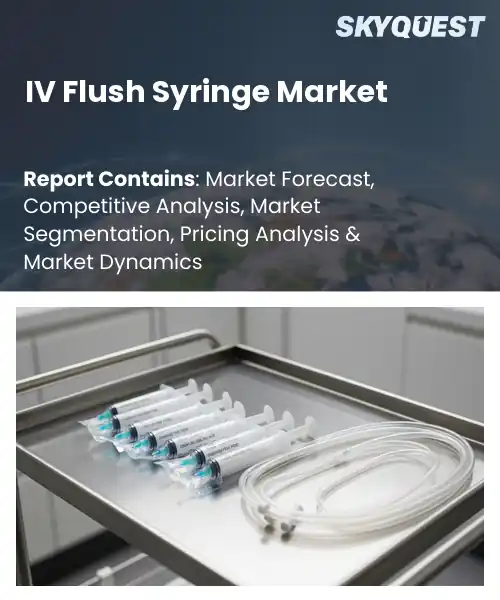
The global IV flush syringe market is made up of sterile, pre-filled syringes used to clear IV lines after medications have been given in order to avoid contamination and make sure that the dose is accurately delivered. There is increased focus on patient safety measures and the number of patients with chronic illnesses that require recurring amounts of infused medications is rising, thus the increase in this market. Traditionally, glass syringes ruled this market; however, advancements in technology have replaced these devices with single use (disposable), polymer-based systems, due to the issuance of strict regulations regarding how lines should be primed (particularly by the F.D.A.) in The early 2000s. The transition from glass to polymer IV syringes has been confirmed by the increase in hospitals using ready to use flush syringes in the U.S., which has in turn reduced the rate of infections and has streamlined nursing care.
The biggest factor that is currently driving global IV flush syringe market growth is the rising amount of outpatient infusions, which is increasing the need for flush solutions that can be administered by patients in their homes. As insurance companies are providing broader coverage for chronic care therapies, pharmacy stores are stocking more pre-filled syringes that contain a mixture of saline (sodium chloride) and heparin so patients can maintain the patency of their IV lines without having to return to the doctor’s office. In turn, this reduces patient readmittance to the hospital, prompting many providers to recommend patients follow the flush protocol from home. Consequently, manufacturers are investing in filling lines and biodegradable barrel materials, creating opportunities to capture market share by offering products tailored to the burgeoning home‑infusion ecosystem.
How is AI-driven Automation Influencing Growth In The IV Flush Syringe Market?
Automatically injecting IV flush syringes with AI-driven marketing technology is transforming their application. Intelligent sensors and machine-learning algorithms have been integrated into the fill-finish process, allowing for continual real-time monitoring of temperature, pressure, and volume so if any variation occurs, they can be immediately corrected. This process also includes an efficient way to change over between different product lines based on the needs of today’s hospitals, thus allowing manufacturers the ability to respond much quicker to changes in hospital needs. Reducing manual processes reduces the potential for contamination and labor costs together help increase production capacity. These improvements will result in a more reliable supply chain and increase the ability to fulfill the increasing demand for pre-filled syringes, while maintaining reliable safety levels.
In April 2024, Becton Dickinson announced their new AI-driven robotic line which automatically assembles and fills IV flush syringes at a much higher throughput rate than ever before and with significantly improved quality control.
Market snapshot - (2026-2033)
Global Market Size
USD 462.5 Million
Largest Segment
Prefilled IV Flush Syringes
Fastest Growth
Empty IV Flush Syringes
Growth Rate
5.8% CAGR
To get more insights on this market click here to Request a Free Sample Report
Global IV flush syringe market is segmented by product type, solution type, volume, application, end user, usage type and region. Based on product type, the market is segmented into Prefilled IV Flush Syringes and Empty IV Flush Syringes. Based on solution type, the market is segmented into Normal Saline Flush Syringes, Heparin Flush Syringes and Other Flush Solutions. Based on volume, the market is segmented into Below 5 mL, 5–10 mL and Above 10 mL. Based on application, the market is segmented into Vascular Access Device Maintenance, Catheter Flushing, IV Line Patency Maintenance, Drug Administration Support and Others. Based on end user, the market is segmented into Hospitals, Ambulatory Surgical Centers, Clinics and Home Healthcare Settings. Based on usage type, the market is segmented into Disposable Flush Syringes and Reusable Flush Syringes. Based on region, the market is segmented into North America, Europe, Asia Pacific, Latin America and Middle East & Africa.
The Prefilled IV Flush Syringe group is dominant due to a desire of healthcare providers to have devices that are ready to use, which will allow for a reduction in prep time and the chance of contamination. The ability to integrate prefilled syringes into a sterile workflow improves the maintenance of catheters, improving the safety of the patient and providing for maximum efficiency for the staff. The convenience of standardizing dosages and compatibility with a variety of vascular access devices are also driving the usage of prefilled syringes; making this option the device of choice across a multitude of places providing care.
As per IV flush syringe market analysis, the Empty IV Flush Syringe group is experiencing rapid growth as clinicians look to have the ability to change their dosage as needed and have the ability to change their flush solution as needed. Advances in the design of low dead space syringes will also increase accuracy, and there are also price and environmental considerations that are leading to an increase in the reuse of sterile containers; therefore opening more opportunities in this segment of the IV Flush Syringe market.
As per IV flush syringe market outlook, the Normal Saline Flush Syringes category is expected to dominate because it is an accepted way to maintain line patency and to administer an isotonic solution that will not react adversely with most medications. The simplicity of this solution is consistent with standard clinical procedures, which means minimal training is needed by end-users and the number of adverse events (or negative consequences) can be minimized. In addition, the vast body of clinical evidence available supporting the effectiveness of saline to flush catheters builds confidence in the continued use of saline flushes in hospitals and outpatient settings, thereby establishing saline flushes as the main category in this market.
While the Heparin Flush Syringes category is the fastest growing market segment as providers attempt to prevent thrombus formation in patients with catheters at high risk for developing thrombus. The increase in awareness of thromboembolic complications has positively impacted the popularity of heparin flushes. Additionally, the introduction of low concentration heparin products continues to improve the safety profile of all heparin products, which has led to further use of these products. This increase in use creates opportunities for additional development and penetration into the existing heparin flush product developing and/or manufacturing markets.
To get detailed segments analysis, Request a Free Sample Report
The IV Flush Syringe industry is dominated by North America because there are advanced healthcare systems, strict regulations for patient safety, and are highly engaged in using devices that are manufactured with safety features. Both Canada and the United States have sophisticated clinical best practices with a focus on infection control, which drives ongoing demand for adequate quality Flush Solutions. Strong reimbursement programs are a key component influencing hospitals’ decisions to modernize infusion systems as well as extensive research activities, both of which are critical to continue product innovation. Furthermore, the close collaboration between device manufacturers and healthcare providers allows for faster conversion of clinical data into product design modifications. A regulatory environment supporting rapid urgency for the approval of new design concepts will allow organizations in this marketplace to be quick to react to changing clinical strategies.
The IV flush syringe market in the United States is characterized by a strong focus on patient safety and a significant number of tertiary care hospitals supporting their use. Overall, hospitals and outpatient facilities are providing closed-system devices to reduce the risk of infection, which is creating substantial demand for the purchase of advanced flush syringes. Leading manufacturers are responding to clinical requests for precise dosing by continuing to innovate, and by offering comprehensive reimbursement plans nationwide, hospitals and outpatient facilities are able to purchase IV flush syringes more cost effectively across all types of care settings.
The Canadian IV flush syringe market is shaped by a healthcare system that prioritizes access to care for all people and rigorous infection-control standards. Provincial authorities promote the use of safety-engineered flush syringes in all acute and community care settings, thereby creating consistent demand. Canadian manufacturers closely collaborate with clinical stakeholders to customize products to their specific protocols, and align their offerings with new reimbursement processes so that the deployment of IV flush syringes can occur in a cost-effective manner across various types of health care facilities in Canada.
Europe experiences rapid expansion of the IV Flush Syringe market driven by a harmonized regulatory framework that elevates safety standards across member states. Health systems prioritize infection prevention, leading to widespread adoption of closed‑system flush devices in hospitals, ambulatory clinics, and long‑term care facilities. The region’s strong pharmaceutical manufacturing base fuels demand for precise fluid management, while collaborative research initiatives promote continuous product refinement. Growing emphasis on environmental sustainability encourages manufacturers to develop recyclable or reusable syringe components, aligning with policy incentives. Integrated supply chains and cross‑border procurement further streamline market access, enabling healthcare providers to source high‑quality flush solutions efficiently and reinforcing Europe’s position as a dynamic growth hub. Additionally, national health agencies invest in training programs that reinforce proper flushing techniques, ensuring optimal clinical outcomes and fostering confidence among practitioners.
IV Flush Syringe Market penetration in Germany benefits from a healthcare system that integrates medical technologies with stringent safety protocols. Large academic hospitals and clinics prioritize the use of sterile, precision‑engineered flush syringes to support complex therapeutic regimens. Domestic manufacturers collaborate closely with research institutions, fostering innovation that aligns with national guidelines for infection control. Robust reimbursement mechanisms and a strong emphasis on quality assurance drive consistent procurement across public and private sectors.
IV Flush Syringe Market in the United Kingdom is emerging as healthcare providers adopt enhanced safety measures to reduce catheter‑related infections. The National Health Service encourages the transition to closed‑system devices, prompting hospitals to integrate advanced flush syringes into routine practice. Collaborative projects between academic centers and device manufacturers accelerate the development of ergonomically designed syringes that meet evolving clinical guidelines. Reimbursement pathways support cost‑effective acquisition, fostering broader diffusion across both urban and regional facilities.
IV Flush Syringe sector in France is recognized as the fastest‑growing segment within Europe, propelled by proactive health‑policy initiatives that prioritize patient safety. French hospitals and outpatient clinics increasingly replace traditional devices with safety‑engineered flush syringes to align with national infection‑prevention campaigns. Strong collaboration between biotech firms and medical‑device companies spurs the introduction of innovative syringe designs that enhance dosing accuracy. Reimbursement structures that reward preventive care further accelerate market uptake across both public hospitals and private practices.
Asia Pacific is strengthening its position in the IV Flush Syringe market through a confluence of expanding healthcare infrastructure, heightened focus on patient safety, and increasing investment in domestic manufacturing capabilities. Nations across the region are upgrading hospital facilities and adopting international safety standards, which drives demand for reliable flush syringes. Government health programs emphasize infection‑prevention protocols, encouraging the integration of closed‑system devices in both urban and rural settings. Collaborative efforts between local manufacturers and global technology partners accelerate the introduction of innovative, cost‑effective solutions tailored to regional clinical practices. Additionally, growing awareness of sustainable medical products motivates the development of recyclable syringe components, aligning market growth with environmental stewardship. Regulatory agencies are also streamlining approval pathways, enabling quicker market entry for novel flush syringe technologies and reinforcing the region’s competitive edge.
IV Flush Syringe Market in Japan is characterized by a strong emphasis on precision medicine and rigorous infection‑control standards within its technologically advanced healthcare system. Leading hospitals adopt closed‑system flush syringes to support complex therapeutic protocols, while domestic manufacturers leverage high‑quality engineering to meet stringent regulatory criteria. Partnerships between academic research institutions and device firms foster continuous innovation, resulting in syringes that enhance dosing accuracy and patient safety. Government‑backed reimbursement schemes facilitate widespread adoption across both acute care and outpatient environments.
IV Flush Syringe Market in South Korea benefits from rapid adoption of advanced medical technologies and a proactive regulatory environment that prioritizes patient safety. Major healthcare providers incorporate closed‑system flush syringes to reduce infection risks in high‑throughput clinical settings. Local manufacturers collaborate with multinational firms to integrate cutting‑edge materials and ergonomic designs, enhancing both performance and user comfort. Supportive health‑policy initiatives and streamlined reimbursement processes further accelerate market penetration across hospitals, clinics, and long‑term care facilities.
To know more about the market opportunities by region and country, click here to
Buy The Complete Report
Growing Adoption Of Smart Syringes
Increasing Demand For Safety Features
Stringent Regulatory Compliance Requirements
Higher Production Costs Of Specialized Devices
Request Free Customization of this report to help us to meet your business objectives.
The IV Flush Syringe market is shaped by intense competition among manufacturers who are accelerating product innovation, expanding geographic reach, and securing strategic partnerships to meet rising demand for pre‑filled and plastic syringes. Recent activity includes joint development agreements to embed smart dosing technology into syringes and acquisitions targeting specialty polymer capabilities, driving differentiation and supply chain resilience.
SkyQuest’s ABIRAW (Advanced Business Intelligence, Research & Analysis Wing) is our Business Information Services team that Collects, Collates, Correlates, and Analyses the Data collected by means of Primary Exploratory Research backed by robust Secondary Desk research.
As per SkyQuest analysis, the global IV flush syringe market is propelled primarily by the expanding outpatient infusion sector, which fuels demand for ready‑to‑use prefilled syringes and makes the prefilled IV flush syringes segment the clear market leader. A secondary catalyst is the rising emphasis on safety features such as needle‑free mechanisms that improve staff protection and drive procurement preferences. However, stringent regulatory compliance requirements pose a notable restraint by lengthening approval timelines and raising costs for manufacturers. North America dominates the market due to mature healthcare systems, strong reimbursement policies and early adoption of smart‑syringe technologies, reinforcing its lead across regions.
| Report Metric | Details |
|---|---|
| Market size value in 2024 | USD 462.5 Million |
| Market size value in 2033 | USD 768.21 Million |
| Growth Rate | 5.8% |
| Base year | 2024 |
| Forecast period | (2026-2033) |
| Forecast Unit (Value) | USD Million |
| Segments covered |
|
| Regions covered | North America (US, Canada), Europe (Germany, France, United Kingdom, Italy, Spain, Rest of Europe), Asia Pacific (China, India, Japan, Rest of Asia-Pacific), Latin America (Brazil, Rest of Latin America), Middle East & Africa (South Africa, GCC Countries, Rest of MEA) |
| Companies covered |
|
| Customization scope | Free report customization with purchase. Customization includes:-
|
To get a free trial access to our platform which is a one stop solution for all your data requirements for quicker decision making. This platform allows you to compare markets, competitors who are prominent in the market, and mega trends that are influencing the dynamics in the market. Also, get access to detailed SkyQuest exclusive matrix.
Table Of Content
Executive Summary
Market overview
Parent Market Analysis
Market overview
Market size
KEY MARKET INSIGHTS
COVID IMPACT
MARKET DYNAMICS & OUTLOOK
Market Size by Region
KEY COMPANY PROFILES
Methodology
For the IV Flush Syringe Market, our research methodology involved a mixture of primary and secondary data sources. Key steps involved in the research process are listed below:
1. Information Procurement: This stage involved the procurement of Market data or related information via primary and secondary sources. The various secondary sources used included various company websites, annual reports, trade databases, and paid databases such as Hoover's, Bloomberg Business, Factiva, and Avention. Our team did 45 primary interactions Globally which included several stakeholders such as manufacturers, customers, key opinion leaders, etc. Overall, information procurement was one of the most extensive stages in our research process.
2. Information Analysis: This step involved triangulation of data through bottom-up and top-down approaches to estimate and validate the total size and future estimate of the IV Flush Syringe Market.
3. Report Formulation: The final step entailed the placement of data points in appropriate Market spaces in an attempt to deduce viable conclusions.
4. Validation & Publishing: Validation is the most important step in the process. Validation & re-validation via an intricately designed process helped us finalize data points to be used for final calculations. The final Market estimates and forecasts were then aligned and sent to our panel of industry experts for validation of data. Once the validation was done the report was sent to our Quality Assurance team to ensure adherence to style guides, consistency & design.
Analyst Support
Customization Options
With the given market data, our dedicated team of analysts can offer you the following customization options are available for the IV Flush Syringe Market:
Product Analysis: Product matrix, which offers a detailed comparison of the product portfolio of companies.
Regional Analysis: Further analysis of the IV Flush Syringe Market for additional countries.
Competitive Analysis: Detailed analysis and profiling of additional Market players & comparative analysis of competitive products.
Go to Market Strategy: Find the high-growth channels to invest your marketing efforts and increase your customer base.
Innovation Mapping: Identify racial solutions and innovation, connected to deep ecosystems of innovators, start-ups, academics, and strategic partners.
Category Intelligence: Customized intelligence that is relevant to their supply Markets will enable them to make smarter sourcing decisions and improve their category management.
Public Company Transcript Analysis: To improve the investment performance by generating new alpha and making better-informed decisions.
Social Media Listening: To analyze the conversations and trends happening not just around your brand, but around your industry as a whole, and use those insights to make better Marketing decisions.
REQUEST FOR SAMPLE
 REQUEST FREE CUSTOMIZATION
Global Iv Flush Syringe Market size was valued at USD 462.5 Million in 2024 and is poised to grow from USD 489.33 Million in 2025 to USD 768.21 Million by 2033, growing at a CAGR of 5.8% during the forecast period (2026-2033).
The IV Flush Syringe market is shaped by intense competition among manufacturers who are accelerating product innovation, expanding geographic reach, and securing strategic partnerships to meet rising demand for pre‑filled and plastic syringes. Recent activity includes joint development agreements to embed smart dosing technology into syringes and acquisitions targeting specialty polymer capabilities, driving differentiation and supply chain resilience. 'Becton, Dickinson and Company', 'Baxter International Inc.', 'ICU Medical, Inc.', 'B. Braun SE', 'Medline Industries, LP', 'Cardinal Health, Inc.', 'Fresenius Kabi AG', 'Nipro Corporation', 'Terumo Corporation', 'West Pharmaceutical Services, Inc.', 'Vetter Pharma International GmbH', 'Sterinova Inc.', 'DBM Medical Group', 'Shandong Weigao Group Medical Polymer Company Limited', 'Jiangsu Jichun Medical Devices Co., Ltd.', 'Hindustan Syringes & Medical Devices Ltd.', 'Aquabiliti HealthCare Pvt. Ltd.', 'Wuhan W.E.O Science & Technology Development Co., Ltd.', 'Medefil, Inc.', 'Healthmark Industries Company, Inc.'
The rising preference for sterile single‑use syringes in clinical settings reduces cross‑contamination risk, prompting hospitals and outpatient centers to replace reusable devices. This shift encourages manufacturers to expand product portfolios with advanced IV flush syringes that meet infection‑control protocols. As healthcare providers prioritize patient safety, procurement policies increasingly favor disposables, driving demand across acute care, ambulatory, and home‑infusion segments. Consequently, market participants experience accelerated sales growth and invest in innovation to capture emerging opportunities in the evolving healthcare landscape globally and regionally.
Sustainable Packaging Adoption: The industry is rapidly transitioning to recyclable and biodegradable packaging to meet heightened environmental expectations from healthcare providers and patients. Manufacturers are redesigning primary containers, cartons, and secondary wrappers using plant‑based polymers and reduced‑weight plastics, which also lower logistics costs. This shift is supported by collaborative sustainability initiatives and green procurement policies of major hospital networks, creating demand for eco‑friendly flush syringes and prompting suppliers to obtain relevant environmental certifications as a market differentiator boosting brand credibility worldwide and stakeholder confidence.
Why does North America Dominate the Global IV Flush Syringe Market? |@12


Want to customize this report? This report can be personalized according to your needs. Our analysts and industry experts will work directly with you to understand your requirements and provide you with customized data in a short amount of time. We offer $1000 worth of FREE customization at the time of purchase.
Feedback From Our Clients


 USA (+1) 351-333-4748

