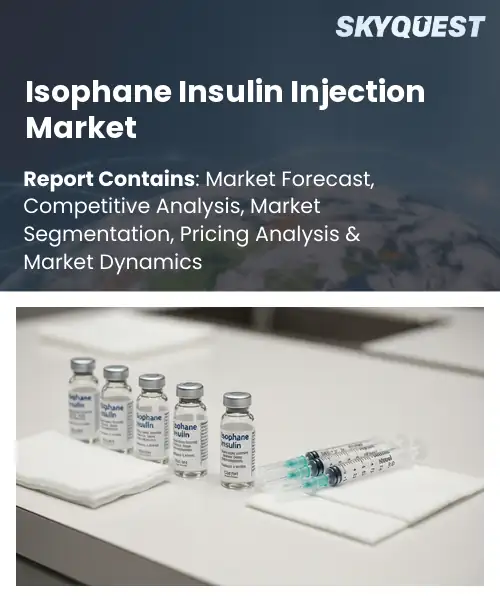
Isophane Insulin Injection Market
Report ID: SQMIG35I3504
Report ID: SQMIG35I3504
[email protected]
USA +1 351-333-4748
Report ID:
SQMIG35I3504 |
Region:
Global |
Published Date: August, 2026
Pages:
157
|Tables:
116
|Figures:
77


Global Isophane Insulin Injection Market size was valued at USD 3.18 Billion in 2024 and is poised to grow from USD 3.39 Billion in 2025 to USD 5.7 Billion by 2033, growing at a CAGR of 6.7% during the forecast period (2026-2033).
The growing prevalence of diabetes is increasing the need for insulin therapy, directly supporting demand for isophane (NPH) insulin injections. WHO reports that approximately 830 million people worldwide were living with diabetes in 2022, with prevalence rising particularly rapidly in low- and middle-income countries. Because NPH insulin is an established intermediate-acting human insulin and remains an affordable treatment option, expanding diabetes populations and treatment requirements are driving demand.
Cost-effectiveness is a major factor supporting isophane insulin adoption, particularly in emerging and low-income markets. WHO identifies human insulin as generally more affordable than insulin analogues and highlights limited availability and high prices as major barriers to insulin access. Consequently, healthcare systems seeking lower-cost treatment options can favor NPH insulin, sustaining demand despite increasing competition from newer long-acting insulin analogues.
How is AI-Driven Automation Improving Dosing Accuracy in the Isophane Insulin Injection Market?
AI‑driven automation is reshaping how clinicians and patients handle Isophane insulin injections. Machine‑learning models analyze glucose trends and recommend precise dose adjustments, while smart pens record each delivery and sync with mobile apps. This closed loop reduces manual calculation errors and gives users real‑time feedback on injection technique. The technology also supports remote monitoring, allowing healthcare teams to intervene before dosing mistakes lead to complications. As the market expands and cost pressures intensify, these digital tools improve adherence and confidence, making the therapy more attractive to both providers and payers.
In January 2026, Novo Nordisk introduced an AI‑enabled insulin pen that automatically calibrates Isophane doses based on sensor data, boosting dosing accuracy and reinforcing market growth through enhanced efficiency.
Market snapshot - (2026-2033)
Global Market Size
USD 3.18 Billion
Largest Segment
Human Isophane Insulin
Fastest Growth
Biosimilar Isophane Insulin
Growth Rate
6.7% CAGR
To get more insights on this market click here to Request a Free Sample Report
Global isophane insulin injection market is segmented by product type, delivery device, distribution channel, end user and region. Based on product type, the market is segmented into human isophane insulin and biosimilar isophane insulin. Based on delivery device, the market is segmented into vials, prefilled pens and cartridges. Based on distribution channel, the market is segmented into hospital pharmacies, retail pharmacies and online pharmacies. Based on end user, the market is segmented into hospitals, diabetes clinics and home care. Based on region, the market is segmented into North America, Europe, Asia Pacific, Latin America and Middle East & Africa.
Based on the global isophane insulin injection market growth, prefilled pens segment dominates because they combine dosing precision with user‑friendly ergonomics, meeting the preferences of both clinicians and patients. Their ready‑to‑use format eliminates preparation steps, reducing administration errors and improving adherence. Moreover, manufacturers have integrated safety features and connectivity, aligning with digital health initiatives and reinforcing market uptake. This convergence of convenience, safety, and technological relevance drives their overall leadership in the global isophane insulin injection market.
However, cartridges segment is witnessing the strongest growth momentum because its compact design supports integration with emerging insulin pump technologies, appealing to tech‑savvy patients seeking automated delivery. Manufacturers are advancing fill‑and‑seal processes that enhance sterility and shelf life, spurring broader clinical adoption and opening new channels for market expansion future.
Human isophane insulin segment dominates because it benefits from established clinical familiarity and physician confidence built over decades of use. Its well‑documented pharmacokinetic profile simplifies prescribing and dosing decisions, while robust supply chains ensure consistent availability across care settings. This entrenched reputation, combined with extensive safety data, sustains its preferred status among providers treating type 1 and type 2 diabetes with intermediate‑acting regimens across global healthcare ecosystems for future worldwide.
Meanwhile, biosimilar isophane insulin segment is emerging as the key high‑growth area because cost‑effective alternatives are attracting payers and patients amid healthcare budgets. Accelerated regulatory pathways and advancing manufacturing capabilities lower entry barriers, prompting new entrants to launch priced products that expand market reach and stimulate adoption in care environments.
To get detailed segments analysis, Request a Free Sample Report
As per the global isophane insulin injection market share, North America maintains market leadership through a convergence of sophisticated healthcare delivery systems, robust research and development ecosystems, and mature reimbursement frameworks that readily accommodate advanced biologic therapies. The region benefits from the presence of several multinational pharmaceutical innovators that invest heavily in formulation refinement and patient‑focused delivery devices. Strong physician engagement, extensive diabetes education programmes, and a regulatory environment that encourages timely product approvals further accelerate adoption. Integrated supply chains and efficient logistics ensure consistent product availability across diverse care settings. Additionally, high consumer awareness and proactive disease management culture drive sustained demand, reinforcing North America’s position as the reference market for isophane insulin injection advancements. The combination of strong payer confidence and ongoing clinical research collaborations creates a fertile environment for continuous product innovation and market expansion.
Isophane insulin injection market in the United States benefits from an expansive network of specialized diabetes clinics and a highly engaged physician community that prioritises evidence‑based therapeutic choices. Reimbursement mechanisms provided by major insurers facilitate broad patient access, while leading biotech firms maintain active pipelines that introduce incremental improvements in formulation stability and delivery convenience. Patient advocacy groups further promote awareness, encouraging adherence and supporting market depth and long‑term sustainability.
Isophane insulin injection market in Canada is reinforced by universal health coverage that streamlines reimbursement and ensures equitable patient access across provinces. Collaborative research initiatives between academic institutions and industry drive formulation enhancements tailored to local clinical guidelines. Government procurement policies emphasise cost‑effectiveness while preserving quality, fostering a stable purchasing environment. Educational programmes directed at healthcare professionals and patients alike sustain high awareness levels and support consistent utilization throughout the system.
Based on global isophane insulin injection regional forecast, Europe experiences rapid expansion of the industry driven by a cohesive regulatory framework that facilitates timely product introductions across member states. Public health programmes focused on chronic disease management promote early therapeutic intervention, while health technology assessment bodies encourage the uptake of cost‑effective biosimilar options. An ageing demographic coupled with heightened disease prevalence amplifies demand for reliable insulin delivery. Robust manufacturing clusters in key economies provide a stable supply base, and extensive collaborative research networks accelerate formulation refinements. Integration of digital health tools enhances patient monitoring and adherence, reinforcing clinician confidence in therapeutic choices. Combined policy support, economic incentives, and a culture of evidence‑based practice collectively propel market momentum throughout the continent. The emphasis on sustainable procurement and cross‑border partnerships further consolidates market resilience.
Isophane insulin injection market in Germany is anchored by a dense network of specialized endocrinology centres and a rigorous health technology assessment process that favours clinically proven products. Strong pharmaceutical research institutes collaborate closely with manufacturers to enhance formulation precision, while insurance schemes provide comprehensive coverage that supports widespread adoption. Patient education initiatives emphasise self‑management, reinforcing consistent usage and market stability. Regulatory pathways that streamline biosimilar entry also contribute to a dynamic product landscape.
Isophane insulin injection market in the United Kingdom is propelled by accelerated adoption driven by national health service reforms that prioritise value based procurement. Integrated digital health platforms enable real‑time glucose monitoring, encouraging prescribers to align therapy with patient outcomes. Robust clinical guidelines underscore the role of intermediate‑acting insulin, while emerging biosimilar options expand therapeutic choices. Collaborative initiatives between academia and industry foster continuous innovation, ensuring the market remains responsive to evolving clinical needs.
Isophane insulin injection market in France is emerging as policy incentives encourage broader inclusion of intermediate‑acting insulin within chronic care pathways. National health insurance structures provide reimbursed access that boosts patient uptake, while regional health agencies promote targeted diabetes education campaigns. Partnerships between local biotech firms and multinational manufacturers accelerate formulation advancements suited to French clinical practice. The focus on cost‑effectiveness combined with strong patient advocacy creates a fertile environment for market expansion.
As per global isophane insulin injection regional outlook, Asia Pacific is strengthening its position in the industry through a confluence of expanding patient populations and proactive governmental strategies that prioritise accessible biologic therapies. Nations across the region invest heavily in domestic manufacturing capabilities, reducing dependence on imports and fostering cost‑competitive product portfolios. Health ministries implement chronic disease frameworks that integrate insulin therapy into primary care, while insurance schemes evolve to accommodate long‑term treatment reimbursement. Rapid advancements in biotechnology and a surge of homegrown research centres accelerate the development of formulation improvements tailored to regional clinical preferences. Strategic partnerships between multinational firms and local players facilitate technology transfer and expand distribution networks. Adoption of mobile health solutions enhances patient monitoring, supporting adherence and reinforcing clinician confidence in therapy selection.
Isophane insulin injection market in Japan benefits from an ageing society that drives sustained demand for reliable intermediate‑acting insulin options. The country’s rigorous regulatory oversight ensures high product quality, while advanced healthcare facilities promote early adoption of innovative delivery devices. Government‑backed initiatives encourage domestic production and streamline approval pathways for biosimilars, enhancing market accessibility. Patient‑centric education programmes reinforce self‑management practices, supporting consistent utilization throughout urban and rural settings.
Isophane insulin injection market in South Korea is propelled by vigorous biotech innovation and strong governmental support for chronic disease management. Accelerated approval mechanisms enable rapid entry of advanced insulin formulations, while national health insurance provides comprehensive coverage that encourages patient uptake. Collaborative research consortia between universities and pharmaceutical firms focus on formulation stability and user‑friendly delivery systems. Growing digital health infrastructure facilitates real‑time glucose tracking, reinforcing adherence and expanding market penetration.
To know more about the market opportunities by region and country, click here to
Buy The Complete Report
Increasing Diabetes Prevalence Globally
Advancements In Delivery Devices
High Cost Of Biologicals
Stringent Regulatory Pathways
Request Free Customization of this report to help us to meet your business objectives.
The global isophane insulin injection market outlook is concentrated among major insulin manufacturers, including Novo Nordisk, Eli Lilly, and Sanofi, with established NPH products such as Insulatard, Humulin N, and Novolin N. Novo Nordisk focuses on portfolio optimization and newer insulin technologies, while Eli Lilly emphasizes affordable access and established Humulin formulations. Sanofi leverages its broad diabetes portfolio and global commercial reach to maintain competitiveness.
Top Player’s Company Profile
Recent Developments
SkyQuest’s ABIRAW (Advanced Business Intelligence, Research & Analysis Wing) is our Business Information Services team that Collects, Collates, Correlates, and Analyses the Data collected by means of Primary Exploratory Research backed by robust Secondary Desk research.
As per SkyQuest analysis, the global isophane insulin injection industry is propelled chiefly by the rising prevalence of diabetes, which expands the patient pool needing reliable basal therapy, while innovative delivery devices such as smart prefilled pens boost convenience and dosing accuracy, driving adoption further. Regulatory incentives encouraging biosimilar entry also accelerate growth by lowering prices and widening formulary options. The prefilled pen segment leads the market because of its user‑friendly design and connectivity features. North America remains the dominant region thanks to advanced healthcare infrastructure and strong payer support. However, the high cost of biological products poses a significant restraint, limiting access in price‑sensitive markets and slowing broader uptake.
| Report Metric | Details |
|---|---|
| Market size value in 2024 | USD 3.18 Billion |
| Market size value in 2033 | USD 5.7 Billion |
| Growth Rate | 6.7% |
| Base year | 2024 |
| Forecast period | (2026-2033) |
| Forecast Unit (Value) | USD Billion |
| Segments covered |
|
| Regions covered | North America (US, Canada), Europe (Germany, France, United Kingdom, Italy, Spain, Rest of Europe), Asia Pacific (China, India, Japan, Rest of Asia-Pacific), Latin America (Brazil, Rest of Latin America), Middle East & Africa (South Africa, GCC Countries, Rest of MEA) |
| Companies covered |
|
| Customization scope | Free report customization with purchase. Customization includes:-
|
To get a free trial access to our platform which is a one stop solution for all your data requirements for quicker decision making. This platform allows you to compare markets, competitors who are prominent in the market, and mega trends that are influencing the dynamics in the market. Also, get access to detailed SkyQuest exclusive matrix.
Table Of Content
Executive Summary
Market overview
Parent Market Analysis
Market overview
Market size
KEY MARKET INSIGHTS
COVID IMPACT
MARKET DYNAMICS & OUTLOOK
Market Size by Region
KEY COMPANY PROFILES
Methodology
For the Isophane Insulin Injection Market, our research methodology involved a mixture of primary and secondary data sources. Key steps involved in the research process are listed below:
1. Information Procurement: This stage involved the procurement of Market data or related information via primary and secondary sources. The various secondary sources used included various company websites, annual reports, trade databases, and paid databases such as Hoover's, Bloomberg Business, Factiva, and Avention. Our team did 45 primary interactions Globally which included several stakeholders such as manufacturers, customers, key opinion leaders, etc. Overall, information procurement was one of the most extensive stages in our research process.
2. Information Analysis: This step involved triangulation of data through bottom-up and top-down approaches to estimate and validate the total size and future estimate of the Isophane Insulin Injection Market.
3. Report Formulation: The final step entailed the placement of data points in appropriate Market spaces in an attempt to deduce viable conclusions.
4. Validation & Publishing: Validation is the most important step in the process. Validation & re-validation via an intricately designed process helped us finalize data points to be used for final calculations. The final Market estimates and forecasts were then aligned and sent to our panel of industry experts for validation of data. Once the validation was done the report was sent to our Quality Assurance team to ensure adherence to style guides, consistency & design.
Analyst Support
Customization Options
With the given market data, our dedicated team of analysts can offer you the following customization options are available for the Isophane Insulin Injection Market:
Product Analysis: Product matrix, which offers a detailed comparison of the product portfolio of companies.
Regional Analysis: Further analysis of the Isophane Insulin Injection Market for additional countries.
Competitive Analysis: Detailed analysis and profiling of additional Market players & comparative analysis of competitive products.
Go to Market Strategy: Find the high-growth channels to invest your marketing efforts and increase your customer base.
Innovation Mapping: Identify racial solutions and innovation, connected to deep ecosystems of innovators, start-ups, academics, and strategic partners.
Category Intelligence: Customized intelligence that is relevant to their supply Markets will enable them to make smarter sourcing decisions and improve their category management.
Public Company Transcript Analysis: To improve the investment performance by generating new alpha and making better-informed decisions.
Social Media Listening: To analyze the conversations and trends happening not just around your brand, but around your industry as a whole, and use those insights to make better Marketing decisions.
REQUEST FOR SAMPLE
 REQUEST FREE CUSTOMIZATION
Global Isophane Insulin Injection Market size was valued at USD 3.18 Billion in 2024 and is poised to grow from USD 3.39 Billion in 2025 to USD 5.7 Billion by 2033, growing at a CAGR of 6.7% during the forecast period (2026-2033).
The competitive landscape of the global isophane insulin injection market is shaped by firms accelerating M&A, forming strategic partnerships, and investing in smart‑delivery technologies to capture the projected market expansion toward $10.6 billion by 2034. Companies are leveraging collaborations with device manufacturers and integrating digital dosing systems to differentiate their biosimilar isophane insulin offerings and secure market share. 'Novo Nordisk A/S', 'Eli Lilly and Company', 'Sanofi S.A.', 'Biocon Limited', 'Wockhardt Limited', 'Tonghua Dongbao Pharmaceutical Co., Ltd.', 'Gan & Lee Pharmaceuticals Co., Ltd.', 'United Laboratories International Holdings Limited', 'Julphar', 'Bharat Serums and Vaccines Limited', 'Sedico Pharmaceutical Co.', 'Exir Pharmaceutical Co.', 'Geropharm LLC', 'Ypsomed Holding AG', 'Becton, Dickinson and Company', 'Owen Mumford Ltd.', 'Haselmeier AG', 'Terumo Corporation', 'SHL Medical AG', 'B. Braun SE'
The rising incidence of type 1 and type 2 diabetes across diverse age groups fuels demand for reliable long‑acting insulin formulations, and is prompting clinicians to adopt isophane insulin injections for basal glycemic control, thereby expanding market volume as patients require consistent therapeutic regimens to manage chronic hyperglycemia. Additionally, heightened awareness of early detection and improved screening programs encourage earlier insulin initiation, further broadening the patient base eligible for isophane products, while providers emphasize adherence to basal schedules to reduce complications, reinforcing sustained market growth.
Personalized Delivery Platforms: Advances in wearable glucose monitors and algorithm‑driven dosing software are enabling insulin manufacturers to integrate isophane insulin into closed‑loop delivery systems. These platforms tailor basal release to individual glycemic patterns, improving adherence and reducing hypoglycemia risk. As patients and clinicians seek seamless, data‑rich therapy experiences, manufacturers are partnering with digital health firms to embed isophane formulations within smart pumps and apps, creating a differentiated value proposition that drives market expansion beyond traditional injection models for broader patient populations worldwide today.
Why does North America Dominate the Global Isophane Insulin Injection Market? |@12


Want to customize this report? This report can be personalized according to your needs. Our analysts and industry experts will work directly with you to understand your requirements and provide you with customized data in a short amount of time. We offer $1000 worth of FREE customization at the time of purchase.
Feedback From Our Clients


 USA (+1) 351-333-4748

